
Foreign News
From Libreville, An Ugly Postcard

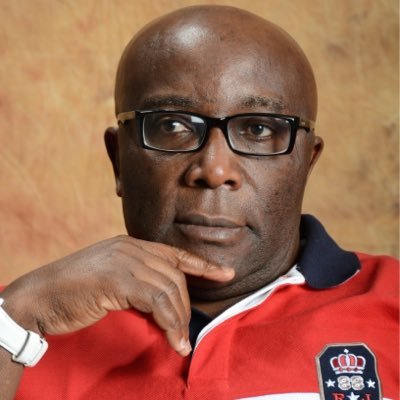
By Chidi Amuta
The immediate past president of Gabon, Mr. Ali Bongo Ondimbo, has joined the new crop of video -posting toppled rulers.
The luxurious expanse of his gold plated presidential mansion in Libreville has shrunk into a tiny sitting space surrounded by book shelves and inconsequential furniture. From here, he has posted an online video that casually urged the world to ‘make some noise’ to draw attention to his altered circumstances. He of course pretends to be unaware of what is happening around him as he admits he is confined to a room while the whereabouts of his wife and family are yet uncertain.https://googleads.g.doubleclick.net/pagead/ads?client=ca-pub-6709758369371331&output=html&h=280&slotname=2123119829&adk=465047999&adf=2676246547&pi=t.ma~as.2123119829&w=644&fwrn=4&fwrnh=100&lmt=1693736032&rafmt=1&format=644×280&url=https%3A%2F%2Fwww.nationalaccordnewspaper.com%2Ffrom-libreville-an-ugly-postcard-by-chidi-amuta%2F&host=ca-host-pub-2644536267352236&fwr=0&fwrattr=true&rpe=1&resp_fmts=3&wgl=1&uach=WyJtYWNPUyIsIjEwLjEyLjYiLCJ4ODYiLCIiLCIxMDMuMC41MDYwLjEzNCIsW10sMCxudWxsLCI2NCIsW1siLk5vdC9BKUJyYW5kIiwiOTkuMC4wLjAiXSxbIkdvb2dsZSBDaHJvbWUiLCIxMDMuMC41MDYwLjEzNCJdLFsiQ2hyb21pdW0iLCIxMDMuMC41MDYwLjEzNCJdXSwwXQ..&dt=1693736032201&bpp=1&bdt=948&idt=404&shv=r20230830&mjsv=m202308290101&ptt=9&saldr=aa&abxe=1&cookie=ID%3Df5adffd583b64c9b-229526ea10d600fc%3AT%3D1666132495%3ART%3D1693736013%3AS%3DALNI_Ma693dnNsBzLrK_vRGO5C1xWYmQPA&gpic=UID%3D00000b12d62d6e07%3AT%3D1666132495%3ART%3D1693736013%3AS%3DALNI_Malo7GCYB-ozwNUzBx8cU6CU7j_2w&prev_fmts=0x0%2C644x280&nras=1&correlator=4018695916601&frm=20&pv=1&ga_vid=1995591903.1666132495&ga_sid=1693736032&ga_hid=1156506440&ga_fc=1&u_tz=60&u_his=6&u_h=800&u_w=1280&u_ah=739&u_aw=1280&u_cd=24&u_sd=1&dmc=4&adx=25&ady=1407&biw=1029&bih=659&scr_x=0&scr_y=0&eid=44759842%2C44759875%2C44759926%2C44796632%2C44801881&oid=2&pvsid=2968901827039517&tmod=829431005&uas=0&nvt=1&ref=https%3A%2F%2Fwww.nationalaccordnewspaper.com%2Fcategory%2Fopinion%2F&fc=1920&brdim=0%2C23%2C0%2C23%2C1280%2C23%2C1044%2C738%2C1044%2C659&vis=1&rsz=%7C%7CoEebr%7C&abl=CS&pfx=0&fu=128&bc=31&ifi=3&uci=a!3&btvi=1&fsb=1&xpc=sE2HGBXB0s&p=https%3A//www.nationalaccordnewspaper.com&dtd=411 https://googleads.g.doubleclick.net/pagead/ads?client=ca-pub-6709758369371331&output=html&h=280&slotname=2824164842&adk=1841859071&adf=1676647969&pi=t.ma~as.2824164842&w=644&fwrn=4&fwrnh=100&lmt=1693736032&rafmt=1&format=644×280&url=https%3A%2F%2Fwww.nationalaccordnewspaper.com%2Ffrom-libreville-an-ugly-postcard-by-chidi-amuta%2F&host=ca-host-pub-2644536267352236&fwr=0&fwrattr=true&rpe=1&resp_fmts=3&wgl=1&uach=WyJtYWNPUyIsIjEwLjEyLjYiLCJ4ODYiLCIiLCIxMDMuMC41MDYwLjEzNCIsW10sMCxudWxsLCI2NCIsW1siLk5vdC9BKUJyYW5kIiwiOTkuMC4wLjAiXSxbIkdvb2dsZSBDaHJvbWUiLCIxMDMuMC41MDYwLjEzNCJdLFsiQ2hyb21pdW0iLCIxMDMuMC41MDYwLjEzNCJdXSwwXQ..&dt=1693736032202&bpp=1&bdt=949&idt=441&shv=r20230830&mjsv=m202308290101&ptt=9&saldr=aa&abxe=1&cookie=ID%3Df5adffd583b64c9b-229526ea10d600fc%3AT%3D1666132495%3ART%3D1693736013%3AS%3DALNI_Ma693dnNsBzLrK_vRGO5C1xWYmQPA&gpic=UID%3D00000b12d62d6e07%3AT%3D1666132495%3ART%3D1693736013%3AS%3DALNI_Malo7GCYB-ozwNUzBx8cU6CU7j_2w&prev_fmts=0x0%2C644x280%2C644x280&nras=1&correlator=4018695916601&frm=20&pv=1&ga_vid=1995591903.1666132495&ga_sid=1693736032&ga_hid=1156506440&ga_fc=1&u_tz=60&u_his=6&u_h=800&u_w=1280&u_ah=739&u_aw=1280&u_cd=24&u_sd=1&dmc=4&adx=25&ady=1695&biw=1029&bih=659&scr_x=0&scr_y=0&eid=44759842%2C44759875%2C44759926%2C44796632%2C44801881&oid=2&pvsid=2968901827039517&tmod=829431005&uas=0&nvt=1&ref=https%3A%2F%2Fwww.nationalaccordnewspaper.com%2Fcategory%2Fopinion%2F&fc=1920&brdim=0%2C23%2C0%2C23%2C1280%2C23%2C1044%2C738%2C1044%2C659&vis=1&rsz=%7C%7CoEebr%7C&abl=CS&pfx=0&fu=128&bc=31&ifi=4&uci=a!4&btvi=2&fsb=1&xpc=PIXeAiBNBA&p=https%3A//www.nationalaccordnewspaper.com&dtd=452
In the last couple of months, some of the footages of Mr. Ali Bongo’s public appearances before the coup showed an infirm man recovering from a debilitating stroke but still firmly in power as the c heir to a family political dynasty that has presided over Gabon for the last 55 years. The younger Bongo is the son of former President, Omar Bongo who often wore high wedge shoes covered by a baggy James Brown -style ‘bongo’ trousers to enhance his dimunitive proportions.
In spite of his personal infirmity and the obviously dysfunctional state of Gabon, Mr. Bongo went ahead to prepare for last weekend’s presidential election. He predictably ‘won’ the election. Opposition parties and groups throughout Gabon however dismissed the election as a fraudulent sham. Mr. Bongo clung to his victory and power nonetheless but was quickly toppled in a palace military coup, barely four days after. The election would have given him a third term in an office he assumed in 2009. He had tweaked the constitution to give himself room for a third presidential term.
Soon after the election of last weekend, it was predictable that his party, the Gabonese Democratic Party (PDG) which he inherited from his late father would win. With a time tested combination of rigging, violence and official intimidation, the perpetual victory of the ruling party was fairly much guaranteed. But opposition forces had of late increased in strength and been joined by masses of disenchanted youth and the urban poor. Gabon, a nation of a little over 2.4 million people has the fourth highest GDP per head in sub Saharan Africa but lately wracked by unemployment and poverty.
Mounting political opposition led to a belated coalition of 16 opposition parties into an electoral alliance that presented a joint candidate to challenge Mr. Bongo at last weekend’s presidential election. That did not alter what was a foregone outcome in what has become a typical African sit -tight tradition of democratic persistence disguised as succession.
In continuation of a recent fashion among French speaking African countries, Gabon has fallen to the new coup contagion. The military struck barely four days after the election results were announced. In a televised photo opportunity that has become typical of the recent Franco-phone coups, a group of soldiers appeared on Gabonese national television to announce that they had decided to topple the democratic order ‘in the name of the Gabonese people’.
Predictably, they declared last weekend’s presidential elections as flawed, dubious and therefore annulled. Typically, the soldiers have suspended the constitution and all institutions of the state. They have also placed the ousted president under house arrest while taking in one of his sons on a charge of ‘high treason.’ As it turns out, the cop leader and transitional president is Brice Clotaire Oligui Nguema, commander of the presidential guards and a cousin of Ali Bongo.
The coup in Gabon comes barely two months after that in Niger which is still the centre of feverish activity within ECOWAS and the African Union. The Gabon coup merely increases the tally of a series of coups that have ravaged Franco-phone Africa. In quick succession, Sudan, Guinea, Mali, Burkina Faso, Chad, Niger and now Gabon have all literally fallen onto the sword. Previous coups in the countries under review have been advanced and marketed as the result of a series of identical causes ranging from insecurity caused by Sahelian jihadist terrorists to economic adversity and political misrule by leaders enthroned by democratic elections.
The Gabonese coup has pointedly indicated an open political dimension. The Gabonese military has added its voice to that of African opposition parties who have of late decried abuses in recent African democratic elections. The Gabonese coup makers have been clear and direct in joining their voice to that of opposition parties and groups. They have openly rejected the conduct and outcome of last weekend’s presidential election in Gabon as well as the long misrule under the Bongo dynasty.
Without doubt, all the coup makers in French -speaking West and Central Africa have acquired their audacity as a result of one single factor: the reduction and even outright decline in French presence and influence in the region. The disengagement of France from its former African coloniesis is the direct result of a latter day revolt by African countries against certain extant exploitative colonial era arrangements between France and its former African colonies. This arrangement which has gained recent currency defines an essentially exploitative economic relationship between France and its former African colonies.
According to the outlines of the arrangement, France has retained tight control over the international financial transactions of these former colonies as well as curtailed the autonomy of their central banks. This has made these countries subject to French supervision and ultimate financial authority. Therefore, the political storm at the bottom of these recent coups seems to be a general revolt of former African French colonies against the last vestiges of a colonial relationship that has left these countries politically independent but
Financially and economically dependent on Paris.
The progressive French disengagement from Africa has also removed the safety switch of ready French intervention and stabilization forces which used to be the guarantee against instability and wider insecurity in these countries. In the absence of standby French intervention and stabilization forces, the frail armies of these countries have taken to an easier recourse to coups to assert some authority.
The frenzy of coups in West and Central Africa will destabilize the region strategically in the near term. It may end up destabilizing not just the region but also upsetting an already stressed global order. The decline of French influence and military presence in the region exposes Western oriented countries in West and Central Africa to direct jihadist terrorist threat. More dangerously, West and Central Africa are now under the direct threat of recent Russian ambition and influence through the conspicuous presence and activities of the Wagner Group of mercenaries in the region.
For Africa, the recent spate of coups challenges our leaders to increase confidence in democracy by ensuring that the processes and practice of democracy meet the hopes of the people. But this is not just an African challenge. For the free world, there is a clear and urgent task of restoring confidence in democracy by using diplomatic pressure to roll back the specter of coups in Central and West Africa.
For the West, there is an immediate issue of defending a vital sphere of western influence from the ills of authoritarian rule and potential Russian influence. The ultimate question for the West is not merely diplomacy as usual. It is also an overarching moral burden. When and where does democracy deserve and qualify to be defended by its global champions? There must be a clear indication that global democracy has a guarantor that will stoutly defend it whenever and wherever it is under threat. Democracy is clearly under threat in Africa today. How the West responds will determine whether the forces of authoritarianism championed by China and Russia will prevail in the contest for a new world order or beat a retreat.
Australian researchers on Thursday revealed that alcohol consumption causes a higher proportion of cancers in Australia than previous estimates.
According to a statement of the University of Sydney, the study estimates that around 4.6 per cent of all cancers in Australia are caused by alcohol consumption, which also increases the risk of developing cancer by 19 per cent.
The research, published in the British Journal of Cancer, analyzed alcohol consumption behavior among 225,000 people in the Australian state of New South Wales’ 45 & Up Study.
The study’s lead author Peter Sarich from the University Of Sydney School Of Public Health said “cancer is the leading cause of premature death in Australia.
“While the science on the causes of cancer continues to evolve, the evidence is now clear that reducing alcohol consumption is an effective strategy for preventing cancer.’’
Researchers estimated that over 7,800 cancer cases diagnosed in Australia in 2024 were attributable to alcohol, exceeding earlier estimates of between 2.8 per cent and 4.1 per cent.
The study found cancer risk rises with increased alcohol intake. For every 10 drinks consumed per week, the risk of cancer increased by 19 per cent.
The risk rose by 46 per cent for liver cancer, 27 per cent for cancers of the mouth, throat, larynx and esophagus, 18 per cent for breast cancer, and 16 per cent for colorectal cancer, according to the study.
Sarich said if Australians followed national guidelines of no more than 10 drinks per week, more than 3,700 alcohol-related cancer cases annually could be prevented.
He added that only around half the population is aware that alcohol causes cancer.
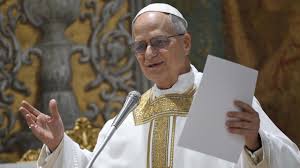
Pope Leo XIV commemorated the first anniversary of the death of his predecessor, Francis, as he addressed worshippers in Equatorial Guinea yesterday.
The pontiff paid tribute to his predecessor’s commitment to the most vulnerable and marginalised groups in society.
As he flew from Angola to Equatorial Guinea, Leo said Francis had given “his witness, his words, and his gestures.
He did so by truly living close to the poorest, to the least, to the sick, to children, and to the elderly.”
In tribute, Leo said, “Let us thank the Lord for the great gift of Francis’ life to the whole Church and to the whole world.
”As Pope, Francis headed the Catholic Church from 2013 to 2025. He died at the age of 88.
The current pope, who was the curia cardinal Robert Francis Prevost, a U.S. and Peruvian citizen, was then elected to succeed him.
Equatorial Guinea is the final stop on the pope’s 11-day tour.
Africa is one of the regions of the world where the Catholic Church is growing.
There are currently around 290 million Catholics living on the continent, and this could rise to more than 700 million by the end of this century, forecasts suggest.
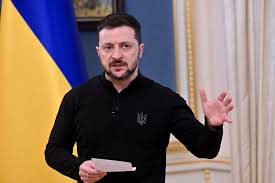
Ukraine’s President Volodymyr Zelensky has condemned a US decision to extend the period during which Russia is allowed to sell oil despite Western sanctions.
The move means countries can purchase Russian oil and petroleum products already loaded on vessels at sea until 16 May.
The US argues that the waiver is meant to ease the energy supply crunch sparked by the US-Israel war with Iran.
But in his remarks on Sunday, Zelensky said “every dollar paid for Russian oil is money for the war” in Ukraine. Widespread sanctions have been in place against Russia since President Vladimir Putin launched his full-scale invasion of its neighbour in February 2022.
The devastating US and Israel attacks against Iran have prompted it to retaliate not only against Israel and US military bases in the Gulf, but also against energy fatalities and other civilian sites across Arab allies of the US in the region.
Additionally, Iran has virtually shut the Strait of Hormuz – the narrow passage where some 20% of the world’s oil and liquefied natural gas (LNG) is usually transported through.
This has led to turmoil in energy markets, with fears that a world recession may ensue if it is not reopened soon.
The US move to ease Russian sanctions on 13 March was widely condemned by Zelensky as well as his European allies.
Extending the waiver on Friday, the US said it wanted “to ensure oil is available to those who need it” as negotiations to end the war “accelerate”.
The Ukrainian leader said Russia had more than 110 tankers from its “shadow fleet” – vessels with obscured ownership designed to help it bypass sanctions – with “over 12 million tons” of oil.
Their sale, he added, would bring $10bn (£7.4bn) to Moscow’s coffers as “a resource that is directly converted into new strikes against Ukraine”.
The Ukrainian leader did not explain what those figures were based on.
But he added that just over the past week, Russia had launched “over 2,360 attack drones, more than 1,320 guided aerial bombs, and nearly 60 missiles of various types at our cities and communities”.
That included the deadliest attack against Ukraine in months on 15 April during which more than 700 drones and missiles were used in multiple waves in one night, killing at least 18 people.
Ukraine has also attacked Russia, particularly focusing on energy facilities.
However, despite ongoing attacks, a stalemate has been reached in the war in Ukraine, with Russia in control of about 20% of Ukrainian territory.
Efforts led by the US to end the war have been put on hold as a result of the war in Iran.



Wike Waives C-of-O Fees for Nigerian Law School
ShareBy Laide Akinboade, Abuja The Minister of the Federal Capital Territory (FCT), Nyesom Wike on Thursday gave an immediate waiver of fees for the Certificate of...
Study Links Alcohol to Higher Cancer Burden in Australia
ShareAustralian researchers on Thursday revealed that alcohol consumption causes a higher proportion of cancers in Australia than previous estimates. According to a statement of...


C’River Debunks False COVID-19 Report, Confirms Only One Case
ShareFrom Ene Asuquo, Calabar The Cross River State Government has refuted a publication by online platforms alleging the discovery of 10 new...


NCC Orders Airtime Credits for Poor Network Service
ShareThe Nigerian Communications Commission (NCC) said telecom operators will compensate subscribers for poor network quality through airtime credits under a strengthened regulatory enforcement framework...


CBN Orders Banks on Monthly Report of Mobile, ATM Transactions
Share The Central Bank of Nigeria has directed banks and other financial institutions to submit monthly reports on failed electronic...


Tinubu Seeks Senate Nod for $516m Sokoto–Badagry Superhighway Loan
ShareBy Eze Okechukwu, Abuja President Bola Tinubu has formally requested the National Assembly’s approval for a $516.3 million external loan...
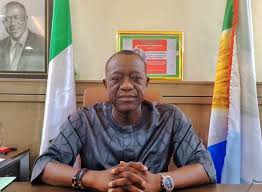

2027: APC Begins Sale of Forms, Adopts Consensus, Direct Primaries
ShareBy David Torough, Abuja The All Progressives Congress (APC) has rolled out a comprehensive and revised timetable for its 2027...
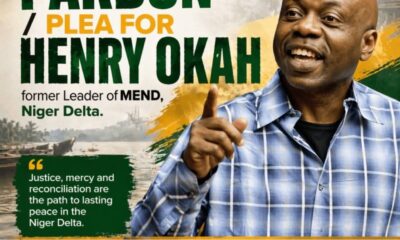

Grant Pardon to Henry Okah, Niger Delta Activists Tells Tinubu
ShareBy Raphael Atuu, Abuja Popular Niger Delta activist Nengi James OON, alongside other youths under the aegis of Advocates for...

NCoS Places Facility on Red Alert over Alleged Attack Threats in Niger
ShareFrom Dan Amasingha, Minna The Nigerian Correctional Service (NCoS) in Niger State has placed all custodial centres across the state on red...


FIBA WWC: D’Tigress Land in Tough Group B with France, Hungary, Korea
ShareNigeria’s D’Tigress will face France, Hungary, and Korea in Group B at the 2026 FIBA Women’s World Cup. The draw set up the D’Tigress for...