
Foreign News
German Navy ‘ll Join Extra NATO Mission in Baltic Sea – Scholz

Chancellor Olaf Scholz, on Tuesday, said that the German Navy would contribute ships to defend infrastructure in the Baltic Sea.
He said this was amid concerns about Russia’s so-called “shadow fleet’’ of oil tankers and recent incidents of damage to cables.
Scholz, who is attending a gathering in Helsinki on Baltic Sea security, said that Germany was prepared to assume responsibility with its own resources in view of the growing threat.
”Of course, this means that we will also ensure security in the Baltic Sea with German ships,’’ he said.
The Russian shadow fleet refers to tankers and other cargo ships, often ageing vessels in poor condition and with opaque ownership structures.
These are structures that Russia use in exporting oil and other commodities in spite of sanctions imposed as a result of its invasion of Ukraine.
Germany’s Foreign Office now counts a total of 79 ships in the shadow fleet.
NATO intends to significantly expand its presence in the Baltic Sea, and is launching a surveillance mission.
The two new NATO members, Finland and Sweden, have already announced that they will be participating with ships.
According to information obtained by dpa, the NATO mission will involve a total of around 10 naval ships.
Estonia already has a naval vessel patrolling the Gulf of Finland.
At the summit in Helsinki, the eight NATO countries on the Baltic Sea Denmark, Estonia, Finland, Germany, Latvia, Lithuania, Poland and Sweden are already seeking to coordinate responses to suspected deliberate acts of damage to infrastructure in the sea.
Scholz described the incidents as a ”very serious matter’’.(dpa/NAN)

President Donald Trump has expanded a US travel ban, barring nationals of five additional countries and people travelling on Palestinian Authority-issued documents from entering the US.
The White House said the restrictions were intended “to protect the security of the United States” and will come into force on 1 January.
Full-entry restrictions will be imposed on people from Burkina Faso, Mali, Niger, South Sudan and Syria as well as Palestinian Authority passport holders.
The administration also moved Laos and Sierra Leone, which were previously subject to partial restrictions, to the full ban list and put partial restrictions on 15 other countries, including Nigeria, Tanzania and Zimbabwe.
Trump, who has tightened immigration controls since returning to the White House in January, said the expanded travel ban was necessary because of what his administration described as failures in screening and vetting systems overseas.
Officials cited high visa overstay rates, unreliable civil records, corruption, terrorist activity and a lack of cooperation in accepting deported nationals.
The announcement followed the arrest of an Afghan national suspected of shooting two National Guard troops over the Thanksgiving weekend, an incident the White House pointed to in highlighting its security concerns.
This is the third time Trump has imposed a travel ban.
During his first term, he introduced a similar order in 2017, which sparked protests and legal challenges at home and abroad. The policy was later upheld by the US Supreme Court.
The White House said the restrictions would remain in place until affected countries show “credible improvements” in identity management, information-sharing and cooperation with US immigration authorities.
A number of exceptions apply and the ban will not affect lawful permanent residents, many existing visa holders, diplomats, or athletes travelling for major sporting events. Officials said case-by-case waivers would also be available where travel is deemed to be in the national interest.
Countries with full restrictions:
Afghanistan, Burkina Faso, Burma, Chad, Equatorial Guinea, Eritrea, Haiti, Iran, Laos, Libya, Mali, Niger, Republic of the Congo, Sierra Leone, Somalia, South Sudan, Sudan, Syria, Yemen
Individuals travelling on Palestinian Authority issued or endorsed travel documents are also subject to a full suspension of entry
Partial restrictions:
Angola, Antigua and Barbuda, Benin, Burundi, Côte d’Ivoire, Cuba, Dominica, Gabon, Gambia, Malawi, Mauritania, Nigeria, Senegal, Tanzania, Togo, Tonga, Venezuela, Zambia, Zimbabwe
Special case:
Turkmenistan (restrictions remain for immigrants but have been lifted for non-immigrant visas).

Thousands of drivers could have speeding fines cancelled after a fault saw some cameras falsely triggered on English A roads and motorways.
National Highways said it had found 2,650 wrongful speed camera activations since 2021 due to a delay between cameras and variable speed signs.
Affected drivers will be contacted by police and be reimbursed for any fines while points will be removed from their licences where needed.
Not all camera activations are enforced, so not all of the wrongful activations will have resulted in fines.
National Highways apologised for the error and chief executive Nick Harris said a fix for the issue has been identified.
“Safety is our number one priority.
All drivers should continue observing the posted speed limits as normal. Anyone who has been impacted will be contacted by the relevant police force,” he said.National Highways, which runs England’s motorways, blamed an “anomaly” in how variable speed cameras were interacting with signs on some A roads and motorways.
It meant a delay of around 10 seconds between cameras and relevant variable speed signs, meaning some drivers were incorrectly identified as speeding after the limit had changed.
The body said the 2,650 incidents since 2021 represent fewer than two each day, compared with more than 6 million activations of speed cameras on the affected roads over the same period.
It said the anomaly has impacted 10% of England’s motorways and major A roads.
The fault affects all of the variable speed cameras on smart motorways, and two on the A14 which links the north and the West Midlands to East Anglia.
It is working with police to check activations and promised nobody will now be wrongly prosecuted.
Meanwhile, police forces have stopped issuing fines from variable cameras until they have confidence in their accuracy.
A Department for Transport spokesperson said: “We apologise to anyone who has been affected. Safety was never compromised, and we are working with policing to ensure nobody is incorrectly prosecuted in future.
“Enforcement is still in place, and the public can remain confident that only motorists who break the rules will be penalised.”

A French court has sentenced a former rebel leader and politician from the Democratic Republic of Congo to 30 years in jail after finding him guilty of complicity in crimes against humanity more than two decades ago.
Roger Lumbala headed a rebel movement backed by neighbouring Uganda accused of committing atrocities during a period known as the Second Congo War.
The judge said the 67-year-old was found guilty of ordering or aiding and abetting torture and inhumane crimes, summary executions, rape constituting torture, sexual slavery, forced labour and theft.
Lumbala, who was living in France when he was arrested nearly five years ago, has refused to accept the legitimacy of the court in Paris.
He did not attend the trial, which began last month, though he was in the dock to hear the verdict on Monday.
Lumbala also served as a minister in DR Congo’s transitional government from 2003 to 2005 and later as a member of parliament.
Several years later the Congolese government issued an arrest warrant for him over his alleged support for the M23, a rebel group currently active in the eastern DR Congo, prompting him to flee to France.
The Second Congo War, which raged from 1998-2003, involved nine countries, numerous rebel groups and led to the estimated deaths of between two and five million people.
At the time Lumbala led the Rally of Congolese Democrats and Nationalists (RCD-N), which allegedly carried out atrocities during a campaign between 2002 and 2003 called “Erase the Slate”.
The operation targeted members of the Nande and Bambuti ethnic groups in the north-eastern provinces of Ituri and North Kivu who were accused of supporting a rival militia.
A UN team that investigated in its aftermath said it was characterised by “premeditated operations using looting, rape and summary execution as tools of warfare”.
Lumbala’s case was prosecuted under the principle of “universal jurisdiction”, which allows French courts to seek justice related to crimes against humanity committed abroad.
Five non-governmental organisations, including Trial International and the Clooney Foundation for Justice, pooled their expertise to participate in the trial, helping support survivors to testify and requesting expert analyses.
Trial International, a Geneva-based justice campaign group, said 65 survivors, witnesses and experts testified before the court about the Erase the Slate operation.
After the verdict, it issued a statement from two of the survivors – David Karamay Kasereka and Pisco Sirikivuya Paluku.
“We were scared but came all the way here because the truth matters. For years, no one heard us,” they said
“We would have preferred to face Roger Lumbala, to look him in the eyes. But this verdict marks a first step toward reclaiming pieces of ourselves that were taken from us.”
During the trial Mr Kasereka, 41, described how his father and neighbours were tortured and killed by Lumbala’s men.
Paluku, who is a now 50-year-old nurse, told of how the rebels robbed and injured him, killed his uncle and raped his friend’s wife.
“We hope that this will serve as a lesson to those who continue to bring grief to the people of Congo, and particularly to Ituri,” he told the Reuters news agency.
Lumbala’s legal team, which has 10 days to file an appeal, called the sentence excessive. Prosecutors had sought a life sentence.
Eastern DR Congo, which is rich in minerals, has been wracked by conflict for more than 30 years, since the 1994 Rwandan genocide. Several peace deals going back to the 1990s have collapsed.
Over the years a number of other militia leaders, including Thomas Lubanga, Germain Katanga and Bosco Ntaganda, have been put on trial and convicted by the International Criminal Court (ICC) for abuses committed in the east of DR Congo.
Human rights groups welcomed Monday’s verdict as a milestone for further accountability in the long-running conflict there.
“This verdict is historic. For the first time, a national court has dared to confront the atrocities of the Second Congo War and show that justice can break through even after decades of impunity,” Trial International’s Daniele Perissi said in a statement.

Nigeria Clinches Bronze in Judo at 4th African Youth Games
ShareTeam Nigeria clinched a bronze medal in judo at the ongoing 4th African Youth Games after winning the 63kg category bout against Zimbabwe. The...

NCDMB Set to Attain 100 Per Cent Local Content in Africa
ShareBy Eddy Ochigbo, Abuja The Nigerian Content Development Management Board (NCDMB) has reaffirmed its determination to increase the current from...


Trump Expands US Travel Ban to Five More Countries
SharePresident Donald Trump has expanded a US travel ban, barring nationals of five additional countries and people travelling on Palestinian Authority-issued documents from entering the US. The White...


Farouk Ahmed, Gbenga Komolafe Resign after Dangote Petition
ShareBy Eze Okechukwu, Abuja President Bola Tinubu has nominated new chief executives for Nigeria’s two foremost petroleum regulatory agencies following the resignation...

NLC Stages Nationwide Strike over Insecurity
ShareLabour Takes Nationwide Protest to Streets over Insecurity The Nigeria Labour Congress (NLC) yesterday led a nationwide protest across major...
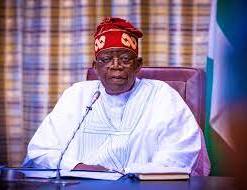

Presidency Transmits N43.5trn 2026 Appropriation Bill to Reps
SharePresident Bola Tinubu yesterday, transmitted the appropriation (Repeal and Re-enactment Bill 2024/2025 bill to the House of Representatives for consideration and expected approval...

SMEDAN Unveils MSMEs New Policy in 2026, Targets Funding Expansion
ShareThe Small and Medium Enterprises Development Agency of Nigeria (SMEDAN) said it will deepen business formalisation, expand access to affordable financing and unveil a new national MSMEs policy in 2026....


NCDMB set to Attain 100% Local Content in Africa
ShareBy Eddy Ochigbo The Nigerian Content Development Management Board (NCDMB) has reaffirmed its determination to increase the current from 56%...
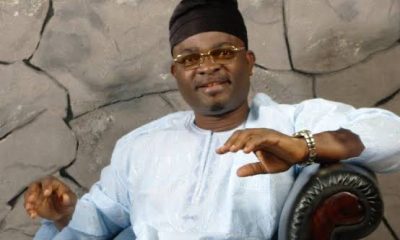

The Man Rotimi Makinde: A True Progressive by All Standards
ShareBy Kolapo Ogundare It is impressive to note that many well-meaning Nigerians are now coming out, recounting several good deeds...
FG, NBS Launch Nationwide MICS7 Survey
ShareFrom Francis Sadhere, Delta The Federal Government of Nigeria, through the National Bureau of Statistics (NBS), has officially launched the...