
Foreign News
Ghanaian Lawmaker Seeks ECOWAS Legislation to End Female Genital Mutilation, Child Marriage


Hon. Laadi Ayamba, a member of the ECOWAS Parliament from Ghana has urged countries of the sub-regional bloc to adopt and implement a law that will end Female Genital Mutilation (FGM) and child marriage.
Ayamba made the call while speaking with newsmen on the sideline of the ongoing ECOWAS Parliament delocalised meeting in Monrovia, the Liberian capital on Thursday.
According to her, female genital mutilation and child marriage are some of the oldest cultural practices that violate the right of the girl-child.
She said though Ghana had already criminalised the mutilation of the female genital, some parents still took their children to neighbouring countries to get the procedure done.
She said the trend could be stopped if all ECOWAS member states were to agree to make the practice a punishable offense under their national laws.
“My constituency is one of the places where the prevalence rate of female genital mutilation is highest. And after the President brought in the issue of imprisonment for anyone found culpable, those who practiced it started crossing the borders again to neighbouring countries.
“They go to countries such as Burkina Faso and Togo to do this thing. When you realise that the girl concerned is not around, you investigate. And when you discover that such person has been sent to a certain place for her genitals to be mutilated, you make a report.
“There is no particular tribe that has been able to come out and tell us that there is economic sense in what they were doing or that there are benefits a girl stands to gain.
“The only thing we come to hear is that they are doing it for the girl-child to be preserved for her to-be husband and to show that she is brave.
“I am saying that we should ensure that we do a regional or a cross country linkage to make sure that if in Ghana there is a law against the practice, in Togo it should be the same and in Burkina Faso too.
“All ECOWAS countries should have the same laws against female genital mutilation so that if you are arrested in Ghana, you can still be arrested in any of the other countries in the sub-region for breaching the same law.
“It is when we are able to do this that as a region, we can end female genital mutilation with one voice,” Ayamba said.
She said the time had come for ECOWAS to embark on an awareness campaign to communities to sensitise parents to the dangers of female genital mutilation and child marriage.
Ayamba also called for a law to stop child marriage, which she identified as another impediment to the development and empowerment of the girl-child.




By Eze Okechukwu, Abuja
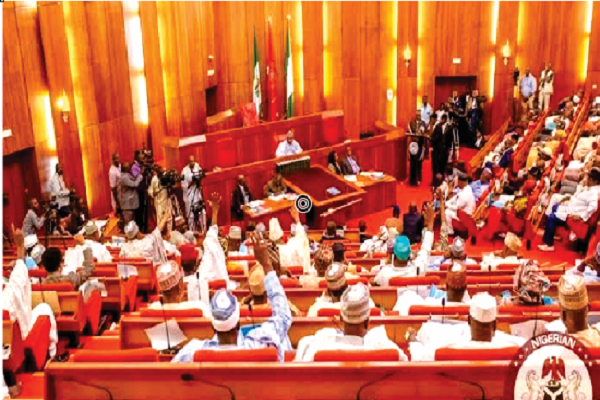
The Senate yesterday ordered mandatory health screening for every international passenger arriving Nigeria airports, seaports, land borders as Ebola resurfaces in the Democratic Republic of Congo with a scare case reported in the FCT.
The resolution followed an urgent motion by Senator Francis Fadahunsi, who warned that with Lassa fever already ravaging states, Nigeria cannot afford another outbreak.
“Protecting our entry points is far cheaper than managing Ebola,” Fadahunsi told the chamber.
Lawmakers insisted screening must be total and indiscriminate — no exemptions based on nationality or departure country because infected travellers can transit through safe-listed nations.
Senator Diket Plang raised the stakes further, demanding immediate funding for NCDC and Port Health Services, including release of withheld funds and emergency budget.
Senate President Godswill Akpabio said the Federal Government has started releasing Ebola response funds but ordered relevant committees to track every kobo.
“Ascertain whether the funds were released and judiciously utilised. Any outstanding debt must be released by the Finance Ministry without delay,” Akpabio directed.
At least 72 civilians who had been prospecting for gold in a border region of Sudan have been killed in air strikes, a regional rights group said.
Emergency Lawyers, based in the Sudanese capital, Khartoum, said jets targeted the so-called artisanal miners at a popular gold mining site on Saturday.
Neither the Egyptian government nor the de facto Sudanese authorities have so far commented.
Cairo has previously faced accusations of deadly strikes on gold prospectors as part of a crackdown on illicit activity along its southern border.
Emergency Lawyers noted the previous alleged attacks and said they represented not only a violation of Sudan’s sovereign territory but demonstrated the government’s lack of control over the region.
“The deliberate targeting of unarmed civilians violates international humanitarian law and the right to life,” it said in a statement on Sunday. “These acts may constitute war crimes.”
It noted that its death toll was provisional and could rise.
The Paris-based Sudan Tribune reported that the death toll could far exceed the number reported by Emergency Lawyers, citing a survivor of Saturday’s attack who said many more people had been injured.
Eyewitnesses said the attack began around 06:00 local time (04:00 GMT), with the aircraft firing more than five missiles directly at the miners’ camps, destroying them and excavation pits with people still inside, the newspaper wrote.
The Sudan Tribune reported claims in June that Egyptian forces had used drones and artillery to target artisanal mining sites in the same region, killing several, after sporadic incidents of Egyptian border guards of burning equipment, torching temporary shelters, and firing live ammunition to disperse mine workers.
Days later, Egypt’s border agency announced that it and the military had begun a sweeping security campaign along the border to foil illegal migration, drug smuggling and illegal mining.
At the same time, Sudan’s de facto leader announced an investigation into the alleged strikes, which were said to have killed dozens.
Gold lies at the core of the border tensions.
Sudan’s ongoing civil war has led to a surge in artisanal mining – and often risky practice conducted by civilians with rudimentary tools and without official permission – particularly in remote areas near its borders.
Gold-rich areas lie along porous borders in terrain historically associated with cross-border smuggling routes, with artisanally mined gold potentially feeding into those channels.
Egypt’s border force said in June that it had seized 86 tonnes of gold ore along with amateur prospecting equipment.
Artisanal mining has also reportedly continued in Sudan’s conflict zones and smuggled gold may be a source of income for armed insurgent groups.
This has raised concerns of illicit Sudanese gold undermining the legitimate Egyptian gold market.
Several German fighter jets will take part in the Northern Atlantic Treaty Organisation (NATO) annual nuclear defence exercise this week as troops from 17 countries take part in the Steadfast Noon drill.
The German Air Force said three Tornado jets will take part in the exercise hosted by Italy, which starts Tuesday and runs for about a week and a half.
The jets are normally stationed in Büchel in the German state of Rhineland-Palatinate.
NATO has not revealed the exercise scenario but said its scale would be comparable to last year’s drill, which involved around 2,000 personnel and more than 70 aircraft.
Last week, NATO’s head of nuclear policy, Nassima Barrows, said the exercise was designed to demonstrate the alliance’s readiness and ability to defend its territory.
No real nuclear weapons will be used, she added.
NATO said the exercise was not linked to current events or directed at any specific country.
Military experts say the drills, held regularly in October, include practising the safe transport of weapons from underground storage facilities to aircraft and mounting them on fighter jets.
Only practice bombs without real nuclear warheads are used during the drills.




West Africa: How WAHO Successfully Harmonized Procedure Manuals for Health Disciplines and Professions
ShareBy David Torough After three days of serious brain-storming sessions in Abuja, the West African Health Organization (WAHO), has successfully...


2027: CAN Seeks Return of Sacked Traditional Rulers in Kaduna
ShareFrom Shabanyan Kantiok, Kaduna The Christian Association of Nigeria in Chikun Local Government Area of Kaduna State has urged Christian...


OPay Opens New Kano Office, Strengthens Commitment to Nigeria’s Financial Inclusion
ShareOPay, Nigeria’s leading digital bank, has opened a new office in Kano State, strengthening its presence in Nigeria and bringing...

Rigging Years Before Elections: Why Tinubu, Parliament Favours Staggered Balloting
Share Silhouette of Donald Andoor e‐mail; doandoor@gmail.com There is a growing need for Nigerians to look beyond the ballot box and...
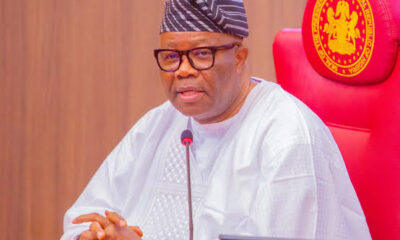

Akpabio Congratulates Nigeria’s Golden Girls, Flamingos
ShareThe President of the Senate, Godswill Akpabio has sent a hearty congratulations to the Nigerian Under-17 Women’s National Team on...
Customs Generates N1.4tn Revenue in Two Months
ShareBy Julius Tambaya, Abuja The Nigeria Customs Service (NCS) generated a total of N1.419 trillion in revenue between September and...

ADC Crisis: Court Battle Threatens Opposition’s 2027 Game Plan
ShareBy David Torough, Abuja The crisis rocking the African Democratic Congress (ADC) has intensified following the Federal High Court judgment...


FG Secures $200m World Bank Support to Boost Aquaculture
ShareBy David Torough, Abuja Nigeria’s annual fish supply deficit has exceeded 2.2 million tonnes, forcing the country to spend close...
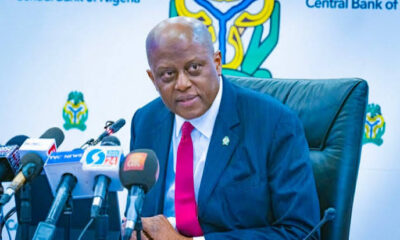

CBN Introduces New Regulatory Framework for Non-Security VASPs, others
ShareBy Tony Obiechina, Abuja The Central Bank of Nigeria (CBN) has introduced a comprehensive regulatory framework for non-security virtual assets...
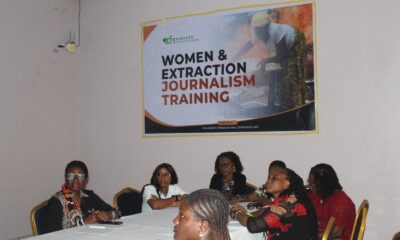

Group tasks Women Journalists on Reporting Impact of Coal Mining in Enugu
ShareFrom Sylvia Udegbunam, Enugu A non-governmental organisation, Renevlyn Development Initiatives, has called on women journalists in Enugu State to intensify...