
NEWS
God Told me not to Contest Election in 2027 – Ortom

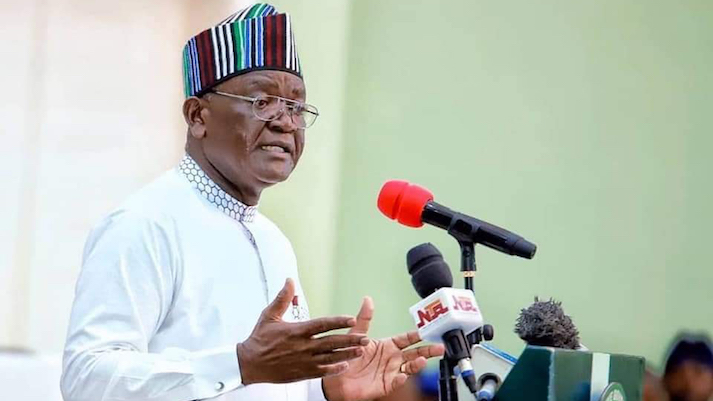
The immediate past governor of Benue, Chief Samuel Ortom, has said that God told him not to contest any election in 2027.Ortom made the disclosure on Tuesday in Makurdi when People’s Democracy Party (PDP) G-14 members paid him a courtesy visit.Report says that G-14 members are elders of the PDP in the 14 Tiv speaking local government areas in Benue.
The former governor said that he had no option but to respect God’s wish. He admitted that he failed to consult God before joining the 2023 election, hence his defeat.Ortom stated that the PDP was determined to take over the Benue Government House in 2027.“I’m not contesting the 2027 election. I knew why I lost the election in 2023. I didn’t consult God. My people purchased the forms for me, and I accepted them without consulting God.“God has revealed everything to me. He has asked me to wait for him,” he said.Ortom further disclosed that while serving the state as governor, he made far-reaching sacrifices, including abandoning his family and friends at some point for state matters.The former governor promised to continue to support the party, adding that no one’s ambition should be above the interest of the party.According to him, after he left office, he wanted to go on sabbatical, but the elders objected.Ortom said nobody has the powers to disband the revered PDP G-14 group, not even him as the leader of the party.“As a leader of the party in the state, I lack the powers to dissolve the group. So nobody can disband this group.“G-14 is the elders forum of the PDP in Benue. If anything must happen, I must know first because I am the leader,” he said.On the forthcoming congresses, he said, the national secretariat had already approved the ward and local government congresses of Benue, adding that the state congress would hold on October 3rd.He said he had already spoken to Sen. Gabriel Suswam and Sen. Abba Moro, and they agreed to encourage consensus as much as they could because they were in opposition.The Chairman of PDP G-14, Dr Laha Dzever, declared full support for the Ortom-led leadership.Dzever said that they came to again pledge their support for his leadership and promised to work for the peace and unity of the party.The chairman stated that in politics there must be occasional disagreements, stressing that the current internal squabble in the party would only make it stronger.He commended Ortom for his relentless efforts in making sure that the PDP remained a major and united party in the state.On their purported dissolution, Dzever said that nobody selected the group, which was formed in 2015 as part of our efforts to ensure that the party did not collapse after losing elections.“The only person that can disband us is the leader of the party in the state, and that is Chief Ortom. You alone can only disband what you have formed.” He said. (NAN)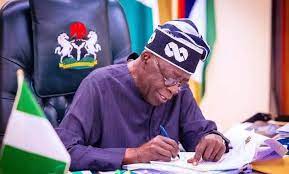
The Federal Executive Council (FEC) on Wednesday approved an amendment to the National Mental Health Act to decriminalise attempted suicide in Nigeria.
The amendment, which will be transmitted to the National Assembly for enactment, seeks to shift the treatment of persons who attempt suicide from punishment to care, protection and support.
Minister of Health and Social Welfare, Prof.
Ali Pate, disclosed this while briefing State House correspondents after the FEC meeting presided over by President Bola Tinubu in Abuja.Pate said attempted suicide remained criminalised under colonial-era provisions of the Criminal Code Act and Penal Code, in spite of the National Mental Health Act 2021 providing supportive care for people at risk of self-harm.
“As you all know, suicide is a major public health concern in Nigeria, as well as several other countries.
“According to the World Health Organisation, it is responsible for more than 7,000 deaths annually, with an estimated 300,000 suicide attempts across the country each year,” he said.
He said the existing legal framework discouraged help-seeking behaviour and created inconsistency with the National Mental Health Act 2021, which provides supportive care, protection and treatment for people at risk of self-harm.
“The idea is attempted suicide is not a crime. This legal approach discourages help-seeking behaviours and also conflicts with our national mental health policy and the National Mental Health Act 2021, which provides for supportive care, protection and treatment for individuals at risk of self-harm,” he said.
Pate said the amendment followed consultations among the Ministries of Health and Social Welfare and Justice, mental health advocates, the Attorney-General’s Office, a task force and the National Assembly.
“A task force had been set up following a resolution of the House of Representatives, which is supportive of this, and together with the Ministry of Health and Social Welfare and Justice, worked towards an amendment of the Mental Health Act,” he said.
The minister said FEC also approved the National Centre for Oral Health Establishment Bill 2026 for transmission to the National Assembly, to strengthen oral health services, research and training.
He said the proposed centre would provide a national referral and research institution while establishing a comprehensive legal and institutional framework for addressing oral diseases and related conditions.
Pate said FEC further approved major infrastructure upgrades at the National Hospital, Abuja, including an administrative block for N18.74 million, modular clinics and theatre complex for N64.92 billion, a high-end wing for N103 billion and a Neuroscience Institute for N69 billion.
“In line with the President’s direction to boldly transform this country through infrastructural upgrades and equipment for the health sector, the Council has also today approved contracts to be awarded.”
He said the Neuroscience Institute would provide dedicated infrastructure for neurosurgical, radiological, interventional and rehabilitative services for patients suffering from stroke, brain tumours and other neurological conditions.
“Ultimately, quality healthcare is not cheap. To have the healthcare system we need, Nigeria has to invest in it.”
The Council also approved N302.3 billion for the design, construction, furnishing, equipment, supervision and commissioning of a National Institute for Cancer Research and Treatment (NICRAT) Centre, with a completion period of 36 months.
Pate said the project would provide a flagship institution for cancer research, treatment, innovation and capacity building, noting that three upgraded cancer centres in Katsina, Benin and Enugu had already been completed and launched.
“These two major investments are really modernising the infrastructure landscape for the health sector, which will serve Nigerians and hopefully provide services that will make it further less likely for Nigerians to have to travel long distances to get the care that they need,” he explained.
He said the projects were funded through appropriations to the relevant agencies, adding that due process and competitive procurement procedures were followed, with the Bureau of Public Procurement providing the necessary clearances.
He added that improved health infrastructure would also create better working conditions for Nigerian health professionals and reduce the need for medical professionals to seek opportunities abroad.
Pate said the investments were part of the Federal Government’s broader effort to strengthen healthcare infrastructure and improve access to quality medical services across the country.
President Bola Tinubu has directed that liquid funds recovered by the Economic and Financial Crimes Commission (EFCC) be channeled to the Nigerian Education Loan Fund (NELFund).
The Minister of Education, Dr Tunji Alausa, disclosed this on Wednesday while briefing State House correspondents after the Federal Executive Council (FEC) meeting presided over by Tinubu in Abuja.
Alausa said the President also directed that unclaimed dividends from the Capital Market Trust Fund and Dormant Account Trust Fund be channeled to NELFund.
He, however, clarified that the directive applied only to liquid, unencumbered funds that were not subject to legal disputes or other restrictions.
“The President, in his benevolence, has now directed that all funds recovered by the Economic and Financial Crimes Commission be diverted to NELFund to continue to support its funding,” Alausa said.
He said the President had also directed the Ministers of Finance and Justice, the Debt Management Office and other relevant agencies to work with the Education Ministry on the legal and operational framework.
According to him, the Justice Minister, Lateef Fagbemi will review the laws establishing the two trust funds to determine how the unclaimed dividends can legally be transferred to NELFund.
He said the Attorney-General would also work with the EFCC Chairman to identify eligible liquid funds recovered by the commission for transfer to NELFund.
“Note, and the President was very clear, not seized properties, or recovered looted funds, but liquid funds, from the EFCC will now be transferred to NELFund,” the minister said.
Alausa said the decision would strengthen NELFund’s financial capacity as demand for student loans continued to grow, adding that more than 1.2 million Nigerian students had benefited from the scheme.
He said NELFund had also disbursed more than N93 billion in stipends to students in federal and state public institutions and over N250 billion in institutional fees.
The minister said the development demonstrated Tinubu’s commitment to fulfilling his campaign promise of expanding access to quality higher education through sustainable student-loan financing.
“The education of our children cannot wait, is of utmost importance to him, and he will do anything and everything to protect the future of every single Nigerian child, every single Nigerian student,” he said.
Alausa also disclosed that FEC approved the transformation of the Suleja Academy into the Nigeria Academy for the Gifted and Talented, to provide specialised support for exceptionally gifted Nigerian children.
He said the academy would operate autonomously, with its own governing structure and diversified funding sources, including government appropriation, endowment and donations.
“We need to do this because we have to look for every single genius in this country and bring them in, nurture them, and let them help create the Nigeria of tomorrow,” he said.
The minister said FEC also approved the augmentation of the existing contract for completion of the National Library of Nigeria, which had been abandoned for about 18 years.
He said construction of the library began in April 2006, with a projected two-year completion period, but work stopped in October 2008.
Alausa noted that funds had been sourced from the Tertiary Education Trust Fund (TETFund), while additional support had been mobilised from the First Lady, Oluremi Tinubu, to enable work to resume on the project.
He also disclosed that FEC approved the deployment of an entrepreneurship, innovation and business incubation certification programme in 14 federal universities.
According to him, the technology-driven programme will equip students with entrepreneurship, innovation, enterprise development and digital skills, alongside mentorship and incubation support.
He said the programme, which had been tested at the University of Lagos, was designed to transform students from job seekers into job creators and innovators.
The 14 universities include Ahmadu Bello University, Bayero University Kano, Nnamdi Azikiwe University, Obafemi Awolowo University, University of Abuja, and University of Benin.
Others are University of Ibadan, University of Ilorin, University of Jos, University of Lagos, University of Maiduguri, University of Nigeria Nsukka, University of Port Harcourt and Usmanu Danfodiyo University, Sokoto.
From Joseph Amedu, Lokoja
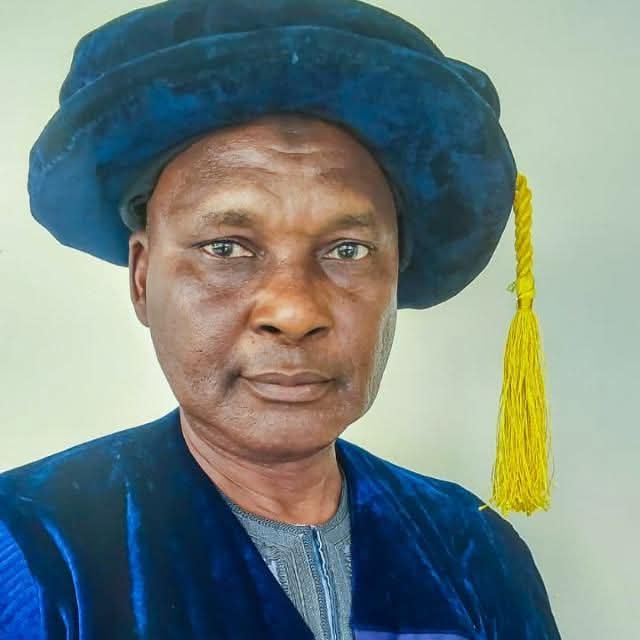
A Professor of History at the Federal University, Lokoja, Suberu Ochi Abdulrahaman, has raised the alarm over the prevailing political illegality bedeviling Nigeria insisting that leaders in the system should endeavor to obey the laws of the land and do the right thing that would move the nation forward.
Professor Abdulrahaman made the observation while delivering the 45th Inaugural Lecture Series of the University at its Felele Campus, in Lokoja, on Wednesday.
Professor Abdulrahaman in his Lecture titled, Persisting Illegalities in Nigeria’s Political Space: Who is to Blame? A Historical Discourse on Power, Institution and Democratic Governance, noted that political illegality which ranges from electoral fraud, arbitrary use of executive power for manipulation and intimidation to sponsorship of thuggery and violence in the system, amongst others, can only be overcome if leaders in governance work in accordance with the nation’s constitution.
According to the Inaugural lecturer “The resistance of political illegalities is neither accidental nor the responsibility of a single institution or generation.
“It is the cumulative product of colonial administrative legacies, prolonged military
authoritarianism, weak institutional development, political opportunism, inadequate civic engagement, and failures of ethical
Leadership.
“History teaches us that no nation develops sustainably when public institutions are weakened by impunity, when constitutional rules are subordinated to personal interests, or when political power is exercised without accountability.
“Equally, history reminds us that societies are capable of renewal when they choose to strengthen institutions rather than personalities, uphold the rule of law rather than arbitrary power, and promote justice above expediency.
“Accordingly, the challenge before Nigeria is not simply to conduct periodic elections or enact additional legislation.
The greater challenge is to cultivate a democratic culture in which constitutionalism becomes habitual, public office is regarded as a sacred trust, institutions command public confidence, and citizens
actively defend democratic values.
“Political leaders must recognise that authority derives its legitimacy not merely from electoral victory but from faithful obedience to the Constitution and unwavering commitment to the public good.
“Institutions must be empowered to function independently, impartially, and professionally.
” Citizens must reject every form of political illegality, whether manifested through vote buying, political
violence, corruption, or indifference to injustice”
The Vice Chancellor of the University, Professor Gbenga Solomon Ibileye in his welcome address, disclosed that his administration will continue to give Inaugural Lecture Series topmost priority as it offers opportunity for where the public is highly equipped with relevant knowledge on contemporary issues affecting the society.
He described Professor Suberu Abdulrahaman as an accomplished historian who has made his mark in his academic field.



FG Moves to Decriminalise Attempted Suicide
ShareThe Federal Executive Council (FEC) on Wednesday approved an amendment to the National Mental Health Act to decriminalise attempted suicide...

Tinubu Orders Recovered EFCC Funds, Unclaimed Dividends to NELFund
SharePresident Bola Tinubu has directed that liquid funds recovered by the Economic and Financial Crimes Commission (EFCC) be channeled to...
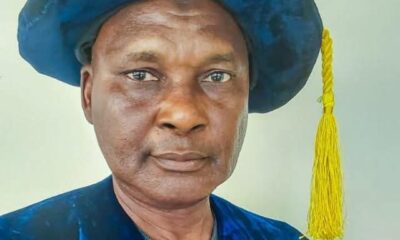

Don Raises the Alarm Over Political Illegality in Nigeria, Proffers Solutions
ShareFrom Joseph Amedu, Lokoja A Professor of History at the Federal University, Lokoja, Suberu Ochi Abdulrahaman, has raised the alarm...


FG Releases Emergency Medical Numbers, Urges Nigerians to Dial 112
ShareThe Federal Government has urged Nigerians to dial 112 during emergencies requiring urgent medical assistance, while releasing state emergency call...


Sanwo-Olu Awards LASU best Graduates N20m Each
ShareLagos State Governor, Babajide Sanwo-Olu, on Wednesday awarded N20 million each to LASU’s best graduating students for the 2024-2025 and...
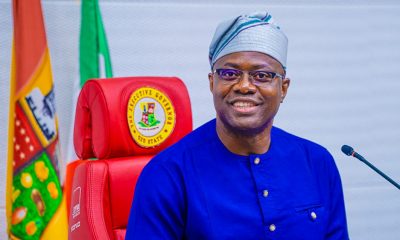

Oyo Declares Thursday Work-free for Isese Day
ShareOyo State Governor, Seyi Makinde has declared Thursday a work-free day in commemoration of Isese Day, a celebration of the...

ICPC Begins Tracking of N1bn FG Projects in Osun
ShareIndependent Corrupt Practices and Other Related Offences Commission (ICPC) said it has commenced the tracking of more than N1 billion...
NPC Launches 4,011 Centres for Nationwide Digital Birth, Death Registration
ShareThe National Population Commission (NPC) has established 4,011 functional registration centres across the country as part of efforts to bring...
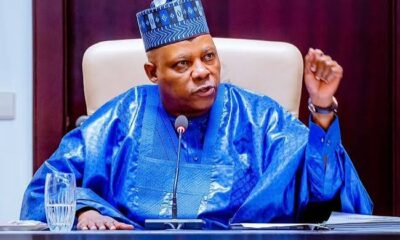

Nigeria Can’t Build $1trn Economy without Women’s Participation – Shettima
ShareVice-President Kashim Shettima says Nigeria’s ambition to build a one-trillion-dollar economy cannot be achieved without the full economic participation of...


NNPC Urges PENGASSAN to Strengthen Regulatory Discipline in Oil Sector
ShareThe Group Chief Executive Officer (GCEO), Nigerian National Petroleum Company (NNPC) Ltd., Bashir Ojulari, has urged PENGASSAN to strengthen regulatory...