
BUSINESS
Google Warns against Using AI as Shortcut to Learning


Google on Tuesday warned against using Artificial Intelligence (AI) as a shortcut to learning, urging students to harness the technology to strengthen critical thinking, creativity and problem-solving skills.
Google’s Vice President, Chris Phillips, gave the warning at a virtual roundtable on Google’s new AI-powered learning tools for students and teachers.
Phillips, also the General Manager, Education, said that AI was reshaping education but teachers must remain at the centre of the learning process.
He said that Google’s global study with Ipsos showed that learning had become the top reason people turned to AI.
According to him, 86 per cent of teachers want to use AI in their classrooms, but only 17 per cent feel adequately trained to use it effectively.
He said that Google was addressing the gap through its free Google Educator Series, offering short, practical AI training to help teachers build confidence and skills.
Phillips said that AI tools were already helping educators save up to 10 hours weekly on administrative tasks, giving them more time to engage with students.
He said that Google was also expanding teacher-led AI features in Google Classroom to enable educators to create assignments, guide students and monitor their progress.
The vice president said that AI should support teachers rather than replace them, adding that the technology should strengthen human connection between teachers and students.
He said that the future of AI in education should be built around empowering teachers and students, rather than replacing human judgment.
Phillips said: “The real breakthrough lies in helping people unlock their own potential.”
Google’s Head of Learning Science, Julia Wilcowski, said that meaningful learning required effort, including engaging with content, recalling information, practising, reflecting and applying knowledge.
Wilcowski said that Google was designing its AI education tools around learning science principles to ensure that students were guided towards discovering solutions rather than simply receiving answers.
She said that an eight-week trial in Sierra Leone showed significant improvement in mathematics among students whose teachers incorporated Google’s guided learning tool into lessons.
According to her, the improvement is equivalent to between 1.8 and 2.5 years of typical academic progress.
She said that teachers in Italy who used Gemini to generate learning materials recorded improved learning outcomes, with more than 80 per cent of students demonstrating the skills targeted in their lessons.
Wilcowski also highlighted the importance of fact-checking and critical thinking because AI systems could still produce inaccurate information, known as hallucinations.
Google’s Director of Gemini for Education, Marta McAlister, said that the company was introducing new learning features in Gemini and Search, to help students organize their studies and learn at their own pace.
McAlister said that students could upload syllabuses, lecture notes and study guides into Gemini to create personalised study notebooks, diagnostic quizzes, bite-sized lessons and progress tracking.
She said that Gemini would also provide interactive quizzes, visualisations, voice-based learning and step-by-step assistance for complex problems.
According to her, Google Lens will soon allow students to use their phone cameras to analyse difficult diagrams and mathematics problems, identify mistakes and receive step-by-step guidance.
She said that Google was offering Google AI Plus free for 12 months to eligible students aged 18 and above in more than 140 countries, including countries in Africa.
McAlister said that the offer would provide students with access to advanced AI learning tools, unlimited file uploads and 400GB of storage.
Google officials, however, emphasised that students and teachers must continue to verify AI-generated information and understand how answers are produced. (NAN)

The Gbongan Unit Command of the Federal Road Safety Corps (FRSC) in Osun recorded a 25 per cent reduction in road crashes between January and August, compared with the same period in 2025.
The Unit Commander, Dr.
Jude Odinfono, disclosed this in an interview on Tuesday in Gbongan, Osun.Odinfono also said the unit recorded an 83.
3 per cent reduction in fatalities and a 40 per cent reduction in injuries during the period under review.He said the unit conducted 468 patrol operations during the period, including eight Special Intervention Patrols carried out in collaboration with the Joint Task Force.
According to him, the operations led to the arrest of 3,166 offenders and the booking of 3,226 offences involving various traffic violations.
Odinfono said four reorientation programmes were also conducted, involving 118 offenders and other road users.
“The unit introduced an Offenders’ Reorientation Programme as part of efforts to complement the vision of the Corps Marshal.
“The programme, conducted with transportation stakeholders, exposes selected offenders to road traffic accident videos and pictorial materials showing the consequences of dangerous driving and other traffic violations,” he said.
Odinfono added that the initiative was aimed at helping offenders understand the consequences of unsafe road practices and encouraging them to adopt safer attitudes.
He explained that the reorientation activities formed part of 168 public education programmes conducted by the command, including roadside campaigns, motor park sensitisation and community engagements.
Odinfono, however, urged personnel to remain friendly, firm and fair in the discharge of their duties. (NAN)

The Organization of Petroleum Exporting Countries (OPEC) may most likely be going to pause its output increases for the fourth quarter of this year as analysts expect that the global oil body still has another layer of production cuts in place, covering most members of the 21-country group until the end of 2026.
According to analysts before the group decides how to unwind the cuts and return production to the market, it needs to review members’ oil production capacity to set 2027 output baselines, which form the basis for quotas.
This debate will likely happen later in 2026 and hence OPEC+ is likely to hold on to output increases in the last quarter, sources earlier told Reuters.
Only the seven OPEC+ members who met on Sunday, plus the United Arab Emirates until it left OPEC in May, have been involved in monthly output decisions in recent years.
The seven countries will hold their next meeting on October 4.
Meanwhile, the OPEC+ kept its oil output policy unchanged for October, it said in a statement, as the producer group needs to agree new quotas before deciding its next output steps.
The meeting of seven core OPEC+ members Saudi Arabia, Russia, Iraq, Kuwait, Algeria, Kazakhstan and Oman — comes as the Iran war continues to disrupt oil exports through the Strait of Hormuz, limiting OPEC+’s influence over prices and market share.
In August, OPEC+ agreed its production boost for September, completing a phased rollback of a 1.65 million-barrel-per-day supply cut first agreed in 2023. Despite the agreed production increases, the group made up of the Organization of the Petroleum Exporting Countries and its allies, including Russia, still produces far below its targets because of the war.
“OPEC+ currently has very limited power over the physical oil market,” said Jorge Leon of Rystad Energy. “The group can change production targets on paper, but it cannot guarantee that those barrels will be produced or actually reach the market.”
“The focus now shifts away from monthly production adjustments and towards the much more consequential debate over 2027.”
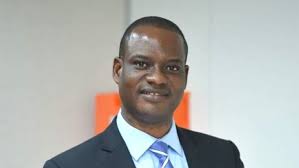
President Bola Tinubu has called on the financial services industry to translate their capital into productive investment and employment opportunities for economic growth and development.
Tinubu said this at the 19th Chartered Institute of Bankers of Nigeria (CIBN) Annual Banking and Finance Conference in Abuja on Tuesday.
The President was represented by Taiwo Oyedele, the Minister of Finance and Coordinating Minister of the Economy.
He said that resilience of the financial system would not be possible where businesses do not have access to affordable credit.
He listed factors that would drive resilience in the financial systems to include growth facilitation, inclusion, technology and long term capital.
Tinubu said that various innovations like Artificial Intelligence (AI), digital and open banking, among others, had impacted the financial system.
The President said that the government would continue to create space for more private sector credit.
”No economy can be more resilient than its financial system,” he said.
The Governor of the Central Bank of Nigeria (CBN), Olayemi Cardoso, said that the benefits of the monetary and fiscal policies reforms would soon start trickling down to impact the common man and their standard of living.
The governor, represented by Philip Ikeazor, CBN’s Deputy Governor, Economic Policies, said the successes of the reforms had been echoed in different platforms.
He said that many citizens had queried the benefits of the reforms, adding that the dividends would soon translate positively in the day to day living of citizens.
”The reforms by the CBN were done in conjunction with other stakeholders,” he said.
The Managing Director of the Nigeria Deposit Insurance Corporation (NDIC), Thompson Sunday, said that the resilience of the financial system exceeded adaptation to shocks.
Sunday, represented by Emily Osuji, the Executive Director, Corporate Services of the NDIC, said that building resilience required strong institutions and shared responsibility.
He urged banks to provide resources required to support agriculture and businesses among others.
In a keynote speech, Dr. Matthew Verghis, the Country Director of the World Bank, commended the country for some of its reforms, adding that they had impacted the inflation rates and built investors’ confidence.
Verghis, represented by Bertine Kamphuis, the World Bank’s Lead Private Sector Development Specialist for Nigeria, said that about three to four million young Nigerians enter the country’s labour force every year.
He said that one in 20 Micro, Small and Medium Enterprises (MSMEs) could access bank credit.
He said the availability of capital was not an issue in the country but the allocation of it.
The Chairman, Body of Banks Chief Executive Officers (CEOs), Oliver Alawuba, said that a resilient economy is one that is designed to adapt to shocks without transferring them to vulnerable citizens.
Alawuba commended the Federal Government, and the CBN for their commitment toward the stability of the economy.
He said the banking sector recapitalisation had better strengthened the capacity of banks to support growth in the country’s economy.
The Chairman called for fiscal and monetary synergy to unlock productivity in the industry.
Sen. Mikhail Abiru, the Chairman, Senate Committee on Banking, Insurance and other Financial Institutions, called on banks to support the real sector and deepen the financial sector.
President/Chairman of Council, CIBN, Dr. Dele Alabi, said that disruption had become a defining feature of the global economy.
Alabi said the war in the Middle East involving Israel, Iran, and the United States, together with disruption to energy and shipping flowing through the Strait of Hormuz, had intensified volatility in oil, freight, and financial markets.
He said that Nigeria was not insulated from these shocks.
According to him, MSMEs are central to employment, enterprise and local value creation, but many remain constrained by high operating costs, unreliable infrastructure, limited access to markets, low productivity, skills gaps and slow digital adoption.
He said the proposed hubs would provide shared infrastructure, business advisory services, capacity building, technology support, market linkages and easier access to finance.
”The good news is that certain policies implemented in the past couple of years are beginning to yield fruit.
”This is precisely why the next phase of reform must focus on transmission, moving stability from national balance sheets to business balance sheets and household budgets.
”The Institute’s advocacy for scalable SME Hubs nationwide is one practical response.
”They would help reduce operating costs, improve bankability, stimulate innovation and connect recapitalised financial institutions more effectively to the real sector.
“In this way, the gains of reform can travel beyond aggregate indicators to stronger businesses, better jobs, higher incomes and more resilient communities,” Alabi said.
The conference brought together stakeholders in the financial system from across the country. (NAN)




Information Minister Backs NIPSS Plan to Unlock Nigeria’s Orange Economy Potential
ShareBy David Torough, Abuja The Federal Government has pledged its support for the National Institute for Policy and Strategic Studies...


Google Warns against Using AI as Shortcut to Learning
ShareGoogle on Tuesday warned against using Artificial Intelligence (AI) as a shortcut to learning, urging students to harness the technology...


FRSC Records 25 Per Cent Reduction in Road Crashes in Osun
ShareThe Gbongan Unit Command of the Federal Road Safety Corps (FRSC) in Osun recorded a 25 per cent reduction in...
OPEC May Review Members Production Capacity to Arrive At 2027 Output Baseline
ShareThe Organization of Petroleum Exporting Countries (OPEC) may most likely be going to pause its output increases for the fourth...


First Bank Backs 10th Calabar Entertainment Conference, Festival
ShareFirst Bank has renewed its partnership with the Calabar Entertainment Conference and Festival (CECF) as the event’s official banking partner...


FIFA Yet to Decide on NFF Visit to Nigeria
ShareWorld football governing body FIFA said it is yet to reach a decision on the future of the Nigeria Football...
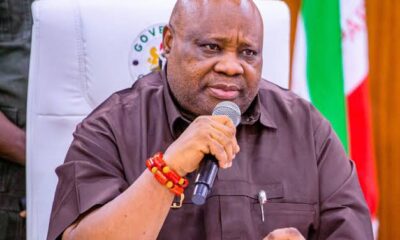

Adeleke, ASUU Differ over Tenure Extension for UNIOSUN VC
ShareThe Osun State Government has urged members of the Osun State University community to refrain from actions capable of creating...

Translate Capital into Productive Investment, Tinubu Urges Banks
SharePresident Bola Tinubu has called on the financial services industry to translate their capital into productive investment and employment opportunities...

Gunmen Launch Attacks on Kaduna Communities, Kill Five, Abduct 27
ShareFrom Agbo Emmanuel, Kaduna Suspected bandits have launched a fresh wave of attacks across parts of Kaduna State, killing at...


Benue Blockade: Obi, Alia Trade Blame over Disrupted Yelewata Visit
ShareFrom Attah Ede, Makurdi A planned visit by the presidential candidate of the Nigeria Democratic Congress (NDC), Peter Obi, to...