
NEWS
Group Calls for Arrest, Prosecution of NNPCL Boss, Mele Kyari


From Mike Tayese, Yenagoa
A group, the Movement for Sustainable Development of the Niger Delta (MSDND) has again called on President Bola Tinubu to sack, arrest and investigate the Group Managing Director of Nigerian National Petroleum Corporation Limited (NNPCL) Mr.
Mele Kyari over alleged economic sabotage.According to the MSDND, the recent series of conflicting claims and data released by Mr.
Mele Kyari on the state of the Turn Around Maintenance (TAM) at the Kaduna and Port Harcourt refineries and the unexplainable difficulty faced from the NNPCL by the Dangote Refineries to access crude oil showed that Mr. Mele Kyari and his cohorts are allegedly behind cases of economic sabotage.“The claims presented by the Nigerian Upstream Petroleum Regulatory Commission (NUPRC) on Monday are made up of manufactured data and are falsely meant to deceive the President and the nation. NUPRC stated that crude oil production increased from 1.4mb/d in May 2024 to 1.5mb/d in June 2024. Nigeria actually produced 1.27mb/d within these periods, and if condensate is removed, then the country only produced about 1m barrels per day.”
“According to the Monthly Oil Market Report for June by the Organization of the Petroleum Exporting Countries (OPEC), quoting direct sources, Nigeria’s oil production for June is 1.276 million barrels per day (bpd).”
“Nigeria’s average daily crude oil production fell to 1.25 million barrels per day (bpd) in May 2024, a 2.34% decrease from 1.28 million bpd recorded in April 2024.”
“Monthly Oil Market Report (MOMR) stated that crude oil export was at 1.32 million bpd in February 2024 and 1.23 million bpd in March 2024. Nigeria recorded a $3.2b loss in Q1 (January – March 2024).”
The group also claimed that senior officials of the NNPCL have hinted that the show of desperation and falsification of data is meant to lie and deceive the Presidency and President Bola Tinubu in order keep the crude oil sabotage ongoing, and to elongate their stay in office.
“The continued stay in office of the NNPCL Group Managing Director, Mr. Mele Kyari despite his years of failures will continue to jeopardise any and all directives of President Bola Tinubu for the security agencies to tackle oil theft in the region. There is an urgent need to investigate the likes of Mele Kyari and their cartel over their culpability in the alleged massive oil theft that is crippling the nation’s economy before it’s too late.”
The MSDND, through its Publicity Secretary, Kelvin Orughoe, in a statement via electronic mail, further argued that the recent claims of a new start off dates for the Kaduna and Port Harcourt refineries, the claims of rising cases of illegal pipeline connections and illegal refineries in the Niger Delta region and the lopsided explanation on the NNPCL position on Dangote Refineries seeking crude from other African countries rather than Nigeria are signs of desperation.
“Mr. Mele Kyari and his cohorts should be sacked and arrested to save Nigeria from economic sabotage and collapse. All of a sudden Mele Kyari and company suddenly remembered that they needed to ensure that the expected TAM at the Kaduna and Port Harcourt refineries works.”
“The false wake-up call by Mele Kyari was after we publicly faulted the outburst of the NNPCL that their manufactured data are not consistent with what is on ground in the Niger Delta region and is a false-battle-cry meant to deceive and distract President Bola Tinubu and the Nigerian public”.
The Nigerian National Petroleum Corporation Limited (NNPCL) and the Group Managing Director, Mr. Mele Kyari had also in a press statement claimed to have uncovered 38 illegal pipeline connections and 108 illegal refineries between June 22 and June 28.
By Tambaya Julius
For many Nigerians, the word Customs has long been associated with what happens at the border-cargo inspections, payment of duties, seizure of prohibited goods and the fight against smuggling.
That perception is understandable.
For decades, these activities have been among the most visible responsibilities of the Nigeria Customs Service (NCS).But the world of trade is changing, and Customs is changing with it.
International commerce today is far more complicated than it was years ago.
Goods can pass through several countries before reaching their final destination.Criminal networks have become more sophisticated, while legitimate businesses increasingly demand faster clearance, clearer procedures and greater certainty.
Governments, too, need reliable trade information to make sound economic decisions.
Technology has added another layer to this transformation.
Against this backdrop, the work of a modern Customs administration cannot be measured only by how much revenue it collects or how many seizures it records.
The bigger test is whether it can protect the country’s economic interests while allowing legitimate businesses to trade with fewer obstacles; identify risks before they become serious threats; share intelligence with international partners; use technology effectively; and build relationships that make global supply chains safer and more efficient.
This is the context in which the evolving role of the Nigeria Customs Service deserves attention.
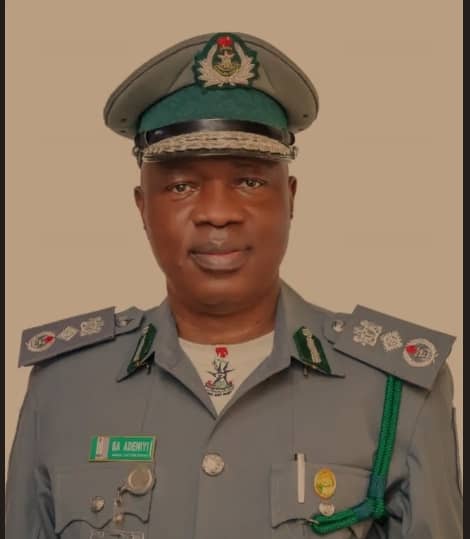
Under the leadership of the Comptroller-General of Customs, Bashir Adewale Adeniyi, MFR, the Service has increasingly projected itself beyond the traditional image of a border enforcement agency.
Its expanding involvement in international cooperation, trade diplomacy, technological modernisation and global Customs governance reflects a broader understanding of the role Customs can play in a modern economy.
For Nigeria, this matters.
As the country works to diversify its economy, increase non-oil exports, support local industries, attract investment and improve the ease of doing business, Customs is becoming an increasingly important part of that economic conversation.
A New Understanding of Customs
Modern Customs faces a delicate balancing act.
On one hand, it must protect the country against smuggling, under-invoicing, prohibited goods, money laundering, counterfeiting and other forms of economic crime.
On the other hand, it must ensure that legitimate businesses are not punished by unnecessary delays, complicated procedures and uncertainty at the border.
The challenge is therefore no longer simply about controlling what enters or leaves the country.
It is about controlling risk while keeping legitimate trade moving.
That requires a different approach.
Rather than treating every shipment as equally risky, modern Customs administrations are increasingly relying on intelligence, data analysis, risk management and technology to determine which consignments require closer attention.
This allows officers to concentrate their resources on suspicious or high-risk cargo while compliant shipments can move more quickly.
For a country like Nigeria, the importance of this approach cannot be overstated.
Nigeria’s ports, airports and land borders connect its economy to markets across Africa, Europe, Asia and other parts of the world. When goods are unnecessarily delayed, the consequences can extend beyond the importer.
Manufacturers may wait for raw materials. Exporters may miss delivery schedules. Retailers may face higher costs. Eventually, consumers may bear part of the burden.
The reverse is also true.
When Customs procedures become faster, more transparent and more predictable, the benefits can spread throughout the economy.
From Seizures to Supply Chain Security
Nigeria’s growing participation in the activities of the World Customs Organisation (WCO) offers a useful window into this changing role.
The world Customs Organisation (WCO) provides a global platform through which Customs administrations cooperate on enforcement, trade facilitation, capacity building and international standards.
Nigeria’s increasing visibility within the organisation has also created opportunities for the NCS to bring its own experiences to international discussions.
A notable example came in March 2026 during the 46th Session of the WCO Enforcement Committee in Brussels.
The development was significant because it reflected the growing importance of enforcement within the wider conversation about global trade security.
But there is a bigger issue behind it.
Customs enforcement is no longer something that one country can effectively handle alone.
Smuggling networks operate across borders. So do the trafficking of drugs, counterfeit products, weapons, proceeds of crime and other illicit commodities.
A suspicious shipment intercepted in Nigeria may have originated somewhere else. Equally, information gathered by Nigerian Customs may be relevant to authorities in another country.
That is why intelligence sharing has become so important.
The criminals may be thinking internationally. Customs administrations must do the same.
This represents a significant change from the traditional view of Customs as an institution whose responsibility ends at the national border.
The Diplomacy Behind Trade Facilitation
Nigeria’s changing approach is also visible in its growing bilateral engagement with major trading partners.
The relationship between the NCS and the United Kingdom’s His Majesty’s Revenue and Customs (HMRC) provides a good example.
To an outsider, a meeting between two Customs administrations might appear to be a technical affair.
In reality, such discussions can have direct implications for trade, government revenue, business confidence and economic planning.
During the Nigeria-UK engagement, one issue that attracted attention was the considerable difference between trade figures recorded by the two countries.
Nigeria’s records put imports from the United Kingdom in 2024 at about £504 million, while UK records indicated exports to Nigeria of approximately £1.7 billion.
The gap naturally raises questions.
Why are the figures so different?
Are there differences in the way goods are valued or declared? Are some goods being routed through third countries?
Could better information-sharing provide both countries with a clearer picture of bilateral trade?
These are more than statistical questions.
Reliable trade data is essential to effective economic planning, revenue administration and Customs risk management.
This is why discussions around pre-arrival data exchange are important.
If Customs authorities know more about a shipment before it reaches the border, they can begin assessing the risk earlier.
Suspicious transactions can be flagged, while compliant cargo may be processed more quickly.
For businesses, that means greater predictability.
For government, it can strengthen compliance and revenue assurance.
For the wider economy, it can help create a more efficient trading environment.
That is where Customs diplomacy begins to have practical economic value.
Building Trust Between Trading Partners
At the heart of successful international Customs cooperation is trust.
Countries must be confident that information shared with their counterparts will be handled properly and used for legitimate purposes.
Businesses also need confidence that compliance will be recognised and that Customs procedures will be applied fairly and predictably.
This explains the growing importance of mutual administrative assistance, technical cooperation and information-sharing arrangements.
The objective is not to weaken enforcement.
It is to make enforcement smarter.
When Customs administrations share useful intelligence, a risk identified in one country can serve as an early warning for another.
An unusual shipment, suspicious company or questionable transaction can be investigated before it develops into a larger problem.
The result is a system that depends less on indiscriminate physical inspection and more on intelligence-led intervention.
That is one of the defining features of modern Customs administration.
Technology Is Changing the Border
Technology is at the centre of this transformation.
At the 2026 WCO Technology Conference and Exhibition in Abu Dhabi, attention focused on artificial intelligence, cloud computing, advanced analytics, digital platforms and other emerging technologies capable of changing the way Customs operates.
For Nigeria, participation in such international discussions is an opportunity not only to learn from other countries but also to showcase what is being developed locally.
The NCS’s modernisation efforts, including the Trade Modernisation Project (TMP) and the indigenous B’Odogwu platform, form part of that wider transformation.
But technology, by itself, is not the goal.
The important question is what technology delivers.
Does it reduce clearance time?
Does it make procedures more transparent?
Does it help officers identify risks more accurately?
Does it strengthen revenue collection?
Does it make compliance easier for legitimate traders?
These are the measures that should ultimately determine whether digital transformation is succeeding.
Modernisation is not simply about replacing paper with computers.
It is about changing how an institution works, how decisions are made and how businesses interact with government.
Data Is Becoming the New Border
One of the most significant changes in Customs administration is the growing importance of data.
In the past, physical inspection was at the centre of border control.
Today, information about a shipment can be just as important as the cargo itself.
Who shipped it?
Who purchased it?
Where did it originate?
What is its declared value?
What route did it take?
Who stands to benefit from the transaction?
Has the trader previously been linked to suspicious activity?
Are there inconsistencies in the documentation?
When such information is properly collected and analysed, Customs can identify potential risks before a container is physically opened.
This explains the growing importance of data exchange between Customs administrations, particularly in addressing cargo diversion and other forms of supply-chain exploitation.
For Nigeria, stronger data capabilities could produce significant benefits.
Better information can lead to better risk assessment.
Better risk assessment can lead to faster clearance for compliant traders.
Faster clearance can reduce the cost of doing business.
And lower costs can make Nigerian businesses more competitive.
The link between technology and economic value is therefore clear.
Looking Towards Asia
Nigeria’s Customs diplomacy is also expanding towards Asia, reflecting the country’s growing commercial relationship with major economies in the region.
Engagement with the Royal Malaysian Customs Department is one example.
Nigeria’s trade relationship with Malaysia has expanded significantly, with imports rising from approximately ₦159.9 billion in 2020 to about ₦716 billion in 2024.
Cumulative trade has been estimated at roughly ₦1.82 trillion.
Those figures demonstrate why stronger Customs-to-Customs cooperation is becoming increasingly necessary.
As trade grows, the institutions responsible for facilitating and regulating that trade must also strengthen their relationship.
This is part of the thinking behind discussions on a possible Mutual Recognition Agreement under relevant WCO frameworks.
The objective is to build greater confidence in each country’s systems and create more predictable Customs procedures for compliant businesses.
It also fits into the broader development of trusted-trader programmes such as the Authorised Economic Operator framework.
The idea is straightforward: a business with a consistent record of compliance should not necessarily face the same level of intervention as one that presents a higher risk.
This allows Customs to focus its attention where it is most needed while giving businesses an incentive to maintain strong compliance standards.
When Customs Diplomacy Becomes Economic Diplomacy
Taken together, Nigeria’s engagements in Brussels, London, Abu Dhabi and Kuala Lumpur reveal something much larger than a series of international meetings.
They point to a changing understanding of Customs diplomacy.
It is no longer simply about representing Nigeria at international conferences.
It is about using international relationships to address practical problems.
Trade discrepancies can be investigated through better data-sharing.
Smuggling can be confronted through intelligence cooperation.
Cargo diversion can be tackled through Customs-to-Customs collaboration.
Border delays can be reduced through digital systems.
Compliance can be encouraged through trusted-trader programmes.
And Customs officers can improve their capabilities through international knowledge exchange.
In this sense, diplomacy becomes an operational tool.
That may be one of the most important aspects of the current direction of the Nigeria Customs Service.
The value of international engagement should ultimately be measured by what it delivers at home.
The Human Side of Modernisation
There is another part of the modernisation story that deserves attention: the people behind the technology.
No digital platform can replace skilled and properly trained officers.
As Customs becomes increasingly dependent on data, intelligence and technology, officers must develop the skills needed to work effectively in that environment.
The Customs officer of the future will need to understand much more than tariff classification and physical inspection.
Data analysis, digital systems, international trade standards, financial crime indicators, intellectual property protection and emerging forms of cross-border crime will increasingly form part of the profession.
This makes human capital development just as important as investment in infrastructure and technology.
An institution does not become modern simply because it acquires new equipment.
Its people must be capable of using the equipment, understanding the information it produces and making sound decisions from that information.
From Global Visibility to Domestic Value
International recognition is valuable, but visibility alone cannot be the ultimate objective.
For Nigeria, the more important question is:
What does all this global engagement deliver for the Nigerian economy?
The potential benefits are substantial.
International cooperation can provide better intelligence.
Better intelligence can strengthen enforcement.
Stronger enforcement can protect legitimate businesses and government revenue.
Digital systems can reduce transaction costs.
Improved trade data can support better economic planning.
Stronger relationships with trading partners can build compliance and trust.
And faster, more predictable Customs procedures can help make Nigeria more attractive to investors and international businesses.
When these elements come together, Customs becomes much more than a revenue-collecting institution.
It becomes part of the infrastructure that keeps the economy moving.
A Customs Service Looking Beyond the Border
The transformation within the Nigeria Customs Service is part of a much wider change taking place around the world.
Borders remain important, but the modern border is no longer limited to a port gate, airport terminal or land checkpoint.
Increasingly, the border begins before cargo arrives, through advance information and risk assessment.
It continues after clearance through post-clearance controls, intelligence sharing and international cooperation.
The most effective Customs administration, therefore, is not necessarily the one that physically examines the greatest number of consignments.
It is the one that can identify risks accurately, intervene where necessary and allow legitimate trade to move with minimal disruption.
Nigeria’s growing participation in global Customs affairs suggests that the NCS is increasingly recognising this reality.
Its engagement within the WCO, cooperation with HMRC and Malaysian Customs, participation in international technology discussions and investment in digital modernisation all point towards a more connected approach to enforcement and trade facilitation.
The economic implications are considerable.
Nigeria cannot fully benefit from international trade if its borders are insecure.
But the country cannot maximise the benefits of trade either if legitimate businesses face unnecessary delays, high transaction costs and unpredictable procedures.
The future, therefore, lies in balance: strong enforcement without unnecessary obstruction; faster trade without weaker controls; technology without losing the human element; and international cooperation that produces measurable results at home.
That is the frontier towards which modern Customs is moving.
If Nigeria can successfully turn its expanding international partnerships into tangible improvements in trade facilitation, revenue assurance, supply-chain security and business confidence, the Nigeria Customs Service will increasingly be viewed in a broader context.
Not merely as an institution that guards the country’s borders, but as an institution helping to determine how effectively Nigeria connects with the global economy.
Beyond the border, therefore, lies a much larger responsibility.
It is the responsibility to make trade safer, make commerce easier and, ultimately, make international trade work better for Nigeria.
By Elijah Oguche, Abuja
The Mining Marshals have defended the continued closure of Stone Rockers Nigeria Limited’s quarry site in Abuja, insisting that the facility remains a crime scene in an ongoing criminal case before the Federal High Court.
The clarification followed the company’s petition to President Bola Tinubu and other government officials over the 13-month shutdown, which it described as unlawful.The Commander of the Mining Marshals, John Onoja in a publication on official page said the quarry was sealed not as an administrative sanction but because it constitutes the locus criminis in Charge No.
FHC/ABM/VR/338/2026, involving Stone Rockers and its director, Kolawole Olaiya. They are accused of conducting illegal mining activities within a mineral title area belonging to Lord’s Career Ventures Nigeria Limited.He said the case followed extensive investigations into petitions by the complainant, which were referred to the Mining Marshals by the Ministers of Solid Minerals Development and Interior. According to him, investigators arrested the defendants at coordinates which fell within Mining Lease No. 000395 ML belonging to Lord’s Career Ventures, a claim reportedly confirmed by the Mining Cadastre Office in a January 23, 2026 letter.
Onoja also said evidence before the court includes correspondence allegedly written by a member of the defence team during the investigation, which he claimed contained admissions relevant to the allegations. He warned against attempts to secure administrative intervention while related criminal and civil matters remain before the courts.
The Mining Marshals rejected allegations of financial inducement, saying enforcement decisions were based solely on evidence gathered during investigations. The agency also said prosecutors had initially excluded workers from the charge because they acted as employees of a disclosed principal, but their participation in protests over the shutdown has prompted a review of whether some should be relisted.
The Commander maintained that public campaigns and alleged blackmail would not deter the Mining Marshals from enforcing Nigeria’s mining laws. He appealed to the media to strengthen editorial verification and gatekeeping, stressing that the dispute between Stone Rockers and Lord’s Career Ventures is ultimately before the courts for determination.
NEWS
Nigeria Thailand Deepen, Cooperation with New Agreement on Agriculture, Cooperatives, Innovation
By Raphael Atuu Abuja
The Federal Government of Nigeria and the Kingdom of Thailand have deepened bilateral cooperation with the signing of new agreements focused on agriculture, cooperatives and innovation, in a move to drive implementation of the Renewed Hope Cooperative Reform and Revamp Programme, RH-CRRP 2030.
The agreements were signed in Lagos, during a high-level engagement on the theme: Building Sustainable Partnerships: Connecting Youth, Innovation and Business between Thailand and Nigeria.
Speaking during the event, Minister of State for Agriculture and Food Security and Supervising Minister of Cooperative Affairs, Sen.
Dr. Aliyu Sabi Abdullahi, said the signing marks the transition of RH-CRRP 2030 from policy formulation to practical implementation.The agreements include a Record of Discussions involving the Thailand International Cooperation Agency, TICA, Kasetsart University and the Federal Cooperative College, Oji-River, Enugu, as well as a Memorandum of Understanding between Kasetsart University and the Federal Cooperative College, Oji-River.
“Today, we have not merely witnessed the signing of documents; we have witnessed the strengthening of a partnership founded on knowledge, capacity development, innovation, institutional cooperation and shared prosperity,” the Minister said.
Abdullahi added that the partnership directly supports *Pillar 2 of RH-CRRP 2030 institutional Strengthening, Professionalization and Capacity Building.
“At the heart of this pillar is a simple but fundamental principle: we cannot build strong and sustainable cooperatives without strong institutions and well-trained people,” he said.
The Minister noted that the reform places deliberate emphasis on developing the knowledge, professional competence and leadership capacity of cooperative leaders, managers, regulators and members.
He referenced an earlier milestone on 12 August 2026 in Abuja, where the Ministry, the Cooperative Federation of Nigeria, CFN, and Seamfix Limited signed an MoU on the Cooperative Digitalization pillar of the reform.
“This demonstrates that RH-CRRP 2030 is moving beyond policy formulation towards implementation, institutional action and measurable impact,” Sen. Abdullahi said.
Linking the partnership to the Renewed Hope Agenda of President Bola Tinubu, the Minister affirmed that the administration is determined to reposition cooperatives as stronger instruments for agricultural transformation, enterprise development, job and wealth creation, financial inclusion and sustainable livelihoods.
“As we work towards Mr. President’s aspiration of building a one-trillion-dollar Nigerian economy within this decade, strengthening the capacity, professionalism and productivity of our cooperative institutions and the millions of Nigerians they serve will be critical,” he stated.
Abdullahi added that Thailand’s experience in agriculture, cooperative development, research and innovation presents important opportunities for mutual learning, while Nigeria brings enormous agricultural potential, a vibrant youthful population and significant opportunities for investment.
He charged all institutions involved to move “deliberately from agreement to implementation” with practical programmes, clear timelines and measurable deliverables.
“May today’s signing marks not the conclusion of a process, but the beginning of a stronger and more productive chapter in Nigeria–Thailand cooperation,” the Minister added.
In attendance were the Deputy Prime Minister and Minister of Foreign Affairs of the Kingdom of Thailand; Nigeria’s Honourable Minister of Foreign Affairs, Ambassador Bianca OdumegwuOjukwu, the Ambassador of Thailand to Nigeria; the Ambassador of Nigeria to the Kingdom of Thailand; the Director-General of TICA; the Executive Secretary of the Agricultural Research Council of Nigeria, ARCN; the President of Kasetsart University; and the Provost of the Federal Cooperative College, Oji-River.
RH-CRRP 2030 is a seven-pillar reform framework designed to reposition the Nigerian cooperative sector as an instrument for inclusive economic growth and distributed prosperity.




EPL: Chelsea Beat Brighton 4-3 to Extend Alonso’s Perfect Start
ShareChelsea maintained their perfect start to the new Premier League season as they held on to defeat Brighton in an...


Beyond Revenue: How Nigeria Customs is Using Global Partnerships to Transform Trade
ShareBy Tambaya Julius For many Nigerians, the word Customs has long been associated with what happens at the border-cargo inspections,...
Mining Marshals Defend Stone Rockers Shutdown, Say Quarry Remains Crime Scene
ShareBy Elijah Oguche, Abuja The Mining Marshals have defended the continued closure of Stone Rockers Nigeria Limited’s quarry site in...
Nigeria Thailand Deepen, Cooperation with New Agreement on Agriculture, Cooperatives, Innovation
ShareBy Raphael Atuu Abuja The Federal Government of Nigeria and the Kingdom of Thailand have deepened bilateral cooperation with the...

Enugu Trains over 15,000 Civil Servants on E-Governance, Digitalization
ShareFrom Sylvia Udegbunam, Enugu The Enugu State Government has trained over 15,000 civil and public servants on e-governance and digitalisation...
Navy Disrupts Two Illegal Refining Sites in Rivers
ShareThe Nigerian Navy has sustained efforts to disrupt illegal refining activities in Rivers with personnel of Nigerian Navy Ship (NNS)...
Troops Recover Terrorists Planted IED Zamfara Community
ShareFrom Ifeanyichukwu Nwannah, Gusau Troops of Joint Task Force North West Operation Fansan Yamma recorded another operational success in Zamfara...


Army Neutralises Key Terrorist Commander in Katsina, Recover Arms and Motorcycles
ShareBy David Torough, Abuja Troops of Joint Task Force North West, Operation FANSAN YAMMA, have neutralised a key terrorist commander...


Troops Neutralize Suspected Terrorist, Recover Two AK-47 Rifles in Plateau
ShareBy David Torough, Abuja Troops of Operation ENDURING PEACE have neutralized a suspected terrorist and recovered two AK-47 rifles and...


How Newborn Baby Abandoned At Birth Rescued in Benue Forest
ShareFrom Attah Ede, Makurdi An abandoned newborn baby girl has been rescued alive near Ashar forest at Wuese community in...