
OPINION
How Nigeria is Closing the Net on Illicit Arms

By Sumaila Ogbaje
Undoubtedly, the steady flow of illegal weapons is keeping Nigeria’s security crisis alive.
From rural communities to active conflict zones, an underground trafficking network feeds criminal elements, directly enabling widespread terrorism, kidnapping, and banditry.
While security forces confront armed groups and recover weapons, the Federal Government is increasingly looking beyond the battlefield to disrupt the supply chains sustaining violence.
At the forefront is the National Centre for the Control of Small Arms and Light Weapons (NCCSALW), under the Office of the National Security Adviser (ONSA).
The centre’s strategy is expanding from weapons recovery to understanding where illicit arms originate, how they move, where they are diverted and how circulation can be stopped.
The National Security Adviser, Malam Nuhu Ribadu, has described illicit weapons as “a deadly threat to the safety of our people”.
According to him, their proliferation sustains banditry in the North-West, communal conflicts in the North-Central and terrorist operations in the North-East.
The NSA said the government’s response was anchored on stronger inter-agency collaboration, disruption of criminal financing networks, enhanced border security and international partnerships.
At the recovery end, NCCSALW has continued to remove weapons permanently from circulation through transparent destruction exercises.
In its latest exercise, the centre destroyed 2,819 illicit, decommissioned and unserviceable weapons, bringing the number destroyed by the centre to about 19,000.
Ribadu said the exercise demonstrated the government’s commitment to ensuring recovered weapons never return to criminal hands.
“Recovering weapons alone is not enough. Public, transparent and verifiable destruction guarantees that these recovered weapons can never again be used against any Nigerian,” he said.
Yet, destruction addresses weapons already recovered. The bigger challenge is preventing replacement firearms from continuously entering the illicit market.
This has placed greater emphasis on securing legitimate weapons, strengthening armouries and preventing diversion from official stockpiles.
NCCSALW Director-General, retired DIG Johnson Kokumo, identified poor armoury management and diversion of government-owned weapons as major proliferation drivers.
He said porous borders, illicit local production and leakage from official stockpiles were among the major sources of illicit weapons.
“The most concerning source of proliferation remains the leakage of weapons from illicit stockpiles held by government agencies.’’
He warned that weapons procured for national security could become instruments of insecurity when weak controls and accountability gaps allow them to reach criminal networks.
Consequently, NCCSALW has intensified capacity development for personnel responsible for arms and ammunition management across security institutions.
The training focuses on record-keeping, storage standards, physical security, accountability and weapons tracking.
A recent programme organised with the HALO Trust and supported by the Netherlands sought to strengthen physical security and stockpile management.
Kokumo urged participants to apply the knowledge acquired, describing them as agents of change in improving arms management.
“You are returning as agents of change. Nigeria is counting on you to enforce accountability and professionalism in arms management.”
However, stronger armoury controls and weapons destruction cannot fully address the problem without knowing its current scale, sources, routes and patterns.
Nigeria’s last national baseline survey on illicit small arms and light weapons was conducted in 2016 and released in 2021.
A decade later, NCCSALW says the data can no longer adequately capture the country’s changing security environment.
Kokumo said Nigeria was preparing a new national baseline survey to provide updated statistics for planning and policymaking.
“The 2016 survey can no longer address the current pattern of proliferation of small arms and light weapons in Nigeria.”
He said the proposed survey would be Nigerian-owned and conducted primarily by Nigerian experts, with technical assistance from international organisations.
“We want to have an arms survey conducted by Nigeria for Nigerians and owned by Nigerians,” Kokumo said.
According to him, updated statistics will help the government develop appropriate policies and improve national security planning.
Dr Adedeji Ebo, Director and Deputy High Representative of the United Nations Office for Disarmament Affairs (UNODA), said the available data was outdated.
“It is not that there is no data. There was a baseline survey conducted on small arms circulation in Nigeria in 2016.”
“That was a decade ago. Imagine Nigeria’s security landscape a decade ago and the security landscape today. A lot has changed.”
Ebo said changes had occurred in arms sources and routes, storage, tracing and marking, as well as activities of non-state armed groups.
“If government is going to have accurate national security planning, they need accurate data.
“So, what we have now is literally out of date, out of context.”
The new survey is expected to examine the nature, scale, distribution, sources and drivers of illicit arms proliferation across Nigeria.
UNODA and the Small Arms Survey in Geneva are expected to provide technical support and train Nigerian experts through a training-of-trainers approach.
Ebo said the process would enable Nigeria to build indigenous expertise capable of conducting future surveys and supporting similar exercises across Africa.
But data gathering alone cannot stop weapons proliferation. The information must translate into policies and interventions capable of closing identified vulnerabilities.
“The survey is not itself the end. It is a means to an end. So we need to have a policy that will flow from that survey.”
Beyond government and international partners, NCCSALW is also widening the response to include civil society organisations and communities.
At a recent roundtable, NCCSALW and UNODA engaged CSOs on strengthening community participation in arms-control efforts.
Ebo described CSOs as uniquely positioned to connect government policies with communities affected by illicit arms proliferation.
“Civil society is the bridge between the state and society,” he said.
He said traditional and religious leaders, women, youths, farmers, fishers and survivors of armed violence should contribute to the survey process.
Representing the National Arms Registrar, retired Maj.-Gen. Bamidele Shafa said CSOs’ proximity to communities provided valuable information on illicit weapons.
He said CSOs would play central roles in designing, validating and disseminating findings from the forthcoming baseline survey.
The EU also identified awareness creation, early warning, conflict prevention, policy advocacy, rehabilitation and reintegration among areas where CSOs could contribute.
The approach reflects a growing recognition that illicit arms proliferation is not merely a security-agency problem, but a national challenge requiring community ownership.
Nigeria’s challenge is further complicated by the transnational character of arms trafficking, making regional and international cooperation indispensable.
UNODA is supporting Nigeria through technical assistance, arms tracing and marking, policy development and implementation of international arms-control instruments.
At home, NCCSALW’s collaboration with the Armed Forces, police, intelligence services, Customs and other agencies remains crucial to disrupting illicit arms networks.
The ultimate objective is to prevent illicit weapons from becoming fuel for violence.
The success of the campaign, therefore, should not be measured only by the number of guns seized or destroyed.
The greater victory will come when Nigeria can identify supply lines, close loopholes and make it increasingly difficult for illegal weapons to reach criminal hands.
That is the battle beyond the battlefield — fought through intelligence, accurate data, secure armouries, effective borders, responsible communities and sustained national coordination.
For NCCSALW and its partners, choking the illicit arms pipeline could prove as important to Nigeria’s security as defeating those who wield the weapons.
Analysts say every trafficking route disrupted, armoury secured, weapon traced and firearm permanently destroyed represents another link broken in the chain of violence. (NAN)
By Nafisat Bello
There is something profoundly significant about an anti‑corruption agency raising a red flag — and the highest level of government responding with action. For years, Nigeria’s fight against corruption has followed a predictable and frustrating cycle: investigations begin, shocking discoveries emerge, suspects are named, money is recovered, outrage spreads, and then attention shifts to the next scandal, while the systems that enabled the abuse remain untouched.
The latest development surrounding the Integrated Personnel and Payroll Information System (IPPIS) offers a chance to break that cycle.
President Bola Ahmed Tinubu’s directive for a comprehensive forensic audit of IPPIS — and of the Federal Government’s wider personnel, payroll and administrative systems — should not be dismissed as another routine announcement. It is a direct response to concerns raised by the Independent Corrupt Practices and Other Related Offences Commission (ICPC), and an acknowledgment of a truth Nigeria has long avoided: we cannot defeat corruption by chasing individual offenders, while leaving vulnerable systems intact.
The directive followed a Federal Executive Council resolution of 19 August, triggered by ICPC findings on suspected ghost workers, questionable government entities and weaknesses in public‑sector control systems. That sequence is important. The ICPC investigated. It exposed vulnerabilities. The findings reached the highest level of government. The Presidency responded with a systemic intervention.
This is how anti‑corruption institutions should influence governance.
At the National Spokespersons Awards and Economic Confidential Annual Lecture in Abuja, ICPC Chairman Dr Musa Adamu Aliyu (SAN) revealed disturbing insights from the Commission’s investigation. According to the ICPC, 908 suspected ghost workers were identified on IPPIS, and ₦941.99 million was traced to accounts linked to the alleged payroll fraud.
The numbers are alarming, but the deeper significance lies in the questions they raise.
If hundreds of fictitious workers could enter a system designed to sanitise the Federal Government’s payroll, the real issue is not simply who collected the money. It is: Who created the identities? Who validated them? Which controls failed? Who had the authority to introduce or approve them? Were the weaknesses technological, administrative or deliberately engineered? And who benefited from keeping those weaknesses alive?
These questions shift the conversation from corruption to systems failure.
For too long, Nigerians have treated ghost workers as the disease. They are not. They are symptoms. The real disease is the institutional weakness that allows ghosts to acquire identities, enter government systems, receive salaries and remain undetected.
Delete a ghost worker without closing the loophole that created it, and another ghost worker will take its place.
President Tinubu’s order for a forensic audit is significant because it goes beyond deleting names. It seeks to examine the architecture of government systems — personnel, payroll, pension, identity, biometric and financial controls.
The goal is simple: determine whether irregularities resulted from technical defects, weak processes, inadequate segregation of duties, human negligence or deliberate manipulation.
This is where serious anti‑corruption reform begins.
The same loophole that allows a fictitious employee to receive a salary could allow a fictitious company to obtain a contract or an illegitimate entity to access public resources. That is why the audit must extend beyond IPPIS to the entire ecosystem of government entities.
The audit is also expected to verify the legal basis of ministries, departments, agencies, commissions, councils and parastatals. In plain language, Nigeria must answer a question that should never have become complicated: Who genuinely belongs to the government — and who has merely found a way to appear as though they do?
It is astonishing that a country facing severe fiscal pressures still struggles to determine which entities are legitimately drawing from public resources.
Under Dr Musa Adamu Aliyu (SAN), the ICPC has demonstrated why anti‑corruption agencies must look beyond arrests and prosecutions. An arrest removes an offender. A prosecution punishes a culprit. Asset recovery returns stolen funds. But fixing a defective system prevents thousands of future offences.
That preventive dimension is the most valuable form of anti‑corruption work.
The IPPIS investigation shows how systems analysis can lead to investigation, financial recovery and institutional reform. In July, the Federal High Court reportedly issued a final forfeiture order for ₦941,994,079.86 linked to the payroll scheme. The presidential directive now pushes the process further — from recovering stolen funds to examining the machinery that enabled the theft.
Nigeria has never lacked committees, investigations, audits or white papers. What we have lacked is implementation. The forensic audit must therefore be rigorous, independent and professionally executed. It must not become another impressive report that disappears into government archives.
Where fraudulent identities were created, accountability must follow. Where administrators ignored irregularities, responsibility must be established. Where technology was manipulated, vulnerabilities must be closed. Where procedures are defective, they must be redesigned. Where entities lack legal foundation, decisive action must be taken.
Anything less would reduce a potentially transformative intervention to another temporary headline.
Every fraudulent salary payment is money that could have funded a classroom, hospital, road or security operation. Every fictitious entity increases the burden on the treasury. Every unresolved control weakness invites another fraudster.
Government cannot demand fiscal discipline from citizens while tolerating indiscipline within its own systems. Fiscal responsibility is not only about raising revenue or removing subsidies — it is also about protecting existing resources.
A government that seeks more revenue while allowing funds to leak through fraudulent payroll systems, is filling a bucket without repairing the holes.
Nigeria celebrates billions recovered after theft. But the greatest anti‑corruption success is not recovering ₦1 billion after it disappears — it is creating a system in which the ₦1 billion cannot disappear at all.
If the forensic audit can reveal how fraudulent identities entered IPPIS, how questionable entities gained recognition, how controls were bypassed and where responsibility failed, Nigeria will gain something more valuable than another recovery figure: institutional knowledge.
And institutional knowledge, when converted into stronger controls, can save billions over time.
Payroll and personnel systems should cross‑check identities across databases, detect duplicates, flag unusual payment patterns and create reliable audit trails. Technology cannot eliminate corruption, but it can make manipulation harder, easier to detect and more costly to conceal.
The ICPC has raised the red flag. The Federal Executive Council has deliberated. President Tinubu has ordered a forensic audit. But the real test is what happens next.
The ICPC must continue its investigations without fear or favour. MDAs must cooperate fully. Those against whom credible evidence exists must face consequences. Every loophole identified must be closed.
Nigeria does not need another war against ghost workers that ends when the ghosts disappear from the newspapers. It needs systems in which ghosts cannot enter the payroll in the first place.
President Tinubu therefore deserves credit for responding to the findings with a directive that extends beyond simply deleting suspected ghost workers. Likewise, the ICPC Chairman deserves recognition for championing anti-corruption reforms through investigation, advocacy and strategic communication.
The ultimate measure of this intervention will not be the number of ghost workers removed or the amount of money recovered. It will be whether Nigeria has the courage to follow the trail to its source, hold those responsible accountable and permanently close the doors through which the ghosts entered.
If that happens, Nigeria will not only fight corruption — it will finally begin to prevent it.
Nafisat Bello writes from Kubwa, Abuja.
By Prince Charles Dickson
In February 2026, Ogonna Egwu took her gravely ill mother to the Accident and Emergency Ward of the University of Nigeria Teaching Hospital, Ituku-Ozalla. Doctors reportedly asked her to buy a waterbed the hospital could not provide.
Unable to leave her mother alone for the 25-kilometre trip into Enugu, she gave money to a staff member. The bed arrived the next day. Her mother died a day later.Then came a final indignity: the bed was allegedly withheld as “hospital policy” and sold to another patient. Egwu later recovered only part of her money.
The Guardian’s account reads like fiction, but it is the kind of reality that has become dangerously ordinary.This is not merely a story about a missing waterbed. It is an X-ray of a country where a patient’s relative becomes procurement officer, porter, blood scout and pharmacist; while grief waits at the cashier’s desk. When a hospital does not get wetin patient need, the family becomes an emergency ministry. The scandal is larger than one hospital and wider than one region.
A tertiary hospital should crown a functioning referral chain: the place for cancer therapy, neurosurgery, complex obstetrics, intensive care, specialist training and research. In Nigeria, that pyramid stands on its head. A 2026 country profile reports that 60 to 90 per cent of patients bypass primary care for secondary or tertiary facilities.
If the foundation bends, the penthouse does not fit stand straight.
From Enugu to Ibadan and Kano, the map changes, but the pathology remains: specialists spend precious hours managing illnesses that should have been prevented, detected or treated earlier.
In the South-East, The Guardian describes primary health centres below standard, general hospitals without basic diagnostics and tertiary facilities overwhelmed by the resulting traffic. Across facilities in Enugu, Nnewi, Owerri, Abakaliki and Umuahia, patients report buying medicines outside, conducting tests privately, waiting for theatre space and supplying water at the bedside. Federal Medical Centre Umuahia reportedly faced power-related costs approaching ₦70 million monthly.
Big gate no be big medicine.
Hospital infrastructure is not concrete alone. It has reliable electricity, clean water, oxygen, blood, laboratories, ambulances, functional equipment, secure information systems and human dignity.
There have been genuine improvements. UNTH has gained major solar-power capacity and a modern linear accelerator, while other facilities have received new buildings and equipment. But one functioning cancer machine serving a heavily populated region is both progress and a warning.
Machine wey no work na monument with plug.
Procurement must include maintenance, consumables, spare parts, trained operators and public reporting of equipment uptime. Commissioning photographs do not treat patients.
Travel west and the illusion of advantage appears. The South-West has major medical schools, more specialists and a dense private healthcare market. Yet University College Hospital, Ibadan, once a symbol of Nigerian medical excellence—suffered a grid disconnection in October 2024 and more than 100 days of blackout. Its power distress remained a public issue in 2026.
In an intensive care unit, electricity is not an overhead, it is medicine. Across Lagos, excellent private care may exist kilometres from overcrowded public wards, but proximity is not accessible.
Hospitals fit dey for your street; if the bill passes your pocket, e far like another country.
The generator has become an unofficial consultant, but diesel cannot be a national health policy.
The North carries the same disease with additional complications: vast distances, thinly distributed specialists, poverty, insecurity and disrupted transportation. A 2026 analysis of national survey data found inadequate antenatal-care use highest in the North-West at 35.5 per cent, followed by the North-East at 31.6 per cent and North-Central at 27.3 per cent, compared with about 10 per cent in the South-East and South-West.
By the time many patients reach Kano, Zaria, Maiduguri or Jos, a manageable condition has become an emergency. Aminu Kano Teaching Hospital has also experienced costly electricity disruptions.
Referral letter without ambulance, safe road and money na invitation wey person no fit attend.
New northern investments—including a 50-bed mental-health and drug-rehabilitation centre at the University of Maiduguri Teaching Hospital—deserve recognition. Yet an excellent tertiary island cannot compensate for a weak mainland of primary and secondary care. A woman with obstructed labour gains nothing from a sophisticated theatre she cannot reach. A trauma patient cannot use a CT scanner after losing the golden hour on a broken road.
All three regions meet at the Nigerian pocket. Out-of-pocket payments accounted for about 71 per cent of health expenditure in 2023, while roughly 91 per cent of Nigerians were uninsured in 2024. Here, sickness first attacks the body, then attacks the family economy. People buy medicines, tests, blood, gloves and consumables; they borrow, sell assets, postpone care or simply go home.
This is not a consumer choice. It is coercion by illness.
Sickness no dey ask tribe, but treatment dey recognise postcode and pocket.
Buildings do not diagnose, operate or comfort. Nigeria had about 38 doctors for every 100,000 people in 2023, with distribution skewed towards cities. Brain drain is not simply a morality tale about unpatriotic professionals; it is a verdict on the system. Health workers leave because remuneration, safety, equipment, career progression and working conditions fail them.
You no fit ask healer to stay where workplace dey wound am.
Those who remain become exhausted, patients wait longer, and young professionals learn to improvise around institutional failure. The cost is not only poorer treatment. Medical education, research and Nigeria’s capacity to confront future epidemics are also weakened.
Funding is not merely what appears in an appropriation law; it is release, execution and accountability. In February 2026, the health minister told lawmakers that only ₦36 million of the ministry’s ₦218 billion 2025 capital appropriation had been released.
Budget wey government no release na promise written with invisible ink.
The division of responsibility, federal tertiary care, state secondary care and local primary care—too often becomes an escape route for blame. But sickness does not carry a government organogram. The patient does not care which tier failed to provide oxygen.
Government reports that nearly 3,000 primary health centres have been revitalised under the IMPACT programme and that emergency obstetric sites and tertiary projects are coming online. That is welcome. The true test, however, is not how many buildings were inaugurated, but how many open every day, have skilled personnel, medicines, water and electricity, and can make a safe referral.
No be signboard dey save life; na di service behind am.
Nigeria needs a referral compact across all three levels of government. Primary centres must deliver prevention, maternal care, essential medicines and early diagnosis. General hospitals need blood banks, oxygen, imaging and round-the-clock emergency surgery. Tertiary hospitals must recover their specialist, teaching and research mandate.
Power and water should be treated as clinical infrastructure, protected through dedicated tariffs and redundant grid, solar, battery and generator systems. Equipment purchases must carry lifecycle budgets and biomedical-engineering support. Health workers need timely salaries, safe workplaces and incentives for underserved areas. The NHIA and state insurance schemes must protect vulnerable families, while public dashboards disclose budgets, releases, waiting times, equipment uptime and avoidable deaths.
Citizens are not the cause of this collapse, but they are not powerless. Communities can use ward health committees, enrol in available insurance, donate blood and demand evidence instead of applauding buildings. Professional bodies must defend workers and patients. Civil society and the media must follow public money beyond allocation to actual results. Leaders should be judged by what happens in a hospital ward at 2 a.m., not by ribbon-cutting at noon.
Return to Ogonna Egwu’s waterbed. Her mother did not need another policy launch. She needed a chain of care that worked—before the emergency, inside the hospital and after the prescription.
Country wey hospital dey wait for patient family to supply the hospital, na the country?
Nigeria must decide whether its tertiary hospitals will remain monuments to ambition or become instruments of survival. A nation cannot rise higher than the care it gives to the person who cannot pay, travel abroad or call anybody.
By Raphael Atuu
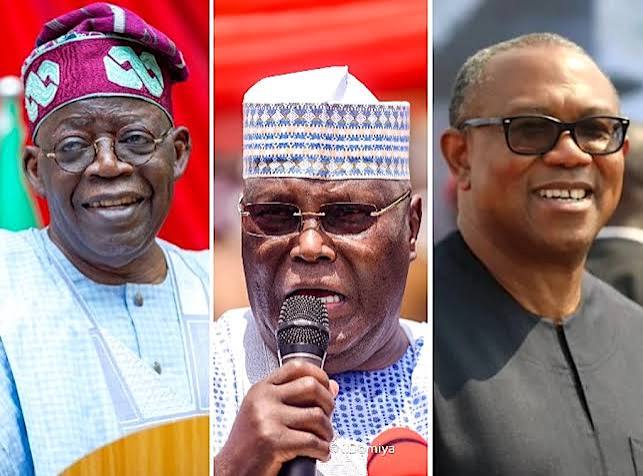
As the 2027 general elections draw closer, the political atmosphere in Nigeria is gradually heating up, with President Bola Ahmed Tinubu, former Vice President Alhaji Atiku Abubakar, and former Anambra State Governor Peter Obi emerging as the major figures shaping the race for the presidency with new strategies.
While President Tinubu is seeking a second term in office, Atiku and Obi are hoping to finally occupy the nation’s highest political seat after previous attempts.
The trio are already adjusting their strategies, building alliances, and strengthening their political structures as they prepare for what promises to be one of the most competitive elections in Nigeria’s democratic history.
President Tinubu, who came into office in 2023, is expected to campaign based on his administration’s reforms and long-term economic plans.
His supporters argue that his policies, including efforts to attract investment, improve infrastructure, and restructure the economy, will eventually deliver positive results.
However, critics believe that the removal of fuel subsidy, rising inflation, and the increasing cost of living have created serious hardship for many Nigerians.
Despite these challenges, Tinubu has continued to defend his administration, insisting that his reforms are necessary to build a stronger economy and that Nigerians will benefit from the sacrifices being made today.
His early move to unveil his campaign team suggests that the ruling party may already be preparing ahead of the opposition.
For Alhaji Atiku Abubakar, the 2027 election represents another opportunity to achieve a long-time ambition of leading Nigeria.
The former vice president has promised policies aimed at reviving businesses, improving economic opportunities, and reviewing some government decisions that have affected Nigerians.
His position on fuel subsidy and opening up more opportunities for private sector participation has attracted attention among some voters and business communities.
However, Atiku’s major challenge remains convincing Nigerians that he represents a fresh alternative after several previous presidential contests.
He will also need to unite his political supporters and build a stronger national coalition to compete effectively.
Peter Obi, who gained massive support during the 2023 election, remains a major force in the political landscape.
His supporters, popularly known as the “Obidient movement,” believe his message of good governance, accountability, and economic transformation can bring a new direction for the country.
Although Obi has not introduced a completely new political strategy ahead of 2027, he appears focused on consolidating the support and goodwill he gained from the last election.
His challenge will be expanding his support base beyond his existing followers and proving that his movement can translate into a nationwide electoral victory.
Beyond the personalities involved, the 2027 election is expected to be decided by key issues affecting ordinary Nigerians, including the economy, security, unemployment, education, healthcare, and the cost of living.
Many voters are likely to judge the candidates based on their ability to provide practical solutions rather than political promises.
Another major factor will be the strength of political alliances. Nigeria’s electoral history shows that no candidate can win the presidency without strong structures across the country.
The ability of Tinubu, Atiku, and Obi to build broad coalitions, attract influential political figures, and connect with young voters will play a significant role in determining the outcome.
For now, President Tinubu appears to have an early advantage in terms of incumbency and political machinery, while Atiku and Obi are working to create a strong challenge. But with many months before Nigerians return to the polls, the political landscape could still change.
In the end, only one candidate will emerge as Nigeria’s president after the 2027 election.
The battle ahead will not only be about personalities but also about who can convince Nigerians that they have the right solutions for the country’s future.


How Nigeria is Closing the Net on Illicit Arms
ShareBy Sumaila Ogbaje Undoubtedly, the steady flow of illegal weapons is keeping Nigeria’s security crisis alive. From rural communities to...

ICPC’s Red Flag and Tinubu’s Response: Why Nigeria Must Stop Fighting Corruption Backwards
ShareBy Nafisat Bello There is something profoundly significant about an anti‑corruption agency raising a red flag — and the highest...

2027: INEC Chairman Meets Admin Secs, Cautions against Shortcuts, Interference
ShareChairman, Independent National Electoral Commission (INEC), Prof. Joash Amupitan, has urged Administrative Secretaries to reject shortcuts and political interference in...
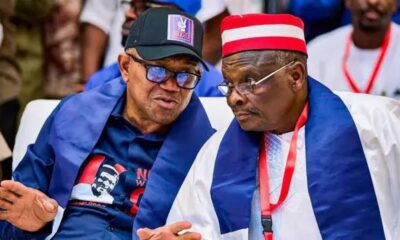

2027: Women Group Rallies Support for Obi-Kwankwaso Victory
ShareA support group for Peter Obi-Rabiu Kwankwaso and other Nigeria Democratic Congress (NDC) flag bearers, has inaugurated its national coordinators...
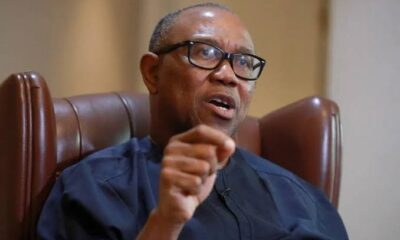

2027: Kwankwaso ‘ll Betray Obi, NDC — NNPP
ShareThe New Nigeria Peoples Party (NNPP) has warned the Nigeria Democratic Congress (NDC) and its presidential candidate, Peter Obi, against...

Nigeria Records N12.59trn Trade Surplus in Q2, 2026 – NBS
ShareBy Tony Obiechina, Abuja The National Bureau of Statistics (NBS) said Nigeria recorded a trade surplus of N12.59trn from the...
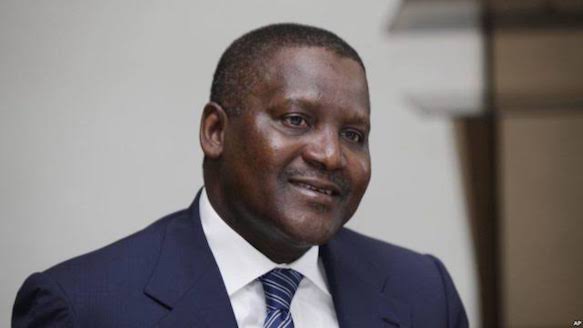
Dangote Refinery Unveils Plans to Open Ownership, Targets 10m Shareholders
ShareBy David Torough, Abuja President of Dangote Industries Limited, Aliko Dangote, has unveiled plans to open ownership of the Dangote...
2027 Polls: INEC Arms States with Real-Time Election Tracker
ShareBy David Torough, Abuja The Independent National Electoral Commission (INEC) is to deploy a real-time operational tracker to monitor preparations...
US Envoys Meet Zelensky in Ukraine after Talks with Putin in Russia
SharePresident Volodymyr Zelensky is holding talks with Donald Trump’s top envoys, in their first visit to Ukraine since Russia’s full-scale...


Court Sentences TV Presenter, 11 Others to Death in Egypt Drugs Case
ShareEgyptian television presenter Sarah Khalifa and 11 other people have been sentenced to death by hanging after being convicted of...