
NEWS
Humanitarian Crisis Looms in Bassa as 20,000 Locals Displaced

From Jude Dangwam, Jos
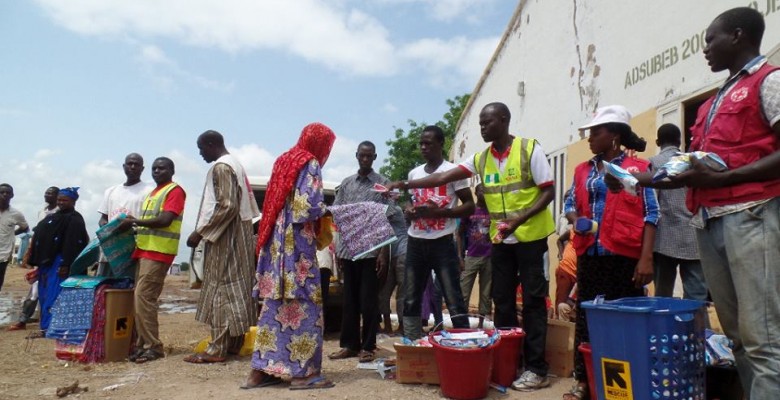
The Director General of the Plateau State Peace Building Agency, Dr. Joseph Lengmang has disclosed that over 20,000 locals have so far been displaced from their ancestral homes in Bassa LGA of Plateau State following the recent attacks.
He said over 180 houses were burnt down and over 50 people so far killed in cold blood in a situation that could have been averted by the security agencies by responding to the early warning signals of the Agency and intelligence reports shared.
The Peace Building Boss stated this while speaking with Newsmen yesterday in his office over the ugly development in Jos the state capital.
“It is so sad to see over 180 houses burnt down and to see how people were killed, as at the last count we are talking of over 50 people so far killed in cold blood.
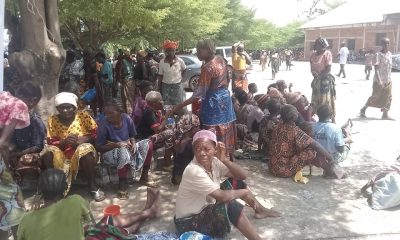
“As it is now, there is a looming humanitarian crisis because you have over 20,000 people already displaced and about 11 communities in Bassa LGA ransacked. This is a serious challenge not only to peace lovers but government in general,” Lengmang said.
He insisted that the Peace Building Agency has never been short of intelligence gathering and communicating it’s early warning signals to security agencies, pointing that the existing response gaps give room for the carnage.
“There has never been any shortage of intelligence, there has never been any shortage of warning signals from our end here. What we usually see is the gap, the response component (security).
“As I will always say, something is fundamentally wrong! And until something is done in that regard, we will keep going round the circle, and we are tired of these things. We are losing our humanity and it appears we are on the path to condemnation.
“Why is it that terrorist, killer herdsmen, bandits, kidnapers or whatever will sometimes write a letter to a community and they carry out this act thoroughly and meticulously and nothing is done about it?”, he furiously questioned.
For him, security agencies need to scale-up their efforts by being proactive.
“I hope the security agencies will overcome all the challenges they face, we are not saying they are not working, all we are saying is they need to scale-up.
“If there are gaps, if there are shortage of personnels, or shortages of equipment like the way they are complaining. I think this is a systemic and structural issues that should be dealt with and I hope the relevant authority, the federal government will respond to this, we are tire,” he lamented.



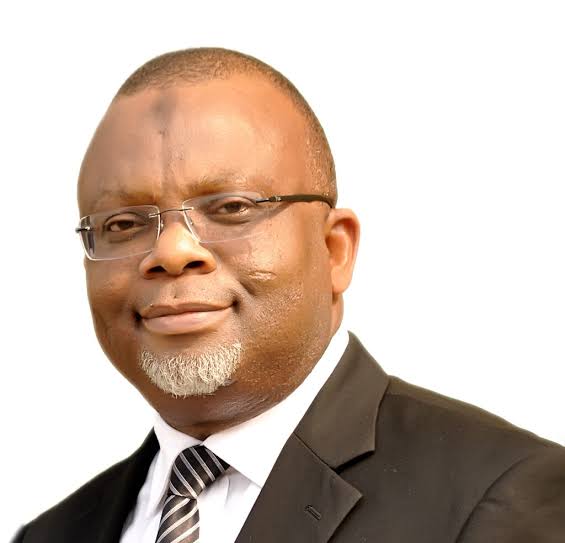
Ahead id 2027 general election, the Amir and National Head of the Ahmadiyya Muslim Jama’at of Nigeria, Barrister Alatoye Abdulazeez, has called for a new direction driven by unity, faith, and purposeful leadership — highlighting the role of young Nigerians in shaping that future, with figures like Adewole Adebayo emerging as potential rallying points.
Mike Odiakose reports in this insightful interview, Abdulazeez blends religious principles with socio-political realities, emphasizing the Ahmadiyya motto, “Love for All, Hatred for None,” as a foundation for national cohesion. He speaks extensively on Islam as a religion of peace, condemns terrorism carried out in its name, and underscores the importance of moral and value-based education in addressing Nigeria’s deep-rooted challenges. Significantly, the cleric turns attention to the political space, urging Nigerian youths to move beyond division, resist inducement, and organize themselves into a formidable force capable of influencing leadership outcomes. He points to Adewole Adebayo as an example of a leader youths could consider supporting—if they can unite across ethnic and religious lines. While offering a balanced assessment of the administration of President Bola Ahmed Tinubu, Abdulazeez maintains that Nigeria’s true progress will depend not only on those in power but also on the collective resolve of its citizens—particularly the younger generation—to redefine the nation’s trajectory. Excerpts:What does the Ahmadiyya Muslim Jama’at of Nigeria and its motto ‘Love For All & Hatred for None’ represent?
The Ahmadiyya Muslim Jama’at Community worldwide has a logo which states ‘Love For All, Hatred for None,’ and this is deeply rooted in our faith in Almighty Allah. Religion consists of two parts. The first part is to worship Allah. We sometimes limit the scope of worship to Solat alone, but no. Worship of Allah means that we dedicate ourselves to serving Allah, to peaceful coexistence, and to all of Allah’s creatures for the sake of Allah.
In the Holy Quran, we are taught that Allah created and owns everything. When you are providing food, medical care, making peace, or involved in disaster recovery for the subjects of Allah who are under trial, you are doing all these for the sake of Almighty Allah. All these acts put together are called acts of worship, though the highest act of worship is the remembrance of Allah Himself.
The second aspect is to love your neighbour as yourself. Various social amenities like hospitals, schools, and essential services provided by the Ahmadiyya community across Nigeria are not for Muslims alone but for all of humanity. We have Christians on our staff.
All the things we quarrel about in this world, especially regarding religion, stem from a lack of understanding. A Muslim does not have to hate a Christian, and a Christian does not have to hate a Muslim. If we love God genuinely, we will not cause havoc in the name of religion. The fear of God is the beginning of wisdom. It is the person who has that wisdom who knows that the whole world is like a garden and Allah is the owner. If you do what is good for the garden, you are working for Allah.
God gave human beings the option to do good or evil; He did not give this option to angels or other creatures, only to human beings. Therefore, we should always do good to all of Allah’s creatures irrespective of their level, class, colour, or religion and eschew evil. We must also know that we must serve God in the right way so that He will love us. If we do good to His creatures, He will be happy with us. If we do evil, He will not be happy. That is where the concept of reward and punishment in this life and the Hereafter comes in.
Are you saying Islam is a religion of peace?
As far as the religion of Islam is concerned, the Ahmadiyya Muslim community believes that the religion of Islam is a religion of peace which has come to teach humanity knowledge, love, and love for all the creations of God. People attacked the Holy Prophet Muhammad (SAW) on this, but he had the right to self-defence, which exists in all religions all over the world and is part of the concept of humanity.
Beyond the right of self-defence, the logo of the Ahmadiyya community — ‘Love for All, Hatred for None’ — is something everybody has to look into because there is no basis for anybody to hate a creature of Allah. If somebody is doing what is not right, there are law enforcement agencies that can be reported to.
Therefore, Islam means peace with God and peace with mankind, and that is what Ahmadiyya has come to preach. That is why we say Islam is a religion of love, because that is what Muhammad taught us, and that is what Ahmadiyya is doing right now.
If Islam means peace with God and humanity as you have explained, why are Boko Haram insurgents killing, kidnapping, and terrorising people in Nigeria in the name of religion?
The terrorists are so ungodly; they do not know God at all. If they knew God, they would have known that the whole world belongs to God. Second, they are powerfully ignorant — there is no doubt about that — because they do not know that they are being used. They are being used under the guise of religion. They tell these groups that if they fight jihad, they will go straight to heaven. However, Allah said if you kill one person, it is as if you have killed the whole of God’s creation. They burn churches, yet God said nobody should destroy any place of worship that belongs to Him.
With due respect, terrorism has nothing to do with Islam. The pillars of Islam are five. The first is to believe in Almighty Allah. Second, a Muslim must pray five times daily so that they do not remain dirty. The next is to pay Zakat — you should give to the underprivileged, take care of the oppressed, and love your neighbour. Then fasting. The fifth pillar of Islam is to travel for the sake of Allah, and that is the Hajj. Which of these pillars says we should kill anyone? None. Have you ever seen a terrorist building a mosque and calling it a Boko Haram mosque?
The challenge of terrorism is for economic purposes; they are only giving it a religious coloration. Most of these terrorists do not know what Islam is all about. They are simply lured with money. However, it is getting clearer now as analysts say that all terrorists worldwide were created by the United States of America’s CIA, and the essence is for solid minerals and oil. After the terrorists sack a whole village, the next thing is mining, and also to upstage any government that does not agree with them.
Those being used for terrorism do not know God at all. If they did, they would not destroy those whom God has created, because by killing, they are committing an offence in Islam. Our message to these terrorists is that they should lay down their arms and not take judgment into their own hands. But unfortunately, as long as the elites who are sending them to kill for economic purposes are giving them money, there will not be a solution as much as we expect.
What is the way out of these insecurity challenges?
Government at all levels should focus on national orientation so that people can be enlightened properly. History and moral education subjects should be reintroduced into our school curriculum. Our leaders should also remember that we will be remembered for what we do. They are not in positions to amass wealth but to use various offices to better the lives of Nigerians. It is also said that the fear of God is the beginning of wisdom. Religious leaders should also educate their followers to shun materialism and fear God. There is nothing you can tell someone who does not believe in God; such a person will only think of money, and money is the root of evil. There should be education on value systems — family values, societal values — both in the family and in schools.
The youths need to learn the art of hard work, desist from fraudulent activities, believe in this country, shun all acts of violence, and think of how they can transform the country positively. They have a lot to do in terms of changing the narrative and direction of how things are going on in the country. They should think of making Nigeria better and greater.
You mean youths also have a role to play in bringing solutions to our insecurity challenges?
Yes, the youths should get their house in order; organise themselves and be ready to take responsibility in bringing solutions to Nigeria’s challenges. Let me start with the EndSARS protest. There is no need for the youths to involve themselves in any protest if they truly want to take over from the older generations. They should select youths with positive character as leaders, and vote for them by voting out the old generations.
Presently we have someone like Adewole Adebayo of the SDP, who is a lawyer and businessman.
Well, someone like Adewole Adebayo can be identified by the youths as their leader, and they can agree to vote for him. It is the youths who vote for the APC, PDP, ADC, or whatever party. All they need to do is organise themselves. In the last presidential election, I remember we had about four youths who contested for the presidency, although they would have grown beyond the youthful age by now. They lost to the old generation because they could not come together to form a strong alliance. It is still the same thing right now. If the younger generation is sure that Adewole Adebayo can deliver, they should team up with him, get things right, encourage other youths from various tribes, see themselves as one, avoid tribalism, and not allow themselves to be induced with money. Then we can now start the real country. Because as it is presently, with all due respect, we are yet to start as a performing country. We have been formed as a country. Now we are at the second stage, which is the storming stage. Maybe at the end of storming, we will form a national norm. What we have now is a northerner norm, a southern norm, and an eastern norm. After the norming stage, we then move to the performing stage, and the youths have a serious role to play at this very critical stage. We must form a national norm, not a norm of O’dua Nation, IPOB, or that of the North, Arewa. Nigeria cannot perform at her storming stage.
My plea to the youth is that it is time we move from where we are; otherwise, we will keep moving in the same direction. Let’s move out of the woods and move to the next stage, which is the norming stage, and begin to move ahead as a nation. In the next 30 years, we will forget that we suffered as a nation.
Do you encourage your members to participate in politics?
Yes, we encourage our members to participate in politics because if they do not get involved, then they do not have the right to complain. Also, for the purpose of serving God and His subjects, not to amass wealth for selfish purposes.
What is your take on the current administration over past three years?
I must admit that President Tinubu has taken bold steps in some areas. Even if we brought an angel down to Nigeria right now, that angel would struggle to administer anything given the state of things. We need to start by acknowledging the credit of what someone has done and then encourage him in areas that need attention. That is the policy of our Jama’at, which emphasizes preaching and praying for our leaders—supplicating for their guidance, wisdom, and righteousness—rather than cursing them or promoting rebellion.
The President is trying his best, but we must understand that he cannot effect changes all at once. We really need to pray for him. For instance, the removal of the fuel subsidy that people criticize has freed up a lot of money. However, how that money is being spent is where he needs to pay closer attention. We have the coastal road from Lagos to Calabar…
He should pay close attention to the challenge of power. Without reliable electricity, Nigeria cannot move forward economically. He should appoint someone who truly understands the power sector to handle it. My honest view is that Mr. President is doing his best. Other grey areas should be looked into, and the followers should cooperate with him to succeed.
Words of advice to Nigerians in achieving a better and greater nation?
Irrespective of our tribe, religion, class, affinity, or belief system, we must see ourselves as one. If we can do that, we can have a uniform group at the national level. I am not saying we should eradicate our identities, but we must learn how to relate peacefully while respecting each other’s cultures and religions. The masses should remember that when it is time for politicians to share money, they do not discriminate. It is only when they want to use us for politics that they bring up issues of tribe.
In the coming general election, we must not allow politicians to use us as pawns in their games. Instead, we must unite and kick against this system of divide and rule. Honestly, if we can genuinely love ourselves and hate none, we will move forward. Without that, our development will be impeded.
End
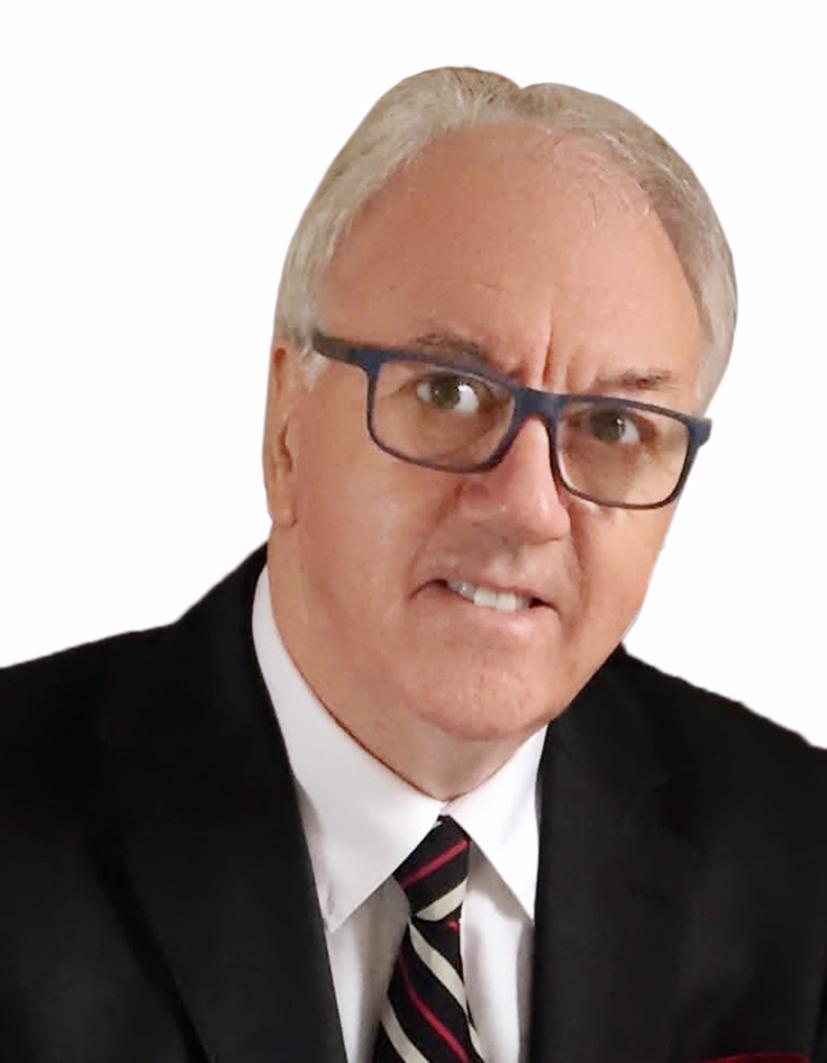
It is with a deeply heavy heart that we reflect on the passing of Mr Kenneth Stewart, a man whose life spoke louder than words and whose presence carried both dignity and compassion.
Ken was not just the first Chairman of the African Forum Scotland. He was a bridge builder, a man who saw beyond borders, beyond colour, beyond ethnicity.
He embraced people with sincerity and walked among communities with a rare humility that made everyone feel seen and valued. His love for Africa, especially Nigeria, was not symbolic. It was lived, demonstrated, and deeply felt in the countless journeys he made, the relationships he nurtured, and the causes he championed.From global boardrooms to grassroots engagements, Ken carried one consistent message: fairness to all, irrespective of colour or ethnic background.
In a world often divided, he chose unity. In spaces where difference could have created distance, he created belonging.That final memory remains tender and powerful. “Please come and take me to lunch and dinner since my mobility has arrived.” Words that now echo with both warmth and weight. None of us knew it would be the last exchange, but perhaps it captures something profound about him. Even in his own season of limitation, he reached out for connection, for fellowship, for life.
Ken lived fully. He gave generously. He believed deeply in people.
His legacy is not in titles alone, though they were many. It is in the lives he touched, the doors he opened, and the dignity he extended to others. As we honour him, let us not only mourn his passing but carry forward his conviction. Let fairness, compassion, and unity not end with him, but continue through us.
A timeless wisdom reminds us:
“Do not judge me by my successes, judge me by how many times I fell down and got back up again.” – Nelson Mandela
And the Scripture reassures us:
“The righteous man walks in his integrity; his children are blessed after him.” – Proverbs 20:7
Ken walked in integrity. His legacy will continue to bless generations.
May his soul rest in perfect peace, and may his life remain a guiding light to us all.
Dr. Festus Ogunmola
Co-Founder/Director of
African Forum Scotland, Centre For Policy Research and Development, Glasgow.
NEWS
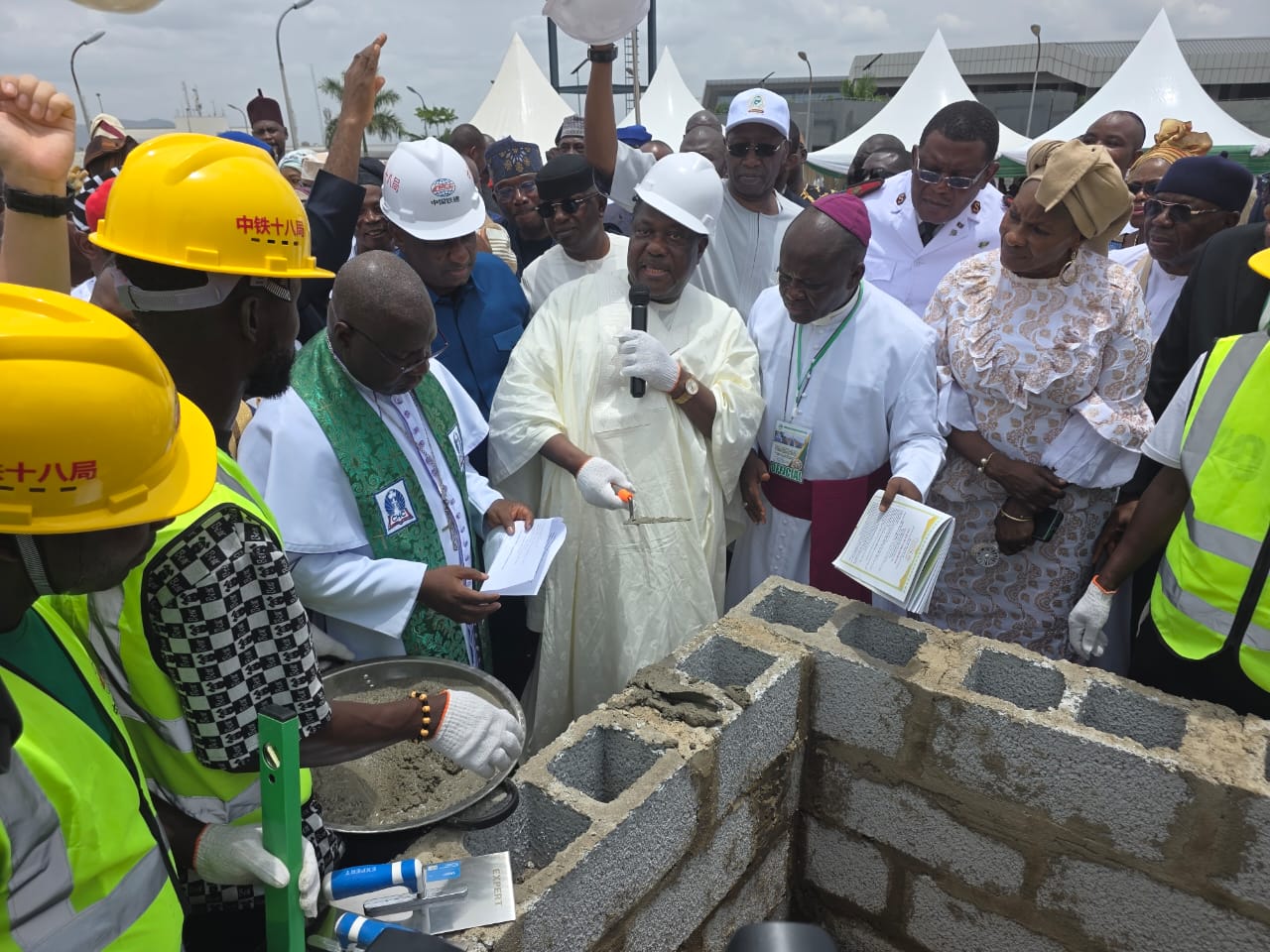
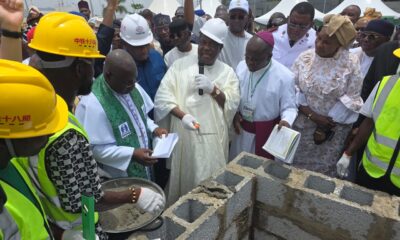
N25b Ecumenical chapel: it will stand as a beacon of hope, peace, promote faith – CAN President
By Laide Akinboade, Abuja
The President, Christian Association of Nigeria (CAN) Archbishop Daniel Okoh, at the weekend, said the proposed Christian Chapel and pilgrimage center,
will provide a sacred space for prayer, reflection,spiritual renewal for travellers, pilgrims, stand as a beacon of hope, peace, and God’s abiding presence in a place of constant movement.
Okoh stated this at the ground breaking ceremony of the chapel in Abuja.
He said the project is apt and significant, because it will promote faith, unity, and spiritual well-being within the nation.
According to Okoh, “This project is both timely and significant.
An international airport is not only a gateway to nations, but also a crossroads of human experiences. The establishment of a Christian Chapel and Pilgrimage Centre here will provide a sacred space for prayer, reflection, and spiritual renewal for travellers, pilgrims, and airport personnel. It will stand as a beacon of hope, peace, and God’s abiding presence in a place of constant movement.“This project is a landmark initiative of the Christian Association of Nigeria (CAN) as part of its 50th Anniversary celebration, and by the grace of God, it is expected to be completed and dedicated in October 2026”.
The CAN President paid tribute to President Bola Ahmed Tinubu and First Lady Oluremi Tinubu for their support, while calling on stakeholders and well-wishers to fulfil their financial pledges to ensure timely completion.
The CAN boss therefore commended
Minister of Aviation, Barrister Festus Keyamo, the Secretary to the Government of the Federation, Senator George Akume, the Senate President, Senator Godswill Akpabio, Senator Hope Uzodinma, the Executive Governor of Imo State for their supports and presence at this important occasion.
Secretary to the Government of the Federation, George Akume, while performing the groundbreaking ceremony, described the project as a “historic and spiritually significant undertaking” that reflects the intersection of faith, national development, and modern travel.
Akume said the facility would serve as a sanctuary for travellers, pilgrims and airport personnel, offering a space for prayer, reflection and spiritual renewal amid the pressures of transit.
“This is not merely the foundation of a physical structure, but the birth of a sanctuary of hope, a refuge of peace, and a sacred space where people can reconnect with God,” he said.
He noted that the initiative aligns with the Federal Government’s broader commitment to upgrading aviation infrastructure and improving passenger experience, adding that the project underscores a holistic approach to development that caters to both physical and spiritual well-being.
According to him, the ₦25 billion investment demonstrates Nigeria’s resolve to “not only build structures but nurture souls,” stressing that the centre would stand as a symbol of unity, compassion, and shared humanity.


2027: Rally Behind Adebayo – Ahmadiyya Chief, Abdulazeez
ShareAhead id 2027 general election, the Amir and National Head of the Ahmadiyya Muslim Jama’at of Nigeria, Barrister Alatoye Abdulazeez,...

Adebayo Raises Alarm Over ‘Stifling’ of Opposition Under Tinubu, Warns of Shrinking Democratic Space
ShareBy Mike Odiakose, Abuja The 2023 presidential candidate of the Social Democratic Party (SDP), Prince Adewole Adebayo, has raised concerns...

Beyond Colour, Beyond Borders: The Ken Stewart Legacy”
ShareIt is with a deeply heavy heart that we reflect on the passing of Mr Kenneth Stewart, a man whose...

N25b Ecumenical chapel: it will stand as a beacon of hope, peace, promote faith – CAN President
ShareBy Laide Akinboade, Abuja The President, Christian Association of Nigeria (CAN) Archbishop Daniel Okoh, at the weekend, said the proposed...


Wike Waives C-of-O Fees for Nigerian Law School
ShareBy Laide Akinboade, Abuja The Minister of the Federal Capital Territory (FCT), Nyesom Wike on Thursday gave an immediate waiver of fees for the Certificate of...
Study Links Alcohol to Higher Cancer Burden in Australia
ShareAustralian researchers on Thursday revealed that alcohol consumption causes a higher proportion of cancers in Australia than previous estimates. According to a statement of...


C’River Debunks False COVID-19 Report, Confirms Only One Case
ShareFrom Ene Asuquo, Calabar The Cross River State Government has refuted a publication by online platforms alleging the discovery of 10 new...


NCC Orders Airtime Credits for Poor Network Service
ShareThe Nigerian Communications Commission (NCC) said telecom operators will compensate subscribers for poor network quality through airtime credits under a strengthened regulatory enforcement framework...


CBN Orders Banks on Monthly Report of Mobile, ATM Transactions
Share The Central Bank of Nigeria has directed banks and other financial institutions to submit monthly reports on failed electronic...


Tinubu Seeks Senate Nod for $516m Sokoto–Badagry Superhighway Loan
ShareBy Eze Okechukwu, Abuja President Bola Tinubu has formally requested the National Assembly’s approval for a $516.3 million external loan...