
NEWS
Delta Community Leaders Warn Mischief Makers to Stay-off Billionaire Philanthropist

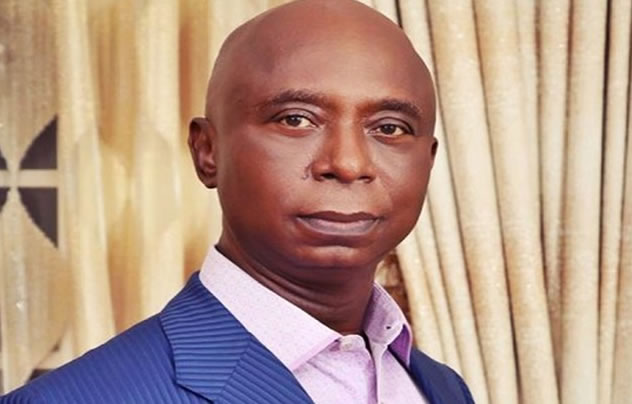
Community leaders, stakeholders and youths of the Idumuje Ugboko Community in Aniocha North local government of Delta state have said attempts to drag an illustrious son of the town, Prince Ned Nwoko into investigations over alleged acts of criminality in the community would fail.
Members of the community said they were happy with the indelible and singular effort of their son and philanthropist, Ned Nwoko to bring Idumuje Ugboko community on the global map of development.
They called on those whose stock in trade was to promote disunity and violence against innocent indigenes of the community for their selfish interest to immediately retrace their steps.
They said some persons currently facing prosecution based on allegations bothering on act of terrorism, arson and abuse, will have their days in court to answer allegations against them and wondered why Prince Ned, a peace loving Philanthropist should be fingered in their ordeal.
Chief Fred Chuwku, a stakeholder in the community, in a statement following a viral post which attributed the crisis in the community to allegation against Ned Nwoko of land grabbing and oppression, said the philanthropist acquired the said expanse of land following due process of land acquisition.
“It is most unfortunate that these same people who are had masterminded the wanton destructions in the community could even speak up and blame their ordeal on an innocent man whose worry is to put smile on the faces of Nigerians irrespective of tribe, religion or creed.
Similarly, the media aide to Prince Ned, Ifetayo Adeniyi, said those who sponsored the story did not make proper finding on the alleged land grabbing case and noted that it was misleading that the 100 acres of land were yet to be developed.
“There was no plan whatsoever by Ned to deceive the members of the community considering the fact that the same Ned has given scholarship to countless members of the community and it would be detrimental to drag his name in the mud”
He noted: “About 5 years ago, he proposed that he wanted to build a University in the community and the Obi in Council (appointed by late Obi to deal on community Land) gave him the land with a caveat that if in 5 years he didn’t do anything on the land they will take it back.
“The said land will be like an equity contribution from the Idumuje Ugboko community more like a joint venture for the community to own 40% and he paid money to the community and clan heads for their crops compensation and extra land he acquired.
“I can tell you categorically that if you go there today construction of the first sport University in Africa, is ongoing. NUC team were there to see the level of work. So it is preposterous and unfair to accuse him of bullying the same community people he has always protected and supported”
“The heinous crimes by these culprits, their refusal to appear in court after several adjournments, court bench warrants issued and court officials who went with police to execute warrants were beaten up and assaulted”
“Some of the defendants arrested and arraigned but granted bail on stringent conditions and their crimes has nothing to do with land dispute. Land disputes are in civil courts,” he stated.




By Ishaya Inuwa Durkwa
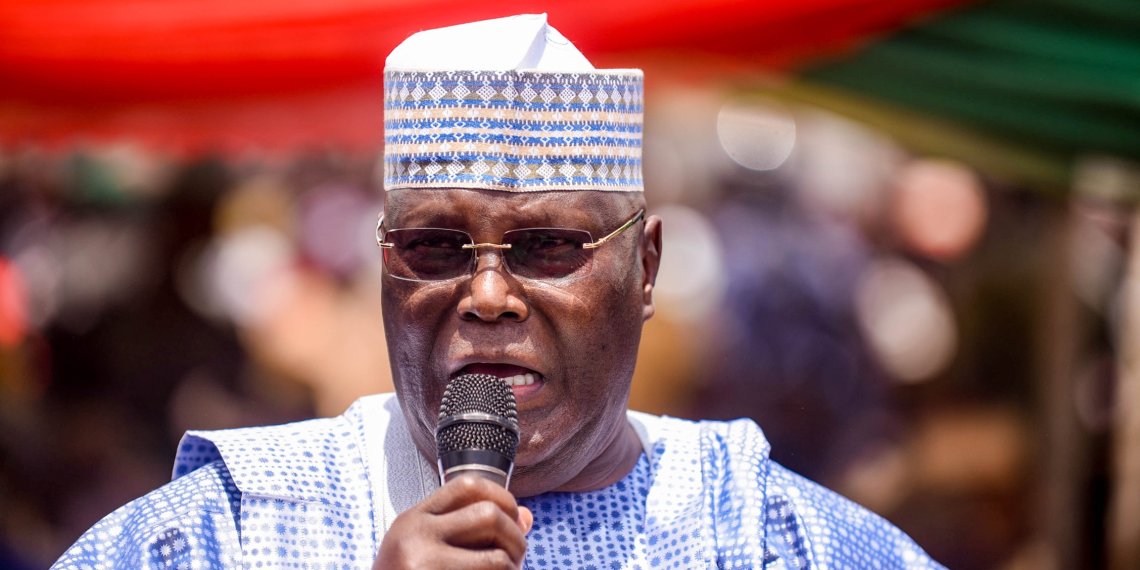
There comes a time when a people must decide whether yesterday’s grievances will continue to determine tomorrow’s possibilities. I believe that moment has come for us in Adamawa State concerning our relationship with Atiku Abubakar.
I am not asking anyone to consider Atiku simply because he is from Adamawa. Nigeria is too important for us to choose a president on the basis of birthplace, ethnicity, or religion. I am asking a more important question: Can we put aside our swords for a moment, look at this man again, weigh his strengths against his weaknesses, and ask whether the years we have counted against him may actually have prepared him for the enormous responsibility of leading Nigeria?Atiku is not a perfect man, as no human being is, nor any Nigerian politician.
I have no interest in creating one. He has been in Nigerian politics for a very long time. He has made friends and enemies, taken difficult political decisions, changed political alliances, and accumulated controversies along the way. There are people in Adamawa who have genuine political disagreements with him. There are those who believe he has not done enough for his home state. Others have grievances going back many years. Those feelings cannot simply be wished away because another election is approaching. But neither should our disagreements make us blind to what is equally obvious: very few Nigerians seeking the presidency today have Atiku’s depth of exposure to the Nigerian federation, its economy, its politics, its institutions, and its contradictions.For some people, the fact that Atiku has been around for so long is itself the problem. I understand that argument, but I think we should look at it differently. When did experience become a crime? Nigeria is one of the most complicated countries to govern in Africa. We are a federation of 36 states and the Federal Capital Territory, more than 200 million people, hundreds of ethnic nationalities, different religions, enormous economic inequalities, and competing regional interests. Our next president must confront insecurity, unemployment, inflation, weak institutions, electricity shortages, infrastructure deficits, and a generation of young Nigerians increasingly losing confidence in their country. Surely, in circumstances like these, experience should at least count for something.
Atiku served as Vice President of Nigeria for eight years, from 1999 to 2007. During that period, he chaired the National Economic Council and the National Council on Privatisation. The latter played an important role in the reform and commercialization of public enterprises and in opening parts of the Nigerian economy to greater private participation. It would be wrong to attribute every reform of the Obasanjo administration to Atiku. Government does not work that way. But it would be equally wrong to erase him from an administration in which he served at the highest level for eight years. He was there when important economic decisions were being made. He saw the Nigerian state from the inside. He experienced the difficulty of translating policy into reality. He understands how governors, ministries, agencies, businesses, and political interests interact. That knowledge matters.
The privatisation question itself deserves a little more honesty than our politics usually allows. Critics have accused Atiku of presiding over the sale of national assets to friends and point to the poor performance of some privatised enterprises as evidence that the policy failed. Those concerns deserve scrutiny, but the historical picture is more complicated. Nigeria’s privatisation programme did not begin with Atiku; it dates to the late 1980s, and the 1999 law created a statutory National Council on Privatisation, chaired by the Vice President, with the Bureau of Public Enterprises as its implementing agency. The reform was undertaken because many state-owned enterprises had become inefficient, financially burdensome, and vulnerable to the same corruption and political interference that weakened much of the public sector. Nor is it accurate to say that everything associated with privatisation failed. The liberalisation of telecommunications, for example, helped transform a country with only about 400,000 telephone lines in 2000 into Africa’s largest mobile market, while some privatised firms in cement, fertiliser, and hospitality subsequently met performance obligations well enough to be released from routine BPE monitoring.
Other transactions undoubtedly performed poorly, which is precisely why privatisation should never mean simply selling an asset and walking away. It requires transparent bidding, competent investors, strong regulation, enforceable performance agreements, and continuing public accountability. I therefore think it is too simplistic either to pronounce the entire programme a success or to attribute every subsequent failure of a privatised company personally to Atiku. The more serious question is whether Nigeria should continue pouring scarce public resources into enterprises that the government has repeatedly demonstrated difficulty managing, or create transparent, competitive, and properly regulated arrangements in which private capital and expertise can deliver services while the government protects the public interest. Ownership should ultimately be judged by efficiency, accountability, and public value, not ideology. That is the economic debate Atiku’s record should provoke.
Perhaps this is why I think we should reconsider another criticism frequently made against him: Atiku has been trying to become president for too long. Yes, he has tried repeatedly. He has won primaries and lost elections. He has suffered political setbacks and returned. He has been criticised and returned. Alliances have broken around him and he has returned. Years have passed, and he has continued to pursue the same ambition. Must we interpret that persistence only as desperation? Could it also be conviction? Could a man continue pursuing an objective because he genuinely believes that he has something to contribute? The more useful question is no longer how many times Atiku has tried to become president. It is what all those years have taught him and what he would do differently if Nigerians finally entrusted him with the responsibility.
Then there is the question of age. Atiku is no longer a young man. That is a fact, not an insult. Nigerians are entitled to consider the age, health, energy and capacity of anyone seeking such a demanding office. But age by itself is not an argument. Youth does not automatically produce competence, just as old age does not automatically produce wisdom. The proper question is whether a candidate possesses the intellectual, physical and leadership capacity required for the job. Perhaps instead of simply asking, “How old is Atiku?” we should also ask, “What has Atiku learned with age?” If those years have produced experience, perspective, relationships and institutional understanding that Nigeria can use, then age should be considered alongside those strengths rather than used to end the conversation.
We must also be willing to talk honestly about the corruption allegations that have followed Atiku. Those of us who want Nigerians to look at him again do our case no good when we pretend that such allegations have never existed. They have, and some have been serious. They should be examined. Questions should be asked. Evidence should be scrutinised. But we should also be careful about the difference between an allegation, an investigation, a finding and a criminal conviction. These are not the same thing. A U.S. Senate subcommittee investigated financial transactions connected to Atiku and members of his family years ago, but the much circulated Senate report did not itself result in criminal charges against him. Democracy requires us neither to conceal allegations nor to turn allegations into convictions by repetition. Let the evidence speak, and let the same standard apply to everyone seeking to govern us.
This brings me home to Adamawa.
I know that Atiku is a complicated political subject here. Perhaps we know him too closely. Familiarity has its advantages, but it can also prevent us from seeing what people standing farther away can see. We remember our political battles. We remember disagreements between camps. We remember who supported whom and who offended whom. Some have personal disappointments. Others have legitimate political objections. But I am appealing to my brothers and sisters across Adamawa: perhaps it is time to sheath our swords.
I am not asking us to do so because Atiku is Fulani. I am not asking because he is Muslim. I am not even asking simply because he is from Adamawa. I am asking because one of our sons has remained a consequential figure in Nigeria’s national political conversation from the beginning of this democratic era, and he possesses strengths that deserve to be considered seriously. There is nothing shameful about Adamawa recognising that. There is nothing wrong with being proud that a son of Jada has remained on the national stage through victories, defeats, controversies and changing political seasons. The mistake would be turning that pride into ethnic entitlement.
Adamawa should not go to the rest of Nigeria saying, “Vote for Atiku because he is our son.” That argument is too small for the Nigeria we want to build. We should instead be able to say, “Here is our son. Examine him. Question him. Test his ideas. Investigate his record. Look at his mistakes. Look also at his strengths. Study what he proposes to do about the economy, security, federalism, jobs, agriculture and national unity. Then decide whether his experience can serve Nigeria.”
That is a case Adamawa can make with dignity.
Perhaps we should even turn some of the things that have been used against Atiku into questions. He has been around for a long time, yes, but what if those years have taught him how the Nigerian state actually works? He has contested repeatedly, yes, but what if those defeats have produced resilience and a deeper understanding of Nigeria? He has belonged to the political establishment, yes, but what if understanding that establishment gives him unusual insight into what must be changed? He is older, yes, but what if age has accumulated experience that Nigeria can put to work?
These questions do not absolve Atiku of anything. They simply ask us to move beyond labels.
Atiku himself must also understand that experience creates responsibility. If Nigerians are going to reconsider him, he must explain clearly what he has learned from the past. He must tell Nigerians what he would do differently. He must demonstrate how his economic ideas would put food on people’s tables, create jobs for young people and restore confidence to businesses. He must explain what restructuring means in practical terms. He must show how he would confront insecurity. And he must convince Nigerians that his government would belong to the entire country, not to a region, religion, political network or circle of friends. Experience should not merely be celebrated; it must be converted into results.
That, for me, is where the Atiku conversation should now go.
For years, many Nigerians have asked, “Why Atiku again?” Perhaps we should begin asking another question: “Why not examine Atiku again?”
Nigeria owes Atiku no presidency. Adamawa cannot demand it for him. No politician is entitled to the votes of Nigerians. But after decades at the centre of Nigeria’s democratic journey, I believe Atiku deserves something much simpler: a fair hearing.
So my appeal to Adamawa is that we lower the temperature of our internal political battles. Let us not allow yesterday’s quarrels to blind us to today’s possibilities. Let us look at our son again, not through the narrow lenses of ethnicity, religion or personal political grievances, but through the larger question of what Nigeria needs at this difficult moment in its history.
And my appeal to Nigerians is equally simple: do not consider Atiku merely because he comes from Adamawa, and do not dismiss him merely because he is old, has been around for a long time, or has carried allegations for years. Interrogate the man. Interrogate his record. Interrogate his policies. Interrogate his mistakes. Interrogate his experience. Ask what he has learned and what he intends to do differently.
Then make your decision.
Perhaps, after that examination, Nigerians may discover that the experience we have spent years holding against Atiku Abubakar is precisely the experience worth examining for the enormous task of rebuilding our country.
Ishaya Inuwa Durkwa write from Adamawa State
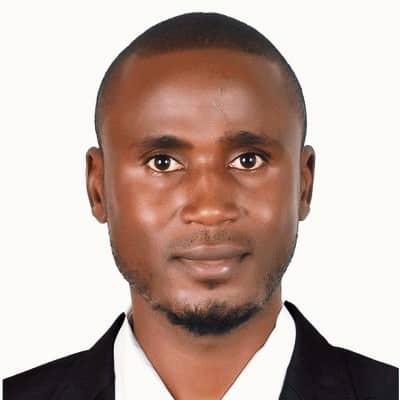
By Suleman Ahmad Tudu
On October 1, 1996, Zamfara State was carved out of the old Sokoto State by the then Military Head of State, late General Sani Abacha in a very rigorous and competitive process.
Out of 72 requests for new states, 2,369 for local governments, and 286 for boundary adjustments, Zamfara—alongside five other states, one each from six geopolitical zones—was created.
This development was wildly celebrated across the affected states. After years of agitation, the people finally had their own identity, their own capital and full control of their own destiny.However, over those three decades, Zamfara’s destiny travelled only on roads when that of our peers was cruising the skies. Zamfara was the only state in the entire North-West, and the only one among the six states created in 1996, without an airport or even an airstrip.
To reach Zamfara, no matter your social class, you had to endure a lot of turmoil. You had to endure the seven-hour drive from Abuja through deplorable roads and the anxiety that came with every journey along that vulnerable route.
However, that narrative has now changed. Three decades after its creation, the fledgling Zamfara has finally grown wings and begun to fly, all thanks to the visionary leadership of Governor Dauda Lawal, the state’s 5th civilian Governor and the 6th overall.
In the midst of fighting insecurity and revamping education, healthcare and other critical sectors, Governor Lawal mobilized resources, summoned courage and demonstrated political will to build the Gusau International Airport from scratch in less than three years. And he achieved this without neglecting any critical sector or increasing the state’s debt profile.
Today, Zamfara has earned the prestige of boasting an international-standard cargo and passenger airport, with commercial operations just commenced on the 1st of October 2026, the day of the state’s 30th anniversary. I couldn’t imagine a better way to celebrate an anniversary!
But let me digress briefly to make one thing clear. By celebrating this achievement, I am not trying in any way to gloat over ordinary citizens like myself who may not have the privilege of affording air tickets. As a matter of fact, the last time I “travelled by air” was from a mango tree down to the ground when I was around 12 years old. But I will not tell you how I landed! Lol.
On a more serious note, whether you can afford an air ticket or not, the Gusau International Airport is about you. Just as you don’t need to own a trailer truck to benefit from a good road or trailer park, you don’t need to board a plane to benefit from an airport. But be rest assured that, one way or the other, the airport will bring development to your doorstep and perhaps, food directly to your plate. Let me tell you how.
Firstly, having an airport in today’s dynamic world is not just about the prestige it brings. It is about opening up Zamfara, granting access to investors and unlocking other life-changing opportunities. This will create more jobs and reduce the unemployment rate in the state. It will also significantly boost the state’s Internally Generated Revenue (IGR).
Secondly, Zamfara State sits on one of the largest mineral reserves in the country and produces an impressive share of Nigeria’s agricultural output. When investors can fly into Zamfara in less than 50 minutes, they can come and buy your millet, sorghum, maize and beans directly, without interference from middlemen.
Consequently, high-value farm produce, processed gold and livestock can reach international markets in record time, generating more revenue for farmers, artisanal miners and the state. This revenue can then be used to build schools for your children or a primary healthcare centre for your community. In this way, airport-induced activities bring development to your doorstep and food to the table of farmers even in the remotest communities.
More importantly, the airport will now enable the rapid airlifting of security forces, surveillance assets and emergency supplies. This will significantly help in addressing our lingering security challenges.
Additionally, one of Zamfara’s major challenges over the years has been retaining specialists. Doctors and consultants often rejected postings to Zamfara due to accessibility and inadequate remuneration. I can proudly say that Governor Lawal has eliminated these barriers. As it stands today, Zamfara State pays its doctors more than the Federal Government. This competitive remuneration, coupled with enhanced accessibility, will undoubtedly attract specialists to care for our citizens.
This is why the Gusau International Cargo Airport is a true game-changer. It is the runway on which Zamfara’s sustainable development will take off.
At 30, Zamfara is airborne. Alhamdulillah, and happy anniversary!
Tudu is the Senior Special Assistant on Media, Office of the Secretary to the Zamfara State Government.
Sulemantudu22@gmail.com
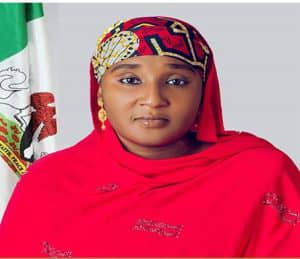
By Tony Obiechina, Abuja
The federal government has digitalised the selection process for the 2026 President’s Teachers’ and Schools’ Excellence Awards (PTSEA), ending the manual process previously used in selecting outstanding teachers and schools.
The Minister of State for Education, Prof Suwaiba Said Ahmad, disclosed this in Abuja on Friday during a press briefing ahead of the 2026 World Teachers’ Day celebration scheduled for Monday, October 5.
World Teachers’ Day is observed annually on October 5 and has been celebrated since 1994.
The 2026 edition also marks 60 years of the 1966 ILO/UNESCO Recommendation concerning the Status of Teachers, which established international standards relating to teachers’ rights, responsibilities, preparation, recruitment, employment and working conditions.Prof Ahmad said the digital selection process was introduced in line with African Union guidelines to promote transparency, accountability, security and proper documentation in the selection of awardees.
She said, “For the first time, the selection process coordinated by the Federal Ministry of Education was digitalised in line with the African Union guidelines to ensure certainty, accountability and reference”.
The minister said the annual celebration, organised by the Federal Ministry of Education in collaboration with the Nigerian Union of Teachers (NUT), would focus on transforming the teaching profession and preparing teachers for the demands of a rapidly changing world.
According to her, the celebration would focus on five interconnected pillars; innovation, mobility, artificial intelligence, inclusion and professional excellence.
The minister said 14 teachers, schools and other education stakeholders would be recognised under the 2026 awards, with the first, second and third-best teachers receiving prizes, while other awardees would receive laptops.
She said teachers from the 36 states and the Federal Capital Territory would participate in the October 5 celebration, including a march-past featuring state flags and cultural attire to showcase unity, diversity and cooperation.
Speaking on behalf of Nigeria Union of Teachers (NUT) President, Comrade Titus Amba, the union’s Deputy National President, Kizito Kalu, said the changing nature of education made it necessary to TV strengthen rather than diminish the professional role of teachers.
Kalu said technology and artificial intelligence were transforming education, but teachers must remain at the centre of the learning process.
“The NUT believes that a strong education system cannot be built without a strong, respected and adequately supported teaching profession,” he said.
He added that teachers needed to be equipped to navigate technological changes with confidence and competence.
“The future of education must therefore be a future in which teachers are empowered to adapt, innovate and continue to exercise their professional judgement,” Kalu added



Atiku Abubakar: Perhaps it is Time to Give Him a Fair Hearing
ShareBy Ishaya Inuwa Durkwa There comes a time when a people must decide whether yesterday’s grievances will continue to determine...

Zamfara at 30: At Last, Zamfara Has Begun to Fly
ShareBy Suleman Ahmad Tudu On October 1, 1996, Zamfara State was carved out of the old Sokoto State by the...

FG Moves to Automate Teachers’ Awards, Ends Manual Selection Process
ShareBy Tony Obiechina, Abuja The federal government has digitalised the selection process for the 2026 President’s Teachers’ and Schools’ Excellence Awards (PTSEA),...

Utsev Leads Nigerian Delegation to World Water Congress in Glasgow
ShareBy David Torough, Abuja Minister of Water Resources and Sanitation, Engr. Prof. Joseph Terlumun Utsev, will on Saturday, October 3,...


BBNaija Season 11: Keivo Becomes Second Housemate to be Disqualified
ShareKeivo has become the second Big Brother Naija housemate to be disqualified from Season 11. This follows his physical altercation...


Mofe-Damijo Envisions Bright Future for Nigeria at 66
ShareVeteran actor and public speaker, Richard Mofe-Damijo, has expressed optimism about Nigeria’s future, describing the country as a work in...


My Wife Paid $20k for Her Surgery Herself, Peller Fires Back at Carter Efe
ShareNigerian content creator and streamer, Peller, has fired back at Carter Efe after the streamer compared their relationships while praising...


I Didn’t Want to be in the Spotlight – Tems
ShareGrammy-winning Nigerian singer Temilade Openiyi, popularly known as Tems, has revealed that despite wanting musical success, she was uncomfortable with...
Nigeria at 66: Which Way Nigeria?
ShareBy Tochukwu Jimo Obi Sixty six years after independence, Nigeria should be asking itself a question that can no longer...

Nigeria at 66: Booming Banks, Struggling Nation, Where Is the Promised Prosperity?
ShareBy Blaise Udunze As Nigeria celebrates 66 years of independence, it must ask whether the country has delivered the prosperity...