
FEATURES
Insecurity: UNICEF, CAN, Stakeholders Want Military Outpost to save Education in Niger


By Dan Amasingha, Minna
From available datas, insecurity has escalated the number of out of school Children in Nigeria especially in the North central states of Niger, Venue, Plateau, Kogi, Kwara and Nassarawa UNICEF, figured estate about 10.
5 million of the Nigeria’s children aged 5-14 are not in school as only 61 percent of 6-11 years olds regularly attend primary and schools and only 35. 6 percent of children aged 36-59 month receive early childhood education.In this report, Our Correspondent, Dan Amasingha examines the underlying security challenge confronting Agwara, Borgu local government areas bordering Republic of Benin and the need to urgently halt the trend before the education sector collapses in the area.
Residents of Papiri are yet to come to term of the recent large scale abduction of the St. Mary Catholic school , parents and the abducted pupils were only savouring the Yuletide period when the date devil bandits struck again in the first week of January, 2026 at Kasuwsn Daji in Borgu local government area of Niger State, a stone throw from Papiri, this time they left in their trail over fourty dead, beyond disrupting the socio- economic activities of the area, the majority casualty is the educational sector and school age Children.
This bleak educational future for the leaders of tomorrow, the Children necessitated the cal from various quarters on the need for the government to beef up security particularly in Papiri so as to ensure children in Agwara local government area are not denied education as well as the general population.
The United Nations Children’s Fund Charter (UNICEF) states that all children, no matter where they live or what their circumstances, have the right to quality education. In the north of the country, the picture is even bleaker, with a net attendance rate of 53 percent. Getting out-of-school children back into education poses a massive challenge.
Findings by our Correspondent have it on good authority that there is no military base in the area encompassing the entirety of Agwara LGA and the vast majority of Borgu LGA which houses the iconic Kainji dam and the Kainji National Game’s reserve. The Police in the area are also ill equipped and have shortage of personnel, few if any operational vehicles nor sufficient firearms to tackle insecurity. It was also noted that there is a serious lack of co-ordination between the various security agencies operating in the area, in particular with the military. Both Borgu and Agwara Local Government areas were originally part of Kwara state, but on 27th August 1991 they became part of present day Niger State. However, it would appear that the military command structure has not been changed to date. Such a laborious chain of command poses a serious obstacle to the rapid deployment of troops to deal with banditry and insurgents. There is an urgent need for streamlining of the Military chain of command and a review of the co-operation or lack of it between all the Security agencies.
In view of the above, St. Mary’s Private Catholic Primary and Secondary schools Papiri, in Agwara local government area of Niger State, need the total Security support of not only the state, but specifically of the Federal government, if they are to have any hope of ever re-opening. Since the abduction of school children in Papiri there has been a Mobile Police presence of approximately 40 personnel guarding the village and the school. However, in spite of this, every day more and more people in Papiri and the nearby Villages of Guffanti, Sokonbara and Bako-Mission are packing their belongings and fleeing the area entirely due to fear of further attacks, especially since the nearby Kasuwan Daji massacre. It is imperative therefore that there is a permanent Military as well as Police base on the ground in the area, capable of not only securing life and property, safeguarding the lives of Pupils, teachers and villagers alike, but also capable of taking the fight to the enemy. The current situation in Papiri is not easy on the Mobile Police where 40 of them are expected to defend against at least more than twice that number of attacking bandits.
Niger State government’s recent directive that schools with threats of terrorist attack should remain closed has given credence to speculation that St Mary’s Catholic School, Papiri, being the only quality educational institution in the entire area, is being threatened with permanent closure, since to date there is no sufficient security presence in the area capable of defending the village of Papiri itself, talk less of the school.
It is commendable that in order to complementing the government’s efforts and to ensure children acquire basic education in Agwara LGA, the Catholic Diocese of Kontagora established the fully equipped St. Mary’s Private Catholic Primary and Secondary schools Papiri, with both Day and Boarding students to serve those who attend school from far distant communities which are up to 100 kilometres away. The abduction of 230 children and teachers and the recent slaughter of 42 persons in Kasuwan Daji market, bordering Agwara and Borgu local government areas and only 15km from Papiri is another clear indication of the absence of a credible security presence in the area as the terrorists were able to burn the market and village to the ground in broad daylight without fear of any security force personnel.
The Proprietor of the school and Catholic Bishop of Kontagora Diocese, Most Rev. Bulus Dauwa Yohanna commended the Federal and State governments, the security agencies and the Media for their roles in ensuring the children and teachers were rescued. He urged the government to see that Papiri Schools speedily re-open adequately protected by a well-equipped and sufficiently numerous security force capable of protecting the children and deterring and if necessary repelling any future attack.
In a passionate appeal during an interview with Journalists, Bishop Bulus D Yohanna who is also the Chairman of the Christian Association of Nigeria (CAN), Niger state chapter, appealed to the government to stand by their words by establishing a military outpost and empowering the security agencies to always be present in Agwara.
He then explained that “the school was established for our children irrespective of religion or tribe so as to build a better future for them, let us not allow their dreams to die because of this ugly incident. Please, all that the government needs to do is beef up security so that our children, teachers and even people in the area can feel secure and learn in a safe environment”.
Also, in a statement, on Tuesday 6th January 2026, the United Nations Resident and Humanitarian Coordinator in Nigeria, Mohamed Malick Fall, called for stronger protection of civilian spaces and schools following the spate of attacks in Niger State.
Fall also described the abduction of children and teachers of St. Mary’s Catholic School as a grave violation of human rights, including the right to life and the protection of civilians, saying “particularly, the abduction of women and children undermine the right to education.”
Niger state Commissioner for Homeland Security, Barrister Maurice Magaji in a telephone interview said comprehensive efforts are being put in place to ensure security is in place in Agwara, Borgu and other troubled LGAs.
He however explained that the government would not want to put the lives of its people at risk by rushing to open schools in troubled areas saying “the government has a responsibility to protect lives and properties. Life comes before education, let us be calm and as soon as there is calm within a short time, the schools in these troubled areas will be opened in phases.”
A chieftain of the All Progressives Congress (APC) in Niger state, Hon. Jonathan Vatsa called for the immediate establishment of a military base and the deployment of marine Police to Agwara local government as a way to minimize the persistent terrorists’ attacks in the area.
The former Publicity Secretary of APC in the state said in a statement in Minna titled: “Urgent call for the establishment of Naval Base and Deployment of Marine Police in Agwara local government area of Niger State”, said the persistent and current situation is beyond what the state government alone can handle, stressing that the federal government must come to the rescue of the state government in tackling the challenges.
Vatsa, who was a Commissioner for Information, Culture and Tourism expressed great worries that the River Niger has increasingly become a security blind spot that enables armed groups to evade land-based security operations, adding that “this vulnerability was glaringly exposed during the insecurity around Papiri community where attackers leveraged riverine routes to perpetrate violence and retreat beyond the immediate reach of conventional security forces”.
It should be recalled that after the Federal Government’s delegation led by Mallam Nuhu, Ribadu, the National Security Adviser to President Bola Tinubu visited Kontagora, parents, relatives and authorities of St Mary Catholic School, Papiri, Agwara Local Government Area of Niger State, were able to breathe a hopeful sigh of relief with the assurance that “the 230 children and teachers are doing fine and would return back safely”.
Worried by the level of insecurity and government’s directive to close schools till further notice in Agwara and other areas, the Principal of the school, Rev. Sister Felicia Gyang, appealed to the federal and state governments including the security agencies to prioritise security in Agwara LGA so as to ensure the children are not denied education and for the safety of everyone including teachers, parents and residents.
One of the teachers who narrated his ordeal, Cyril Ibrahim while commending the school authority, the government and security agencies for their roles in ensuring their safe rescue, appealed for a beef up in security in Papiri, saying “this is the only good school in this local government area that serves more than 50 communities. We are begging the government to do all it can to ensure this school continues by providing security for us.”
Another teacher, Hannah Tevi who was abducted alongside her son and her husband who was visiting them at the time, said the experience was traumatic for them all and still remains fresh in their memories, particularly as most of the time they have to vacate their houses and hide out in the bush for fear of the bandits who freely travel throughout the area both by day and night. Mrs. Tevi then appealed to the federal and state governments to come to their rescue saying “we (teachers) will be out of jobs if this school is not reopened and security beefed up. If there is security, we will feel secure and be able to teach our children.”
Markus Abuka whose only child was abducted and rescued said that although they as parents were devastated, that all hope was not lost as they all resorted to prayers and to trust the promise made by the federal government through the NSA. However, pained by the recent attacks that claimed 42 lives in nearby Kasuwa Daji, Abuka who was seen in a trending short video alongside other villagers, urged the government to set up a military base and joint security outpost to safeguard the lives of the people in Agwara LGA and neighbouring communities such as Sokonbara and other vulnerable villages like Bako-Mission in Borgu LGA, where bandits either by day or night, regularly pass through on their way to carrying out atrocities. Our rescued children he said are presently being doubly traumatised as they are forced together with their parents to hide in the bush at night for fear of being kidnapped again or murdered. The threat we are now facing goes far beyond the school in Papiri. Between Sunday
December 28th and Saturday 3rd January 2026, the date of the attack in Kasuwan Daji, these bandits roamed freely around the area both day and night without being challenged by anyone. Markus pleaded with the authorities to come to their rescue before the next attack which surely is not far off.
Another parent, Livinus Samaila appealed to the government to do all it can to ensure the school still functions as it is the only school that serves almost 60 communities. In his words: “if nothing is done, all our children will be deprived of education, and many of us will end up murdered by these terrorists because we do not have anywhere to go to. We need security and Military outposts so that our children and even we the parents can live freely without fear of being attacked.” Without the rapid deployment of an overwhelming Military force, North Borgu and Agwara face enslavement by these bandits.
Some of the students Florence Michael and Felicia Musa while recounting their ordeals in the hands of the abductors, prayed the governments to do all they can to provide security, saying “we want to continue with our education. If we don’t continue, we will all go back to farms and be denied basic education”.
President Bola Tinubu quickly responded to the killing of 42 persons by terrorists in Kasuwan Daji by directing the Minister of Defence, the Chief of Defence Staff, the Service Chiefs, the Inspector-General of Police, and the Director-General of the Department of State Services (DSS) to track down and apprehend the perpetrators by ensuring that they are swiftly brought to justice.
He also directed security agencies to rescue all the abducted victims urgently.
Tinubu through a Press statement by his Special Adviser on Information and strategy, Bayo Onanuga strongly condemned the attack on the Kasuwan Daji Community and the abduction of women and children.
President Tinubu then assured that “as a country, we must stand together as one people and confront these monsters in unison. United, we can and must defeat them, deny them any sanctuary. We must reclaim the peace and security of these attacked communities”.
A few days ago, the Chief of Army Staff (COAS), Lt. Gen. Waidi Shaibu said when he visited Niger state that additional resources for training of the Nigerian Army will be provided to help stem the tide of insecurity confronting Niger state.
In his words: “We will conduct operational visits to Headquarters of 31 Artillery Brigade and 18 Brigade in Bida to assess operational gaps with the view to addressing them.
“I commend the state government for its continued support to the TRADOC Nigerian Army and all other formations in the state. The Nigerian Army looks forward to additional cooperation and collaboration with the state government”.
Niger state Governor, Umaru Bago after the gruesome killings and attacks noted that it is disturbing and worrying to start the year with such unfortunate incidents.
 | ReplyReply allForwardAdd reaction |

By Tambaya Julius, Abuja
The Nigeria Customs Service (NCS) has graduated 50 officers from the Nigeria Customs Command and Staff College (NCCSC), Gwagwalada, with two officers from the Service’s National Public Relations Unit emerging as the Overall Best and Second Best Graduating Students in Senior Course 14/2026.
A major highlight of the graduation ceremony, held at the Ahmed Makarfi Hall of the College on Friday, 26 June 2026, was the emergence of Chief Superintendent of Customs Ridwan Yusuf as the Overall Best Graduating Student and Chief Superintendent of Customs Nuruddeen Sa’idu as the Second Best Graduating Student.
Both officers serve in the Service’s Public Relations Unit.In his message to the graduating officers, the Comptroller-General of Customs, Adewale Adeniyi, represented by the Commander, Training and Doctrine Command (TRADOC), Deputy Comptroller-General of Customs Sulaiman Chiroma, congratulated them on completing one of the Service’s most demanding professional training programmes.
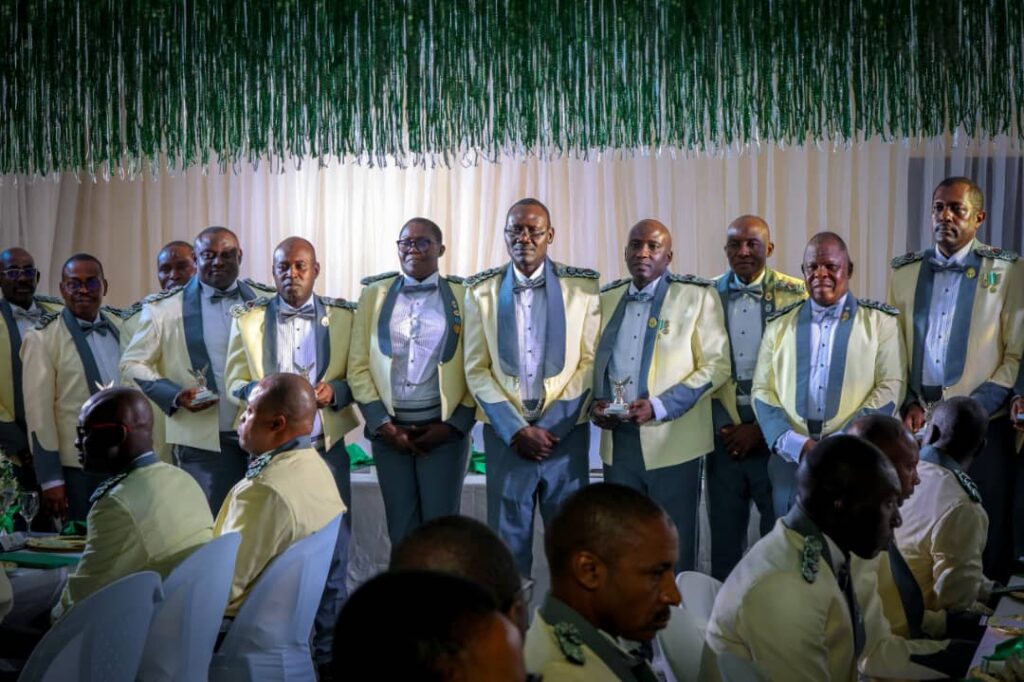
DCG Chiroma charged the officers to uphold the highest standards of professionalism, discipline and courage, saying, “To whom much is given, much is expected. On behalf of the Comptroller-General of Customs, I urge you to remain mission-focused and continue to serve the nation with honesty, integrity and dedication.”
Earlier, the Commandant of the College, Assistant Comptroller-General of Customs Duwoh Gaura, reaffirmed the institution’s commitment to producing competent officers in line with the Comptroller-General’s vision of a more efficient, technology-driven and professional NCS.

The graduation marked another milestone in the Service’s commitment to developing highly skilled officers capable of meeting the evolving demands of Customs administration and border management.
The College had earlier, on Wednesday, 24 June 2026, held a Regimental Dinner at the NCCSC Hotel, Gwagwalada, in honour of the graduating officers. The event was attended by members of the Service’s Management Team, senior officers and guests. It was graced by the Comptroller-General of Customs, Adewale Adeniyi, represented by DCG Sulaiman Chiroma.
By Prof Uche Uwaleke
The Federal Government’s recent decision to draw the first tranche of about $1.5 billion from a $5 billion financing arrangement with the United Arab Emirates’ First Abu Dhabi Bank (FAB) marks another important chapter in Nigeria’s search for innovative ways to finance its budget and manage its growing debt obligations.
The transaction has generated considerable public interest because it departs from the conventional methods through which governments usually borrow money.Instead of issuing Eurobonds or taking a straightforward syndicated loan, Nigeria has opted for a sophisticated financial instrument known as a Total Return Swap (TRS).
While such arrangements are common in advanced international financial markets, they remain relatively unfamiliar to many Nigerians and even to a number of financial market participants. The complexity of the structure has attracted both praise and caution, with supporters viewing it as a creative financing solution while critics warn that it introduces new risks that deserve careful consideration.
To appreciate the significance of this development, it is important to understand the difficult financial environment in which the Federal Government currently operates. Like many developing countries, Nigeria faces a widening gap between government revenue and public expenditure. Large investments are required to build roads, railways, power infrastructure, healthcare facilities and schools, while debt service obligations continue to consume a substantial portion of government revenue.
At the same time, borrowing from the international capital market has become considerably more expensive following the sharp increase in global interest rates over the past few years. Investors have become more selective in lending to emerging and frontier economies, demanding higher returns to compensate for perceived risks. Consequently, issuing new Eurobonds has become significantly costlier than it was only a few years ago.
Against this background, the Federal Government has been exploring alternative sources of external financing that could provide access to large amounts of foreign exchange without immediately returning to the Eurobond market. It is within this context that the financing arrangement with First Abu Dhabi Bank should be understood. According to reports, the recently accessed $1.5 billion represents only the first drawdown under a broader facility of up to $5 billion, which may be accessed in stages over time depending on the government’s financing requirements and the satisfaction of agreed conditions.
The financing itself is structured as a Total Return Swap. Although the name sounds highly technical, the underlying concept can be explained in relatively simple terms. A conventional loan is straightforward. A lender gives money to a borrower, who agrees to repay the principal with interest over an agreed period. A Total Return Swap, however, is not a conventional loan. It is a derivative contract, a financial agreement whose value depends on another financial asset.
Perhaps the simplest way to understand the arrangement is to imagine someone who wishes to borrow money from a bank but instead of merely signing a loan agreement, also pledges valuable investment assets as security while agreeing to exchange the financial returns generated by those assets under a separate contractual arrangement. In effect, the lender provides the required cash while the borrower commits specified financial assets to support the transaction. The arrangement therefore combines elements of borrowing, collateral management and risk sharing into one integrated financial structure.
In Nigeria’s case, the Federal Government receives United States dollar funding from First Abu Dhabi Bank while providing naira-denominated Federal Government securities as collateral. These securities remain government obligations but become encumbered for the duration of the transaction, meaning they cannot be freely used or traded because they have effectively been pledged to support the financing arrangement. This is one of the major distinctions between the facility and a conventional sovereign loan.
One reason governments sometimes prefer such structures is that they can unlock substantial funding even when traditional borrowing channels become less attractive or more expensive. Countries such as Angola and Senegal have previously utilized similar arrangements after conditions in the international capital markets became more challenging. For Nigeria, the facility offers another avenue to obtain foreign exchange without immediately issuing another Eurobond, thereby diversifying its funding sources.
Another feature attracting attention is the pricing of the transaction. When the arrangement was first announced earlier this year, the interest cost was estimated at approximately SOFR plus 3.95 to 4.00 percentage points, together with certain transaction fees. Since then, global interest rates have moderated somewhat. The Secured
Overnight Financing Rate (SOFR), which serves as the benchmark for this transaction, currently stands at roughly 3.6 to 3.7 per cent, compared with over 5 per cent when discussions around the facility first became public. Consequently, the all-in borrowing cost on the current drawdown is now around 7.6 to 7.7 per cent, excluding certain fees and transaction costs.
To many Nigerians, expressions such as SOFR and basis points may sound unnecessarily technical, yet the underlying idea is actually straightforward. SOFR is simply the benchmark interest rate used by financial institutions around the world when pricing many United States dollar loans. It measures the cost at which financial institutions borrow money overnight using United States Treasury securities as collateral. Because these Treasury securities are regarded as among the safest financial assets in the world, SOFR is generally considered a near risk-free base interest rate for dollar transactions.
Whenever an international borrower such as Nigeria raises funds, lenders add an additional percentage above SOFR to compensate for the risks associated with lending to that particular country. This additional charge is known as the credit spread or risk premium. In Nigeria’s case, the premium of about 4 percentage points reflects investors” assessment of sovereign credit risk, exchange rate uncertainty, liquidity considerations and prevailing market conditions. In other words, while the United States government can borrow at rates close to SOFR because it is regarded as one of the safest borrowers in the world, countries perceived to carry greater economic or financial risks must pay an additional premium to attract lenders.
Viewed from this perspective, Nigeria’s current borrowing cost sends two messages simultaneously. On one hand, it confirms that international lenders are still willing to provide substantial financing to the country despite prevailing global uncertainties.
Maintaining access to international credit markets is itself an important positive signal because it demonstrates that investors continue to regard Nigeria as creditworthy.
On the other hand, the relatively wide spread above SOFR also reflects the higher level of risk that international markets currently associate with the Nigerian economy. Countries with stronger credit ratings typically pay much smaller premiums, while frontier economies often pay significantly higher spreads.
Supporters of the transaction argue that, judged against prevailing international market conditions, the pricing remains competitive. One aspect of the pricing that has received comparatively little public attention is the arranger’s fee of 1.5 per cent attached to the facility. Although such fees are common in large international financing transactions, the magnitude of this charge deserves careful consideration. If the entire $5 billion facility is eventually drawn, a 1.5 per cent fee would amount to approximately $75 million. Even if the fee is applied proportionately to individual drawdowns, it still represents a substantial additional financing cost over and above the interest payable on the facility.
From a public finance perspective, the relevant issue is not whether an arranger’s fee should exist but whether its size is justified by the complexity of the transaction and consistent with prevailing market practice for comparable sovereign financing arrangements. When combined with the interest spread above SOFR, the arranger’s fee increases the effective economic cost of the facility and should therefore form part of any comprehensive assessment of whether the transaction represents good value for Nigeria.
Be that as it may, the government maintains that the cost compares favourably with what the country might have paid through other external borrowing options and that the financing will assist ongoing efforts to refinance more expensive debt, strengthen fiscal management and provide additional resources for critical infrastructure projects.
The attraction of the arrangement therefore lies not only in the amount of money available but also in its flexibility. Unlike a single lump-sum borrowing, the facility allows drawdowns to be made in stages as funding needs arise. This means the government does not necessarily incur interest charges on the entire $5 billion immediately but only on the amounts actually accessed. Such flexibility can improve cash flow management and potentially reduce unnecessary financing costs.
Nevertheless, attractive features should never be confused with the absence of risk.
Financial markets rarely provide significant benefits without corresponding obligations.
Indeed, many of the concerns being expressed by international institutions such as the International Monetary Fund, Fitch Ratings and Moody’s do not arise because the facility is inherently inappropriate, but because its complexity introduces obligations that are less obvious than those associated with ordinary government borrowing. Some of these obligations could become significant if economic conditions deteriorate unexpectedly, particularly if the naira weakens sharply, domestic interest rates rise considerably or Nigeria’s sovereign credit rating comes under renewed pressure.
Understanding these less visible obligations is essential to forming an objective assessment of the transaction. While the first drawdown undoubtedly provides valuable foreign exchange at a time when fiscal pressures remain intense, the long-term success of the arrangement will ultimately depend not only on the government’s ability to manage the financial risks embedded in the structure but also on whether the borrowed funds are invested in projects capable of generating sufficient economic returns to comfortably meet future repayment obligations.
If the benefits of the facility are relatively easy to appreciate, the obligations embedded in the transaction require a little more explanation because they represent the very issues that have attracted caution from international financial institutions and credit rating agencies. These risks are not necessarily reasons to reject the financing arrangement outright. Rather, they underscore the importance of understanding that sophisticated financial instruments often contain obligations that become more demanding when economic conditions deteriorate.
Perhaps the most distinctive feature of the arrangement is the requirement for Nigeria to provide collateral in the form of Federal Government securities denominated in naira. At first glance, this may appear entirely unremarkable since lenders routinely demand collateral to protect themselves against possible default. However, the amount of collateral required under this arrangement is considerably larger than the amount actually borrowed.
The agreement requires what is known as a 25 per cent haircut on the pledged securities.
The term “haircut”; can easily be misunderstood because it does not imply that Nigeria is paying an additional fee. Rather, it refers to the discount the lender applies when valuing the collateral. If securities worth one hundred dollars are pledged, the lender does not recognize their full market value but instead treats them as being worth only seventy-five dollars for lending purposes. In practical terms, every dollar borrowed must therefore be backed by approximately one dollar and thirty-three cents worth of government securities. Consequently, if Nigeria eventually draws the full five billion dollars under the facility, it would need to pledge government securities worth the equivalent of roughly six billion, six hundred and seventy million dollars.
This over-collateralization provides additional comfort to the lender but comes at a cost to the borrower. The pledged securities become tied to the transaction and are no longer freely available for other financing operations during the life of the agreement. Although the government continues to own the securities, their use becomes restricted because they now serve as security for the financing. In effect, valuable financial assets become locked into the transaction.
The implications become even more significant because the value of these securities is not fixed throughout the life of the facility. Instead, they are reviewed regularly under a process known as margining. In simple language, this means that the lender periodically reassesses whether the pledged collateral remains sufficient to support the outstanding loan. If market conditions change in a manner that reduces the recognized value of the collateral, Nigeria must provide additional securities to restore the agreed level of protection.
An everyday illustration may help explain this concept. Suppose a bank lends money against a house whose market value subsequently falls sharply. The bank may require the borrower to provide additional security because the original collateral no longer offers adequate protection. The same principle applies here, except that instead of property, the collateral consists of government securities whose value fluctuates with movements in financial markets and the exchange rate.
This feature introduces one of the most important risks associated with the arrangement.
Since the loan itself is denominated in United States dollars while the collateral consists of naira-denominated securities, changes in the exchange rate become critically important. If the naira depreciates substantially against the dollar, the dollar value of the pledged securities may decline even if their naira value remains unchanged. Should that happen, the lender may require Nigeria to pledge additional securities in order to maintain the agreed collateral coverage.
The consequences could become particularly challenging during periods of economic stress. Exchange rate depreciation often occurs at precisely the time when governments are already under pressure from declining revenues, rising inflation and tighter financial conditions. Having to identify additional collateral during such periods could further strain public finances and reduce policy flexibility.
The value of the collateral may also decline for reasons unrelated to the exchange rate.
Government bond prices fluctuate continuously in response to movements in domestic interest rates. When interest rates rise, the market prices of existing bonds generally fall.
If Nigerian interest rates increase significantly, the market value of the pledged securities may decline sufficiently to trigger additional collateral requirements even if the exchange rate remains relatively stable.
This is one reason Fitch Ratings has warned that dollar-denominated margin calls secured by naira collateral could intensify pressure on Nigeria’s foreign exchange position if domestic bond yields increase or the naira weakens. The concern is not that such an outcome is inevitable but that the structure itself creates an additional channel through which financial market volatility could affect the government’s financing position.
It is worth noting that the agreement is designed to operate in both directions. If the market value of the collateral rises significantly, some excess collateral may theoretically be released back to Nigeria. In practice, however, financial markets have historically demonstrated that adverse developments often occur more suddenly and with greater force than favourable ones. Governments therefore tend to experience the downside obligations of collateral management more frequently than the upside benefits.
Another important feature of the arrangement concerns its maturity. On paper, the facility has a six-year tenor, with repayment of the principal scheduled as a single lump sum at the end of the period. Unlike many conventional loans that require gradual repayment over time, this structure postpones repayment of the principal until maturity.
This feature provides obvious short-term relief because the government avoids making annual repayments of the principal during the life of the facility. Cash that would otherwise have been devoted to debt repayment remains available for infrastructure, public services and other fiscal priorities. Yet the same feature also creates a future obligation that cannot be ignored. When the six years eventually expire, the entire principal falls due at once unless it is refinanced. If adequate preparations have not been made well in advance, the government could face significant fiscal pressure at maturity.
Equally noteworthy is the provision allowing a review after three years. Such break clauses are not unusual in sophisticated financial transactions. They provide an opportunity for both parties to reassess the arrangement in light of prevailing market conditions. While this flexibility may prove advantageous if circumstances improve, it also introduces an element of uncertainty because the continuation of the arrangement beyond that point may depend on negotiations between the parties.
Perhaps even more significant is the requirement for annual rollover of each tranche. This aspect has received relatively little public attention despite its potential implications.
Although the facility is described as having a six-year maturity, each amount drawn under the arrangement is effectively subject to periodic renewal. In practical terms, the borrower must request that the lender continue each tranche under agreed conditions.
This means the financing does not possess the same degree of certainty as a traditional six-year loan whose terms remain fixed throughout its life. Should global financial conditions deteriorate or the lender’s assessment of Nigeria’s creditworthiness change materially, the lender could seek revised pricing, request additional collateral or reduce its exposure. In the most adverse circumstances, failure to agree on a rollover could oblige Nigeria to repay the affected tranche much earlier than originally anticipated.
Another layer of complexity arises from provisions linked to Nigeria’s sovereign credit ratings. The agreement reportedly contains mechanisms that may be activated if major international rating agencies downgrade Nigeria’s sovereign rating beyond specified thresholds. Such developments could trigger consultations between the parties with a relatively short period within which to negotiate revised terms. If no satisfactory agreement is reached within the stipulated timeframe, the arrangement could potentially be terminated prematurely.
It is this combination of collateral management, exchange rate exposure, market revaluation, rollover requirements and credit rating triggers that distinguishes the transaction from conventional sovereign borrowing. None of these features automatically translates into financial distress. Indeed, if macroeconomic stability is maintained, the naira remains reasonably stable, inflation moderates and investor confidence improves, many of these provisions may never become problematic. However, prudent public financial management requires governments to evaluate not only what happens under favourable conditions but also what could occur if events take an unfavourable turn.
The fundamental question, therefore, is not whether the financing arrangement is inherently good or bad. Rather, it is whether the government possesses sufficient financial resilience, adequate external reserves, effective debt management capacity and credible contingency plans to manage these embedded risks should they materialize. That question becomes even more pertinent when viewed against the concerns already expressed by the International Monetary Fund, Fitch Ratings and Moody’s, whose observations deserve careful examination before arriving at a balanced judgment on the transaction.
The concerns expressed by the International Monetary Fund, Fitch Ratings and Moody’s should not be interpreted as outright opposition to Nigeria’s decision to utilize this financing arrangement. These institutions recognize that governments, particularly those in emerging and frontier markets, must continually adapt to changing global financial conditions and sometimes explore innovative financing mechanisms. Their reservations are directed less at the objective of raising external finance than at the potential vulnerabilities that complex derivative structures may introduce into sovereign debt management.
The IMF, for example, has cautioned that transactions of this nature are often characterized by complexity and limited transparency. More importantly, it warned that some of the embedded features of the arrangement could constrain monetary and exchange rate policy. This concern deserves careful reflection. Governments ordinarily prefer to retain maximum flexibility when responding to economic shocks. During periods of exchange rate pressure, central banks may need to allow currencies to adjust gradually, while fiscal authorities may also require room to modify borrowing strategies as circumstances evolve. However, where financing arrangements contain collateral triggers linked to exchange rate movements or market valuations, policymakers may find themselves operating under additional constraints because certain policy choices could inadvertently activate contractual obligations.
Similarly, Fitch Ratings has pointed to the possibility that depreciation of the naira or increases in domestic bond yields could generate dollar-denominated margin calls. In practical terms, this means that financial market developments capable of weakening the value of the pledged collateral could oblige Nigeria to provide additional securities or meet other contractual requirements at precisely the time when economic conditions are already under strain. This does not necessarily imply that such events will occur, but prudent debt management requires recognizing that the risks are real and planning appropriately for them.
Moody’s has also observed that swap arrangements introduce forms of credit risk that are not normally associated with conventional commercial borrowing. Traditional sovereign loans generally involve clearly defined repayment schedules and fixed contractual obligations. Derivative-based financing, by contrast, often contains multiple moving parts, including periodic valuation of collateral, market-based adjustments and contractual provisions that may be activated by developments beyond the borrower’s immediate control. These additional layers inevitably make the overall risk profile more complex.
Another issue that deserves attention is the potential effect of the transaction on Nigeria’s existing creditors. Although the facility does not expressly confer senior creditor status on First Abu Dhabi Bank, the practical effect of the collateral arrangement may create a degree of priority that distinguishes it from conventional unsecured sovereign borrowing.
Most holders of Nigerian Eurobonds rely solely on the full faith and credit of the Federal Government without access to specifically pledged assets. Under the present arrangement, however, the lender benefits from identified government securities that have been set aside as collateral and enjoys contractual rights to demand additional security if circumstances require.
This distinction may influence how existing and prospective investors assess Nigeria’s sovereign debt. Domestic investors could become concerned that a significant volume of government securities has effectively been locked away as collateral, potentially affecting market liquidity. If investors perceive that the supply of freely tradable government securities has been reduced or that risks have increased, they may demand higher yields on future bond issuances. Higher yields, in turn, would translate into higher borrowing costs for the government.
International investors could reach similar conclusions regarding Nigeria’s Eurobonds.
Since Eurobond holders remain unsecured while another lender enjoys collateral-backed protection, some investors may perceive a subtle weakening of their own position. Such perceptions could result in higher risk premiums on future international borrowings, even if Nigeria continues to meet all its obligations punctually.
This broader market interpretation is perhaps one of the less obvious but potentially more important aspects of the transaction. Financial markets do not evaluate sovereign borrowing solely on the basis of whether a government obtains financing. Investors also pay close attention to the manner in which that financing is obtained. Increasing reliance on collateralized borrowing is sometimes interpreted as an indication that conventional funding sources have become either too expensive or less readily available. Whether that interpretation is entirely justified is open to debate, but perception often exerts considerable influence in international financial markets.
It is, however, equally important to avoid an unduly pessimistic interpretation of the transaction. The facility also offers several significant advantages that should not be overlooked. It provides immediate access to substantial foreign exchange at a time when Nigeria continues to face considerable fiscal pressures. It diversifies the country’s financing options by reducing exclusive reliance on the Eurobond market. The phased drawdown structure allows borrowing to be aligned more closely with actual financing needs rather than requiring the government to raise the full amount at once. Furthermore, if managed prudently, the arrangement could contribute to refinancing more expensive obligations, thereby improving the overall composition of the public debt portfolio.
Much therefore depends on how the proceeds are utilized. Borrowing, whether through conventional loans or sophisticated derivative structures, is neither inherently good nor inherently bad. Its ultimate value depends on whether the borrowed resources generate economic returns sufficient to exceed their financing costs. If the funds are invested in productive infrastructure that expands economic activity, improves exports, strengthens tax revenues and stimulates private sector investment, future repayment becomes considerably easier because the economy itself has grown stronger. Conversely, if borrowed funds are consumed without creating productive assets, even relatively inexpensive financing can become burdensome over time.
The experience of many countries demonstrates that debt sustainability depends not merely on how much is borrowed but on what the borrowed money accomplishes.
Governments routinely borrow to finance development, but successful borrowing requires disciplined project selection, efficient implementation, transparency and rigorous accountability. Every dollar borrowed today represents future obligations that must ultimately be honoured by taxpayers, either directly through higher revenues or indirectly through stronger economic growth.
For Nigeria, therefore, the critical questions extend beyond the structure of the First Abu
Dhabi Bank facility itself. Can the economy generate sufficient foreign exchange earnings over the next six years to comfortably meet future repayment obligations? Will fiscal reforms continue to strengthen government revenues? Can macroeconomic stability be maintained sufficiently to minimize exchange rate volatility and reduce the likelihood of collateral pressures? Are adequate contingency plans in place should international financial conditions deteriorate unexpectedly? Above all, will the projects financed under this arrangement generate measurable economic returns that justify the cost and risks of the borrowing?
These are the questions that policymakers, legislators, investors, Academia, Civil Society Groups and citizens alike should continue to ask. They are far more important than the technical terminology surrounding the transaction.
Equally important is the need for full transparency regarding the overall cost of the transaction. Public debate has understandably focused on the interest margin above SOFR, but policymakers should also disclose the full economic cost, including arranger’s fees, legal expenses, hedging costs and any other transaction charges. Only then can Nigerians properly assess whether the financing represents better value than alternative sources of external borrowing.
By and large, the First Abu Dhabi Bank financing should be viewed neither as a financial masterstroke nor as an impending crisis. It is, instead, a sophisticated financial instrument that offers both opportunities and obligations. Like many innovations in modern finance, it can serve the country’s interests if managed with discipline, transparency and foresight, but it can equally expose public finances to avoidable pressures if the embedded risks are underestimated.
The first drawdown of approximately $1.5 billion is therefore only the beginning of a much larger story. Its success will not be measured by the speed with which the funds are disbursed or even by the amount eventually accessed under the $5 billion programme.
Rather, history will judge the transaction by whether it strengthens Nigeria’s economic fundamentals, enhances debt sustainability and delivers tangible improvements in infrastructure, productivity and the welfare of its citizens. If those objectives are achieved, the facility may well be remembered as an innovative financing solution deployed at a difficult moment in the country’s economic history. If they are not, it may instead become another reminder that in sovereign finance, as in personal finance, the true cost of borrowing is determined not only by the interest paid but also by the wisdom with which the borrowed money is used.
Prof Uche Uwaleke, a financial Economist, is Nigeria’s renowned Professor of Capital Market at the Nasarawa State University Keffi and President of the Capital Market Academics of Nigeria.
FEATURES
Three Years of Purposeful, Intentional and Transformative Leadership of Governor Hyacinth Alia
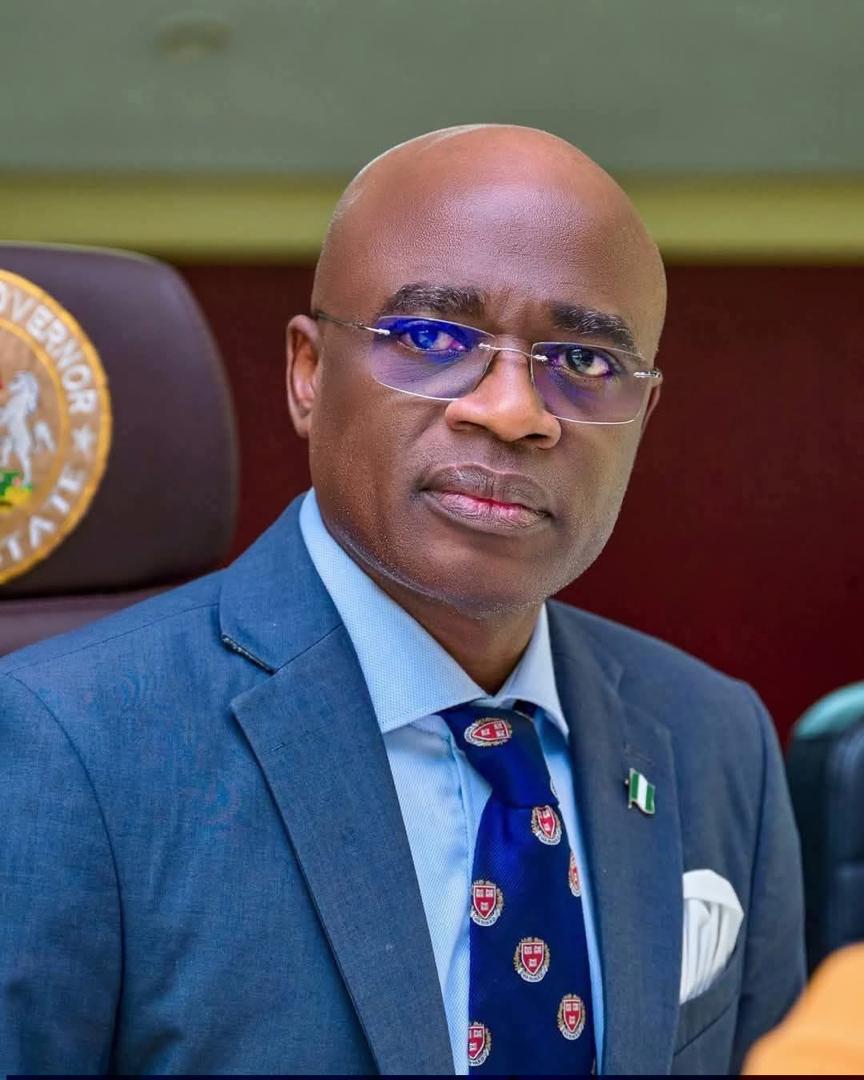
By Solomon Iorpev
When Rev. Fr. Dr. Hyacinth Iormem Alia took the oath of office on May 29, 2023, as the sixth democratically elected Governor of Benue State, he inherited more than the keys to Government House.
He inherited a state fatigued by insecurity, stalled by unpaid salaries, and yearning for a new kind of leadership. Three years later, the verdict across the Food Basket of the Nation is settling into three words: purposeful, intentional, and transformative.Purpose: The Clergyman Who Chose The Arena
Leadership begins with why. For Governor Alia, the purpose was never in doubt.
He campaigned on a simple premise: Benue needed healing. Not just spiritual healing from the pulpit, but economic, administrative, and social healing from the seat of government.Benue in May 2023 was a state where civil servants marked calendars by unpaid salary arrears. Pensioners died in queues. Rural communities were ghost towns, displaced by years of farmer-herder conflict. Schools and hospitals were shells of their former selves. The social contract had frayed.
Governor Alia’s purpose was to restore that contract. He framed his administration around seven priority pillars: Security, Agriculture and Rural Development, Commerce and Industry, Human Capital Development, Infrastructure, ICT/Digital Economy, and Governance Reform. But beyond policy documents, his purpose was personal. As a priest who had spent decades listening to the poor, he came to power with a bias for the vulnerable.
That purpose showed up first in payroll. Within his first 100 days, the Alia administration cleared months of salary and pension arrears that had lingered for years. For teachers, nurses, and local government workers, the alert tone on their phones became the first sermon of the new government: a government that pays. By year three, the state had moved from a backlog to a consistent salary schedule, with civil servants now receiving pay before the 25th of every month. Purpose, for Alia, meant dignity restored through wages earned.
Intention: Governing By Design, Not Default
If purpose is the why, intention is the how. And in three years, Governor Alia has demonstrated that he is not governing by accident or reaction. Every major policy has carried the fingerprint of design.
Security: From Reaction to Architecture
Benue sits in Nigeria’s Middle Belt, and for over a decade, it was the epicenter of violent conflict. Alia’s intention was not to merely deploy security forces after attacks, but to build a security architecture that prevents them.
The administration launched Operation Ayem A Kpatuma II and deepened collaboration with the military and local vigilantes. But more critically, it established the Benue State Bureau of Homeland Security, creating a framework for intelligence gathering and rapid response at the community level. The result has been measurable: dozens of displaced communities in Guma, Logo, and Kwande have begun returning home after years in IDP camps. The governor’s monthly security vote is now publicly tied to community policing equipment, communication gadgets, and logistics, not shrouded in secrecy. Intention meant turning security from a slogan into a system.
Agriculture: From Food Basket to Agribusiness Hub
Benue’s identity is agriculture, but for years it exported raw produce and imported poverty. Governor Alia’s intention was to move the state up the value chain.
In three years, his government has distributed over 500,000 improved seedlings, facilitated tractors for mechanized farming, and reopened the Benue Tractor Hiring Agency. The state partnered with the Federal Government and private investors to revive the Taraku Mills and establish new agro-processing zones for soybeans, rice, and yams. The Bureau of Agricultural Development and Mechanization was created to end the era of hoes and cutlasses.
The intention is clear: Benue must not just feed Nigeria, it must profit from feeding Nigeria. Data from the Ministry of Agriculture shows a 40% increase in dry-season farming participation since 2023, driven by the governor’s direct input support to real farmers, not political farmers.
Infrastructure: Connecting a State Back to Itself
For years, “rural-urban migration” in Benue was forced by bad roads. A farmer in Vandeikya couldn’t get yams to Makurdi without losing half to spoilage. Alia’s intention was to reconnect Benue to itself.
The urban renewal of Makurdi, Gboko, and Otukpo is visible. But the real story is rural. The administration has constructed and rehabilitated over 300km of rural roads in three years, including the Awajir-Oju road, the Lessel-Ihugh-Tse-Mker road, and the ongoing Zaki-Biam-Afia-Gbeji road. These are not political roads. They are economic roads, designed to move produce, not just politicians.
In Makurdi, the underpass at High Level and the rehabilitation of major arteries have reduced traffic time by 60%. Streetlights have returned. The intention is that a state capital should look like one.
Human Capital: Health and Education as Infrastructure
A transformative leader knows that bridges and roads mean little if the people are sick and uneducated.
In health, the Alia administration has renovated and equipped 276 primary healthcare centers across the 23 LGAs under the Basic Health Care Provision Fund. The Benue State University Teaching Hospital received a new MRI machine, dialysis center, and oxygen plant. More than 10,000 households have been enrolled in the Benue State Health Insurance Scheme, with premiums subsidized for the vulnerable.
In education, the story is similar. Over 9,000 teachers were recruited in 2024 to address the teacher-pupil ratio. The government cleared counterpart funding for UBEC, unlocking billions for classroom construction. The School of Nursing and Midwifery, Makurdi, and College of Health Technology, Agasha, have been upgraded. Intention here meant treating human capital as the most critical infrastructure.
Governance: The Death of “Business as Usual”
Perhaps the most intentional shift has been in governance itself. Governor Alia introduced the Benue Geographical Information System [BENGIS] to digitize land administration, blocking leakages and raising IGR. The Treasury Single Account was enforced, and the state’s IGR rose from N1.2 billion monthly in 2023 to over N3.8 billion monthly by mid-2026, without introducing new taxes.
The Civil Service was audited, ghost workers flushed out, and promotion arrears paid. E-governance platforms now allow citizens to track projects. Intention meant running a government like a system, not a bazaar.
Transformation: The Benue That Is Emerging
Purpose and intention mean nothing if they do not produce transformation. After three years, the transformation is not in speeches. It is in data, in streets, and in stories.
Economic Transformation:
Benue has moved from a salary-dependent economy to one seeing private capital return. The Makurdi Industrial Layout is being reactivated. The Alia administration has signed MoUs for a $2.5 billion investment in biofuel and ethanol from cassava. The Benue Investment and Property Company [BIPC] has been repositioned, and the state hosted its first Benue Economic Summit in 2025, attracting investors from across Nigeria and the diaspora. Unemployment figures from the NBS show a 7% drop in Benue’s youth unemployment between Q2 2023 and Q1 2026.
Social Transformation:
IDP return is the most human face of this transformation. As of May 2026, over 180,000 displaced persons have returned to their ancestral homes in Guma, Makurdi, Logo, and Kwande LGAs, supported by the state’s resettlement program. Schools have reopened in communities that were silent for five years. Markets are back. That is a transformation you can touch.
Political Transformation:
Governor Alia has redefined political engagement in Benue. He has kept a deliberate distance from political godfatherism, insisting that his only godfather is the Benue people. His monthly media chat, “Alia Speaks,” has created a direct line between the governor and citizens. For the first time in years, a governor’s approval rating is driven by project delivery, not ethnic sentiment.
Institutional Transformation:
The Benue State House of Assembly has passed 21 executive bills in three years, including the Benue State Bureau of Public Procurement Law, the Benue State Disability Rights Law, and the Benue State Electricity Law. These are not laws for headlines. They are laws for structure. They mean the transformation will outlive the transformer.
The Road Ahead: Year Four And Beyond
To be purposeful for three years is commendable. To remain purposeful for four, five, or eight is legacy. Governor Alia’s third anniversary comes at a midpoint. The foundations have been laid, but the real test of transformation is sustainability.
The challenges remain. Security, though improved, is not yet total. Federal allocations still dictate the pace of development. The wage bill remains heavy. And political opposition, both within and outside his party, is recalibrating.
But if the first three years have shown anything, it is this: Rev. Fr. Dr. Hyacinth Iormem Alia did not come to occupy an office. He came to discharge a purpose. He has not governed by impulse. He has governed by intention. And Benue, slowly but visibly, is being transformed.
Three years ago, he asked Benue to believe. Today, Benue is beginning to see.
The priest who entered the arena is still wearing the collar. But now, it is stained not just with anointing oil, but with the dust of roads built, the chalk of schools renovated, and the sweat of a state being rebuilt.
That is purposeful leadership. That is intentional governance. That is transformation in motion.
Chief Solomon Iorpev is the Technical Adviser to the Benue State Governor on Media, Publicity and Strategic Communication.



Abuja Court Dismisses Age Falsification Case Against Senior Police Officers
Share Justice Yusuf Haliru of the Federal Capital Territory,( FCT) High Court Abuja, has dismissed a case brought against some...


World Cup 2026: France Set to Clash with Spain in Epic Battle
ShareTwo-time World Cup champions France will on Tuesday take on Spain, the reigning European champions and 2010 FIFA World Cup...
State Police and Fear of Governors’ Abuse
ShareBy Tochukwu Jimo Obi The debate over the creation of state police in Nigeria has continued to generate intense public...

FG Withdraws Registration Fees Hike on WASSCE, NECO, SSCE
ShareBy Tony Obiechina, Abuja The Federal Government has suspended the proposed review of registration fees for the 2027 West African...


Education Stakeholders Split over FG’s N50,000 WAEC, NECO Examinations Fee
ShareThe Federal Government’s approval of a N50,000 registration fee for National Examinations Council (NECO) and West African Examinations Council (WAEC)...


Triple Murder Suspect Appears in South Africa Court
ShareA man suspected of killing his wife and two daughters in Bedfordshire has been in court in South Africa after...


England to Wear All-white Kit against Argentina
ShareEngland will wear their all-white home kit to face Argentina in the semi-finals of the World Cup in Atlanta on...
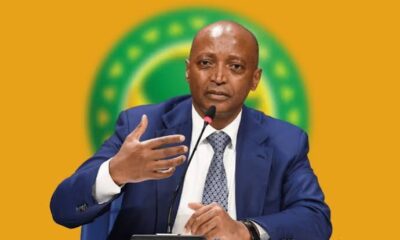

CAF President Mourns South Africa W’Cup Player, Jayden Adams
ShareConfédération Africaine de Football Président Dr. Patrice Motsepe has expressed sadness over the death of South Africa international and Mamelodi...


2027: YPP Presidential Candidate Pledges Inclusive Governance
ShareBy Julius Tambaya, Abuja The presidential candidate of the Young Progressive Party (YPP), Peter Agada, has pledged to usher in...


ADC Dismisses Rival Nomination Portal Claim, Urges INEC to Probe Alleged Forgery
ShareAfrican Democratic Congress (ADC) has dismissed the claims by a rival group of uploading presidential nomination details to the Independent...