
Foreign News
International Conference in Paris Set to Mobilise for Ukraine Aid

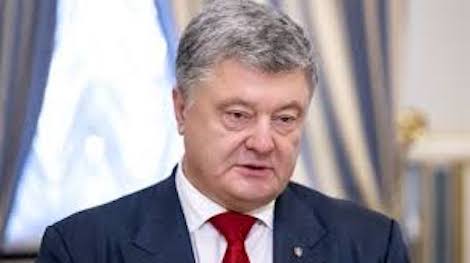
An international donor conference to mobilise help for Ukraine and its infrastructure, destroyed by the Russian war, is set to take place in Paris on Tuesday.
Around 70 countries, international organisations and the European Union would be participating.
The aim of the conference is to coordinate emergency aid in the areas of energy, transport, agriculture, water and health care.
French President Emmanuel Macron and Ukrainian President Volodymyr Zelensky agreed to the conference, which was also expected to be attended by EU Commission President, Ursula von der Leyen and German Foreign Minister Annalena Baerbock.
A separate meeting was to set the course for French business participation in the reconstruction of Ukraine.
Around 500 French companies were expected to attend. (dpa/NAN)






Thousands of drivers could have speeding fines cancelled after a fault saw some cameras falsely triggered on English A roads and motorways.
National Highways said it had found 2,650 wrongful speed camera activations since 2021 due to a delay between cameras and variable speed signs.
Affected drivers will be contacted by police and be reimbursed for any fines while points will be removed from their licences where needed.
Not all camera activations are enforced, so not all of the wrongful activations will have resulted in fines.
National Highways apologised for the error and chief executive Nick Harris said a fix for the issue has been identified.
“Safety is our number one priority.
All drivers should continue observing the posted speed limits as normal. Anyone who has been impacted will be contacted by the relevant police force,” he said.National Highways, which runs England’s motorways, blamed an “anomaly” in how variable speed cameras were interacting with signs on some A roads and motorways.
It meant a delay of around 10 seconds between cameras and relevant variable speed signs, meaning some drivers were incorrectly identified as speeding after the limit had changed.
The body said the 2,650 incidents since 2021 represent fewer than two each day, compared with more than 6 million activations of speed cameras on the affected roads over the same period.
It said the anomaly has impacted 10% of England’s motorways and major A roads.
The fault affects all of the variable speed cameras on smart motorways, and two on the A14 which links the north and the West Midlands to East Anglia.
It is working with police to check activations and promised nobody will now be wrongly prosecuted.
Meanwhile, police forces have stopped issuing fines from variable cameras until they have confidence in their accuracy.
A Department for Transport spokesperson said: “We apologise to anyone who has been affected. Safety was never compromised, and we are working with policing to ensure nobody is incorrectly prosecuted in future.
“Enforcement is still in place, and the public can remain confident that only motorists who break the rules will be penalised.”

A French court has sentenced a former rebel leader and politician from the Democratic Republic of Congo to 30 years in jail after finding him guilty of complicity in crimes against humanity more than two decades ago.
Roger Lumbala headed a rebel movement backed by neighbouring Uganda accused of committing atrocities during a period known as the Second Congo War.
The judge said the 67-year-old was found guilty of ordering or aiding and abetting torture and inhumane crimes, summary executions, rape constituting torture, sexual slavery, forced labour and theft.
Lumbala, who was living in France when he was arrested nearly five years ago, has refused to accept the legitimacy of the court in Paris.
He did not attend the trial, which began last month, though he was in the dock to hear the verdict on Monday.
Lumbala also served as a minister in DR Congo’s transitional government from 2003 to 2005 and later as a member of parliament.
Several years later the Congolese government issued an arrest warrant for him over his alleged support for the M23, a rebel group currently active in the eastern DR Congo, prompting him to flee to France.
The Second Congo War, which raged from 1998-2003, involved nine countries, numerous rebel groups and led to the estimated deaths of between two and five million people.
At the time Lumbala led the Rally of Congolese Democrats and Nationalists (RCD-N), which allegedly carried out atrocities during a campaign between 2002 and 2003 called “Erase the Slate”.
The operation targeted members of the Nande and Bambuti ethnic groups in the north-eastern provinces of Ituri and North Kivu who were accused of supporting a rival militia.
A UN team that investigated in its aftermath said it was characterised by “premeditated operations using looting, rape and summary execution as tools of warfare”.
Lumbala’s case was prosecuted under the principle of “universal jurisdiction”, which allows French courts to seek justice related to crimes against humanity committed abroad.
Five non-governmental organisations, including Trial International and the Clooney Foundation for Justice, pooled their expertise to participate in the trial, helping support survivors to testify and requesting expert analyses.
Trial International, a Geneva-based justice campaign group, said 65 survivors, witnesses and experts testified before the court about the Erase the Slate operation.
After the verdict, it issued a statement from two of the survivors – David Karamay Kasereka and Pisco Sirikivuya Paluku.
“We were scared but came all the way here because the truth matters. For years, no one heard us,” they said
“We would have preferred to face Roger Lumbala, to look him in the eyes. But this verdict marks a first step toward reclaiming pieces of ourselves that were taken from us.”
During the trial Mr Kasereka, 41, described how his father and neighbours were tortured and killed by Lumbala’s men.
Paluku, who is a now 50-year-old nurse, told of how the rebels robbed and injured him, killed his uncle and raped his friend’s wife.
“We hope that this will serve as a lesson to those who continue to bring grief to the people of Congo, and particularly to Ituri,” he told the Reuters news agency.
Lumbala’s legal team, which has 10 days to file an appeal, called the sentence excessive. Prosecutors had sought a life sentence.
Eastern DR Congo, which is rich in minerals, has been wracked by conflict for more than 30 years, since the 1994 Rwandan genocide. Several peace deals going back to the 1990s have collapsed.
Over the years a number of other militia leaders, including Thomas Lubanga, Germain Katanga and Bosco Ntaganda, have been put on trial and convicted by the International Criminal Court (ICC) for abuses committed in the east of DR Congo.
Human rights groups welcomed Monday’s verdict as a milestone for further accountability in the long-running conflict there.
“This verdict is historic. For the first time, a national court has dared to confront the atrocities of the Second Congo War and show that justice can break through even after decades of impunity,” Trial International’s Daniele Perissi said in a statement.

US Secretary of State Marco Rubio has said Rwanda’s actions in eastern Democratic Republic of Congo are “a clear violation of” the peace deal brokered by Donald Trump last week.
In a post on X, he said the US would “take action to ensure promises made to the President are kept”, without going into details.
Trump hailed the deal signed with great fanfare in Washington between DR Congo’s President Félix Tshisekedi and Rwanda’s President Paul Kagame as “historic” and “a great day for Africa, great day for the world”.
But the M23 rebel group said it has “fully liberated” the key city of Uvira in an offensive the US and European powers say is backed by Rwanda.
UN experts have previously accused it of having “de facto control” of the rebel force’s operations.Rwanda denies the allegations, however, its presence in Washington was a tacit acknowledgment of its influence over the M23.
The rebels were not signatories to Trump’s deal – and have been taking part in a parallel peace process led by Qatar, a US ally.
The latest fighting risks further escalating an already deeply complex conflict.
Prof Jason Stearns, a Canada-based political scientist who specialises in the region, said that the view in M23 circles was that “they need more leverage in the negotiations”, while the feeling in the Rwandan government is that Tshisekedi cannot be trusted.
He added that the assault on Uvira, in South Kivu province, “flies in the face of all the negotiations that are under way”.
The M23’s new offensive in South Kivu started a few days before Kagame and Tshisekedi flew to Washington last week to ratify the agreement first hammered out in June.
Bram Verelst, a Burundi-based researcher with the Institute for Security Studies (ISS) think-tank, said the assault appeared to be an attempt to force Burundi to withdraw the troops it had in eastern DR Congo backing the army against the rebel forces and Rwanda.
He pointed out that Uvira – which lies just 27km (17 miles) from Burundi’s capital, Bujumbura, on the northern tip of Lake Tanganyika – was of strategic importance because of the presence of at least 10,000 Burundian troops in South Kivu.
Yale Ford, an Africa Analyst for the Critical Threats Project at the American Enterprise Institute, pointed out that Uvira, which had a population of about 700,000, was the DR Congo government’s last major foothold and military hub in South Kivu.
He added that the M23 was now likely to establish a parallel administration in the city, and use its military gains “as a bargaining chip in peace talks”.
As for the DR Congo government, it has not acknowledged its latest military setback, but says that the “gravity of the situation is compounded by the now proven risk of regional conflagration”.
Burundi has been a natural ally of DR Congo for years because of its enmity with Rwanda.
Both accuse the other of backing rebel groups seeking to overthrow their respective governments.
The neighbours share a similar language and ethnic make-up – with Tutsi and Hutu communities often vying for power – and both have suffered terrible ethnic-based massacres.
But unlike Rwanda, which is headed by a Tutsi president, the majority Hutus are in power in Burundi.
Burundi’s government fears that if the M23 cements its presence in South Kivu, it would strengthen a Burundian rebel group called Red Tabara.
Based in South Kivu, it is mainly made up of Tutsis – and has attacked Burundi in the past.
In an apparent attempt to placate Burundi’s fears, the M23 said it had “no sights beyond our national borders”.
Burundi has shut its border with DR Congo, but, according to Mr Verelst, it is still allowing people to cross into its territory after carrying out security checks.
Aid agencies say that about 50,000 people have fled into Burundi in the past week.
Burundian troops – along with the Congolese army and allied militias – fought to block the rebel advance towards Uvira, but the city itself fell “without much fighting”, Verelst said.
The fall of Uvira would hit Burundi’s already struggling economy as the country has been suffering from a severe shortage of foreign currency and fuel, and had been heavily dependent on eastern DR Congo for both, he said.
The M23 began a major advance earlier this year when it captured Goma, the capital of North Kivu province, on the border with Rwanda.
At the time, South African troops were deployed to help DR Congo’s army, but they were forced to withdraw after the M23 seized the city in January.
Shortly afterwards the rebels captured the next big city in eastern DR Congo, Bukavu, capital of South Kivu.
The move on Uvira came after the rebels broke the defence lines of the DR Congo army, militias allied with it and Burundian troops.
Prof Stearns said the M23 was estimated to have more than 10,000 fighters, but there was likely to have been an “Influx” of Rwandan troops for the recent offensive to capture Uvira.
The US lays the blame for the recent fighting squarely on Rwanda.

Dangote Petitions ICPC, Accuses NMDPRA Boss of Corruption, Abuses
ShareBy David Torough, Abuja President of the Dangote Group, Alhaji Aliko Dangote, has petitioned the Independent Corrupt Practices and Other Related Offences Commission...

NDIC Liquidates Aso Savings, Union Homes, Pays N2m Deposits
ShareBy Tony Obiechina, Abuja The Nigerian Deposit Insurance Corporation (NDIC) exercised its appointment as the liquidator of Aso Savings and...


Reps Launch Nationwide Probe into Drug Abuse, Trafficking Crisis
ShareBy Ubong Ukpong, Abuja The House of Representatives has commenced a nationwide investigation into Nigeria’s worsening drug abuse and trafficking...

Clement Koko Assumes Office as CIPPON President
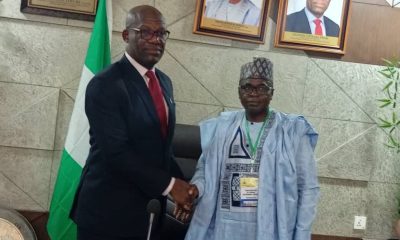
ShareBy David Torough, Abuja Clement Koko has been inaugurated as the President and Chairman-in-Council of the Chartered Institute of Professional...
Thousands of Drivers Wrongly Fined for Speeding Since 2021
ShareThousands of drivers could have speeding fines cancelled after a fault saw some cameras falsely triggered on English A roads...

UK Unemployment Rate Rises to 5.1 Per cent
ShareThe UK unemployment rate in the three months to October has increased to 5.1%, according to official figures. That marked...

French Court Sentences Ex-DR Congo Rebel, Politician to 30 Years in Jail
ShareA French court has sentenced a former rebel leader and politician from the Democratic Republic of Congo to 30 years...


EEDC Explains Recent Decline in Power Supply across South-East
ShareThe Enugu Electricity Distribution Company (EEDC) has attributed the recent decline in power supply across the South-East to low electricity...
DMO Takes Sensitisation on Borrowing Guidelines to Northern States
ShareThe Debt Management Office (DMO) said that its World Bank-assisted workshop on borrowing guidelines was designed to intimate subnational entities...


Oborevwori Signs N1.729trn 2026 Budget, Three Other Bills into Law
ShareFrom Francis Sadhere, Delta Delta State Governor, Sheriff Oborevwori on Tuesday signed the 2026 Appropriation Bill of N1.729 trillion, tagged...