
Education
JAMB Schedules May 11 Policy Meeting to Determine 2026 UTME Cut-Off Marks


The process for the 2026/2027 tertiary admissions cycle is set to begin in earnest as the Joint Admissions and Matriculation Board has fixed May 11 for its annual policy meeting, where minimum cut-off marks for the Unified Tertiary Matriculation Examination will be decided.
The development, disclosed in a statement by JAMB’s spokesperson, Fabian Benjamin, signals the start of critical decisions that will shape admission processes across universities, polytechnics and colleges of education nationwide.
According to the statement, the meeting will take place at the Body of Benchers Auditorium, located within the Institute and Research District in Jabi, Abuja, and will bring together key stakeholders in Nigeria’s education sector.
It is expected that the Minister of Education, Maruf Alausa, will outline major policy directions guiding the upcoming admission exercise.
“The Board’s annual policy meeting on admissions is a crucial annual gathering where stakeholders decide minimum tolerable UTME marks, admission guidelines, and policies for tertiary institutions.
“Furthermore, the meeting is expected to, in particular, formally set the tone for the 2026/2027 admission exercise while impressing on attendees the need to adhere strictly to stipulated guidelines.
“Attendees at the 2026 meeting would include critical stakeholders such as vice-chancellors, rectors, provosts, registrars and their admission officers.
Others are regulatory bodies ranging from the National Universities Commission (NUC), National Commission for Colleges of Education (NCCE), to the National Board for Technical Education (NBTE), among others.”
The gathering is also expected to attract goodwill messages from major agencies within the education ecosystem, including the Nigerian Education Loan Fund and the National Youth Service Corps, alongside other stakeholders.
In addition to policy deliberations, the event will feature the sixth edition of the National Tertiary Admissions Performance-Merit Awards (NATAP-M), aimed at encouraging strict compliance with admission regulations and improving standards across Nigeria’s tertiary education system.
With stakeholders set to converge, the outcome of the meeting is expected to provide clarity on admission benchmarks and reinforce guidelines that will govern placements into higher institutions for the 2026/2027 academic session.
Education
Makurdi Old Boys Association Inaugurates BOT October 17, Launches N1bn Secretariat Project Fund
Government College Makurdi Old Boys Association (MOBA) has completed arrangements to inaugurate its Board of Trustees (BOT) October 17, at the school premises.
The high profile event will also witness the launch of N1billion Appeal Fund for the construction of its National Secretariat Project.
A statement by the Association’s National President, Dr Cletus Akwaya and the Central Planning Committee Chairman Cmrd.
Stephen Tadawus, reminded all members of the National Executive Committee (NEC), Board of Trustees Members-designate, invited Guests, and the entire MOBA family to attend the event punctually at Government College Assembly Hall, Makurdi beginning by 10:00AMThe statement said the Governors of Benue state, Rev.
Fr. Dr. Hyacinth Iormem Alia; Plateau state, Barr. Caleb Manasseh Mutwang; Nasarawa, Engr. A. A. Sule and Bauchi, Sen. Bala Abdulkadir Mohammed are expected to grace the occasion as distinguished guests of Honour.Similarly, the Commissioner for Education and Knowledge Management, Benue State, Dr. Adamu Margaret Ijaguwa and Executive Secretary, Teaching Service Board, Benue State, Dr. Bem Tseen have been invited as Special Guests, the statement said.
It named members of the Board of Trustees (BOT) to include Prince Yandev Amaabai, Senator Joshua Chibi Dariye, Senator Gabriel Torwua Suswam, Hon Hassan El Yakub SAN- Hon, Alhaji Abubakar Giza, Prof. Terna Yawe, Chief Rebo Usman, Dr. Dader Mazadu Bako, Engr. Ali Rabiu, Prof. John Wade, Arc. Terseer Dankaro and Titus Ihunduas Secretary of the Board.
This event marks a new chapter in the life of the Association. We request all Old Boys to massively turn out and support the cause of giving back to their Almamater,” the statement further said adding, All concerned are therefore, requested to come together to make this historic event a success and to contribute generously towards the completion of Makurdi Old Boy’s Associations’ National Secretariat Project.”
Maryam Umar, a limb difference student, is set to graduate with a Bachelor of Science degree in Economics from the Gombe State University.
Umar, who successfully completed her Level 400 course work, examinations and project, achieved this feat after overcoming educational and financial challenges.
In an interview on Monday in Gombe, Umar said that the intervention by the Academic Staff Union of the University (ASUU) made her journey to attain university education a reality.
Umar recounted that she started primary education at the age of 11 at Hammadaji Primary School in Gombe metropolis, adding that she could not immediately proceed to secondary school due to challenges.
The foot-writer student later attended Government Day Secondary School, Nasarawo, Gombe, where she obtained a senior school certificate.
“Many people doubted my ability to attend university because of physical and financial challenges.
“Nevertheless; I sat for the Joint Admissions and Matriculation Board (JAMB), and National Examinations Council (NECO) examinations, and passed both, but could not proceed due to lack of sponsorship.
“Apparently, my predicament widely circulated in the national dailies attracted the attention of the ASUU,” she said.
She said that the union visited her family home, verified her educational credentials, and subsequently offered her scholarship.
Umar said that handwriting proved to be a major obstacle because she writes with her toes during lectures, tests and examinations.
“During my first test, I couldn’t finish within the allocated time and reported the matter to the union.
“The ASUU chairman subsequently wrote to my Head of Department, requesting an additional time for me during tests and examinations. The department granted the request and continued to support me throughout my studies,” she said.
Umar also commended her lecturers for their support and understanding.
She recalled that when a journalist visited the university, and inquired about her academic performances, the records rated her as being more punctual than most of the able-bodied students.
Umar also expressed joy over the successful completion of her degree programme without any academic failure.
“I am happy that I am about to graduate. I give God the glory because I have had no problem academically.
“Some students who I started schooling together had withdrawn or dropped out,” she said.
While urging people living with disabilities not to allow their conditions to distract them from pursuing their dreams, Umar enjoined them to shun street begging.
“You should not see begging as the only option. I once begged on the street, but now I am about to achieve my dream of becoming a graduate.” (NAN)
The Cross River State government on Saturday said it had closed down no fewer than 58 schools in Calabar South, Calabar Municipality, Odukpani and Yakurr local government areas of the state.
Commissioner for Education in the state, Professor Stephen Odey, disclosed this in Calabar, the state capital.
According to him, the ministry’s Department of Quality Assurance has intensified crackdown on schools operating without Approval To Operate (ATO) across the state.
He noted that the exercise was part of the state’s ongoing efforts to sanitise the education sector, enforce compliance with established regulations and ensure acceptable standards for teaching and learning.
The commissioner further explained that the exercise was aimed at protecting learners and ensuring that schools operated in safe, conducive and properly regulated environments.
Odey stressed that the government would not compromise the standards required for operating educational institutions in the state.
The commissioner explained that the exercise was not intended to witchhunt school proprietors, but rather, ensure that all schools met the prescribed minimal requirements for establishing and managing educational institutions.
He urged proprietors of unapproved schools to regularise their operations by obtaining the necessary approval, warning that any school sealed by the government and reopened without authorisation would face appropriate sanctions.
According to him, the enforcement exercise will continue across the state’s 18 local government areas, until the objectives of the sector’s ongoing cleanup are achieved.




Attempted Suicide in Nigeria: Legislative Reform, Economic Hardship and the Right to Human Dignity
ShareBy Oluwaleye Adedoyin Grace Should a person who survives a suicide attempt be punished or helped? This question challenges Nigeria’s...

UBA Scores Legal Victory in N156bn Stallion Debt Case
ShareBy Tambaya Julius, Abuja United Bank for Africa (UBA) Plc has secured a favourable judgment in its N156 billion debt...

Nigeria Customs, Afreximbank Push Regional Border Modernisation
ShareBy Tambaya Julius, Abuja The Nigeria Customs Service (NCS) and the Customs administrations of Benin and Cameroon are working with...


NCDMB Heritage Energy Train 48 Nigerians in Subsea Engineering
ShareFrom Mike Tayese, Yenagoa The Nigerian Content Development and Monitoring Board (NCDMB), in partnership with Heritage Energy Operational Services Limited...

CAN: Tinubu Tasks Christians for Greater Unity
ShareBy Laide Akinboade, Abuja The first lady Senator Oluremi Tinubu, at the weekend urged all Nigerian Christians to ensure they...
Maka Oganiru Begins Operations, Pledges Africa’s Investment-ready Projects
ShareBy Tony Obiechina, Abuja New Africa-focused advisory firm aims to connect high-potential opportunities with global capital, institutional investors and strategic...

FG Tadks Varsities on Specialised Health Degree Programmes
ShareBy Tambaya Julius, Abuja The Federal Government has urged vice-chancellors of Nigerian universities to introduce degree programmes that address critical...
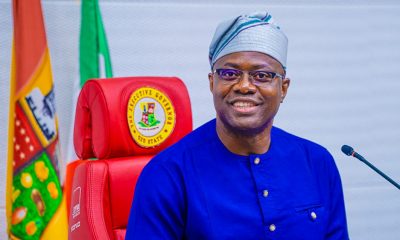

Presidency, Makinde Clash Over Alleged ₦250bn NLNG Fund for States
ShareBy Tambaya Julius, Abuja The Presidency has dismissed claims by Oyo State Governor Seyi Makinde that the Federal Government is...
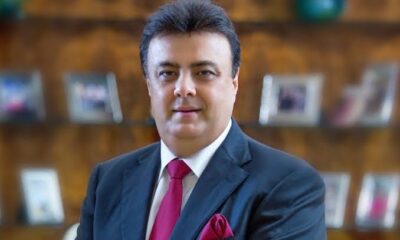

UBA Wins N156bn Debt Recovery Case Against Stallion Group
ShareThe Court on Friday ruled in the Bank’s favour on all issues and granted all its prayers. United Bank for...


Senator Abba Moro: It is Time to Go Home
ShareBy Cleopas Agada For seven years in the National Assembly, what has Benue South actually felt? For a man who...