
NEWS
Julius Berger: Engineering Prosperity Across Nigeria’s South-South

By Daniel Udugba
The South-South region of Nigeria, long celebrated as the nation’s “oil and gas capital,” is entering a new era of transformation. Beyond its oil wells and gas pipelines, the region is steadily being redefined by the power of infrastructure, roads, bridges, and civic projects that are opening new economic pathways for millions.
At the heart of this transformation is leading engineering construction company, Julius Berger Nigeria Plc, a construction firm whose presence is now being reinforced across Nigeria, especially in the South South states of Akwa Ibom, Bayelsa, Delta, and Rivers.
For decades, the region has been Nigeria’s revenue engine, contributing massively through oil and gas. But the region is far more than hydrocarbons. Its diverse ethnic communities, Ibibio, Efik, Ijaw, Itsekiri, Urhobo, and Ikwerre, among others, sustain rich cultural traditions. Its geography of rivers, mangroves, and coastlines supports agriculture, fishing, and tourism.
The challenge has always been how to connect these potentials to prosperity. Notably, the federal and state governments are relying on Julius Berger’s engineering prowess to make it happen.
Akwa Ibom: Built bedrock of modernisation
Akwa Ibom, one of Nigeria’s fastest-growing states, largely witnessed an infrastructure revolution over a decade ago when Julius Berger in collaboration with the state government, was central to the progress, delivering landmark roads, drainage systems, and bridges that laid the foundation for new standards in durability and design.
The Abak–Ikot Ekpene Road stands as a prime example. Built with reinforced layers designed to withstand high traffic volumes, it is engineered to last generations. Complementing this is the use of trenchless “pipe-jacking” technology in drainage construction, an innovation that reduces disruption to residents and safeguards the environment.
Perhaps, the most symbolic is the Uyo, Abak Bridge, a 343-metre structure linking Ikot Ekpene to Port Harcourt. Constructed on nearly 700 reinforced piles and launched incrementally to overcome weak soil conditions, the bridge is not just a physical connector but a statement of ambition for Akwa Ibom’s future. The 30,000 sitting capacity state-of-the-art Uyo stadium and the International Worship Centre, also in the state capital, easily complement the rising modernisation Julius Berger has brought to the state.
Bayelsa: Honouring history, building the future
Julius Berger’s presence in Bayelsa state predates the current dispensation. If Akwa Ibom’s projects represent the future, Bayelsa’s current landmark project bridges past and present.
The company had been in the coastal state assisting in the infrastructural development of the area, building structures that have endured till date. Its current efforts in Bayelsa state is thus, another opportunity to contribute its professional quota towards further solidifying not just the relationship with the people of the state, but to to strengthening the bonds that bind them together.
Currently, in Otuabagi, Ogbia LGA, the site of Nigeria’s first commercial oil discovery in 1956, Julius Berger is constructing the long-awaited Oloibiri Oil Museum and Research Centre.

Awarded by the Federal government-owned Nigerian Content Development and Monitoring Board (NCDMB), the project is envisioned as both a national monument and a modern research facility. It will house an interactive museum showcasing Nigeria’s oil and gas history, complete with geological exhibits, early drilling equipment, and digital engagement tools.
For the people of Oloibiri, the project is more than concrete and steel. It is recognition of their community’s role in shaping Nigeria’s economic destiny. It may even attract more developmental projects in the area, said a local fruit seller, Priye Ebikeme.
For the country, it represents a hub where academia, industry, and history will converge. “We are on. No time wasting,” said Project Manager, Finn Drosdowski as Julius Berger mobilised swiftly to site. “It is our job to discharge our contracts professionally and on schedule,” he added.
Delta: Making the “Big Heart” beat again
Delta State nicknamed the “Big Heart of the Nation,” is pulsing with renewed energy. In October 2023, the state government awarded Julius Berger a ₦78 billion contract to overhaul transportation in Warri and Effurun.
The ambitious project covers three flyovers, an expansion of the DSC/NPA Expressway from four to eight lanes, a cloverleaf interchange, and two pedestrian bridges. For years, chronic gridlock had stifled commerce and daily life in the bustling hubs of Effurun and Warri. The new road network promises not just relief but rebirth.
Local enthusiasm is palpable. “Julius Berger should finish the job in time for us to get our groove back; the big heart must beat well again,” said estate agent, Mr. Igho Ogheherukevwe at Effurun Roundabout.
The Project Manager, Thomas Haug did not mince words in assuring residents that work is advancing at a pace that may even beat the official deadline. For many, the flyovers are more than engineering feats; they are symbols of a city reclaiming its vibrancy.
Rivers: Unlocking the treasure base
Rivers State, often referred to as Nigeria’s “Treasure Base,” is also benefitting from Julius Berger’s touch.
After completing 12 flyovers in Port Harcourt, the company is now building the 50.15-kilometre Port Harcourt Ring Road, a dual carriageway that will connect six Local Government Areas.
Even more ambitious is the Bodo–Bonny Road, the first road in history to access Bonny Island, home to Nigeria Liquefied Natural Gas Company, NLNG. The 35.7km stretch cuts through swamps, tidal zones, and flood-prone terrain, requiring some of the most advanced engineering in Nigeria today.
The project’s significance cannot be overstated. “This will unlock tremendous opportunities for Bonny Island, enabling socio-economic development across the region and beyond,” said Chief O. R. Longjohn, Chairman of the Bodo-Bonny Road Peace Committee. Despite security concerns, construction continues steadily.
Additional works, such as the Buguma–Abonnema road in Emohua LGA, are gradually opening previously inaccessible riverine communities to commerce and development.
Engineering a South-South Renaissance
From Akwa Ibom’s bridges to Bayelsa’s museum, Delta’s flyovers, and Rivers’ Road corridors, Julius Berger’s projects are more than infrastructure; they are catalysts of transformation.
Each bridge connects more than towns; it links opportunities. Each road extends beyond asphalt; it paves the way for commerce, culture, and cohesion.
In a region too often defined by resource conflict and neglect, these engineering milestones suggest another narrative: one of shared prosperity built on solid foundations. Julius Berger’s imprint across the South-South is steadily turning oil wealth into infrastructure wealth, a shift that could define Nigeria’s next chapter of development.
By Sumaila Ogbaje
When officers, soldiers and defence stakeholders gathered in Port Harcourt for the Nigerian Army Day Celebration (NADCEL) 2026, the occasion represented far more than another military anniversary.
It provided an opportunity to reflect on 163 years of dedicated service and honour the sacrifices of fallen heroes.
It also highlighted the Nigerian Army’s operational achievements and efforts to reposition itself to confront a complex security environment.
Established in 1863 as the Glover Hausas, the Nigerian Army has evolved from a modest colonial force into one of Africa’s largest and most experienced land forces.
Its history mirrors Nigeria’s own evolution, spanning the civil war, peace support operations across Africa and the ongoing fight against terrorism, insurgency, banditry, kidnapping, oil theft and other emerging security threats.
Today, the Army operates across the country’s six geopolitical zones under various joint operations, confronting asymmetric threats that have continuously replaced conventional warfare.
In spite of these challenges, the Army says sustained offensive operations, improved intelligence and enhanced collaboration with sister services and other security agencies have continued to degrade criminal and terrorist networks while protecting lives and critical national assets.
The 163rd anniversary also underscored Nigeria’s growing role in regional security cooperation.
As part of NADCEL 2026, the Nigerian Army hosted the Third African Land Forces Forum, bringing together army chiefs and defence leaders from 17 African countries to deliberate on terrorism, insurgency and other transnational security threats confronting the continent.
The Chief of Army Staff (COAS), Lt.-Gen. Waidi Shaibu, said integrating the forum into NADCEL reflected the Nigerian Army’s commitment to strengthening military diplomacy, regional cooperation and collective security across Africa.
According to him, terrorism, insurgency, organised crime and other transnational threats have become increasingly complex, making collaboration among African armies imperative.
Shaibu said Nigeria’s experience in counter-terrorism and counter-insurgency operations had demonstrated the importance of adaptive strategies, effective air support, intensive training, intelligence-driven operations and regional cooperation.
He noted that the successes recorded by the Multinational Joint Task Force in degrading insurgent capabilities and reclaiming territories within the Lake Chad Basin further demonstrated the value of collective action.
The COAS expressed confidence that the forum would deepen interoperability, promote knowledge sharing and produce practical strategies capable of strengthening Africa’s collective security architecture.
For Shaibu, NADCEL 2026 also marked another milestone in the Nigerian Army’s transformation journey.
He said the nationwide activities reflected the institution’s commitment to professionalism, operational excellence and national cohesion while reinforcing its constitutional responsibility to protect the nation’s territorial integrity.
According to him, the theme of this year’s celebration, “Protecting the Nation and Serving the People: A Way Forward for the Nigerian Army,” captures the Army’s determination to balance operational effectiveness with improved service to Nigerians.
He paid tribute to fallen heroes whose sacrifices, he said, remain the foundation for building a safer and more secure nation, while reaffirming the Army’s commitment to personnel welfare and continuous enhancement of operational capabilities.
Speaking at the grand finale of NADCEL 2026, President Bola Tinubu, represented by Vice-President Kashim Shettima, said the Nigerian Army remains a strategic pillar of national security.
He noted that the Army’s professionalism and resilience have continued to preserve Nigeria’s unity while contributing to peace and stability across Africa.
The President said the changing security environment requires a modern, agile and highly motivated Army, assuring that his administration would continue to invest in personnel welfare, training, modern equipment and operational capabilities.
He also reaffirmed his administration’s commitment to improving the welfare of officers, soldiers and the families of fallen heroes, stressing that a well-motivated military remains indispensable to national peace, security and development.
Tinubu urged Nigerians to complement the efforts of the Armed Forces through patriotism, intelligence sharing and cooperation with security agencies, emphasising that national security is a shared responsibility.
Observers say the President’s commitment aligns with the Army’s “Soldier First” initiative introduced by Shaibu, which places personnel welfare at the centre of operational effectiveness through improved accommodation, healthcare, education, training and modern equipment.
Military analysts believe the initiative has boosted morale and reinforced the understanding that a motivated soldier is better equipped to accomplish demanding operational tasks.
Beyond combat operations, experts say the Army’s increasing emphasis on civil-military cooperation reflects the realities of contemporary warfare.
According to them, intelligence provided by local communities has become one of the most effective tools in combating terrorism, banditry and kidnapping.
Consequently, the Army has expanded medical outreaches, educational support, environmental sanitation campaigns and community development projects aimed at strengthening public confidence and fostering stronger civil-military relations.
Analysts argue that such engagements help bridge the gap between the military and civilians while reinforcing the Army’s constitutional responsibility to serve the people.
Notwithstanding these gains, the Army continues to confront significant challenges.
The changing character of warfare has seen terrorists and other criminal groups deploy drones, improvised explosive devices, encrypted communications and sophisticated propaganda to advance their activities.
Security experts say these developments demand sustained investment in emerging technologies, intelligence capabilities and specialised training.
They also advocate stronger collaboration among security agencies and regional partners to improve intelligence sharing and coordinated responses to transnational threats.
Beyond military operations, analysts maintain that addressing the root causes of insecurity remains critical to achieving lasting peace.
They identify poverty, unemployment, weak governance, limited educational opportunities and communal conflicts as conditions that continue to facilitate recruitment into criminal and extremist groups.
According to them, while military operations create the secure environment required for development, sustainable peace ultimately depends on good governance, economic opportunities and social inclusion.
Retired senior military officers also emphasise the importance of professionalism, accountability and strict adherence to the rules of engagement during internal security operations.
They argue that public confidence in the Armed Forces is strengthened when military operations are conducted with respect for human rights and the rule of law.
Nigeria’s contribution to regional and international peace support operations also remains one of the defining features of the Army’s history.
Over the decades, Nigerian troops have served under the mandates of the United Nations, the African Union and the Economic Community of West African States, earning recognition for professionalism while enhancing the country’s international standing and enriching the operational experience of its personnel.
As the Army marks 163 years of existence, defence experts say it must continue investing in modern equipment, digital technologies, intelligence capabilities and human capital to remain responsive to evolving security threats.
They also advocate stronger collaboration with research institutions, indigenous defence industries and international partners to promote innovation, self-reliance and technological advancement in defence production.
Equally important, they say, is sustained government support through adequate funding, timely procurement of equipment and continued investment in personnel welfare and leadership development.
For many Nigerians, NADCEL extends beyond colourful parades and ceremonial displays.
It is an opportunity to honour officers and soldiers who paid the supreme price in defence of the nation while recognising those who continue to serve under demanding and often dangerous conditions.
Families of fallen heroes and wounded personnel equally view the celebration as recognition of the enormous sacrifices made in preserving Nigeria’s unity, sovereignty and stability.
As the Nigerian Army marks 163 years of distinguished service, analysts say its ability to remain professional, adaptive and people-centred will determine its relevance in addressing Nigeria’s evolving security challenges.
They argue that President Tinubu’s message at NADCEL 2026 reinforces a shared national responsibility; while the government must continue to equip and support the military, citizens must equally contribute through patriotism, intelligence sharing and cooperation with security agencies.
They also believe the decision to host the African Land Forces Forum alongside NADCEL reflects Nigeria’s growing leadership role in promoting regional military cooperation against terrorism, insurgency and other transnational threats.
Ultimately, the Nigerian Army’s legacy is measured not only by its battlefield achievements but also by its enduring commitment to professionalism, constitutional responsibility and selfless service.
As new security threats continue to emerge, the Army’s sustained transformation, investment in personnel welfare, regional partnerships and commitment to serving the people will remain central to safeguarding Nigeria’s peace, unity and sustainable development. (NAN)
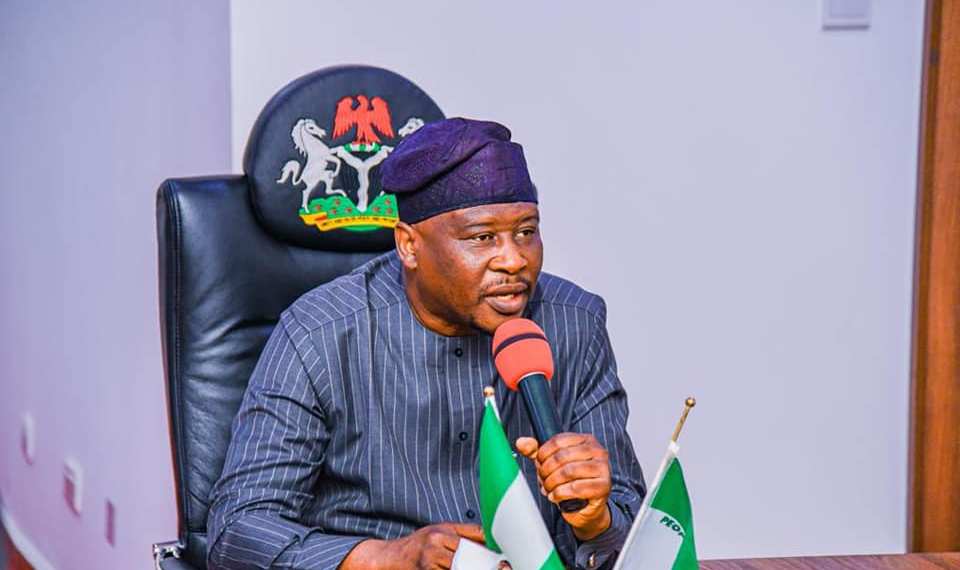
Adamawa State Gov, Ahmadu Fintiri, on Wednesday, swore in 21 newly elected council chairmen to administer the local governments in the state for the next three years.
The ruling Peoples Democratic Party (PDP) in the state won the election conducted by the Adamawa State Independent Electoral Commission (ADSIEC) on June 13.
The governor at the ceremony in Yola, congratulated the chairmen and the 226 councilors for their victory.
He called on them to discharge their responsibilities diligently, and warned against corrupt practices.
Fintiri also advised the elected officers to stay in their respective local government areas instead of living in the state capital.
“As Chairmen of Councils, you are the government at grassroot.
“You are at the vantage position to create the right image for government policies which are not only pro-poor and largely intended to change the life of our rural dwellers for the better.
“You must be the vanguards for stimulating developments in your respective areas.
“You must let the people feel the impact of governance by making yourselves available and willing to listen and solve problems at that level.
“Governance is better appreciated when its impact is felt at the bottom. You must be a symbol of government at your various duty posts”, he said.
“Fintiri further called on the chairmen to work with their respective traditional rulers and Development Area Administrators to ensure the reconstruction of trust and confidence in the government’s good intentions.
In his remarks, Alhaji Ibrahim Jibrin, Chairman, Yola North LGA, who spoke on behalf of the other chairmen, expressed gratitude to God, the governor and electorate.
Jibrin assured that he and his colleagues would discharge their duties diligently and provide more dividend of democracy to the people at the grassroots.
“We heard you loud and clear during our campaign tour and therefore assure you of our commitment to providing the needed dividends of democracy by ensuring we carry you along,” he said.
The oath of office and allegiance was administered by the State Chief Judge, Justice Hafsat Abdulrahaman.
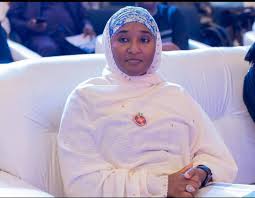
The Minister of State for Education, Prof. Suwaiba Ahmad has expressed satisfaction with the conduct of the National Examinations Council (NECO) Computer-Based Test (CBT) Senior School Certificate Examination,
Ahmad, while monitoring the ongoing examination at Redeemers Teap School and Anglican Girls’ Grammar School on Wednesday in Abuja, described the exercise as a major step towards eliminating examination malpractice.
She said feedback from candidates at both centres indicated that most of them preferred the CBT format to the traditional paper-based examination.
According to her, the candidates also confirmed that they experienced no technical glitches and that the examinations commenced on schedule.
”I spoke with a lot of the students and most of them said they prefer the CBT examination.
”They also confirmed that they had not seen the examination questions before the test and that each candidate answered a different set of questions randomly.
”The CBT makes communication between candidates impossible and is one of the best ways of tackling examination malpractice,” she said.
The minister said the successful deployment of CBT represented significant progress in the education sector, adding that the government would only proceed with full transition after ensuring adequate infrastructure nationwide.
”We will not begin the full transition until we have everything in place because we do not want to put any student at a disadvantage.
”We are working with the National Assembly, state governors, private partners and other stakeholders to provide the facilities required for a seamless nationwide transition,” she said.
Ahmad added that the adoption of CBT would ultimately improve the quality of education by promoting merit and integrity in examinations.
Also speaking, the Registrar of NECO, Prof. Ibrahim Wushishi, said the council recorded no technical hitch since the commencement of the examination.
”They assured me that since the commencement of this year’s examination, they have not experienced any technical glitch. The exams were ready, they started on time, no hiccups, no network problems, nothing like that.”
He disclosed that 1,378,048 candidates registered for this year’s Senior School Certificate Examination, with female candidates slightly outnumbering their male counterparts.
According to him, the increasing participation of girls reflects the impact of government policies promoting girl-child education.
Wushishi also said NECO had about 10 CBT centres in the Federal Capital Territory (FCT), adding that the council is expected to release the examination results by the first week of September to support the 2026 admission process.
He reaffirmed that the CBT system, through question randomisation, had greatly reduced opportunities for examination malpractice while enhancing the credibility of the examination process.
One of the candidates, Ambassador Alabi, from Redeemer’s teap described the CBT experience as seamless and more convenient than the traditional paper-based examination.
Another Candidate from the Anglican girls school Isaac Abioro said CBT examination has been efficient and easy to answer questions and there have not been any technical glitch in the process so far
On her part the Principal of Anglican Girls’ Grammar School, Mrs Nkiruka Nwafor, said the transition to CBT was preparing students for a technology-driven future.
According to her, the school adopted the system early to familiarise students with computer-based examinations before external assessments.
”The CBT experience is what we’ve all been waiting for. The future our girls are going into is dynamic and heavily ICT-driven.
”We are excited that our proprietor got on board. We have also introduced CBT for some of our internal examinations so that from JS1 and JS2, the students gradually get used to the system. So it’s about time, and it’s good that it’s happening,” she said.
The monitoring exercise at Redeemer’s Teap Secondary School and Anglican Girls’ Grammar School showed candidates writing the examination in an orderly environment without reported technical challenges.


Nigerian Army at 163: Legacy of Sacrifice, Service and Transformation
ShareBy Sumaila Ogbaje When officers, soldiers and defence stakeholders gathered in Port Harcourt for the Nigerian Army Day Celebration (NADCEL)...


What the Oyo Situation Teaches about Nigeria’s Emerging Security Doctrine
ShareBy Crispin Oduobuk There are moments when an entire nation seems to breathe again. The announcement on Friday, 10 July...

Fintiri Swears in Newly Elected Council Chairmen
ShareAdamawa State Gov, Ahmadu Fintiri, on Wednesday, swore in 21 newly elected council chairmen to administer the local governments in...

NECO Targets Full CBT Transition as Hitch-free Exam Boosts Confidence
ShareThe Minister of State for Education, Prof. Suwaiba Ahmad has expressed satisfaction with the conduct of the National Examinations Council...


Adeleke’s Call for Visa Ban on APC Stalwarts Sign of Political Jitters, Says Oyebamiji
ShareFrom Ayinde Akintade, Osogbo The governorship candidate of the All Progressives Congress (APC) in the forthcoming gubernatorial election in Osun...


Midnight Social Media Curfew Proposed for UK Teens Aged 16, 17
ShareOlder teenagers in the UK will face an overnight social media curfew, the government has announced – though they will...


UN Forum Participants Discuss Role of Private Sector in Achieving SDGs
ShareThe 2026 UN Global Business Forum on the Sustainable Development Goals (SDGs) has concluded, with participants calling for a greater...

Aliko Dangote: Africa’s Industrialist-in-chief
ShareBy Wale Osofisan Aliko Dangote’s rise from a trader from Kano to the builder of some of Africa’s most important...


When a Toothache Turns Fatal: Nigeria’s Silent Antimicrobial Resistance Crisis
ShareBy Racheal Abujah Mrs Amara Obi, a 28-year-old trader at Wuse Market in the FCT, believed that she only had...


World Cup: We Were Not at Our Best – Mbappe
ShareKylian Mpappe said he and his France teammates did not perform well to progress to the 2026 FIFA World Cup...