
NEWS
Kogi L-PRES Begins Process for Project Implementation


From Joseph Amedu, Lokoja
The Kogi State Livestock Productivity and Resilience Support Project (L-PRES), has taken bold step towards full implementation of the scheme in the state.
The move kick-started with the successful hosting of a two-day strategic meeting with members of the State Technical Committee (STC) and State Steering Committee (SSC) held in Lokoja, over the weekend.
Stakeholders while making their contributions noted that the meeting provided a crucial platform for in-depth discussions on project implementation, key challenges, and strategies to enhance livestock productivity and resilience in the state.
Key highlight of the engagement was the presentation, review, clearance and approval of the Annual Work Plan and Budget (AWPB), ensuring alignment with Project Objectives and the Kogi State Development Plan.
The stakeholders critically assessed progress reports, identified priority intervention areas, and deliberated on strengthening institutional frameworks to enhance service delivery in the livestock sector.
The Chairman of the State Steering Committee and state’s Commissioner for Agriculture and Food Security, Hon Timothy Ojomah commended the State Project Implementation Unit (SPIU) for its dedication to the project’s success.
He emphasized the need for intensified efforts to scale up livestock production, enhance commercialization, and foster resilience across the state.
While acknowledging the progress achieved so far, he urged all stakeholders to remain committed to implementing strategies that will drive sustainable growth in the livestock sector.
He further reaffirmed the government’s unwavering support for initiatives aimed at improving productivity, expanding market access, and strengthening resilience against emerging challenges in the livestock value chain.
In his remarks, the State Project Coordinator, Otaru Abdulkabir Onoruoyiza, underscored the significance of the meeting in advancing project implementation. He reiterated that the committees play a pivotal role in reviewing project activities and ensuring that all interventions align with the Project Development Objective (PDO) and the Kogi State Development Plan.
The meeting was attended by Permanent Secretaries from the Ministries of Finance and Water Resources, who represented their respective commissioners, further demonstrating cross-sectoral commitment to the project’s success.
Also, in attendance were top directors from the Ministry of Livestock Development and the Ministry of Women Affairs. Additionally, representatives from Civil Society Organizations, the Nigerian Bar Association, the State Security Service (SSS) participated in the discussions, highlighting the broad stakeholder engagement in the project.
It is worth recalling that the State Technical Committee (STC) meeting, chaired by the Permanent Secretary of the Ministry of Agriculture and Food Security, Abdulsalam Sagir Muhammed also had in attendance the Managing Director of Kogi Agricultural Development Project, the Permanent Secretary of the Ministry of Commerce, Director of Veterinary Services, Director of Animal Husbandry and Secretary to the Technical Committee; as well as other critical stakeholders.
To further strengthen oversight and ensure effective implementation, the Committees are scheduled to embark on a comprehensive tour of project sites from Saturday, March 15, to Monday, March 17, 2025. This assessment visit will provide first-hand insights into the progress made since the project’s inception, identify areas for improvement, and reinforce accountability in delivering tangible outcomes for the livestock sector in Kogi State.
Oil prices rose past $100 (£74) a barrel on Wednesday after further strikes in the conflict between the US and Iran and continuing Houthi attacks in Saudi Arabia.
In back and forth attacks, the US hit five Iranian tankers in reprisal strikes after Tehran targeted one of its warships.
Brent crude – which is the global benchmark for prices – has not been as expensive since the end of July, when a ceasefire between Iran and the US collapsed.
Yemen’s Iran-backed Houthi movement also attacked oil facilities in Saudi Arabia on Tuesday and have been targeting tankers in the Red Sea.
Brent crude did dip back down to $99.90 a barrel, but any fresh flare-ups in the Middle East could see it pushed higher again.
Tit-for-tat strikes between Iran and the US have escalated in the past week, more than six months after conflict broke out when the US and Israel launched attacks on Iran on 28 February.
Oil prices have fluctuated wildly since the war began, and pressure on the industry has been exacerbated by wider regional instability.
Before the conflict Brent crude had been priced at about $70 (£52) a barrel.
But the war has seen the effective closure of the Strait of Hormuz, which carries 20% of the world’s oil and liquefied natural gas (LNG).
The rising costs have sparked huge price leaps in petrol around the world for motorists at the pumps.
The US strikes on the five Iranian tankers saw four in the Gulf of Oman linked to Iran’s Revolutionary Guards Corps (IRGC) hit as well as another near Kharg Island.
Tehran responded by launching missiles at a US base in Jordan – most of which were shot down – and said it attacked two US vessels and eight oil tankers in the Strait of Hormuz.
The Houthis and Saudi Arabia have also been exchanging strikes since July after their own informal ceasefire unravelled.
On Monday the Houthis accused Saudi Arabia of bombing a prison in al-Hazm and killing 11 people.
Then on Tuesday the Saudi authorities said Houthis had struck civilian and economic sites in the cities of Abha, Khamis Mushait, Jazan and Najran.
The latest round of escalation comes after Iran targeted a US warship with ballistic missiles, which Centcom said were “successfully evaded”. It added that no American troops were harmed during the attacks.
In response, the US said that the five Iranian oil tankers it targeted were “part of a multi-billion-dollar shadow network that funds the IRGC and its regional proxies”.
One of the ships it had struck, the M/T Riesco, sunk in the Gulf of Oman, Centcom later said, posting a video on X of the damaged vessel.
Kharg Island – where one Iranian tanker was attacked in the latest round of US strikes – hosts Iran’s main terminal for exporting oil.
Some 90% of the country’s crude oil passes through the island in the Gulf, transported through pipes from the mainland.
Also on Tuesday, Yemen’s Iran-backed Houthi movement attacked energy facilities and civilian infrastructure in Saudi Arabia, injuring 73 people, according to Saudi authorities.
The drone and missile attack caused fires at oil facilities and installations that led to a temporary halt in operations, Saudi Arabia’s military and energy ministry said.
When asked by reporters about the latest tit-for-tat strikes between the US and Iran, US Secretary of State Marco Rubio on Tuesday said the situation was “pretty straightforward”.
“Iran continues to try to hit US naval ships. And, for every time they do that or try to do that, they’re going to lose tankers. And I think you’ll see that again today,” Rubio told reporters during a trip in Colombia.
The US strikes on Tuesday came hours after Iran’s Navy claimed it had seized an uncrewed US submarine in the Strait of Hormuz.
US Navy Capt Tim Hawkins, a spokesperson for Centcom, said that the “underwater drone operated by US forces malfunctioned more than a day ago” and was used to survey regional waters “in support of ongoing operations”.
The defective drone was “an older model that neither collected sensitive data nor carried any classified sonar or radar equipment”, he said, adding that US operations in regional waters were ongoing.
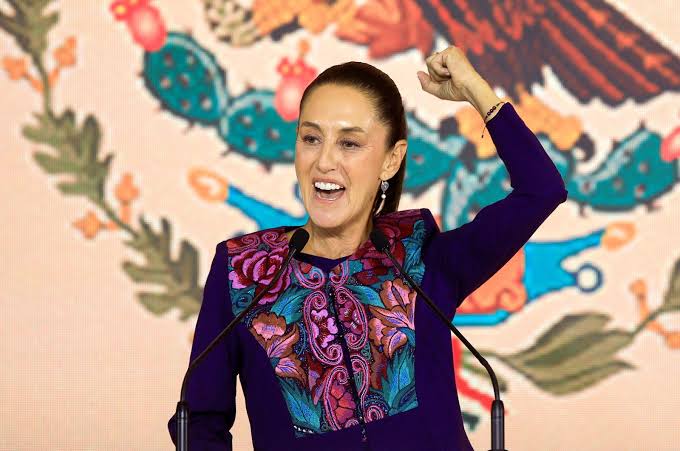
The United States must do its part in the fight against drug trafficking, Mexican President Claudia Sheinbaum said, following recent revelations of corruption at the U.S. Drug Enforcement Administration.
“We insist that they have a very important part to play over there and they shouldn’t just keep pointing the finger at Mexico,” Sheinbaum said at a press conference in the National Palace.
She said Mexico has succeeded in slashing the flow of fentanyl into the United States by more than 70 per cent, a figure acknowledged by U.
S. authorities.She added that the United States is also where the distribution of drugs and money laundering take place on a massive scale due to the high rate of drug consumption.
Sheinbaum also noted that Sara Carter, director of the U.S. Office of National Drug Control Policy, has acknowledged that drug abuse in the United States is a public health issue.
In May, Carter’s office released a document in which the U.S. federal government acknowledges the need for a national public health policy to address drug addiction.
Earlier this year, Carter visited Mexico and expressed interest in the Mexican government’s initiatives aiming to tackle the root causes of violence and prevent drug use.
Study says 12 per cent of Australian adolescents had used e-cigarettes in their lifetime and almost six per cent had used tobacco.
The study, published by the Australian and New Zealand Journal of Public Health also said that 3.
5 per cent had used nicotine pouches on Wednesday.According to the survey by the journal 1,848 students aged 14-18 across the Australian states of New South Wales, Queensland and Western Australia have put their health at risk using a range of different nicotine products.
More than two per cent of respondents had used all three products.
Among adolescents who had used nicotine pouches, a newly emerging nicotine product of concern, 82 per cent had also vaped and 71 per cent had smoked cigarettes, the survey showed.
Males reported higher use of nicotine pouches and cigarettes than females, it said, adding that nicotine pouch use was reported by 4.8 per cent of males, compared with 1.5 pe rcent of females.
Meanwhile, tobacco cigarette use was reported by 6.9 per cent of males and 4.1 per cent of females.
The study shows the need for targeted strategies to prevent teenage nicotine addiction and to support young people to quit, said lead author Lauren Gardner, a senior research fellow at the University of Sydney.
“Many teens who have used one nicotine product have also tried others,” Gardner said.
The researcher added that the findings showed the need for prevention strategies addressing “shared risk factors for nicotine use more broadly, rather than focusing on just vaping or smoking.”
Public health experts said the findings highlight the need for governments to protect young people from nicotine products, crack down on illegal sales and fund evidence-based prevention campaigns.


Building Security through Coordination, Intelligence and Public Trust
ShareBy Chido Onumah The security-sector results recorded in the third quarter of 2026 provide a useful window into the changing...
Oil Hits $100 Per Barrel for First Time Since JULY after US, Houthi Strikes
ShareOil prices rose past $100 (£74) a barrel on Wednesday after further strikes in the conflict between the US and...


Mexican President Urges the U.S. to Help Fight Drug Trafficking
ShareThe United States must do its part in the fight against drug trafficking, Mexican President Claudia Sheinbaum said, following recent...
Australian Teens Use Multiple Nicotine Products – Study
ShareStudy says 12 per cent of Australian adolescents had used e-cigarettes in their lifetime and almost six per cent had...
Russia Dismisses Accusation of Attempted Leipzig/Halle Airport Drone Attack
ShareThe Russian Federation has refuted accusation by Germany linking Moscow to an attempted Leipzig/Halle Airport drone attack which occurred on...
Germany’s Merz Attacks AfD in Stormy Debate after Far-right Election Win
ShareGerman Chancellor Friedrich Merz has clashed with AfD leader Alice Weidel in parliament, calling her party a “destructive force” with...
Namibia Calls for Green Financing to Drive Industrialisation, Job Creation
ShareNamibia on Wednesday called for innovative green financing to support industrialisation, job creation and expanded electricity access as the country...
France, Britain, Canada Affirm Commitment to Two-state Solution
ShareBritish, French, and Canadian leaders have affirmed their “commitment to protect the two-state solution” in the face of the “systematic...


UNESCO Warns of Continued Rise in Attacks on Schools Worldwide
ShareThe United Nations Educational, Scientific and Cultural Organisation (UNESCO) expressed its concern Wednesday over the continued rise in attacks on...
Kimi Raikkonen’s Son Robin, 11, Signs for Red Bull
ShareRobin Raikkonen, the 11-year-old son of former Formula 1 world champion Kimi Raikkonen, has signed for Red Bull. Nicknamed ‘Ace’,...