
SPORTS
Moment of Truth Here for Qatar as FIFA World Cup Begins

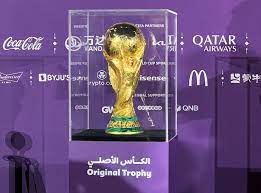
The moment of truth for Qatar’s ability to organize the FIFA World Cup after years of failed overtures and criticism over labor rights and strict laws has come.
Predicaments began mounting as early as December 2010 when it was announced that Qatar would host the finals amid a storm of international criticism.
“For me it is clear: Qatar is a mistake, a bad choice,” Sepp Blatter, the former president of world football’s governing body FIFA, said last week.
But it was his administration that oversaw the awarding of the 2022 event’s hosting rights to Qatar.
Always held during the close season of the majority of leagues, it was difficult to maintain such a schedule now.
Temperatures are presently reaching more than 45 degrees Celsius in Qatar’s blazing summers.
Two studies carried out by FIFA in 2014 and 2015 were enough to conclude that it would be impossible to hold the tournament in June/July, prompting the move to November and December.
Constructing the new stadiums witnessed many controversies regarding labour rights, amid media reports that thousands of foreign workers either lost their lives or were mistreated in the process.
Qatar responded by altering its labour laws to contain global dismay.
Additionally, Qatar’s strict Islamic laws against LGBT rights or alcohol consumption faced yet another storm of criticism.
Sheikh Tamim bin Hamad Al Thani, the Emir of Qatar, dispelled widespread fears recently.
He told the United Nations General Assembly last September that his government was ready to welcome everyone from around the world without discrimination.
Qatari Olympic high jump champion Mutaz Barshim, a World Cup ambassador, said the tournament is an opportunity to unite people.
“The World Cup will positively impact our society by showcasing our culture to the world and by helping people create friendships and build networks.
“It is a golden opportunity to change negative perceptions about the region and create new and meaningful connections,” he said in an interview with the Qatar 2022 website on Wednesday.
Qatar will be the first team since Italy in the second World Cup in 1934 to participate in the finals for the first time as a host.
This is a team hosting without having previously qualified for the tournament.
They need to avoid a similar fate to that of Switzerland, Chile and South Africa, who all hosted but exited the finals in the group stages in 1954, 1962 and 2010.
That is why the Qatari team has undergone a thorough process of preparing for the tournament.
It started by appointing Spanish coach Felix Sanchez in 2017, whose knowledge of the region helped him guide Qatar to the 2019 Asian Cup title, winning all matches in the process.
Sanchez’s men raised eyebrows with a number of notable performances, including a 3-1 defeat of Japan in the final.
The team continued its preparations by rubbing shoulders with South America’s best through their participation in the 2019 Copa America.
Nonetheless, the experience proved to be a little too much for the team as they finished bottom of their group following defeats by Colombia and Argentina and a draw against Paraguay.
Qatar, similarly and upon special request, took part in the CONCACAF Gold Cup last year.
There they showed improvement by topping their group and beating El Salvador in the quarter-finals before losing 1-0 to the U.S in the semi-finals.
The team will be under pressure by fans to achieve the desired results on home soil.
This is especially after the Qatari Federation’s decision not to allow their players to play for their domestic clubs since the beginning of the current season.
This was in order to devote themselves to preparations for the finals.(Reuters/NAN)





The Sports Writers Association of Nigeria (SWAN), Anambra State Chapter, and the Anambra State Football Association (AnSFA) have officially resolved their two-year-old feud.
This was contained in a statement jointly signed by the leadership of SWAN led by Chimezie Anaso, its chairman and Chikelue Iloenyosi, Chairman, AnSFA in Awka on Monday.
The two bodies have had a faceoff that lasted for over two years before now.
The parties agreed to withdraw cases against each other wherever it was reported, including the Directorate of State Services (DSS).
Speaking on the development, Anaso said the truce was a positive sign and a turning point for sports in the state.
He said though there was no alternative to how the parties reacted to the impasse at the time, there was no doubt that there were collateral losses due to the frosty relationship.
“This is a new dawn for football and sports in Anambra, it is important to note that it happened organically, there was no mediator, no facilitator, it happened in the fullness of time, so, we thank God.
“I thank members of SWAN in Anambra and the national leadership under Isaiah Benjamin for their understanding, solidarity and interventions during this period,” he said.
The Vice President South East Zone, Ikem Asika, who expressed surprise as to how things went awry, said he was happy that everything was now in the past.
“Sports and media are like siamese twins, the misunderstanding was not necessary, so I am happy that we are back because football is an important sport that deserves all the attention it can get.
“We have come a long way; there was nothing personal in the faceoff, like the Bible will say, unless the two agree, they cannot work together, so now that we have agreed, it can only be better,” he said.
On his part, Iloenyosi recalled the smooth personal relationship he enjoyed with each member of SWAN and wondered how it collapsed.
He said he was fulfilled that the long days of faceoff had come to an end and promised to make SWAN an integral part of his administration going forward.
“I hold nothing against anybody; everyone is a personal friend to me, so I do not know why we should not work as a team. I am happy that we are back; let bygones be bygones,” he said.
Team Nigeria wins one silver and two bronze, concluding its competition at the ongoing Ulaanbaatar 2026 United World Wrestling (UWW) 3rd Ranking Series on Saturday in Mongolia
Hannah Ojo and Esther Kolawole won silver and bronze in their categories.
Ojo and Kolawole have joined Christianah Ogunsanya in securing medals at the ongoing competition.
The championship allows athletes to earn crucial seeding points for upcoming global championships.
Nigeria’s Ojo put up a 10-0 superlative display against Mongolian Tuvshinjargal Tarav to set up a semi-final clash with Priya of India, who she later beat 5-1.
However, the reigning African champion’s impressive run came to an end, losing to Kajal of India 0-8 in the final to settle for silver.
Earlier, Kolawole won a bronze medal for Nigeria after she overwhelmed Huan Yang of China 10-0.
Kolawole made a statement of intent in her run to the bronze medal match, upsetting Russian world number one, Amina Tandelova 6-0.
She lost narrowly to world silver medallist, Kim Ok-ju of North Korea 4-5.
Team Nigeria concluded the Ranking Series Tournament with one silver and two bronze, totalling three medals from four athletes that represented the country.
Four female wrestlers represented the country in different categories: Mercy Genesis 50kg; Tolulope Ogunsanya 53kg; Esther Kolawole 62kg and Hannah Ojo 76kg.
The third United World Wrestling (UWW) Ranking Series for female wrestling in Mongolia, tagged ‘Ulaanbaatar Open’, is held annually on the international calendar.
This is the third of four UWW Ranking Series tournaments, offering wrestlers crucial seeding points.
The championship, which started on June 4, ended on Saturday in Mongolia.
Seven-time Olympian Olufunke Oshonaike said Nigerian table tennis players are making steady progress in spite of the challenges they face in competing regularly at international tournaments.
Oshonaike said in an interview on Wednesday in Lagos.
She said many players are improving in both skill and experience, but limited financial support continues to affect their development and world rankings.
“The players are improving, and the girls are improving too, but the others are also making progress.
“What many people do not understand is that regular participation in international tournaments is necessary for athletes to improve, gain experience and move up on the rankings,” she said.
According to her, the biggest challenge facing many Nigerian players is not a lack of talent, but the high cost of participating in international competitions.
She explained that competing in World Table Tennis (WTT) events and other global tournaments requires significant financial resources, which many athletes struggle to secure.
“If you want to play in WTT competitions, it is very expensive. Sometimes athletes have to fund themselves to attend competitions.
“We are not like footballers who have a lot of money. Without regular competitions, it is difficult to improve rankings,” Oshonaike said.
The table tennis icon noted that in spite of these challenges, Nigerian players have continued to show determination and commitment in their pursuit of excellence.
She said many athletes often rely on personal funds to participate in continental championships and other important tournaments needed for their growth.
Throughout her career, she became known for her consistency, discipline and resilience, earning respect from players and administrators across the world.
The table tennis icon also disclosed plans to revive her table tennis clinic for young players, particularly girls, as part of efforts to contribute to the development of the sport in Nigeria.
Oshonaike said the initiative would, however, depend on securing adequate sponsorship and support from corporate organisations and other stakeholders.
“I really want to do something, especially for the girls, but I cannot do it alone.
“I just hope I can get sponsors to support me. By the grace of God, if not this year, by 2027, I will start a big clinic,” she said.
She noted that grassroots programmes and youth clinics remained important avenues for discovering and nurturing future champions.
The Olympian also commended Nigeria’s leading player, Quadri Aruna, for his efforts toward establishing a table tennis academy aimed at developing young talents and creating opportunities for the next generation of players.
For more than three decades, Oshonaike has remained one of the most respected figures in Nigerian sports.
She represented Nigeria at seven Olympic Games, making her one of Africa’s most accomplished table tennis players.
She said such initiatives are critical to sustaining Nigeria’s status as one of Africa’s leading table tennis nations.



Nasarawa Governor’s Aide Empowers 250 Women in Karu
ShareBy Tambaya Julius, Abuja Two hundred and fifty (250) women from Panda/Kare Electoral Ward in Karu Local Government Area, Nasarawa...


Benue CAN Deputy Chair Makes Case for Less Privileged, Vulnerable in Society
ShareBy Attah Ede, Makurdi The Deputy Chairman Christian Association of Nigeria CAN Benue State Chapter, Rev. Jonathan Terwase Ugbede has...

FG Saves N61.58bn Through Early Fertiliser Procurement, Secures Supply for 2026 Farming Season
ShareBy Raphael Atuu ,Abuja The Federal Government has saved approximately ₦61.58 billion (US$43.99 million) and secured fertiliser supplies for the...

Democracy Day: Renewed Hope Agenda Laying Foundation for Sustainable Growth, Says Nasarawa SSG
ShareFrom Abel Zwanke, Lafia. The Secretary to the Government of Nasarawa State and Renewed Hope Ambassador, Shuaibu Magaji Labaran, has...


One out of every four children in Benue suffering nutritional deficiencies- UNICEF
ShareFrom Attah Ede, Makurdi The United Nations Children’s Fund (UNICEF), has revealed that one out of every four Benue State...
Niger Debunks School Attack Rumours
ShareThe Niger Government has reassured parents, guardians, students, and the general public that schools across the state remain safe and conducive for teaching and learning. This was contained in a statement signed by...


Pope Leo Visits Canary Islands, Highlights Perilous Journeys of Migrants
ShareBakary Jaiju was 19 when he climbed into a wooden boat in the Gambia and set out for Europe. He...
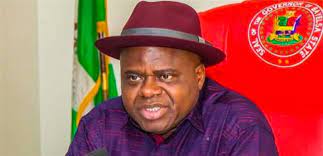

Diri Signs PWDs, BMUTH Bills into Law
ShareFrom Mike Tayese, Yenagoa Bayelsa State Governor, Senator Douye Diri, has signed the Persons with Disabilities (PWDs) and the Bayelsa Medical...

Democracy Day: FG Declares Friday Public Holiday
ShareThe Federal Government has declared Friday, public holiday to commemorate Nigeria’s 27 years of unbroken democratic rule. This was contained in a statement on Thursday in Abuja, by...
NUJ Osun Condemns Arrest of Secretary, Demands Public Apology from Police
ShareFrom Ayinde Akintade, Osogbo The Osun State Council of the Nigeria Union of Journalists (NUJ) has condemned the arrest and detention of its Secretary, Olalekan Akindoju, by...