
Education
Must Every State Own a University?

By Obike Ukoh
Rivers, Enugu, Imo and Edo states took the lead in the establishment of state universities.
The Rivers State University of Science and Technology was established in 1980, the same year the old Anambra State established Anambra State University of Science and Technology (now Enugu State University of Technology).
Imo State University, Okigwe (now Abia State University, Uturu) was established by the old Imo State in 1981, the same year old Bendel State established Bendel State University (now Ambrose Alli University, Ekpoma).
All the universities were established during the Second Republic. The pioneers in the establishment of state universities were states with high students’ enrolment, seeking admissions into higher institutions.
As a result of quota system, bright and qualified students from these states were denied admission, the raison d’être for the states to establish their own universities to accommodate qualified indigenes.
That was then. Many states it appears, now establish universities for sake of it, not out of necessity. There is now a rat race by states to establish own universities, even some states establishing two.
Not long ago, Adamawa State University, Mubi, complained of low patronage by indigenes.
Prof. Kaletapwa Farauta, the Vice-Chancellor of the Adamawa State University, who spoke recently, expressed worry over the low number of indigenes applying for admission into the university.
“Children from our Local Government Areas (LGAs) do not apply to the state university even though they are indigenes of the state.
“It will be good to let our people know that every LGA has a certain number of slots for admission into the state university. This is because they are the major stakeholders.
“But in many occasions after admissions, we found out that so many LGAs did not fill their slots.
“They let go off their slots because they don’t have candidates to fill up the gaps,” she said.
According to her, the development is a source of concern to the management of the university.
Farauta said that it was imperative for the indigenes to recognise themselves as the university’s major stakeholders, and urged them to ensure that they fill their admission quotas.
She enjoined the state and local education authorities to begin to sensitise their students to always choose their state owned university when filling their Joint Admission and Matriculation Board (JAMB) forms.
Academic Staff Union of Universities (ASUU)’s opposition to proliferation of state universities is predicated on poor funding, among others.
President of ASUU, Emmanuel Osodeke said that some universities are established by states, based on political, rather than educational and logistical considerations.
Osodeke said that some state chief executives regard universities as, “constituency projects. ”
To check the arbitrary creation of universities, Osodeke suggested that the NUC should play a more visible role prior to the establishment of universities by state and federal governments.
“I should not be mistaken as saying that the NUC should only be more stringent in its accreditation of courses offered by these government-sponsored universities.
“Certainly, the NUC must have increased direct involvement before the establishment of new universities.
“Undoubtedly, the revival of the educational sector is paramount to the progress of this country.
“If, however, government accords more priority to the creation of more universities than the funding and maintenance of the existing ones, such will be counterproductive and inimical to the progression of our society,” he said.
Calabar Zone of ASUU, on its part, expressed disappointment at the way and manner some state governments establish state universities without backing same with necessary laws, and urged governors to stop playing politics with universities establishment.
The Zonal Chairman, Dr Aniekan Brown, said the development portend dangers as most governors use that to interfere with the autonomy of state universities.
“The non-demonetisation of the Act gives room for university administrators and governors to trample on the autonomy of the universities by usurping the powers of governing councils and senate.
“Evidence of this could be gleaned from the manipulation of the composition or non-constitution of governing councils.
Brown called on all concerned to immediately set in motion necessary steps for domestication of the Universities Miscellaneous Provision Amendment Act to allow for exercise of autonomy in the state universities in line with the national and global best standards.
He identified another area of concern to ASUU to include funding of state universities, adding that the union has observed that most state government now rely on TETFUND and sometimes divert such money to establish their universities.
“In some instances, state governments divert allocation meant for existing institutions from TETFUND to establish their politically motivated universities.
“The inadequacy or absence of funding for capital projects has overtly manifested in the dearth of well-equipped workshop, libraries, studios, classrooms, hostels, utilities and municipal services.
“ASUU is committed to working for industrial harmony in all universities including those owned by state governments.
“However, this commitment can only be sustained if the respective visitors and governing councils take urgent steps to address the nagging issues highlighted so far.
“Therefore, we call on all owners of state universities to as a matter of urgency, make adequate budgetary provision for both capital and recurrent expenditure for infrastructure, staff development and payment of staff emoluments,” Brown stressed.
Edo inherited the Bendel State University, built by old Bendel State Government. But in 2016, the then Edo governor, Adams Oshiomhole, built Edo State University, Uzairue, located in his country home.
The government also attempted to convert the state’s College of Education into a University of Education.
But his successor, Gov. Godwin Obaseki, said that the move by the previous administration to convert the old College of Education into a University of Education was not feasible due to budget constraints.
He added that the state was already blessed with two state-owned universities and seven private universities, saying that it would be imprudent to establish another state-owned university.
From Delta the story was different as the Delta Government recently inaugurated the governing councils of the three new universities at Government House, Asaba.
The three universities are: University of Delta, Agbor; Dennis Osadebey University, Asaba and the Delta State University of Science and Technology, Ozoro.
Gov. Ifeanyi Okowa, who inaugurated the councils described as false, ASUU allegations on the proliferation of universities in the state.
Okowa stressed that the universities were established to increase access to educational facilities for the teeming number of students from the state.
“Let me respectfully disagree with the position of ASUU that there is an unhealthy proliferation of state universities in the country.
“The establishment of universities is on the concurrent list and, as a state, we do so when the need arises.
“In our case, it is to fill the gap created by shortage of space and to increase access to university education for our qualified youths.”
The governor, who relied on statistics from the Joint Admission Matriculation Board (JAMB) 2018 report, said that 80,131 or 4.85 per cent of the total number of Unified Tertiary Matriculation Examination (UTME) candidates for that year were from the state.
“Also, for the 2019/2020 academic session, 25,896 candidates from the state chose Delta State University (DELSU) as first choice. Out of this number, 22,358 qualified but only 4,854 candidates could be admitted.
“From the foregoing, you can see that even the state-owned DELSU has reached its full carrying capacity, hence, it is incumbent on us as an administration to broaden access to university education for our bright students especially in the fields of medicine, engineering, law, ICT and architecture.”
Okowa did not speak on constraints of funding, the bane of Nigerian universities.
Stakeholders, however insist that though access to university education is desirable, establishment of universities, especially by states should be driven by patriotic consideration not political expediency.
They also say that expanding of infrastructure, may be a better alternative to boost admissions openings.
Obike Ukoh is of the News Agency of Nigeria (NAN)
The Federal Government has commenced a comprehensive review of agricultural curricula in polytechnics and colleges of education to address widening skills gaps and revive youth interest in agriculture.
The Chairman of the Agriculture Curriculum Review Implementation Committee, Prof.
Idris Bugaje, disclosed this at a two-day national workshop on agricultural curriculum review on Monday in Abuja.Bugaje, who is also the Executive Secretary of the National Board for Technical Education (NBTE), said many agricultural programmes had remained unchanged for more than 15 years.
He said the outdated curricula had become unattractive to young Nigerians and misaligned with industry needs.
According to him, the review will cover all 33 National Diploma (ND) and Higher National Diploma (HND) agricultural curricula, alongside more than 32 National Occupational Standards.
Bugaje said past funding for curriculum review was grossly inadequate.
He noted that about N50 million was previously allocated annually to review over 320 curricula and more than 100 occupational standards nationwide.
“The work before this committee is critical because agriculture remains the mainstay of Nigeria’s economy.
“It employs a large number of Nigerians and contributes significantly to the Gross Domestic Product (GDP).
“Unfortunately, admissions into agricultural programmes have been declining because the curricula are no longer attractive or responsive to current realities,” he said.
Bugaje added that the review would prioritise practical, industry-driven training rather than purely academic content.
He said private sector participation would be strengthened to ensure graduates acquire relevant skills aligned with modern agriculture and global best practices.
The NBTE boss said four thematic groups covering crops and agronomy, livestock, fisheries, and forestry would develop implementation timelines.
He added that the groups would also recommend industry resource persons for the exercise.
Bugaje noted that undergraduate agricultural programmes under the National Universities Commission (NUC) would not be reviewed immediately.
He said this was in line with the commission’s five-year curriculum review cycle.
He added that the exercise would instead focus on programmes supervised by NBTE and the National Commission for Colleges of Education (NCCE).
Bugaje commended the Ministers of Education, the Minister of State for Agriculture, and the Minister of Livestock Development for their collaboration.
He said their efforts facilitated the establishment of the committee.
The Executive Secretary of NCCE, Dr. Angela Ajala, said Nigeria must urgently shift agricultural education from theory to hands-on practice.
Ajala said this was necessary to address manpower shortages in extension services and specialised farm operations.
She said the decline in trained agricultural extension officers and technical experts underscored the need for a forward-looking curriculum.
“If Nigeria must secure its agricultural future, training must move from classroom theory to practical competence,” she said.
Also speaking, the Executive Secretary of the Agricultural Research Council of Nigeria (ARCN), Dr. Abubakar Dabban, said the council was committed to producing industry-ready graduates.
Dabban, represented by Dr. Oluwafemi Salako, Director of the Plant Resources Department, said the council would provide technical support for the exercise.
He said ARCN supervised 19 national agricultural research institutes and 17 federal colleges of agriculture.
He added that the council would strengthen research, training, and extension linkages.
An international expert representing the Sector Skills Council for Agriculture, Pascal Durand-Carrier, said ongoing skills-gap surveys would support the review.
Durand-Carrier said the surveys were being conducted in collaboration with international partners.
He said the effort would help align training with labour market demands and strengthen collaboration between academia and industry.
Participants at the workshop expressed optimism that the review would produce modern, market-driven curricula.
They said the outcome would attract young Nigerians to agriculture and enhance national food security.

The Joint Admissions and Matriculation Board has announced a slight adjustment to the arrival time for candidates sitting the 2026 Unified Tertiary Matriculation Examination, particularly those scheduled for the first session.
In a notice issued via its official X handle on Monday, the board stated that candidates for the first session are now expected to arrive at their examination centres by 7:00 a.
m. , instead of the earlier scheduled 6:30 a.m.JAMB added that the examination will commence at 8:30 a.m. and end at 10:30 a.m.
“Attention 2026 UTME Candidates: This is to notify you of a slight adjustment to the arrival scheduled time, particularly for the first session, which is now 7:00am as against the earlier published 6:30am, while the scheduled start time for the session is now 8:30 am and end time 10:30 am,” the notice read.
The board also clarified that candidates are not required to reprint their examination slips following the adjustment.
The full daily timetable, as shared by JAMB, includes four sessions running from Monday to Friday, with adjusted timings across all batches to ensure smoother operations at Computer-Based Test (CBT) centres nationwide.
This adjustment comes in response to long-standing feedback from candidates and parents regarding the challenges of very early morning travel, including safety concerns on roads before dawn and logistical difficulties for those coming from distant locations.
The UTME is scheduled to be held from Thursday, April 16, to Saturday, April 25, 2026.
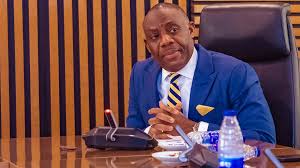
By Tony Obiechina, Abuja
The Federal Ministry of Education has announced the commencement of applications for the second cohort of the National Technical and Vocational Education and Training (TVET) Programme.
The ministry said the programme is part of efforts to boost skills acquisition and tackle unemployment among Nigerian youth.
In a statement issued by the ministry’s Director of Press and Public Relations, Boriowo Folasade on Monday, the ministry said the applications will open on Monday, April 13, 2026, at 4 pm.
It further invited interested Nigerians to participate in the nationwide initiative aimed at strengthening technical capacity, promoting entrepreneurship, and enhancing job creation.
The Minister of Education, Maruf Alausa, described the programme as a key strategy for human capital development.
She said the initiative is designed to equip young Nigerians with industry-relevant skills needed to succeed in a rapidly evolving economy.
Alausa said the programme aligns with the Renewed Hope Agenda of President Bola Tinubu, adding that it reflects the administration’s commitment to expanding access to skills-based education and fostering sustainable livelihoods.
He also said the Federal Government is investing in the productive capacity of young people through practical training and recognised certification, creating pathways for self-employment, innovation, and long-term economic growth.
“In strengthening this programme, the Federal Government is investing in the productive capacity of our youth. By providing practical training and recognised certification, we are creating pathways for self-employment, innovation, and long-term economic growth,” the Minister said.
The statement noted that as part of efforts to expand opportunities in emerging sectors, the Ministry is collaborating with the Federal Ministry of Arts, Culture and Tourism to strengthen training in creative and cultural industries, with a view to unlocking the potential of Nigeria’s creative economy.
According to the statement the TVET Programme will provide intensive six-month and one-year hands-on training in accredited centres across the 36 states and the Federal Capital Territory. He added that participants will receive a monthly stipend of N22,500 and a nationally recognised certificate upon successful completion.
Boriowo added the training areas include construction, ICT, automotive technology, creative media, agriculture, fashion and garment production, cosmetology, tourism and hospitality, catering services, and leather works.
The Ministry further stated that applicants are required to demonstrate commitment to the programme and must be available for full participation throughout the training period, adding that attendance will be monitored using biometric verification systems, with stipends tied to compliance.



CAN Denies Split, Says No Relief Funds Missing, Warns Against False Claims
ShareBy Laide Akinboade, Abuja The Christian Association of Nigeria (CAN) on Wednesday, denied alleged division within the Association along Northern...


NBA Makurdi Condemns Detention of Lawyer, Demands Immediate Action
ShareBy David Torough, Abuja The Nigerian Bar Association (NBA), Makurdi Branch, has strongly condemned the arrest and continued detention of...


The Weight of “Permission” from the Law
ShareBy Alu Azege, Abuja The first thing Kessy noticed was the silence. Silence that felt like an entity, leaving her...


Son Kills Father While Defending Mother in Niger
ShareFrom Dan Amasingha, Minna A tragic domestic incident has left a 60-year-old man dead after he was allegedly assaulted by...


Man City, Inter, Chelsea, Juventus Face Off in Hong Kong for Preseason
ShareEnglish and Italian football giants Manchester City, Chelsea, Inter Milan and Juventus will square up for pre-season friendlies in Hong Kong in August, the clubs...
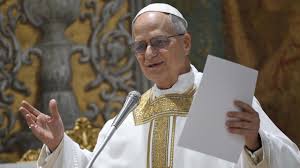

Pope Leo XIV Pays Tribute to Predecessor on Anniversary of His Death
SharePope Leo XIV commemorated the first anniversary of the death of his predecessor, Francis, as he addressed worshippers in Equatorial Guinea yesterday. The pontiff paid tribute to his...


Labour Party Fixes National Convention April 28
ShareThe Labour Party has fixed its national convention for April 28 in Umuahia, Abia. The party also officially released the list of chairmen and members of its electoral sub-committees for the forthcoming...


Cross River Confirms Case of COVID-19
ShareFrom Ene Asuquo, Calabar The Cross River State Government has confirmed a case of COVID-19 and swiftly activated its public health emergency response mechanisms to contain any potential...


Nigeria Imports 61.7m Barrels US Crude In Two Years
ShareNigeria imported about 61.7 million barrels of crude oil from the United States between January 2024 and January 2026, underscoring...


FG Slams 13-Count Charge against Alleged Coup Plotters
ShareBy David Torough, Abuja The Federal Government has filed a 13-count charge before the Federal High Court in Abuja against...