
NEWS
NAF Annihilates Terrorists’ Command Hub in Mandara Mountains


The Air Component of Operation Hadin Kai, has in a coordinated night airstrikes, annihilated a known terrorists’ command hub on the Mandara Mountains in Chikide and Degbewa areas of Borno.
This is contained in a statement by the Deputy Director, Public Relations and Information, Nigerian Air Force (NAF), Group Capt.
Kabiru Ali, on Tuesday in Abuja.Ali said that the night operation targeted insurgents’ enclaves deep within the treacherous Mandara Mountains, delivering a crippling blow to the terrorists’ stronghold and disrupting their activities.
He said credible Intelligence, Surveillance, and Reconnaissance (ISR) data had indicated that the notorious terrorist leader, Ali Ngulde, and his fighters had planned a high-level engagement at the location.
According to him, ISR missions over the area confirmed terrorists activity at a key assembly point in Degbewa, alongside the presence of heavily fortified structures equipped with solar-powered installations.
”Following this intelligence, the NAF immediately launched a precision night strike under the cover of darkness, achieving complete surprise.
”The coordinated firepower extensively destroyed the terrorists’ logistics and command centre, igniting large fires that obliterated multiple structures and eliminated scores of terrorists in their hideouts.”
Ali added that the operation against Boko Haram enclaves across the theatre significantly degraded their fighting capability, while creating favourable conditions for ground troops to advance and dominate the battlespace.
”The successful execution of this night operation underscores the NAF’s growing dominance in both day and night air power capabilities, proving that insurgents can no longer operate under the cover of darkness.
”Through relentless precision strikes and sustained air operations, the NAF remains committed to utilising its formidable air power to neutralise terrorist networks and restore lasting peace to the region,” he said. (NAN)

By David Torough, Abuja
The West African Health Organization (WAHO) has called for stronger regional collaboration and practical policy interventions to address health workforce shortages, brain drain and poor working conditions across the Economic Community of West African States (ECOWAS) member countries.
The call was made at the opening ceremony of a three-day workshop in Abuja to finalize the work plan for motivating and retaining health workers across the ECOWAS region.
Speaking on behalf of the Minister of State for Health, Dr. Ishiaka Adekunle Salako, Dr.
John Ovuoranye said the Nigerian government was pleased to host the regional meeting, describing it as an opportunity to align national, regional and continental efforts towards strengthening Africa’s health workforce.He noted that the workshop coincided with other major health-related engagements in Nigeria, including activities marking the 50th anniversary of the West African College of Physicians and a high-level African Union forum on the continent’s community health workforce.
According to him, the convergence of the events reflects growing recognition among African countries that addressing health workforce challenges requires coordinated action rather than isolated interventions.
Ovuoranye emphasized that the work plan being developed by WAHO and its partners must complement broader continental initiatives, particularly the African Union’s target of expanding the community health workforce by two million workers by 2028.
He explained that while continental initiatives would establish broader frameworks for strengthening the health workforce, the ECOWAS work plan would focus on practical measures to motivate health professionals and encourage them to remain in the region.
He stressed that the different initiatives must be aligned to ensure that training, recruitment, motivation and retention efforts produce sustainable results.
The minister’s representative also highlighted Nigeria’s preparedness in responding to public health emergencies, citing the country’s response to a reported Ebola case.
He said the country had activated surveillance and contact-tracing measures, adding that the experience demonstrated the importance of having adequately trained personnel and effective health systems to respond to emerging threats.
Ovuoranye urged other countries in the region to strengthen their preparedness and invest in the health workforce, noting that the movement of people across national borders makes regional cooperation essential.
In a presentation on the meeting’s objectives and expected outcomes, the representative of the WAHO Director General, Professor Joseph Olorunda, described health workers as the backbone of health systems and warned that shortages and unequal distribution of personnel continued to threaten healthcare delivery across West Africa.
He said the workshop was expected to move beyond general discussions about workforce challenges to identify specific problems confronting member countries and develop practical strategies to address them.
According to Olorunda, participants would examine the relationship between motivation and retention, identify areas where policies and partnerships could support improvements, and agree on actions that governments and relevant institutions could implement.
He stressed that the effectiveness of a health system depended not only on infrastructure and technology but also on the availability of adequately trained and motivated professionals to deliver services.
Olorunda identified poor working conditions, delayed salary payments, inadequate remuneration, limited career progression, weak political commitment and the migration of skilled professionals to higher-income countries as major factors undermining workforce retention in the region.
He argued that investments in hospitals, equipment and other health infrastructure would not deliver the desired results without sufficient numbers of skilled personnel to operate them.
The WAHO representative also raised concerns about disparities in health professional education and training across countries, including differences in programme duration, admission requirements, diploma recognition and professional qualifications.
He called for sustained efforts to harmonize training standards and qualifications across the region to improve professional mobility and ensure that health workers receive appropriate preparation for their responsibilities.
Drawing attention to the scale of migration, Olorunda cited Nigeria and Ghana as examples of countries facing persistent challenges in retaining trained health professionals.
He noted that Ghana had recorded substantial outward migration of nurses, while Nigeria continued to face the loss of doctors and nurses to countries offering more attractive employment opportunities.
He also highlighted the particular difficulties confronting countries such as Liberia and Sierra Leone, where conflict and fragile health systems have compounded workforce shortages.
According to him, the challenges vary across countries, making it necessary for the regional work plan to recognize national circumstances while establishing common priorities for action.
Olorunda maintained that governments must treat health workforce retention as a fundamental health system priority rather than a secondary concern.
He called for competitive and timely remuneration, improved working environments, professional recognition, structured career advancement and measures to protect the safety and welfare of health workers.
He also cautioned against relying excessively on compulsory service arrangements and other restrictive measures to prevent migration, arguing that improving employment conditions would provide a more sustainable incentive for professionals to remain in their home countries.
He urged policymakers to ensure that health workers are adequately rewarded for their expertise and years of training, while providing opportunities for professional development and advancement.
The WAHO representative further emphasized that political commitment would be essential to implementing the work plan, noting that even well-designed policies would have little impact without adequate funding and effective institutional support.
He called on participants to use the workshop to develop a practical document that could guide decision-makers in addressing staffing gaps, improving workforce distribution and strengthening the retention of skilled personnel.
The three-day workshop is expected to produce a finalized regional work plan outlining strategies to improve the motivation and retention of health workers across ECOWAS member countries.
The initiative is intended to strengthen regional cooperation in addressing workforce shortages, improve the working conditions of health professionals and support the delivery of quality healthcare services to populations across West Africa.

The African Export-Import Bank (Afreximbank) and its subsidiaries have reported a 24 per cent increase in net income for the nine months ended Sept. 30, 2026.
Net income increased to 813.
5 million dollars compared with the 654. 3 million dollars recorded in the corresponding period of 2025.The bank disclosed this in a statement by Vincent Musumba, Communication and Events Manager, Afreximbank on Monday.
Musumba attributed the growth to increased lending activities, higher interest income and disciplined cost management amid a challenging global operating environment.
He said the bank’s total assets and contingencies rose 12 per cent to 54.1 billion dollars, up from 48.5 billion dollars at the end of 2025, while net loans and advances increased eight per cent to 36.2 billion dollars from 33.5 billion dollars.
He said highlights of the results showed Gross income grew by 11 per cent to 2.7 billion dollars during the period, supported by balance sheet expansion and stronger earnings generation.
He added that interest income increased by 9.1 per cent to 2.4 billion dollars from 2.2 billion dollars in the corresponding period of 2025.
“This reflects growth in average loan balances from 28.9 billion dollars to 34.8 billion dollars,” he said.
Musumba said that Net interest income also increased by 15 per cent to 1.5 billion dollars.
“Fees and commission income from unfunded activities including guarantees, letters of credit and advisory services, increased to 136.9 million dollars from 117.2 million dollars,” he further said.
He said that the bank maintained operational efficiency, with its cost-to-income ratio improving to 20 per cent from 21 per cent a year earlier, remaining below its strategic ceiling of 30 per cent.
“Return on average shareholders’ equity stood at 12 per cent, while return on average assets improved to 2.48 per cent from 2.34 per cent in the corresponding period of 2025.
”The non-performing loans ratio edged up to 2.48 per cent from 2.43 per cent at the end of December 2025,” he added.
He said provisions for expected credit losses increased to 537.6 million dollars from 481.3 million dollars in the corresponding period of the previous year, adding that the bank’s liquid assets stood at 6.1 billion dollars, which represented 13 per cent of total assets, compared with 15 per cent at the end of 2025.
The communication and events manager of Afreximbank, however said capital adequacy ratio moderated to 22 per cent from 23 per cent.
According to him, shareholders’ funds increased to 9.0 billion dollars from 8.4 billion dollars at the end of 2025, supported by internally generated profits and 195.2 million dollars in new equity contributions under its General Capital Increase programme.
“During the period, Afreximbank also strengthened its access to international debt capital markets through a 1.5 billion dollar dual-tranche bond issuance completed in July 2026.
”The issuance comprised 750 million dollars in 5.5-year notes and another 750 million dollars in 10-year notes.
“Consequently, the bank’s debt securities in issue increased to 4.4 billion dollars from 3.4 billion dollars at the end of 2025, further diversifying its funding base.”
Musumba revealed that the bank also established a 10 billion dollars Gulf Crisis Response Programme to provide liquidity support, facilitate trade and payment flows.
He said this would help member countries maintain access to essential imports, including energy products, fertilisers, food and other strategic commodities.
“The group’s high-impact investments increased by 23 per cent to 1.6 billion dollars from 1.3 billion dollars at the end of 2025.
“This supports development projects aimed at advancing industrialisation, improving trade competitiveness and strengthening economic resilience,” he said.
Commenting on the performance, Afreximbank’s Senior Executive Vice-President, Denys Denya, said the results demonstrated the bank’s capacity to sustain profitability while fulfilling its development mandate across Africa and the Caribbean.
Denya said the expansion of the bank’s lending portfolio, strong earnings and capital position reflected the effectiveness of its strategy and the growing relevance of its interventions across its target markets.
“As global economic and geopolitical uncertainties persist, Afreximbank remains committed to providing the financing, trade facilitation and strategic investments needed to strengthen regional value chains, support industrialisation and accelerate the continent’s economic transformation,” he said.
By Laide Akinboade, Abuja
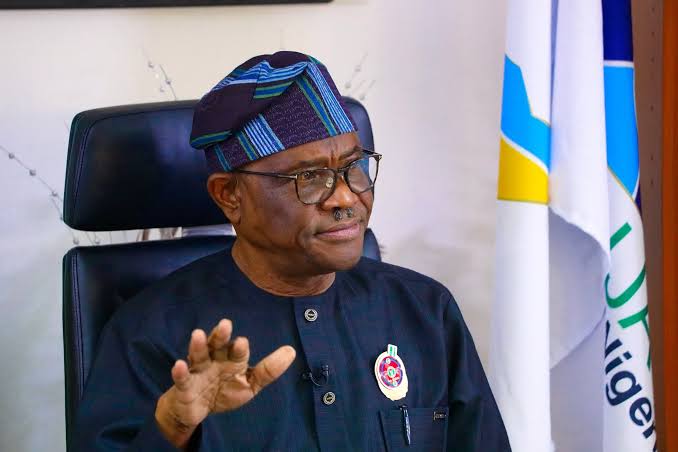
The Minister of State, Federal Capital Territory (FCT), Dr. Mariya Mahmoud, has reaffirmed the commitment of the FCT Administration, under the leadership of FCT Minister, Barr.
Nyesom Wike, to strengthen healthcare delivery, supporting medical institutions and ensuring residents have access to quality healthcare services.Mahmoud stated this, while delivering her goodwill message as Chief Host at the 50th Anniversary Celebration and Annual General and Scientific Meetings of the West African College of Physicians (WACP), held at the Bola Ahmed Tinubu International Conference Centre, Abuja, with the theme, “WACP at 50: Celebrating a Legacy and Envisioning the Future.
”The Minister described the College’s Golden Jubilee as a significant milestone in West Africa’s medical history, commending its five decades of contributions to specialist medical training, scientific research, professional development and the promotion of excellence in clinical practice.
She emphasised that a strong healthcare system is fundamental to sustainable development, noting that the health of a population directly influences economic productivity, social well-being and regional prosperity.
In her words, “A healthy population is essential for economic productivity, social well-being and sustainable national development.”
Mahmoud called on governments and relevant stakeholders to prioritise investment in medical education, specialist training, scientific research, modern healthcare infrastructure and the welfare of healthcare professionals.
She also advocated for expanded mentorship and professional development opportunities for young physicians to strengthen the region’s medical workforce.
Mahmoud noted that physicians play a critical role beyond treating illnesses, highlighting their contributions to disease prevention, medical research, public health education and the formulation of evidence-based healthcare policies.
She further encouraged the College to embrace emerging technologies, including artificial intelligence, to improve clinical decision-making and healthcare delivery.
The Minister commended the WACP leadership, Fellows, members and partners for sustaining the vision of the College’s founding fathers and providing a platform for scientific exchange, professional collaboration and the development of practical solutions to shared healthcare challenges.
She also praised the Central Organising Committee, led by Dr. Akin Moses, for successfully organising the landmark event in Abuja.
In his remarks, the President of the WACP, Dr. Mourtalla Ka, called for stronger postgraduate medical education, enhanced scientific research and greater regional collaboration to address emerging healthcare challenges across West Africa.
Ka noted that the College had trained and certified thousands of specialist physicians over the past five decades, contributing significantly to clinical practice, medical education, scientific research and health leadership across the region.
He paid tribute to the founding fathers, past presidents, senior Fellows, teachers and mentors whose dedication had sustained the institution’s legacy.
The WACP President stressed the importance of embracing advances in medical science and technology while upholding professional standards and the human values central to medical practice.
He also urged the College to strengthen support for younger Fellows and trainees and use the Golden Jubilee and scientific meeting to renew its commitment to medical excellence and improved healthcare delivery.




Much Ado About the PBAT Door-to-Door Movement
ShareBy Catherine Agbo In the unfolding drama of Nigerian political discourse, few things excite the commentary circuit quite like a...

WAHO, ECOWAS Countries Move to Tackle Health Worker Shortages, Brain Drain
ShareBy David Torough, Abuja The West African Health Organization (WAHO) has called for stronger regional collaboration and practical policy interventions...
Afreximbank’s Net Income Rises 24 Per Cent to $813.5 Million in Nine Months
ShareThe African Export-Import Bank (Afreximbank) and its subsidiaries have reported a 24 per cent increase in net income for the...


Wike-Led FCTA Committed to Quality Healthcare, Stronger Medical Institutions – Mahmoud
ShareBy Laide Akinboade, Abuja The Minister of State, Federal Capital Territory (FCT), Dr. Mariya Mahmoud, has reaffirmed the commitment of...


Enugu Police Arrest 28 Year Old Suspect for Robbing POS Operator
ShareFrom Sylvia Udegbunam, Enugu The Enugu State Police Command has arrested a 28-year-old male suspect, Michael Ayisa, for allegedly robbing...

Peter Obi Has Nothing to Offer as President — Shettima
ShareBy Tony Obiechina, Abuja Vice-President Kashim Shettima has criticised the presidential candidate of the Nigeria Democratic Congress (NDC), Peter Obi,...


NCMMP 2.0: The Gaps in National Alignment and Inclusive Consultation
ShareBy Uche Joe Uwaleke The Nigeria Capital Market Master Plan 2.0 (NCMMP 2.0), covering 2026-2036, is a commendable and ambitious...


Interswitch, Banks Push Tap-to-Pay for Faster Transactions
ShareBy Tambaya Julius, Abuja Interswitch and its banking partners are stepping up efforts to promote tokenised card payments, which could...


ADC, Shettima In Hot Exchanges Over Atiku Economic Plan
ShareBy Tambaya Julius Abuja The African Democratic Congress (ADC) Presidential Campaign Council has criticised Vice-President Kashim Shettima over his remarks...


Phone-Tapping Saga: Abuja Court Orders El-Rufai to Open Defence
ShareBy Tambaya Julius, Abuja A Federal High Court in Abuja on Monday dismissed a no-case submission filed by former Kaduna...