
NEWS
NAFDAC Generates N2.5bn from Illicit Drug Market Raids

By Ubong Ukpong, Abuja
The National Agency for Food and Drug Administration and Control (NAFDAC) on Wednesday, said that it generated N2.5 billion from its recent raids of illicit drug markets in Lagos, Onitsha, and Aba, respectively.
Director-General of the agency, Prof. Mojisola Adeyeye, who revealed this during a session with the House of Representatives Committee on Food and Drug Administration and Control, said the funds were fines collected from traders found guilty of selling fake or substandard drugs during recent enforcement actions in open markets across the country. While stressing that all funds were paid directly into NAFDAC’s official account, she noted that N996 million was spent on enforcement operations, N159 million was borrowed from a donor grant, and N1.175 billion went to regulatory expenses.According to her, the agency was left with about N206 million after deductions.She said the operation, which deployed over 1,300 security personnel, uncovered widespread violations ranging from expired and unapproved drugs to poor storage practices.Adeyeye said the enforcement drive, which lasted up to four weeks in some locations, uncovered serious threats to public health.She disclosed that some shop owners were caught distributing banned substances like Tramadol and selling expired or unregistered medicines.“These charges were not punitive but necessary. The standard fine for violating Good Distribution and Storage Practice (GDSP) is N2 million, but in many cases, we reduced it to N500,000,” she said.She, however lamented that the agency’s inability to sustain such critical operations is being crippled by severe revenue restrictions imposed by the federal governmentWhile decrying the financial constraints facing the agency, Adeyeye explained that at the end of 2023, NAFDAC had N19 billion in its accounts The DG however noted that N9 billion was removed before the agency could access it, and only N4.5 billion was eventually released.Speaking of the agency’s 2024 raid in Kano, she described the operation in the Northwestern state as a monumental and court-mandated intervention that differed significantly from the raids conducted in Lagos, Onitsha, and Aba.She said the Kano raid was anchored on a judgment delivered on February 16, 2024, by the Federal High Court which ordered the relocation of open drug market traders to the newly constructed Coordinated Wholesale Centre (CWC), known as the Kanawa Pharmaceutical Centre.Adeyeye clarified that no administrative charges or fines were collected during the Kano enforcement, due to the urgent and court-directed nature of the operation.The DG however noted that post-marketing surveillance was carried out after relocation.She added: “These are the lives we are trying to save. We had no funds at the time our accounts had just been shut down and reopened with zero balance at the start of January 2024. Yet, we had to carry out the court judgment and move over 1,300 shops into the regulated centre.”Adeyeye stated that Kano was the only state that had built its CWC as mandated by a presidential directive, long before her tenure began.Responding to lawmakers’ concerns that Kano traders were treated more leniently compared to the operations in the southern part of the country, she said the agency followed due process, guided by the urgency of the court judgment and prevailing security risks.Clarifying the financial situation of the agency, Director of Finance and Accounts, NAFDAC, Adeniji Nma, said the Office of the Accountant-General of the Federation (OAGF) had unilaterally classified NAFDAC as a revenue-generating agency and begun sweeping up to 50 per cent of all revenue inflows into the federal treasury.Because of it, we find it difficult to do most of our operations.”After the presentation, a member of the committee, Hon. Emeka Idu, requested a detailed breakdown of the revenue generated from each location where fines were collected during the enforcement operations.The NAFDAC team was unable to provide the breakdown at the hearing.Chairman of the committee, Regina Akume, noted that the agency’s presentation was incomplete.The committee, consequently, directed the agency to return with a comprehensive, location-by-location account of the N2.5 billion generated from the raids.
By Uche Uwaleke
During a recent academic study tour of key financial institutions in Malaysia with some of my PhD students from Nasarawa State University, Keffi, I had the opportunity to visit Bank Negara Malaysia (BNM), the Central Bank of Malaysia, where senior officials made presentations on the Bank’s mandate and institutional framework.
What particularly caught my attention was the positioning of sustainable economic growth as the ultimate objective, with monetary stability serving as an important means towards achieving that broader objective.
I was equally struck by the emphasis placed on enhancing the financial well-being of households and businesses as one of the Bank’s strategic thrusts.
These aspects of the Malaysian framework prompted me to reflect on what Nigeria might learn from a central banking model that appears to place monetary stability within a broader developmental conception of economic policy.
The Malaysian experience therefore offers Nigeria an opportunity to revisit a fundamental question about the role of a central bank in a developing economy: should monetary stability be regarded essentially as an end in itself, or as one of the instruments through which the broader objective of sustainable economic growth and improved economic welfare can be achieved? The question is not whether monetary stability matters; it unquestionably does, because stable prices are indispensable to investment, savings, production and household welfare. The more important question is whether a developing economy such as Nigeria should expect its central bank to remain largely focused on monetary stability while leaving the pursuit of sustainable economic growth almost entirely to the fiscal authority.
It has been argued that the real issue for Nigeria is not the formal scope of the Central Bank of Nigeria’s mandate but the quality of coordination between monetary and fiscal authorities.
There is considerable merit in this argument. Monetary policy does not operate in isolation from fiscal policy, and every significant monetary-policy decision has implications for government debt-servicing costs, business financing, household borrowing, investment and productive capacity. Fiscal policy, in turn, affects inflation, liquidity conditions, exchange rates and the effectiveness of monetary policy. It is therefore difficult to envisage a successful economic policy framework in which the monetary and fiscal authorities operate as though they inhabit entirely separate economic universes.
However, while coordination is necessary, I do not believe it is sufficient. The critical question is how such coordination should be institutionalized and sustained beyond the personalities or policy preferences of particular administrations and central-bank managements.
Coordination is essentially a process, whereas a statutory mandate establishes an institutional obligation. If sustainable economic growth is not expressly recognized within the legal framework governing the CBN, there is a risk that successive managements of the Bank will concentrate overwhelmingly on those objectives that are most clearly articulated in the law and regard broader developmental concerns as secondary or discretionary. This is why I believe that an amendment to the CBN Act of 2007 deserves serious consideration.
I submit that the CBN Act should explicitly recognize sustainable economic growth as an overarching objective, while retaining monetary and financial stability as indispensable conditions for achieving it. Such an amendment would not mean transforming the CBN into a development agency, asking it to substitute for the fiscal authority, or giving it a licence to sacrifice price stability whenever growth becomes politically desirable.
Rather, it would establish a statutory framework within which the CBN is expected to consider how its monetary and financial policies can contribute to productive capacity, investment, employment and the financial well-being of households and businesses. There is an important distinction between giving the CBN responsibility for development and giving it a responsibility to contribute to development; it is the latter that I am advocating.
The experience of the United States is instructive in this regard. The Federal Reserve operates under a dual mandate that includes price stability and maximum employment, demonstrating that recognition of broader economic outcomes within a central bank’s statutory framework does not necessarily undermine monetary-policy credibility or central-bank independence.
If a highly developed economy with deep and sophisticated financial markets can accommodate broader economic objectives within its central-bank framework, there is little reason to assume that a developing economy such as Nigeria must necessarily confine its central bank to an exceptionally narrow conception of its responsibilities.
Indeed, given Nigeria’s structural challenges, including inadequate productive capacity, limited access to finance, weak industrialization and high unemployment, the case for a framework that recognizes the developmental implications of monetary and financial policy may be even stronger.
Another argument that deserves serious consideration is Nigeria’s recent experience with development finance under the previous CBN administration.
The Bank became deeply involved in several intervention programmes designed to support agriculture, manufacturing and other sectors of the economy, and some of these interventions understandably generated concerns about the appropriate boundaries between monetary policy, fiscal policy and credit allocation.
Questions were also raised about their scale, implementation and institutional consequences. Those concerns should not be dismissed, but neither should we draw the conclusion that developmental central banking has no legitimate place in a developing economy.
The fact that a policy instrument can be abused does not invalidate the underlying principle. The appropriate lesson is that development-oriented interventions must operate within clear rules, transparency, accountability, institutional limits and proper coordination with fiscal policy.
Nigeria should therefore avoid moving from one extreme to another: from a CBN that attempts to do too much to one that does too little. The challenge is to identify the institutional middle ground in which the central bank remains credible and disciplined in preserving monetary and financial stability while recognizing the structural realities of a developing economy.
Such a central bank would not indiscriminately allocate credit, finance government programmes or substitute for fiscal policy, but neither would it regard the cost and availability of finance to productive enterprises as entirely outside its legitimate concerns.
The Malaysian example also invites reflection on Nigeria’s financial regulatory architecture. It has been suggested that Malaysia and Nigeria both operate broadly fragmented financial regulatory systems, but the two arrangements are not comparable in degree.
Malaysia’s principal financial-sector regulatory architecture is considerably more concentrated, with Bank Negara Malaysia and the Securities Commission playing the central regulatory roles, whereas Nigeria has a considerably more dispersed structure involving institutions such as the CBN, Securities and Exchange Commission, NDIC, NAICOM and PENCOM.
This difference has implications for regulatory coordination, policy coherence and the transmission of financial policy across the economy.
The lesson, however, is not that Nigeria should simply reproduce Malaysia’s institutional structure, but that we should examine carefully what institutional arrangements enable monetary stability, financial stability and developmental objectives to coexist without compromising central-bank credibility.
There is also a compelling argument that Nigeria should not make development dependent upon the discretion of the CBN. Development should not depend on whether a particular governor happens to favour interventionist policies, nor should the central bank become the institution responsible for financing every developmental aspiration of government. I agree with this concern, but I do not see it as an argument against a broader statutory mandate.
On the contrary, it strengthens the case for a clearer institutional framework. The objective should be to create an ecosystem in which the fiscal authority remains primarily responsible for fiscal policy, public investment and broader development strategy, while the monetary authority performs its core functions with credibility and independence and contributes, within clearly defined boundaries, to the broader developmental objective.
The CBN does not need to do everything, but it should be expected to contribute to the right things. This distinction is particularly important when considering access to affordable credit.
The monetary-policy framework and financial-sector regulations established by the CBN have significant implications for whether businesses can obtain financing at costs compatible with productive investment.
If productive enterprises are consistently confronted with prohibitively expensive credit, while monetary and financial conditions systematically favour financial intermediation over productive investment, the consequences extend beyond conventional monetary indicators to investment, employment, production and economic growth.
This does not mean that the CBN should arbitrarily force banks to lend cheaply or undermine the principles of sound banking; it means that the Bank should be encouraged, within the limits of monetary and financial stability, to consider how its policies and regulatory framework can facilitate efficient financial intermediation and improve access to finance for productive sectors.
Some may argue that this approach risks undermining central-bank independence. I would argue the opposite.
Independence and coordination are not mutually exclusive. A central bank can retain operational independence while engaging in structured, transparent and rules-based coordination with the fiscal authority. Indeed, genuine independence may be strengthened when the respective responsibilities of the monetary and fiscal authorities are clearly defined and when coordination takes place within an established institutional framework rather than through informal political pressure.
The purpose of coordination is not for government to dictate monetary policy or for the CBN to dictate fiscal policy, but to ensure that the two arms of economic policy do not systematically work at cross-purposes.
It goes without saying that Nigeria should move beyond the simplistic choice between an interventionist central bank and a narrowly conservative one. What is needed is an enabling central bank: one that remains firmly committed to price and financial stability while recognizing that monetary stability is also a condition for sustainable investment, production, employment and economic transformation.
Such a central bank would work with the fiscal authority without becoming subordinate to it, support productive sectors without becoming a permanent allocator of credit, and facilitate financial inclusion without compromising the soundness of the financial system.
Most importantly, it would operate within a statutory framework that reflects the realities of a developing economy.
The debate, therefore, should not be reduced to whether the CBN should have a narrow or broad mandate. The more important question is what kind of institutional architecture Nigeria requires to achieve both monetary credibility and sustainable economic transformation.
Price stability remains indispensable, but price stability alone does not build factories, create productive jobs, expand businesses, improve household welfare or transform an economy.
Those outcomes require fiscal policy, industrial policy, infrastructure, human capital, financial-sector development and effective institutions, with monetary policy playing an important complementary role.
For this reason, I believe Nigeria should seriously consider amending the CBN Act of 2007 to recognize sustainable economic growth as the ultimate goal, while preserving monetary and financial stability and protecting the operational independence of the Bank.
Properly designed, such an amendment would not be a licence for reckless intervention; rather, it would provide the foundation for a more disciplined form of developmental central banking in which the CBN’s role is clearly defined, its independence protected, and the developmental implications of its monetary and financial policies explicitly acknowledged.
The Malaysian experience does not tell Nigeria to become Malaysia. It tells us something more important: institutional choices matter. Nigeria must therefore design institutions that respond to its own economic realities while learning from countries that have demonstrated the possibility of combining monetary credibility with developmental ambition.
The objective should not be to make the CBN more powerful, but to make Nigeria’s economic-policy architecture more coherent, coordinated and capable of delivering sustainable and inclusive growth. That, in my view, is the more consequential lesson that the Malaysian experience offers Nigeria.
Prof Uche Uwaleke is the Director of the Nasarawa State University Institute of Capital Market Studies and President of the Capital Market Academics of Nigeria.
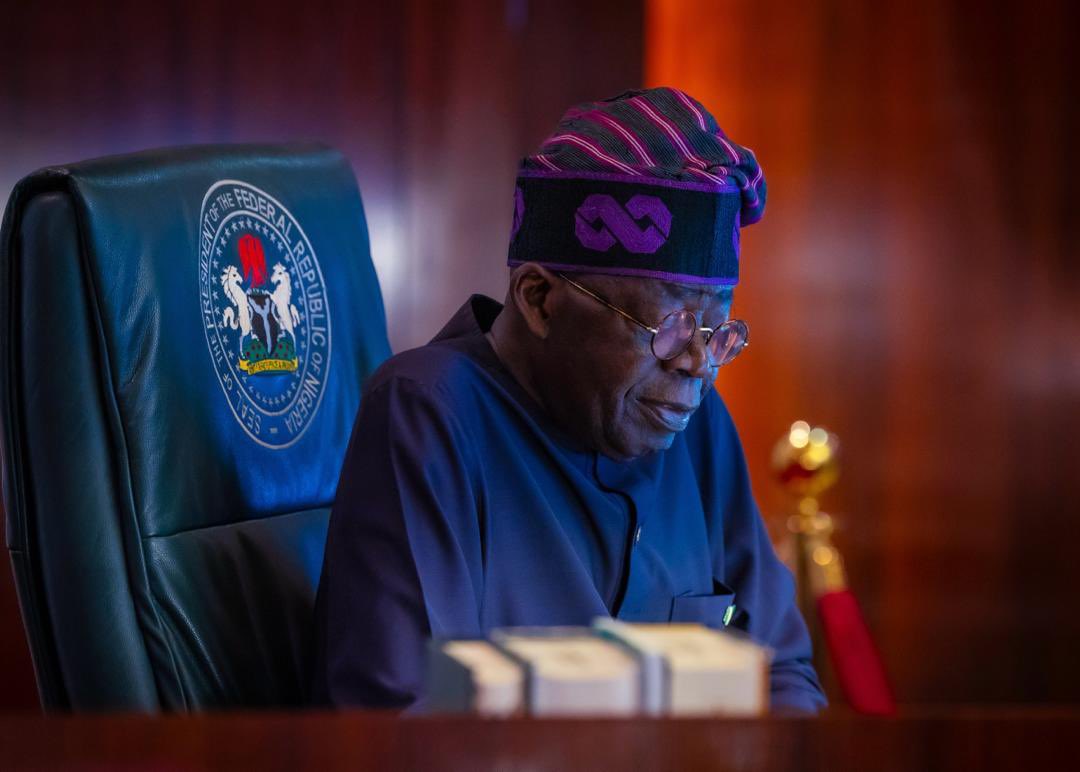
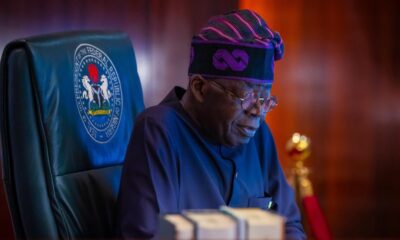
Chairman of the Northern Christian Association, NCA, Rev. Joseph Hayab, has said President Bola Tinubu and Vice President Kashim Shettima were not elected by Muslims alone in the 2023 general elections.
Hayab made the remark while reacting to comments by Islamic cleric, Sheikh Sani Yahaya Jingir, who had defended Tinubu’s Muslim-Muslim ticket ahead of the 2027 elections and argued that Muslims should not apologise for supporting candidates of their faith because of their population and popularity.
In a viral video, Jingir described Christians as “infidels” and urged Muslims to unite and use their numerical strength to pursue their political interests.
Hayab said the comments were unacceptable, arguing that the 2023 presidential election showed that the Tinubu-Shettima ticket received support from Christian-majority states and communities.
“Will you tell me that the current Muslim Muslim ticket that you claim to have put was only elected by Muslims? No, sir. I can count states that are mostly Christian. The man won in those states,” he said.
He said the Muslim-Muslim ticket had raised concerns among Christians, noting that they had advised that there should be a balance for fairness.
“We only wanted understanding and togetherness, as enshrined in our Constitution,” Hayab said.
Hayab also criticised Jingir’s description of Christians as “infidels”, saying such language was unacceptable when addressing fellow Nigerians because of their faith.
“If you respect me, you do not come out publicly and make such a derogatory statement against me, against my faith, just for politics. “It is no longer politics. It is the reality that has been going on on the ground,” he said.
The NCA chairman said Jingir’s comments had also brought into the open what Christians in the North had experienced for years but were often dismissed whenever concerns were raised about persecution, marginalisation and religious dominance.
He said it was worrisome that the Islamic cleric made the statement in the presence of political leaders who did not immediately reject or rebuke him but were instead seen cheering him.
‘Nigeria’s pretence over allegations of persecution and discrimination against Christians had finally come to an end.”
According to him, “There is always a day when you will no longer pretend. We have been living in pretence in Nigeria, lying to ourselves that we are together, lying to each other that there is unity and lying to each other that we are co-citizens.
“But for us as Christians in the North, we know these preachers have always been there for all these decades. So, I think Sheikh Jingir just found an opportunity to open up what has been happening in secret,” Hayab said.
“The man did not just say it in his room. The man said it in the presence of three governors, and they were all smiling.
“An action that would have been frowned upon, an action that would have been rebuked, an action that would have been rejected instantly,” he said.
“Some months ago, we had controversy in this Nigerian debate around whether Christian genocide is happening and whether Christians have been persecuted. Many people said, ‘No, that is not true.’
“Today, Nigerians do not need to ask another question unless you want to pretend. The pretence has ended. We can see it clearly. We can hear it clearly,” he said.
He challenged the governors at the gathering, the Federal Government and politicians being promoted by the cleric to publicly state their positions on the matter.
“We are waiting to see the reaction of those governors. Whatever stopped them from reacting that day is another different thing. We are going to see what they are going to say.
“Then, we will see the reaction of the Federal Government. We will see the reaction of those candidates whom the man is campaigning for, whether they like such,” he said.
Hayab maintained that the controversy was not simply about Muslims supporting Muslim candidates but about the language used to address fellow Nigerians because of their faith.
He argued that Nigeria had previously witnessed political tickets involving candidates of the same faith without generating the current level of tension, adding that the problem was not necessarily the religious identity of candidates but inflammatory rhetoric and attempts to demean other citizens.
Hayab, however, said Christians would not abandon dialogue and engagement with Muslims and other religious groups despite the controversy.
“We will not stop the dialogue. We will talk with honest people and clerics. We will talk with people who understand things rightly.
“But we should also call out people like Jingir and others. And when we call them out, government can now act responsibly and know that these people are creating bigger problems for us than uniting Nigeria.
“Nigeria needs unity. Nigeria needs togetherness,” he said.
The NCA chairman also renewed his call for religion to be included in Nigeria’s national census, saying accurate demographic data could help address competing claims of religious numerical strength and dominance.
Hayab also rejected suggestions that Christians had failed to engage government and other stakeholders on issues affecting their communities.
According to him, Christian leaders regularly meet political party leaders, government officials and security agencies to raise concerns, although they sometimes choose quiet engagement in the interest of peace.
The cleric also warned against a growing pattern of divisive statements, citing another video in which a speaker declared that Christians would be removed from government and other sectors if he became governor of Katsina State.
Hayab said the emergence of such comments within a short period should concern Nigerians and called on authorities to take decisive steps against rhetoric capable of worsening religious tensions.
He also faulted efforts to restrict religious preaching, arguing that the Constitution guarantees Nigerians the freedom to practise and propagate their faith.
“Nigerians are suffering from hunger. There is insecurity in Nigeria. Our people are not reminding themselves to do what is right to secure Nigeria and to contribute to nation building.
“Instead, they are busy coming up with divisive rhetoric, insulting fellow citizens and smiling while someone insults other citizens. “It is a shame,” Hayab concluded.
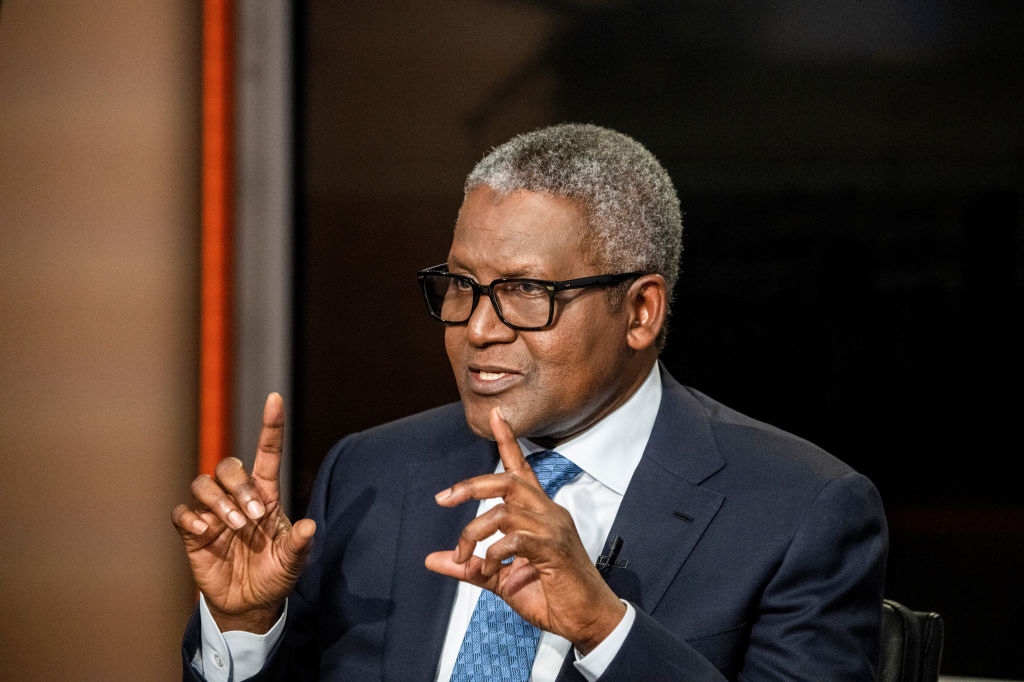
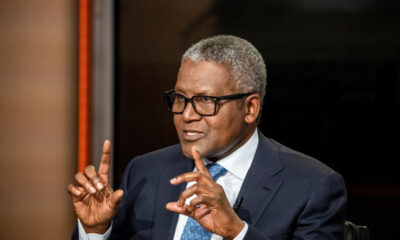
Aliko Dangote, has expressed confidence in his company meeting estimated revenue growth in the next four years.
He said detailed internal modelling had reinforced management’s confidence that the Group’s target of generating US$100 billion in annual revenue by 2030 was achievable.
Dangote said this when Senior executives from leading global investment banking and financial services firm Goldman Sachs toured the company’s integrated petroleum refinery, petrochemicals and fertiliser complex in Lagos.
The delegation, led by Co-Chief Executive Officer of Goldman Sachs International and Global Co-Head of Investment Banking, Anthony Gutman, visited the Dangote Petroleum Refinery & Petrochemicals, Dangote Fertiliser Limited and supporting infrastructure during a recent visit to Nigeria.
He noted that the projections were based on conservative assumptions and had strengthened the company’s conviction that it could pursue an even more ambitious long term growth strategy.
He added that the level of employee participation in the recent private placement of the Dangote Petroleum Refinery reflected strong internal belief in the company’s growth strategy and prospects.
Dangote said the refinery and associated industrial facilities demonstrate the transformative potential of long-term investment in Africa, adding that the Group’s growth ambitions extend well beyond its current strategic plan.
“No matter how we try to explain what we have built, you cannot fully appreciate it until you see it. But this is only the beginning. We need to look beyond 2030. The next phase of our journey will include new investments and acquisitions as we continue to scale the business,” he said.
Speaking after an extensive tour of the 700,000 barrels per day refinery, the Goldman Sachs executives remarked, “It is extraordinary what Dangote and the whole organisation have achieved. The ambition, the scale of the project, the quality of the project and the culture of the people is very impressive.”
The Goldman Sachs team included Adib N. Zouein, Co-Head of EMEA Emerging Markets Regional Sales and Head of the Middle East and North Africa region for Global Banking & Markets Public; Ryad Yousuf, Global Head of FICC Sales Strats and Structuring; and Jimi Adesanya, Head of Sub-Saharan Africa Sales (excluding South Africa). They were received by President and Chief Executive of Dangote Industries Limited, Aliko Dangote; Group Vice President, Oil & Gas, Devakumar Edwin; Managing Director and Chief Executive Officer of Dangote Petroleum Refinery & Petrochemicals, David Bird; Group Executive Director, Oil & Gas, Fatima Aliko Dangote; Chief of Staff to the President/CE, Ibrahim Dikko; Group Chief Branding and Communication Officer, Anthony Chiejina; Group Chief Economist, Dr. Hassan Mahmud; and Group Chief Strategy Officer, Aliyu Suleiman; Head of Administration, Dangote Petroleum Refinery & Petrochemicals, Musa Bala, among others.




Rethinking the CBN’s Mandate: Lessons from Malaysia for Nigeria
ShareBy Uche Uwaleke During a recent academic study tour of key financial institutions in Malaysia with some of my PhD...

Tinubu, Shettima not Elected by Muslims Alone, Northern Christian Chair Slams Cleric
ShareChairman of the Northern Christian Association, NCA, Rev. Joseph Hayab, has said President Bola Tinubu and Vice President Kashim Shettima...

Dangote Confident on Group’s Projected $100bn Revenue Target By 2030
ShareAliko Dangote, has expressed confidence in his company meeting estimated revenue growth in the next four years. He said detailed...


Chevron Says Competitive Local Capacity Devt to Define Nigeria’s Energy Future
ShareThe Managing Director of Chevron Nigeria Limited, Jim Swartz, has highlighted key areas that would sustain Nigeria’s energy transition growth...
Reading the Early Signals of Nigeria’s 2027 Presidential Contest
ShareBy Tom Chiahemen In Chinua Achebe’s Things Fall Apart, the wrestling arena was more than a place where strong men...
Dressing, Addressing, and Redressing Nigeria’s Lawyers and Judges
ShareBy Chidi Anselm Odinkalu On 20 June 2011, Willy Mutunga assumed office as the first Chief Justice of Kenya under...

Kyari Charges BOA to Explore Blended Finance, Guarantees to Boost Agric Lending
ShareBy Raphael Atuu, Abuja The Minister of Agriculture and Food Security, Sen. Abubakar Kyari, said the Federal Government is repositioning...

Akume Hails Tinubu’s Infrastructure, Education, Security Achievements
ShareBy David Torough, Abuja The Secretary to the Government of the Federation (SGF), Senator George Akume, has commended President Bola...
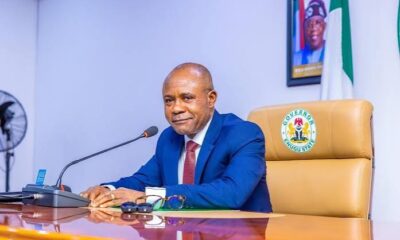

Enugu Civil Service Commission Gets New Chairman
ShareFrom Sylvia Udegbunam, Enugu Enugu State Governor Peter Mbah has appointed the former Permanent Secretary, State Ministry of Information, Chris...
FACAN Petitions EFCC over Alleged N150m Fraud, Impersonation in Benue
ShareFrom Attah Ede, Makurdi The Federation of Agricultural Commodity Association (FACAN), Benue State chapter, has petitioned the Economic and Financial...