
Metro
Nation’s Challenges Take Centre Stage at 2021 Awolowo Lecture as Leaders Speak Out

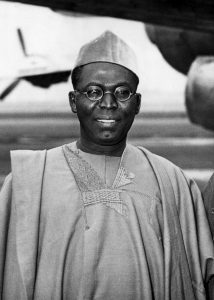
Nigerian leaders and panelists, at the 2021 Obafemi Awolowo Annual Lecture, have reiterated the necessity of building a united and progressive Nigeria through massive education and a re-engineered constitution.
The webinar lecture, held on Saturday evening and chaired by Nobel Laureate Wole Soyinka, was to mark the 112 birthday anniversary of the late Sage and former Premier of Western Region, Chief Obafemi Awolowo.
The Special Guest, Chief Emeka Anyaoku, a Diplomat and former Commonwealth Secretary-General, who noted that the current state of affairs in the country was not sustainable, emphasised the need for one Nigeria.
“There is no section or ethnic group in Nigeria that does not stand to gain from belonging to one country.
“It is in the common interest of all the ethnic groups and component parts to sustain the oneness, for progress of the country,” Anyaoku said.
He decried the growing poverty, incessant attacks, killings and displacement of people by terrorists and bandits, growing level of distrust and divisiveness undermining the cohesion and continued existence of one Nigeria.
The elder stateman, who noted that these national challenges should be effectively dealt with to make progress, however, stated that they could not be tackled with the present federal system of government.
Anyaoku said that a federal system with less dominance of the federal would bring Nigeria back to the path of political stability and progress.
He advocated the Indian type of federal system as against the US, saying that India shared a lot of national attributes with Nigeria.
He urged the National Assembly to organise an all-inclusive national dialogue, taking into account previous national conferences to produce a consensus constitution, as only a restructured constitution would guarantee political stability and economic development.
The Sultan of Sokoto and Royal Father of the Lecture, Alhaji Sa’ad Abubakar, who noted that the processes of Nation building always took time, said that insinuations, suspicions and provocative utterances had held the country back.
He decried the inaction of governments and the erosion of the nation’s founding father’s healing, understanding and accommodation processes among ethnic groups, while calling on the political class and religious leaders to manage social tensions.
“We can solve our problems without a stick. No problem is beyond dialogue, ” Abubakar said, while cautioning against violence and tribal wars.
He urged government to act promptly and swiftly in addressing national challenges and send strong signals to divisive elements.
The Guest Speaker, Mr Odia Ofeimun, who delivered a lecture on the theme; “Whither Nigeria? “, emphasised the necessity of education for all children and ending minority domination of the nation, to overcome her teething challenges and make progress.
Ofeimun, who stressed the need for ethnic nationalities, said that the nation had many unresolved issues such as Boko Haram, Indigenous People of Biafra, herdsmen and others, all of which had been fueling secession pressures.
“We need to discuss what belongs to us as a people. This is a country that is worth defending and we should all defend it. We need to free ethnic nationalities so that Nigeria can be free,” he said.
Emphasising the need for restructuring, Ofeimun, who called on political leaders to take responsibility, decried political financing and the widening gap in education between the south and the north.
“There is a way of managing Nigeria such that every child will go to school. We must put all the cards on the table and discuss Nigeria. We need a less dominant centre. If we go by this, we are moving towards having a country.
“Every government should give every child education, to address some of our problems. There are so many children roaming the streets without education and hope. Every child in the north needs to go to school.
“We have to plan a country, Awolowo did it and it worked. It is important we bring all Nigerians into education like the Awolowo Education Policy did. Nobody should be left out,” he said.
In his contribution, the former Emir of Kano, Alhaji Sanusi Lamido Sanusi, said that some of Nigeria’s issues were not ethnicity or religion, but economic and governance, saying that the nation’s expensive system of government had also hindered her progress.
Wrapping up the dialogue, Soyinka observed that there was a consensus on the country requiring restructuring that would allow decentralisation and devolution of powers, adding that a lot could be done on the Constitution to allow greater autonomy for the state.
Soyinka, who said that the current system was not working and should not be allowed to continue, called for an honest and people-oriented Constitution to set the country on the path of progress.
Dr Dosunmu Awolowo, one of the daughters of the late sage, said that Obafemi Awolowo Foundation’ lecture was instituted to honour Chief Awolowo, noting that Nigerians wanted the country to work and are willing to sit together to find solutions to the nation’s challenges.
The News Agency of Nigeria (NAN) reports that the lecture, moderated by Prof. Michael Faborode, had several eminent Nigerians, both from within and abroad emphasising the need to address our national challenges without delay. (NAN)




Two people were killed, and about 10 houses were burnt in Ilesha Baruba, Baruten Local Government Area of Kwara State, on Saturday, after a violent clash involving an Islamic scholar triggered mob attacks in the community.
The Kwara State Police Command confirmed the incident in a statement on Sunday by its spokesperson, Adetoun Ejire-Adeyemi, describing it as mob violence, arson and extrajudicial killings.
According to the police, the crisis began after an altercation between an Islamic scholar, Alhaji Mohammed Ilyasu, and an unidentified Fulani man, during which both sustained machete injuries.
Both men were taken to hospital, where they were later confirmed dead.
“Investigations revealed that a violent altercation occurred between an unidentified Fulani man and an Islamic scholar, Alh Mohammed Ilyasu, during which both parties sustained severe machete injuries,” she said.
“They were immediately rushed to the hospital for medical attention. Sadly, Mohammed Ilyasu was confirmed dead on arrival, while the assailant also succumbed to his injuries while receiving treatment.”
The police said the deaths triggered reprisals by some youths, who stormed the hospital, took the corpse of the deceased assailant and set it ablaze.
“Rather than allowing the law to take its course, some irate youths reportedly stormed the hospital, seized the corpse of the deceased assailant, and set it ablaze,” the spokesperson said.
She added that another passerby was attacked and set on fire during the violence.
“In a further display of lawlessness, the mob allegedly attacked another man passing through the area and set him on fire,” she said.
About 10 houses belonging to members of the Fulani community, including the residence of the Ardo Fulani, Alhaji Hassan, were also burnt.
Security operatives, including police and military personnel, were deployed to restore order, the command said.
Commissioner of Police, Ojo Adekimi, condemned the incident, describing the attacks as criminal and barbaric.
“The acts are criminal, barbaric, and a direct affront to the rule of law,” he said.
He added that investigations had begun and warned that those involved would be arrested and prosecuted.
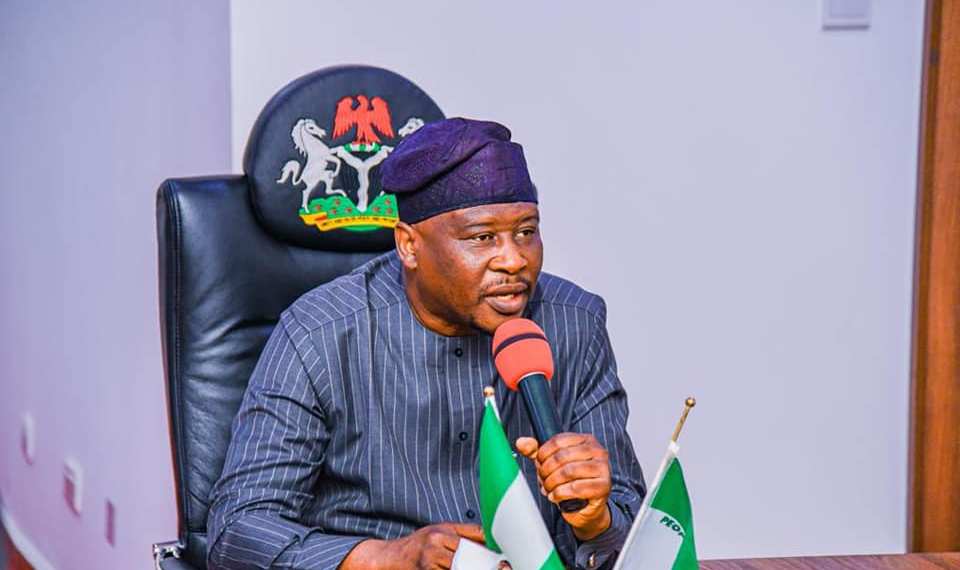
Adamawa State Governor, Rt. Hon. Ahmadu Umaru Fintiri, CON, has called on the people of Adamawa to rededicate themselves to making the state a model of peace and harmonious living.
As Nigerian Muslims join their counterparts across the world to celebrate this year’s Eid-el-Kabir Sallah, the Governor said peace and harmony are necessary to enjoy the blessings of Allah, which he said abound in Adamawa.
“First, I use this opportunity to wish all Muslims a happy Sallah, and all Nigerians peace.
But whatever we want for ourselves lies in our hands to achieve, especially as we approach an election year,” Governor Fintiri said.He noted that Nigerians must rescue the country from the vices threatening to pull it down. He added that the period offers the people another opportunity to submit completely to the will of Allah.
“We must renew our interaction with our fellow human beings and, most essentially, our duties to Allah. We must, therefore, reflect more on the reason for our creation and make moves to be closer to Allah,” he said.
While wishing the residents of the state and all Nigerians an exciting celebration during this occasion of piety and sacrifice, the Governor also urged leaders and followers to hold fast to the tenets of hope, sacrifice, and restoration, as epitomized in the central message of Eid-el-Kabir.
Fintiri said God has been good to the country by preserving peace despite aggressions and vexed issues. Despite unwanted developments, he said Nigerians must remain grateful.
“You must remain grateful for many things—peace, love, and well-being. And so long as there is hope, yesterday’s challenges can become history about how we turned things around,” he said.
“Those things should never overcome us. Being alive means there is a possibility to learn from yesterday, improve upon today, and turn around tomorrow. Builders look to tomorrow, and we must be builders in our minds.”
The Governor, who said his administration’s desire is to build tomorrow today, urged Nigerians to remain steadfast in their endeavours and prove wrong the cynics who think the country will sink.
Barka Da Sallah!

By David Torough, Abuja
President Bola Tinubu yesterday declared that the sacrifices Nigerians have endured under his administration’s economic reforms are beginning to yield positive results, even as security agencies across the country rolled out massive deployments to ensure peaceful Eid-el-Kabir celebrations.
In a personally signed Sallah message, Tinubu said the difficult but necessary reforms undertaken by his administration over the past three years had stabilised the economy, improved investor confidence, and laid the foundation for job creation and economic growth.
Drawing lessons from Prophet Ibrahim’s obedience and willingness to sacrifice his son, Ismail, the President urged Nigerians to embrace unity, compassion, and selflessness.
“As a nation, we are on a journey of reconstruction and renewal. The reforms we have undertaken are challenging but necessary to build a stronger and more prosperous Nigeria for future generations,” Tinubu stated.
He added: “The sacrifices and efforts we have made over the past three years have yielded a more stable economy, making our country a preferred investment destination that will drive job creation and economic growth. The walk through the dark tunnel is over, and the light is here.”
While acknowledging persistent security threats, including killings and kidnappings by terrorists and bandits, Tinubu reassured citizens that his administration remained determined to defeat criminal elements.
He referenced the recent elimination of a wanted ISIS leader and urged Nigerians to pray for peace and national unity, warning that criminals must either abandon their evil ways or face the full weight of the law.
Meanwhile, security agencies nationwide announced heightened security operations ahead of the Eid-el-Kabir festivities.
In Lagos and Ogun states, the Assistant Inspector-General of Police in charge of Zone 2, AIG Olohundare Jimoh, assured residents of watertight security arrangements, directing Commissioners of Police to intensify visibility policing, patrols, intelligence gathering, and traffic management.
In Edo State, Commissioner of Police Monday Agbonika said no fewer than 6,000 police personnel had been deployed across prayer grounds, highways, markets, motor parks, and recreational centres to forestall criminal activities during the celebrations.
Similarly, Delta State Commissioner of Police Yemi Oyeniyi ordered massive deployment of officers drawn from tactical units, area commands, and divisions, with support from the military, DSS, NSCDC, and FRSC to secure the state throughout the festive period.
Kaduna State Police Command also announced strategic deployment of personnel and operational assets to Eid grounds, highways, and public spaces, while bomb disposal experts were directed to sweep prayer grounds and crowded areas.
In the Federal Capital Territory, the police command activated a joint security operation code-named “Operation Sweep FCT” involving the military, DSS, NSCDC, Immigration Service, and FRSC.
Police spokesperson Josephine Adeh said the operation would include continuous patrols, intelligence-led raids, and explosive ordnance sweeps at worship and recreational centres.
The Nigerian Security and Civil Defence Corps (NSCDC) in Plateau State said it had deployed 1,820 personnel across all 17 local government areas to protect lives, critical infrastructure, and worship centres during the Sallah festivities.
Also in Osun State, Commissioner of Police Ibrahim Gotan said security personnel had been stationed at entry and exit points, highways, prayer grounds, parks, and recreational centres to prevent criminal infiltration and ensure peaceful celebrations.
Across the country, security agencies urged residents to remain vigilant, cooperate with law enforcement authorities, and promptly report suspicious activities, while reaffirming their commitment to safeguarding lives and property throughout the Eid-el-Kabir celebrations.



2027 election: l Nwanyanwu emerges as ZLP Consensus Presidential Candidate
ShareBy Laide Akinboade, Abuja The Zenith Labour Party (ZLP) has endorsed its National Chairman, Chief Dan Nwanyanwu, as the party’s...
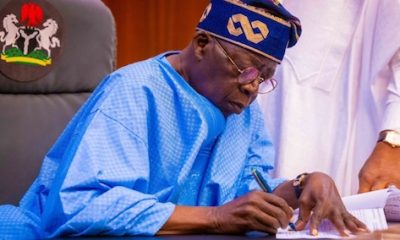

Three Years After: A Critical Evaluation of Tinubu’s Economic Reforms
ShareProf Uche Uwaleke As President Bola Ahmed Tinubu marked three years in office on May 29, 2026, Nigeria stands at a defining moment in...


Troops Neutralize Five Terrorists, Rescue 31 Kidnapped Victims in Katsina, Zamfara
ShareFrom Ifeanyichukwu Nwannah, Gusau Troops of Sector 2 Operation Fansan Yamma have rescued 31 kidnapped victims, neutralized five terrorists and dismantled several terrorists camps in a series of coordinated...

Arsenal Set Aside UCL Loss to PSG with Bus Parade Celebrating EPL Title
ShareTens of thousands of Arsenal fans put aside their pain at missing out on European glory as the club on Sunday celebrated...
Ghana’s Parliament Passes Anti-LGBTQ+ Bill
ShareThe parliament in Ghana has approved a new bill criminalising homosexuality and the promotion of LGBTQ+ activities. It proposes that identifying as lesbian, gay, bisexual, transgender or...
Kwara Community Clash Claims Two, Razes 10 Houses
ShareTwo people were killed, and about 10 houses were burnt in Ilesha Baruba, Baruten Local Government Area of Kwara State, on Saturday, after a violent clash involving an...

Declares No Faction in Nasarawa
ShareFrom Abel Zwanke, Lafia The Nasarawa State chapter of the Peoples Democratic Party (PDP) has declared that there is no faction within the party, insisting that...


Personal Loans Rise to N1.96trn in Jan 2026 – CBN
ShareBy Tony Obiechina, Abuja Personal loans granted by Nigerian banks rose to N1.96tn in January 2026, accounting for more than...


NNPC Records N481bn April Profit amid Strong Revenue Growth
ShareBy Tony Obiechina, Abuja The Nigerian National Petroleum Company Limited has recorded a significant month-on-month surge in performance, with revenue...


Oyo Abduction: Tinubu Orders Full-Scale Action After 16 Days of Agony
ShareBy David Torough, Abuja President Bola Tinubu has intensified efforts to secure the release of 46 abducted pupils and teachers...