
NEWS
NDC Raises the Alarm Over ‘Strange Names’ on INEC Candidate List

From Attah Ede, Makurdi
The Nigeria Democratic Congress (NDC) has accused the Independent National Electoral Commission (INEC) of replacing some of its legitimately nominated candidates for the 2027 general elections with individuals the party says it neither nominated nor authorised.
The allegation followed INEC’s publication on Sunday of candidates for the 2027 State Houses of Assembly elections, with the NDC raising particular concern over entries in Anambra State, the home state of its presidential candidate, Peter Obi.
In a statement, the party’s National Chairman, Senator Moses Cleopas Zuwoghe, alleged that nine names published as NDC candidates in various Anambra constituencies were unknown to the party and were not contained in the final list submitted by its leadership.
Zuwoghe called on the INEC Chairman to urgently investigate how the disputed names found their way onto the commission’s published list. He also urged the commission to extend the investigation to Benue, Imo and other states where, according to him, similar discrepancies had been observed.
The NDC chairman said the development had embarrassed the party and its genuine candidates while creating disaffection among supporters in Nigeria and the diaspora.
According to him, preliminary findings from an internal investigation by the party suggested possible complicity by some INEC officials in the alleged substitution of candidates.
“We, as a party, are also carrying out our own independent investigation, the preliminary findings of which are already pointing to the complicity of INEC officials in foisting names purporting to be our candidates, but who are not from us,” he alleged.
The party identified the disputed names published for Anambra State House of Assembly constituencies as Umennaajiego Jude Ezenwa for Onitsha South 1; Akpotue Obinna Chibuike for Onitsha South 2; Nwankwo Chiemerie for Orumba North; Maduagwu Eric K for Anaocha 1; Ngoebisi Obinna for Idemili North; Isintume Charles for Njikoka 1; Nwachukwu Nonso for Nnewi South 1; Okeke Ifeanyi Akunne for Nnewi South 2; Nnonyelu Samson E for Ayamelum; and Azotani Chuks Francis for Dunukofia.
Zuwoghe said the party had followed its internal nomination process after the conclusion of its primaries and appeal proceedings.
He explained that stakeholders from Anambra, the NDC leadership, representatives of Obi and members of the appeals panel had produced and signed off on a final list of candidates before it was uploaded to the INEC portal using credentials supplied by the commission.
The chairman, however, alleged that INEC officials subsequently kept nine entries on “Pending” status, claiming that their system already contained names submitted by officials who monitored the party’s primaries.
He said the NDC challenged the disputed entries and submitted the identities of candidates it considered legitimate, but alleged that the commission did not replace the names in question.
According to him, INEC later collected Form EC-9 directly from the individuals whose candidacies were being disputed and uploaded the forms without going through the party leadership.
“To further confirm that there was a predetermined effort on the part of INEC to impose the said nine candidates on the party, and embarrass both NDC and Mr. Peter Obi, INEC went behind the NDC to collect the Form EC-9 directly from the candidates, bypassing the party, and uploading same,” he alleged.
The NDC chairman argued that where discrepancies existed between a party’s official submission and information obtained by INEC’s monitoring teams, the commission should have suspended the affected entries pending clarification rather than publish candidates the party said it did not nominate.
“At the very worst, INEC could have left us with no candidates for those positions, if they knew they were unwilling to engage us in addressing any perceived anomaly,” he said.
The party alleged that the development formed part of a wider pattern in which opposition parties were allegedly prevented from uploading their preferred candidates while other names were introduced into their candidate lists.
Zuwoghe said the NDC would pursue the matter through the courts and other available legal channels to have what it described as its authentic candidates restored.
“We are moving to approach the court of competent jurisdiction to seek redress and restore our authentic candidates,” he said, urging party supporters to disregard the published individuals as representatives of the NDC.
The allegations have not been independently established in the statement, and the NDC called on INEC to investigate and clarify the circumstances surrounding the disputed candidate entries.
By David Torough, Abuja
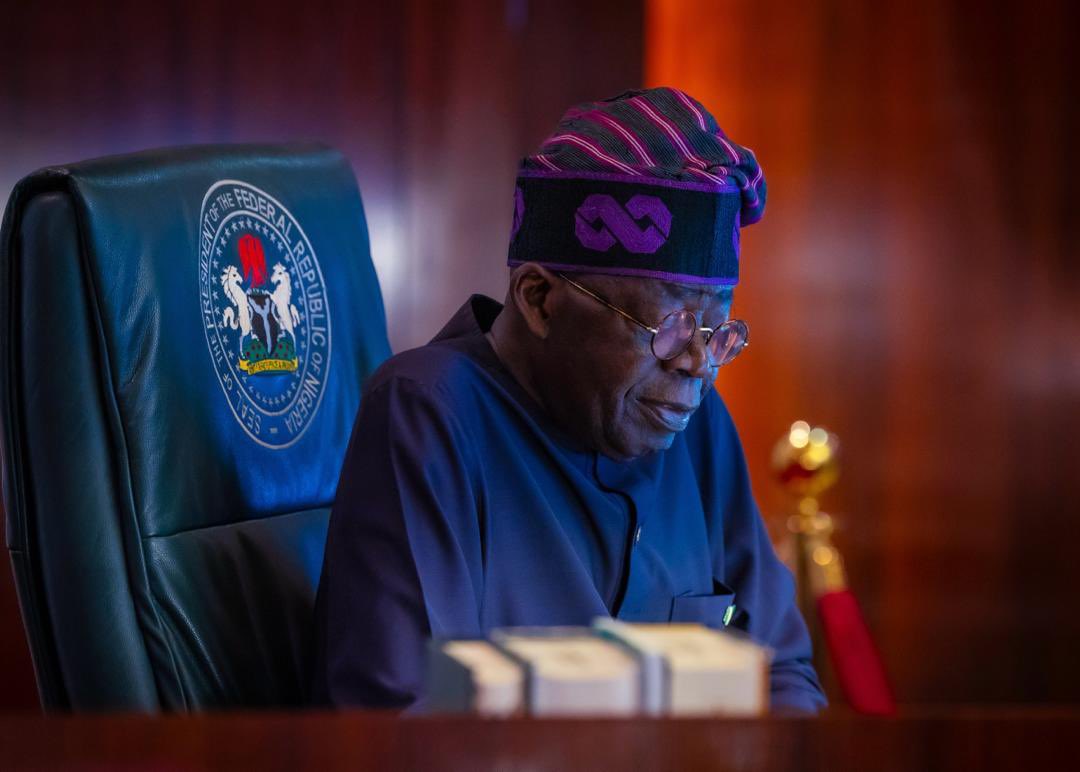
President Bola Tinubu has taken Nigeria’s concerns over recurring xenophobic and Afrophobic attacks against Africans and other nationals in South Africa to the African Union, urging continental leaders to adopt collective measures to protect the safety and dignity of Africans across national borders.
Tinubu, represented by Vice President Kashim Shettima, made the call on Sunday at the 21st Extraordinary Session of the Assembly of the African Union in Luanda, Angola.
The President urged the AU to place the issue on the agenda of its 40th Ordinary Session scheduled for January 2027, saying the recurring attacks undermine African solidarity, unity and peaceful coexistence.
“While recognising South Africa’s sovereign right to enforce its immigration laws and acknowledging its contributions to the continent, Nigeria stresses that such attacks undermine African solidarity, unity and peaceful coexistence, and require urgent collective attention,” Tinubu said.
He called for stronger continental efforts to combat xenophobia and Afrophobia through dialogue, preventive diplomacy and collective action.
Tinubu’s intervention formed part of a broader call for greater African ownership of the continent’s peace and security challenges. He backed the adoption of the Luanda Action Plan as a practical framework for strengthening conflict prevention, arguing that preventing conflicts was more cost-effective and sustainable than managing them after violence had erupted.
The President also expressed concern over growing reliance on foreign military forces, mercenaries and private defence contractors, warning that external involvement could weaken African institutions and the principle of African ownership.
He urged arms-producing and exporting countries to work more closely with African states to prevent weapons and ammunition manufactured in their jurisdictions from being diverted to terrorists and other non-state armed groups.
According to Tinubu, although the AU has established mechanisms for preventing and resolving conflicts, limited trust among member states and inconsistent implementation continue to weaken their effectiveness.
He therefore called for sustainable and predictable financing for AU peace operations and the full operationalisation of United Nations Security Council Resolution 2719 to strengthen the continental body’s capacity to respond to conflicts and crises.
“Let us therefore renew our collective commitment to solidarity, cooperation, and shared responsibility as we build the Africa we want,” the President said.
Three-week European vacation
Shortly after the AU engagement, Tinubu departed Abuja on Sunday for a three-week vacation in Europe as part of his annual leave.
According to the Special Adviser to the President on Information and Strategy, Bayo Onanuga, London, United Kingdom, is the President’s first port of call.
The Presidency said the vacation was designed to enable Tinubu to rest and recharge after months of intensive engagement with matters of governance.
Special Adviser to the President on Media and Public Communications, Sunday Dare, said Tinubu had spent the past six to seven months heavily engaged with issues concerning the economy, security and other aspects of national administration.
Dare said the timing of the break was also significant as political activities intensify ahead of the 2027 general election.
He explained that the President was entering a period of several months of sustained political activity and campaigning, while governance would continue during his absence.
Tinubu is expected to return to Nigeria after the working vacation and join the campaign activities ahead of the January 2027 election season.
The Presidency did not disclose the President’s detailed itinerary or other destinations he may visit during the three-week break.
The President’s departure comes against the backdrop of heightened political preparations at home and his renewed call for African leaders to pursue collective, home-grown solutions to the continent’s security and social challenges.
By David Torough, Abuja
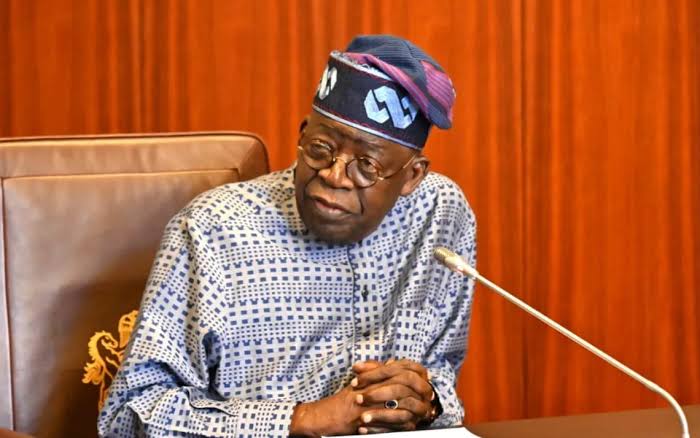
President Bola Tinubu has approved a comprehensive forensic audit of the Federal Government’s personnel, payroll and administrative systems, including the Integrated Personnel and Payroll Information System (IPPIS) and all federal agencies.
The President directed the Minister of Finance and Coordinating Minister of the Economy, Taiwo Oyedele, to oversee and coordinate the exercise.
According to a statement issued on Friday by the President’s Special Adviser on Information and Strategy, Bayo Onanuga, the audit follows a resolution of the Federal Executive Council on August 19, 2026, prompted by findings from the Independent Corrupt Practices and Other Related Offences Commission (ICPC) concerning alleged “fake agencies,” ghost workers and other control failures within government.
The audit is expected to determine the nature and extent of weaknesses in government control systems and establish how such weaknesses may have been exploited.
The exercise will have two major components. The first will focus on government systems, particularly IPPIS and related payroll, personnel, pension and financial-management platforms.
It will examine reported cases of ghost workers and payroll fraud, reconcile figures identified by the ICPC, trace how fictitious or ineligible persons were enrolled, and assess access, identity, biometric and bank-account controls.
The audit will also examine the links between IPPIS and other government platforms, including the Government Integrated Financial Management Information System (GIFMIS), Remita, the Treasury Single Account (TSA) and Sub-TSA.
The review will seek to determine whether identified irregularities resulted from system defects, process failures, inadequate segregation of duties or deliberate circumvention of established controls.
The second component will cover federal ministries, departments, agencies, commissions, councils, parastatals and other government bodies.
It will establish a definitive inventory of such entities and verify their legal basis, while examining how they obtain official recognition, budgetary consideration, correspondence privileges, office facilities and access to government systems.
The exercise will also assess governance, procurement, internal-audit and oversight mechanisms across the Federal Government, with the aim of shutting systemic loopholes that could enable irregular entities or individuals to gain access to public resources.
Tinubu directed that the audit be conducted independently and with the highest standards of professionalism and forensic integrity. The audit team will have access to relevant government systems and records and will work with the ICPC to complement ongoing investigations, prosecutions and recovery efforts.
The President said the exercise should go beyond identifying individual cases of fraud or administrative failure and instead strengthen the architecture of government, improve data verification and reconciliation, reinforce accountability and ensure that only legally constituted entities and eligible personnel have access to government resources.
The Presidency said the initiative reflects Tinubu’s commitment to transparency, accountability, fiscal governance and institutional integrity across the Federal Government.
By Tony Obiechina, Abuja
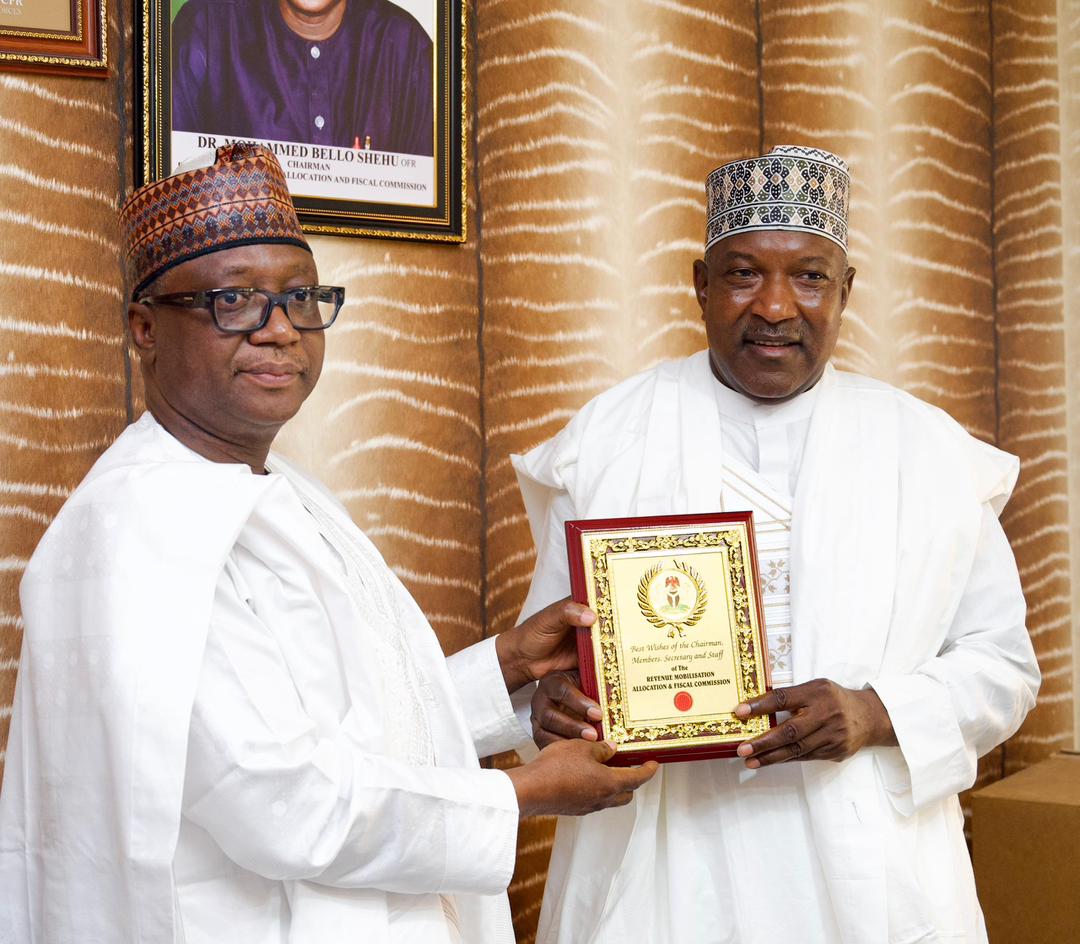
The Chairman of the Revenue Mobilisation, Allocation and Fiscal Commission (RMAFC), Dr. Mohammed Bello Shehu has emphasized the significance of greater collaboration between RMAFC and the Nigeria Extractive Industries Transparency Initiative (NEITI), to promote transparency, accountability and improved revenue mobilisation and generation in Nigeria’s extractive industries.
Dr. Shehu stated this when the NEITI Executive Secretary Hon. Musa Sarki Adar paid him a courtesy visit at the Commission’s headquarters in Abuja on Friday.
He reaffirmed RMAFC’s commitment to deepening its longstanding partnership with NEITI.
“RMAFC is delighted to receive the Executive Secretary and his delegation. Our relationship with NEITI is longstanding, strategic and mutually beneficial. We value NEITI’s work in promoting transparency and accountability in Nigeria’s extractive sector, and we are committed to deepening this partnership,” Shehu said.
The Chairman commended NEITI for providing credible information on the operations and financial flows of the extractive industries, noting that its efforts had improved public understanding of the sector and strengthened accountability in the management of Nigeria’s natural resources.
“NEITI has earned a strong reputation through its consistent efforts to uncover facts, reconcile information and promote openness. That work is important to the country and deserves the support of all stakeholders,” he said.
The Chairman also acknowledged the support of NEITI’s international partners and expressed the hope that stakeholders would continue to strengthen the organisation’s capacity in information gathering, data verification, revenue transparency and accountability.
He assured NEITI of the Commission’s continued support and openness to collaboration in data sharing, research, revenue monitoring and policy engagement.
Shehu congratulated Hon. Musa Adar, on his appointment, describing it as well deserved while expresseing confidence in his ability to provide effective leadership.
“Your appointment is well deserved. You have demonstrated commitment, competence and diligence in your professional career. I am confident that you will bring these qualities to bear in your new role and lead NEITI to even greater achievements.” He said.
In his remarks, the NEITI Executive Secretary described the relationship between both institutions as a long-standing partnership built on a shared commitment to transparency, accountability and improved revenue mobilisation.
“The relationship between NEITI and RMAFC is not new. It is a partnership built over time, and we must now take it to a higher level,” Hon. Sarkin Adar said.
He highlighted RMAFC’s role in monitoring revenues accruing to the Federation Account and advising on measures to improve revenue collection and accountability, particularly in relation to Nigeria’s natural resources.
Sarkin Adar noted that reliable information on revenues generated from oil, gas and mining activities was essential for fiscal management, public accountability and informed decision-making.
He explained that NEITI’s independent reconciliation of financial and physical flows in the extractive industries provides useful data on revenues, payments, production, exports and company activities.
“NEITI’s reports can support RMAFC’s work in revenue monitoring, verification, policy analysis and the development of measures to improve revenue mobilisation,” he said.
He also highlighted Nigeria’s presence at the ongoing 2026 Extractive Industries Transparency Initiative (EITI) implementation under the 2023 EITI Standard, describing it as an opportunity to demonstrate measurable progress in strengthening governance across the extractive industries.
According to him, the standard’s emphasis on data reliability, systematic disclosure, transparency of revenue flows and institutional collaboration aligns closely with RMAFC’s mandate and creates opportunities for deeper cooperation.
Sarkin Adar invited RMAFC to participate in the Global EITI Conference scheduled for October 8–9, 2026, in Brussels, Belgium, where Nigeria is expected to showcase its progress in resource governance.
He called for stronger collaboration among NEITI, RMAFC and other relevant institutions in data sharing, revenue mobilisation, research, capacity building and policy dialogue.
“Our objective should be to build a more coordinated institutional framework for revenue assurance and resource governance. By working together, NEITI and RMAFC can strengthen oversight and support evidence-based policymaking,” he said.
The meeting was attended by the Secretary to the Commission, Comrade Tosin Adeyanju; some Directors and Special Advisers to the Chairman of the Commission.



NDC Raises the Alarm Over ‘Strange Names’ on INEC Candidate List
ShareFrom Attah Ede, Makurdi The Nigeria Democratic Congress (NDC) has accused the Independent National Electoral Commission (INEC) of replacing some...

Tinubu Takes Xenophobia Fight to AU, Heads to Europe for Vacation
ShareBy David Torough, Abuja President Bola Tinubu has taken Nigeria’s concerns over recurring xenophobic and Afrophobic attacks against Africans and...

Troops Rescue 54 Kidnap Victims, Neutralises 22 Terrorists in One Week – DHQ
ShareBy David Torough, Abuja The Armed Forces of Nigeria rescued at least 54 kidnapped victims and neutralised 22 terrorists during...

Tinubu Orders Forensic Audit of IPPIS, Federal Agencies Over Ghost Workers, Payroll Fraud
ShareBy David Torough, Abuja President Bola Tinubu has approved a comprehensive forensic audit of the Federal Government’s personnel, payroll and...
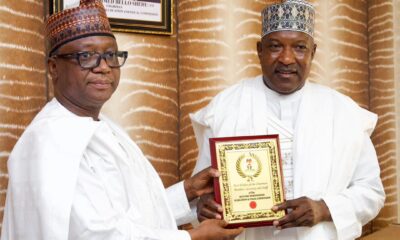

RMAFC, NEITI Collaborate to Boost Transparency in Revenue Generation
ShareBy Tony Obiechina, Abuja The Chairman of the Revenue Mobilisation, Allocation and Fiscal Commission (RMAFC), Dr. Mohammed Bello Shehu has...

Nigeria’s Capital Market Upgraded to Global Frontier Status after Classification
ShareBy Tony Obiechina, Abuja Nigeria’s capital market has been upgraded from “Unclassified” to “Frontier Market” status by global index provider,...
Electricity Distributors’ Association Decries Outstanding Debts by MDAs
ShareThe Association of Nigerian Electricity Distributors (ANED) has raised concerns over outstanding electricity debts owed by government Ministries, Departments and...

Afreximbank Records 30 Per Cent Rise Net Income for First Half 2026
ShareThe African Export-Import Bank (Afreximbank) and its subsidiaries (the Group) recorded a 30 per cent increase in net income to...


CBN Sells N700bn Treasury Bills in Second August Auction
ShareBy Tony Obiechina, Abuja The Central Bank of Nigeria (CBN), on behalf of the Debt Management Office (DMO), has offered...


Niger FRSC Records 234 Crashes, 110 Deaths in Seven Months
ShareFrom Dan Amasingha, Minna Ten people have been killed and several others injured in a fatal road crash involving a...