
NEWS
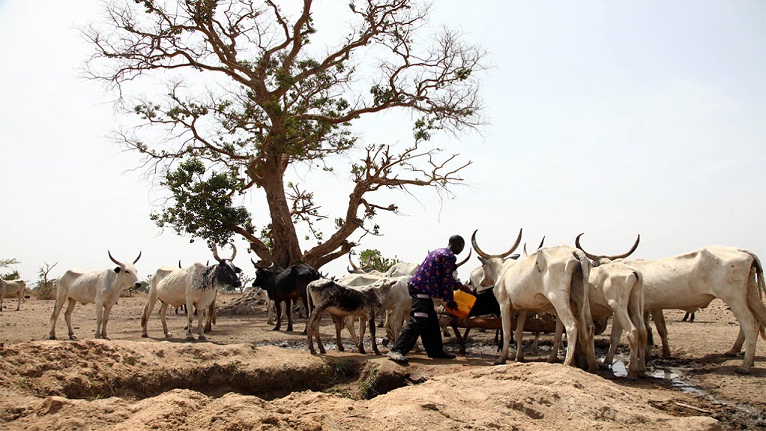
New STF Commander Engages Natives, Fulanis in Mangu Ahead of Farming Season

From Jude Dangwam, Jos
The General Officer Commanding 3 Division and Commander Operation Safe Haven (OPSH), Nigeria Army, Major General Folusho Oyinlola has engaged with natives of Mwagavul and Fulanis in Mangu local government area of Plateau State as part of efforts towards safer farming season this year.
He said the engagement is to consolidate on the gains recorded in the last farming season assuring that the Command is ready to deal with any criminal elements bent at disrupting the relative peace as well as this year’s farming season.
Oyinlola stated this during the stakeholders’ engagement held on Thursday at the NUT Hall in Mangu local government area of the state.
According to him, “Let me also acknowledge that we achieved significant milestones last year through similar engagements in the past. These were manifested in the reduction in violent clashes between herders and farmers which culminated in the peaceful yuletide and harvest season recorded last year.
“The success of our earlier engagements that de-escalated tension in Mangu in January this year is a testament to the power of collaboration among security agencies, stakeholders and community leaders.
“This engagement is to build upon these gains even as we prepare for the forthcoming farming season. We must be determined to consolidate on the gains made so far by ensuring that the forthcoming farming season is devoid of incidents that threaten security of lives and property.” He noted
The Commander, while calling for the support of all segments of the society to achieve a secure farming season this year, equally banned night grazing, underage grazing with a promise to look into various concerns raised by stakeholders at the engagement.
“While we continue to collaborate with communities to provide timely and effective responses to security challenges, the cooperation of stakeholders is vital towards sustaining peace at the critical period of farming.
“Let me also express my sincere optimism that this seminar will yield the desired results of building on the gains made so far in the Joint Operations Area to facilitate a secure farming season. We must continue to embrace dialogue over violence, forgiveness over vengeance and cooperation over division.
“In this way, we can together build a peaceful future for our communities where each and every one of us can live and thrive in harmony and security. I urge all stakeholders to be ambassadors of peace not just in words but by actions,” he tasked participants
Plateau State Governor, represented by his Special Adviser on Labour Relations/former Speaker of the Plateau State House of Assembly, Rt. Hon. Titus Alams noted that peace is paramount for any meaningful developments hence the need for warring parties to shield their swords and embrace peace for the development of the state.
He noted that the Ministry of Livestock and Fishery created in the state is aimed at addressing some of the issues affecting the herders and farmers in the State.
The Ngolong Ngas HRH Nde Jika Golit and the the Mishkaham Mwagavul HRH John Hirse represented by the SUM Pyem HRH Charles Mato both stressed that no society developed without a visitor but however stressed that they can only accommodate visitors that are ready to live in peace with their people and respect their customs and traditions.
He called for the review of community documents produced in 2001 for the daily operations of both farmers and herders in the local government area towards addressing the conflict and restoring lasting peace in the troubled LGA.
The stakeholders’ engagement brought together the Mwagavul socio cultural organization, the youth’s body, Women Wing, Fulanis groups and Federation of Muslim Women, CAN and JNI among others both called for peaceful coexistence and the urgent need to return all displaced persons across various communities in the last three years in the council back to their ancestral abodes.
By Tambaya Julius, Abuja
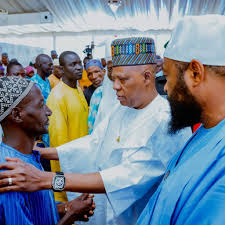
The Federal Government has assured families of the 37 suspected miners who died in the custody of the Nigeria Security and Civil Defence Corps (NSCDC) in Niger State that it will investigate the incident and ensure that anyone found culpable faces the law.
Vice President Kashim Shettima gave the assurance on Monday during a condolence visit to Minna, where he conveyed President Bola Tinubu’s sympathies to Governor Mohammed Bago, the bereaved families and the people of Niger State.
The 37 men died on September 17 after they were detained by the NSCDC over alleged illegal mining.
The circumstances surrounding their deaths have yet to be established.
Shettima announced a Federal Government donation of ₦250 million to support the families of the deceased.
According to him, President Tinubu had ordered a comprehensive investigation into the incident, resulting in the constitution of a 10-member independent investigative committee and the suspension of officers linked to the case pending the outcome of the probe.
Describing the deaths as “a blot on our national conscience,” Shettima said the government’s responsibility to protect citizens does not end when they are taken into custody.
“No parent should receive a body when they are waiting for a son to come home,” he said.
The Vice President said the government would not prejudge the investigation but would ensure that the circumstances surrounding the deaths are fully established and those responsible identified.
“On President Tinubu’s directive, an independent investigative panel has been constituted to establish the facts, determine responsibility and lay the foundation for justice and closure,” he said.
Shettima stressed that being in custody does not strip anyone of their right to protection by the state.
“A citizen deprived of liberty remains entitled to the protection of the state. No allegation, however grave, diminishes that entitlement. No uniform confers immunity from accountability,” he said.
He added that anyone found culpable would be made to answer before the law.
“We owe justice to every soul lost, answers to every bereaved family and due process to every person under investigation. Whoever is found culpable must answer before the law.
Our duty to you outlives this visit,” the Vice President said.
The investigative committee is expected to determine the circumstances surrounding the deaths and recommend measures to prevent a recurrence.
The committee is chaired by retired Deputy Director-General of the Department of State Services, Jonathan Kure, while former Director-General of the Nigerian Law School, Prof. Isa Hayatu Chiroma, SAN, serves as secretary.
Shettima said the incident should also serve as a reminder to law enforcement agencies of their duty to protect human dignity while enforcing the law.
“We have come to you today without the togas of partisan politics. We come as sympathisers, as parents, as uncles and aunts, as brothers and sisters, and, above all, as leaders entrusted with your protection,” he said.
“We have come to share your grief, to hear your concerns, to stand beside the bereaved and to reaffirm our obligation to protect every citizen, without distinction or exception.”
The Vice President commended Governor Bago for supporting the search for justice and providing assistance to those affected.
“Every victim deserves dignity, every survivor deserves care, and every family deserves the truth,” he said.
He also prayed for God’s mercy on the deceased and strength for their families to bear the loss.
Governor Bago thanked Shettima for visiting Niger State on behalf of President Tinubu, describing the visit as a demonstration of empathy and solidarity with the affected families.
He noted that both Tinubu and Shettima were outside the country when the incident occurred, with the President on annual leave and the Vice President representing Nigeria at the United Nations General Assembly.
Bago said the President’s message had been clearly conveyed to the bereaved families and the people of the state.
He, however, stressed that the immediate purpose of the visit was to mourn with the families and offer condolences.
“Your message has been delivered clearly to the families and the people of Niger State that upon your return, insha Allah, you are here today. You have made it; we thank you,” the governor said.
Also speaking, the governor’s Principal Private Secretary, Emmanuel Umar, said the deaths had left the affected families, communities and the entire state in grief.
Umar said Shettima’s visit showed that the President stood with the affected families, adding that the Vice President came not only in his official capacity but also as a leader sharing in the pain of the people.
After the Niger State visit, Shettima proceeded to Maiduguri, Borno State, where he condoled with Governor Babagana Zulum over the death of his sister, Amina (Inna) Zulum.
The Vice President prayed for Allah to grant her Aljana Firdaus and give the family the fortitude to bear the loss.
By Racheal Abujah
When Nigeria gained independence on Oct. 1, 1960, it held immense promise.
Sixty-six years later, healthcare delivery remains deeply polarised.
Brilliant achievements in medical training and crisis control are consistently undermined by chronic underfunding, broken infrastructure, critical staffing shortages, and severe inequities.
Nigeria eradicated smallpox in 1980, made significant progress against diseases such as river blindness and polio, expanded immunisation and built institutions that became important centres of medical education, research and specialist care.
But progress has not always been sustained. For millions of Nigerians, healthcare remains a financial burden, while many primary healthcare facilities still struggle with electricity, water, equipment, medicines and skilled personnel.
President Bola Tinubu sounded upbeat about the healthcare sector during his address on Nigeria’s 66th Independence Anniversary.
“We will continue to strengthen primary healthcare, basic education, and the essential public services poorer,’’ he said.
Analysts argue that Nigeria’s health story is one of neither failure nor uncomplicated success. It is a story of achievement, interrupted progress, and repeated attempts at reform.
In the early post-independence years, health development focused heavily on tertiary institutions and urban centres.
Experts say University College Hospital, Ibadan, and teaching hospitals in Lagos, Zaria, and Enugu became key centres for medical training and specialist care.
Yet many rural communities remained poorly connected to formal healthcare.
A major shift came under the late Prof. Olikoye Ransome-Kuti, Minister of Health from 1985 to 1993.
Ransome-Kuti championed primary healthcare, prevention, immunisation, maternal and child health and community participation.
Former Health Minister Prof. Eyitayo Lambo, who also served as a Regional Adviser on Health Economics at WHO/Africa Region, later described Ransome-Kuti as a reformer and change agent whose contribution left a lasting mark on Nigeria’s health system.
The philosophy was simple: healthcare should begin in the community, not only when a patient reaches a teaching hospital.
Economic difficulties, the Structural Adjustment Programme and years of military rule, however, placed pressure on public institutions.
The depreciation of the naira increased the cost of medicines and equipment, while health-worker migration became increasingly visible.
The return to democracy in 1999 brought renewed efforts to reform healthcare.
In 2001, African leaders adopted the Abuja Declaration, committing countries to allocate at least 15 per cent of their annual budgets to health.
Nigeria subsequently enacted the National Health Act of 2014, establishing the Basic Health Care Provision Fund (BHCPF), and the National Health Insurance Authority Act of 2022.
The BHCPF was designed as a dedicated financing mechanism for primary healthcare and Universal Health Coverage.
Its current platform reports 8,309 PHC facilities directly funded across the 36 states and the FCT, 1,296 facilities revitalised and more than 20 million Nigerians enrolled in health insurance.
Yet financing remains one of the sector’s biggest challenges. The 2026 Federal Budget allocated N2.48 trillion to health.
Dr Ipalibo Banigo, Chairman of the Senate Committee on Health, Secondary and Tertiary, has called for stronger domestic health financing and supported efforts to increase the statutory BHCPF allocation from one to two per cent of the Consolidated Revenue Fund.
The household burden remains substantial.
WHO reported that household out-of-pocket spending accounted for about 72 per cent of Nigeria’s current health expenditure in 2023, linking the way healthcare is financed to whether people receive care early, delay treatment or miss it altogether.
For a family facing cancer, kidney disease, complicated pregnancy, trauma or prolonged hospitalisation, treatment costs can quickly become an economic crisis.
Nigeria’s health financing system also relies on government revenue, insurance, private spending and external assistance.
The WHO/ African Health Observatory health-system profile notes that donor funding remains part of this financing mix, highlighting the importance of strengthening sustainable domestic financing.
The primary healthcare system remains the foundation of any attempt to achieve Universal Health Coverage.
The Federal Government says more than 3,000 PHCs have been revitalised under the current administration, while the latest N32.9 billion BHCPF disbursement supports more than 8,300 facilities through performance-based financing.
But the real test is what happens inside those facilities.
In August, the current Minister of State for Health and Social Welfare, Dr Iziaq Salako, said between 60 per cent and 70 per cent of Nigeria’s primary and tertiary health facilities experienced frequent power outages or had no electricity, while about 40 per cent of functional PHCs had no electricity access.
The consequences can be particularly serious for women and children.
Salako said more than 70,000 frontline health workers had been retrained towards a target of 120,000, while Nigeria had also been advocating managed migration arrangements that would require destination countries to contribute to training and workforce development in source countries.
Salako said the Presidential Initiative for Unlocking the Healthcare Value Chain and the pharmaceutical sector executive order were intended to reduce dependence on imported health commodities and increase local production.
Nonetheless there are concerns about brain drain and other related issues.
“But training alone cannot resolve the “Japa” challenge. Remuneration, safety, equipment, housing, working conditions and career progression remain important considerations in retaining professionals.
“COVID-19 exposed weaknesses in Nigeria’s laboratory capacity, supply chains and access to essential medical commodities. It also prompted investments in preparedness,’’ a health analyst said.
Dr Simeon Agwale, a renowned virologist and Chief Executive Officer of Innovative Biotech, said the COVID-19 pandemic exposed how vulnerable countries could become when global supply chains were disrupted.
He said for Nigeria, strengthening local manufacturing was therefore becoming increasingly important for health security, economic resilience and pandemic preparedness.
Agwale also noted that climate change was adding another layer to the country’s health challenges.
“Flooding, extreme heat, changing patterns of infectious diseases, food and water insecurity, as well as damage to health infrastructure, can affect communities and put additional pressure on health services.
“WHO describes climate change as a threat to health systems and a factor that can undermine the gains already made in public health?”
He said building climate-resilient healthcare in Nigeria would require ensuring that health facilities could continue to function during floods and heatwaves.
“It would also require stronger surveillance for climate-sensitive diseases and greater protection of water, sanitation and food systems,’’ he said.
Under Coordinating Minister of Health and Social Welfare Prof. Muhammad Pate, the Federal Government introduced the Nigeria Health Sector Renewal Investment Initiative, implemented through a Sector-Wide Approach.
The strategy seeks to reduce fragmentation, strengthen primary healthcare, improve financing and increase accountability.
Pate reported in 2025 that health insurance coverage had risen from about six to seven per cent two years earlier to 12 per cent, driven partly by mandatory insurance and the Vulnerable Groups Fund.
He also called for greater investment by states and Local Governments in health, water, sanitation and nutrition.
Pate said the reform agenda had also produced more than 21 strategic health policies, expanded health infrastructure and strengthened digital health systems.
It is experts’ view that Nigeria is not held back by a lack of health policies, but by the critical gaps in implementing them.
For any future strategy to succeed, experts say funding must move past bureaucracy and directly reach the frontlines where it can tangibly transform a patient’s experience.
By embracing predictable domestic financing, fostering community ownership, and using robust data to target resources where they are needed most, policymakers can build a healthcare system that truly serves its people.
Stakeholders say the path forward does not lie in copying foreign models, but in forging a resilient, sustained framework uniquely tailored to Nigeria’s size and realities.(NAN)

By Gabriel Agbeja
In spite of arriving on time, checking in, and waiting at the boarding gate, many air travelers in Nigeria are increasingly met with sudden announcements of flight delays or cancellations.
Consequently, flight disruptions have become one of the most persistent challenges plaguing Nigeria’s domestic aviation industry.
While delays and cancellations are not peculiar to Nigeria, their frequency has continued to generate concern among passengers, airlines, regulators and other stakeholders.
Capt.
John Ojikutu, Chief Executive Officer of Centurion Security and Safety, said in an interview with the News Agency of Nigeria that domestic market encroachment was a primary cause of frequent flight delays and cancellations.“If the commercial agreement was included in the Bilateral Air Services Agreement (BASA) during the era of Nigeria Airways, why did Nigeria Airways not fly to Gatwick, whereas British Airways (BA) was permitted to include Abuja and Lagos as part of its designated routes under the BASA?
“Why was Arik refused Heathrow but only Gatwick? I don’t know how you can convince me with language of the foreign airlines’ incursion rights into our domestic market with the help of our political office holders.
“Tell me why BA and VK from the UK operate to Lagos and Abuja, why Emirates, Qatar, and Etihad operate to Lagos, Abuja, and Kano, and especially why Ethiopian Airlines operates to all five Nigerian international airports.
“You consider these as a right in the Nigerian commercial agreement with the countries of these foreign airlines.
“How many of our 15 domestic airlines can fly daily to our five international airports if you still have not seen these ‘rights’ as incursions into the domestic airline market?” he queried.
Meanwhile, the Minister of Aviation and Aerospace Development, Mr Festus Keyamo, has placed considerable emphasis on engagement with industry stakeholders as part of efforts to address operational challenges.
In August 2026, Keyamo convened an emergency stakeholders’ meeting involving aviation unions, airline operators and government agencies following industrial tensions that disrupted flight operations.
Among the resolutions was a plan for the Nigeria Civil Aviation Authority (NCAA) and other aviation-agency heads to obtain payment schedules from airlines with outstanding statutory obligations, taking into consideration the airlines’ operating costs and prevailing economic realities.
Keyamo, who had said in many fora that airlines must meet their financial and regulatory obligations, affirmed that excessive financial pressure on operators can also threaten their ability to maintain sustainable operations.
“The Federal Government’s challenge is consequently to create an environment in which airlines can remain financially viable while passengers receive dependable services.
“At the centre of the effort is the NCAA, which is responsible for regulating the industry and protecting the interests of air travelers.
“Such measures are important because effective regulation goes beyond monitoring safety. It must also ensure that airlines provide reliable services and properly manage passengers when disruptions occur, ’’ he said.
Nevertheless, data released by the NCAA recently revealed that it recorded 4765 light delays and 36 cancellations in the month of August.
The regulator, in its summary of domestic airline flight disruption operations in the country for August revealed that 15 carriers operated 7,961 flights during the month, with roughly six in every 10 flights failing to operate on schedule.
“Air Peace recorded the highest number of delayed flights, with 1,330 of its 1,864 flights delayed, representing 71.4 per cent of its operations.
“United Nigeria Airlines recorded the highest delay rate among the carriers, with 943 of its 1,231 flights delayed, representing 76.6 per cent. The airline also recorded eight cancellations, the highest number during the month.
“Enugu Air followed with 582 delays out of 878 flights, representing 66.3 per cent, in addition to four cancellations.’’
It said Value Jet recorded 435 delays from 767 flights, representing 56.7 per cent, while Aero had 246 delays out of 469 flights, or 52.5 per cent.
Also, Green Africa recorded 114 delays from 226 flights, representing 50.4 per cent, while Overland had 139 delays out of 239 flights, or 58.2 per cent.
“Ibom Air recorded 254 delays from 560 flights, representing 45.4 per cent, while Max Air had 204 delays from 336 flights, or 60.7 per cent.
“Rano Air recorded 216 delays from 503 flights, representing 42.9 per cent, while Arik had 188 delays from 301 flights, or 62.5 per cent.
“Xe Jet recorded 40 delays from 127 flights, representing 31.5 per cent, while Binani had 22 delays from 57 flights, or 38.6 per cent.’’
NCAA stated that Umza Air recorded the best performance among the carriers, with 52 delays from 403 flights, representing 12.9 per cent, and no cancellations.
NCAA reported that 2,801 delayed flights were set back by 16 minutes to an hour, and 1,322 flights were delayed for one to two hours.
“Another 407 flights were delayed for between two and three hours, while 235 experienced delays of three hours or more.
“Air Peace accounted for 108 of the 235 longest delays, followed by Enugu Air with 46 and United Nigeria with 41; NG Eagle recorded no operations during the period,’’ it said.
More so, NCAA has issued stern warnings to airlines over spate of flight delays, crew shortages and other consumer-related infractions, urging them to align flight schedules with available aircraft and crew.
The Director General of Civil Aviation (DGCA), Capt. Chris Najomo, gave the admonition during separate interactive sessions with Air Peace and Max Air, held at the NCAA Corporate Headquarters in Abuja recently.
Najomo questioned the effectiveness of the buffer in view of recurring delays and cancellations being experienced, while acknowledging weather, diversions and airport restrictions as possible causes.
He underlined the need for contingency planning and effective passenger communication.
The NCAA Director, Public Affairs and Consumer Protection, Mr Michael Achimugu, said authority monitoring had revealed instances where passengers were left without adequate information or assistance.
He reminded Air Peace of its obligations to provide refreshments after two hours, meals after six hours, and accommodation, refunds and compensation where applicable.
He also raised concerns over flight merging and urged prompt responses to consumer complaints.
Responding, the Chief Operating Officer at Air Peace, Oluwatoyin Olajide, disclosed that the airline had 20 aircraft – five Aircraft on Ground (AOG) and 15 serviceable.
Olaide added that Air Peace deliberately operated 80 to 85 flights daily to maintain a buffer for disruptions.
She attributed disruptions to technical issues, including bird-strike damage, component shortages and a cracked windshield, as well as weather and airport restrictions.
Olaide said that Air Peace provided hotel accommodation and assistance to affected passengers.
At the Max Air session, the General Manager, Ground Operations/Business Development, Mr Raymond Omadiagbe, disclosed that three Boeing 737 aircraft were available for domestic operations.
He said that all serviceable, with only two being operated due to crew limitations, the international fleet comprised two Boeing 747s and one Boeing 777 undergoing checks.
Omadiagbe said Max Air had reduced its schedule to match available resources in addition to discontinuing late-night Kano operations following passenger feedback.
Observers say the recent interventions by the Federal Government, the NCAA, airlines and other stakeholders show that the problem is receiving attention.
Nonetheless, the August disruption figures demonstrate that much more remains to be done.
Experts say the true measure of progress for Nigeria’s aviation industry lies not in how swiftly stakeholders manage flight delays and cancellations, but in their ability to build systems that prevent these disruptions altogether.
For Nigerian travelers, success is defined by a simple, predictable experience: arriving at the airport, boarding on schedule, and reaching their destination safely.(NAN)




Customs Auctions 22,175 Litres of Seized Petrol for N32.1m
ShareBy Tambaya Julius, Abuja The Nigeria Customs Service (NCS) has auctioned 22,175 litres of Premium Motor Spirit (PMS) seized by...


NNPCL: Accounting for Fuel Subsidy
ShareBy Uddin Ifeanyi I am not an accountant, so my opinion on the NNPCL’s recently released 2025 annual financial report...

Can ECOWAS Parliament Turn Climate Commitments into Regional Action?
ShareBy Mark Longyen West Africa’s climate crisis is becoming harder to separate from the region’s familiar struggles with poverty, displacement,...

2027 Elections: INEC Voter Register Hits 103m
ShareBy Tambaya Julius, Abuja The Independent National Electoral Commission (INEC) said Nigeria’s voter register has risen to more than 103...

Niger 37: FG Pledges Accountability Over Deaths of Miners in NSCDC Custody
ShareBy Tambaya Julius, Abuja The Federal Government has assured families of the 37 suspected miners who died in the custody...


11-year-old Girl Found Dead in Suleja Well, Church Guard Arrested
ShareFrom Dan Amasingha, Minna The disappearance of 11-year-old Christabel Albert after she left home for a birthday celebration has ended...


Jonathan Receives Bayelsa East APC Candidates
ShareFrom Mike Tayese, Yenagoa Former President of Nigeria, His Excellency, Dr. Goodluck Ebele Jonathan, has commended the quality, experience and...


2027: Delta APC Inaugurates Support Groups for Tinubu, Oborevwori
ShareFrom Francis Sadhere, Delta The Delta State chapter of the All Progressives Congress (APC) has inaugurated two political support groups...

‘Transformative Agenda to Critical Sectors are My Rescue Mission’ – Dauda
ShareFrom Ifeanyichukwu Nwannah, Gusau. Governor Dauda Lawal of Zamfara State, Dauda Lawal has declared that his administration’s rescue mission is...

Yari Urges Northerners to Honour Power Rotation, Back Tinubu’s Eight-Years Presidency
ShareFrom Rabiu Sanusi Kano Former Zamfara State Governor and Director-General of the All Progressives Congress (APC) Presidential Campaign Council, Senator...