
Education
NFVCB Partners ABU on Capacity Building for Undergraduates

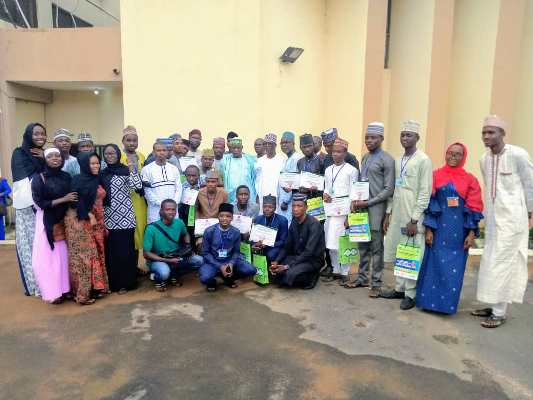
The National Film and Video Censors Board (NFVCB), in collaboration with the Department of Theatre and Performing Arts, has conducted a training on film and video censoring and creative capacity development for students from Zamfara state.
The two-day capacity building programme , which held at the Samaru Campus of ABU Zaria, ended on Friday, with relevant stakeholders from the
academia, as well as officials of the board, held different sessions for
participants.
The students were taught basic dynamics of films and videos censoring and
classification, creative and entrepreneurial skills, as well as the
preservation of Nigeria’s cultural heritage through films.
The event also featured practical interactive and film critic session, as
well as panel discussion session , anchored by erudite scholar Prof. Steve
Abah.
In his presentation, Alh Adedayo Thomas, Executive Director of NFVCB, said
the programme was in furtherance of the board’s Media Literacy and
Mentorship initiatives earlier launched for youths, especially Theatre and
other Creative Arts undergraduates in Nigerian Universities.
According to him, the board is set to equip young theatre practitioners
from the North- West with practical knowledge of the movie industry besides their academic experience.
“There is no reason to doubt that youths shape the future of a country, and
if a country’s youths are diligent and hardworking, then that nation is
bound to progress, but if its youths are indolent, then no one can save
that country from downfall.
“It is therefore, important to tap the unbridled vigor of our youths and
give it a right direction by effectively channelizing this energy into
productive endeavours , which will in turn discourage youthful extremism.
“As the key regulator of the Nigerian motion picture industry, NFVCB has
decided to bring practical knowledge of how the sector works to these
youths to secure the future of our movie industry.
“We are teaching them classifications and rating of videos and films as
well as productive use of social media in order to properly position them
for opportunities that abound in the industry,” he said.
Thomas further said that, under his watch, NFVCB had taken its Media
Literacy and Mentorship initiatives to universities across the six-geo
political zones.
He explained that Nigeria, like most countries, seeks to protect its young
and minors from unsuitable contents, thus the inherent need for censorship
and classification of films and video works.
He noted that, as a multi ethnic developing society, Nigeria needs to
preserve ethnic, racial and religious harmony, especially with the influx
of all kinds of media.
The NFVCB boss described the Censors Board as a mediator between filmmakers and society that needs to ascertain if a film is good for the consumption of Nigerians.
He noted, among other things, that beside its educational and entertainment values, such film must not negate the Nigerian culture, interest and values.
He further explained that a film that encourages religious, racial or
ethnic discrimination was inimical to the corporate existence of Nigeria.
In his remark, Dean of the Faculty of Arts, Prof. Abubakar Liman, expressed
delight over the collaboration and mentorship initiative by the board.
He said:”Our youths have a great future in self employment through
creativity, innovation and Imagination.
“ A workshop like this that bothers on entrepreneurship is very important
as ours youths are inspired to look inward, develop themselves and follow
their dreams instead of looking up to the government for everything.”
Also, Hon.Yahaya Chado, former Federal Lawmaker who represented Gora
Bakura/Maradun constituency of Zamfara State, commended the NFVCB for
extending its youths empowerment programmes in the North-West to the state.
The event had in attendance Zamfara State Students association, filmmakers from the region and government functionaries, including a member of the Zamfara State House of Assembly, Hon.Alhasssan Kanoma and representatives of the state government.
Highpoint of the event was the presentation of certificate of participation
and the screening of three short films produced by the Theatre Arts
Department of the Institution.
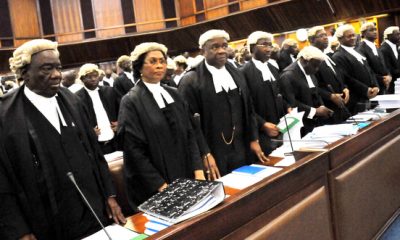







The Joint Admissions and Matriculation Board (JAMB) has warned universities against issuing admission letters to candidates, insisting that only admissions processed through its Central Admissions Processing System (CAPS) are legally recognised.
The Board said universities had no statutory authority to issue official admission letters, warning that candidates who accept admission offers outside the approved system risk obtaining documents that may not be recognised for official purposes, including mobilisation for the National Youth Service Corps (NYSC).
JAMB Registrar, Prof. Segun Aina, gave the warning when he received a delegation from Veritas University, Bwari, Abuja, during a courtesy visit to his office.
Aina said the Federal Ministry of Education had expressly directed that all admissions into tertiary institutions be processed through CAPS, stressing that any admission conducted outside the platform was illegal and invalid.
He explained that JAMB remained the only body statutorily empowered to issue official admission letters to candidates seeking entry into universities, polytechnics and colleges of education across the country.
The registrar expressed concern that candidates often assume admission letters purportedly issued by universities are authentic simply because they carry the institutions’ identities.
He urged universities engaging in the practice to desist, while directing them to ensure that candidates obtain the appropriate admission documents from JAMB.
Aina further stressed that institutions could not substitute their own admission letters for the official documents issued by the Board after candidates had accepted their offers on CAPS.
He warned that admissions not processed through the approved platform would not be recognised for purposes such as NYSC mobilisation, underscoring the need for institutions and candidates to comply with established admission procedures.
Education
Makurdi Old Boys Association Inaugurates BOT October 17, Launches N1bn Secretariat Project Fund

Government College Makurdi Old Boys Association (MOBA) has completed arrangements to inaugurate its Board of Trustees (BOT) October 17, at the school premises.
The high profile event will also witness the launch of N1billion Appeal Fund for the construction of its National Secretariat Project.
A statement by the Association’s National President, Dr Cletus Akwaya and the Central Planning Committee Chairman Cmrd.
Stephen Tadawus, reminded all members of the National Executive Committee (NEC), Board of Trustees Members-designate, invited Guests, and the entire MOBA family to attend the event punctually at Government College Assembly Hall, Makurdi beginning by 10:00AMThe statement said the Governors of Benue state, Rev.
Fr. Dr. Hyacinth Iormem Alia; Plateau state, Barr. Caleb Manasseh Mutwang; Nasarawa, Engr. A. A. Sule and Bauchi, Sen. Bala Abdulkadir Mohammed are expected to grace the occasion as distinguished guests of Honour.Similarly, the Commissioner for Education and Knowledge Management, Benue State, Dr. Adamu Margaret Ijaguwa and Executive Secretary, Teaching Service Board, Benue State, Dr. Bem Tseen have been invited as Special Guests, the statement said.
It named members of the Board of Trustees (BOT) to include Prince Yandev Amaabai, Senator Joshua Chibi Dariye, Senator Gabriel Torwua Suswam, Hon Hassan El Yakub SAN- Hon, Alhaji Abubakar Giza, Prof. Terna Yawe, Chief Rebo Usman, Dr. Dader Mazadu Bako, Engr. Ali Rabiu, Prof. John Wade, Arc. Terseer Dankaro and Titus Ihunduas Secretary of the Board.
This event marks a new chapter in the life of the Association. We request all Old Boys to massively turn out and support the cause of giving back to their Almamater,” the statement further said adding, All concerned are therefore, requested to come together to make this historic event a success and to contribute generously towards the completion of Makurdi Old Boy’s Associations’ National Secretariat Project.”
Maryam Umar, a limb difference student, is set to graduate with a Bachelor of Science degree in Economics from the Gombe State University.
Umar, who successfully completed her Level 400 course work, examinations and project, achieved this feat after overcoming educational and financial challenges.
In an interview on Monday in Gombe, Umar said that the intervention by the Academic Staff Union of the University (ASUU) made her journey to attain university education a reality.
Umar recounted that she started primary education at the age of 11 at Hammadaji Primary School in Gombe metropolis, adding that she could not immediately proceed to secondary school due to challenges.
The foot-writer student later attended Government Day Secondary School, Nasarawo, Gombe, where she obtained a senior school certificate.
“Many people doubted my ability to attend university because of physical and financial challenges.
“Nevertheless; I sat for the Joint Admissions and Matriculation Board (JAMB), and National Examinations Council (NECO) examinations, and passed both, but could not proceed due to lack of sponsorship.
“Apparently, my predicament widely circulated in the national dailies attracted the attention of the ASUU,” she said.
She said that the union visited her family home, verified her educational credentials, and subsequently offered her scholarship.
Umar said that handwriting proved to be a major obstacle because she writes with her toes during lectures, tests and examinations.
“During my first test, I couldn’t finish within the allocated time and reported the matter to the union.
“The ASUU chairman subsequently wrote to my Head of Department, requesting an additional time for me during tests and examinations. The department granted the request and continued to support me throughout my studies,” she said.
Umar also commended her lecturers for their support and understanding.
She recalled that when a journalist visited the university, and inquired about her academic performances, the records rated her as being more punctual than most of the able-bodied students.
Umar also expressed joy over the successful completion of her degree programme without any academic failure.
“I am happy that I am about to graduate. I give God the glory because I have had no problem academically.
“Some students who I started schooling together had withdrawn or dropped out,” she said.
While urging people living with disabilities not to allow their conditions to distract them from pursuing their dreams, Umar enjoined them to shun street begging.
“You should not see begging as the only option. I once begged on the street, but now I am about to achieve my dream of becoming a graduate.” (NAN)



Adeniyi, JAMB Registrar Seek Operational Synergy
ShareBy Tambaya Julius, Abuja The Nigeria Customs Service (NCS) and the Joint Admissions and Matriculation Board (JAMB) are considering areas...


NLC Suspends FCT Indefinite Strike
ShareThe Nigeria Labour Congress (NLC), Federal Capital Territory (FCT) Council, has suspended its indefinite strike and directed all affected workers,...


APC Dismisses Alleged Plot to Assassinate Atiku
ShareThe All Progressives Congress (APC) Presidential Campaign Council (PCC) has dismissed allegations that the Federal Government is plotting to assassinate...


2027: We’ll Deliver Rivers, FCT for Tinubu – Wike
ShareBy Laide Akinboade, Abuja The Minister of the Federal Capital Territory (FCT), Nyesom Wike, has declared that the All Progressives...

Tinubu’s Three Bills and the Burden of Government
ShareBy Tom Chiahemen A government that asks its citizens to endure the pain of economic reform must demonstrate a corresponding...

DMO Raises N2.02trn As FGN Bond Yields Rise To 17.29 Per Cent
ShareBy Tony Obiechina, Abuja Yields on Federal Government of Nigeria (FGN) bonds increased by as much as 50 basis points...


Anxiety Grips FCT Residents As FG Confirms Ebola Disease Case
ShareBy Laide Akinboade, Abuja The Federal Government (FG), on yesterday confirmed one case of Ebola disease in the Federal Capital...


Again, Tinubu Rules Out Return to Petrol Subsidy Regime
ShareBy Tambaya Julius, Abuja President Bola Ahmed Tinubu has ruled out a return to petrol subsidy, insisting that his administration...

Former Delta Governor Uduaghan Dies at 70
ShareFrom Francis Sadhere, Delta Former Governor of Delta State, Dr. Emmanuel Eweta Uduaghan, has died. Uduaghan, who governed the state...


Customs Opens Review for Disqualified Recruits, Flags 397 Applicants
ShareBy Tambaya Julius, Abuja The Nigeria Customs Service (NCS) has opened a review process for applicants disqualified during its recent...