
Agriculture
Nigeria Leads West Africa in Organic Agriculture Promotion – ECOWAS Official

The Head of Agriculture Division, ECOWAS Commission, Abuja, Mr Ernest Aubee, has said that Nigeria was leading in the promotion of Organic Agriculture in the West Africa region.
Aubee said this in his closing remarks at the cocktail event on `Reporting Back Achievements of Ecological Organic Agriculture (EOA) Initiative’ activities in Nigeria for the years 2014-2020 and Award presentation, in Abuja.
He said Nigeria’s efforts in organic agriculture were commendable and timely, as it was coming at a time when people paid attention to what they eat.
“What Nigeria is doing will benefit not only Nigeria, as a country, but also the other 14 ECOWAS member states, and we hope member states will take a cue from your strides so far,” he said.
Aubee, also Chairman, Regional Steering Committee of EOA in West Africa, said EOA had been given a pride of place in the ECOWAS Commission, such that it was driving the organic agriculture initiative for the benefit of the region.
“We must look at how best to mainstream organic agriculture into every sector of the economy, to encourage and promote its sustainability in the region,” he said.
Aubee urged other ECOWAS member states to start work immediately on how best to ensure the mainstreaming of organic agriculture in their lives.
The event had in attendance representatives from the Ministries of Agriculture and Rural Development (FMARD), Trade, Industry and Investments.
Also present were the Agriculture Research Council of Nigeria (ARCN), Nigerian Export Promotion Council (NEPC), National Universities Commission (NUC), National Board for Technical Education (NBTE), NAFDAC and partners of the EOA Initiative in Nigeria.
Earlier, Dr Olugbenga AdeOluwa, the Nigeria Country Coordinator of EOA , reported that the Initiative had the support of the African Heads of States’ 2020 decision EX.CL/Dec.621 (XVII) on Organic Farming, and that Nigeria had been part of EOA processes since 2011.
Mr Oyewole Gbadamosi, the Project Manager, while reporting back on EOA’s achievements, said the goal was to mainstream EOA into national agricultural production systems by 2025, with a view to improving the quality of life of African citizens.
“A database of organic agriculture research on crop and livestock was produced and distributed in strategic institutional libraries in Nigeria; in bridging organic research gaps in the country.
“It also supported the production of the current revised version of Organic Agriculture Standards in Nigeria.
“The initiative has successfully supported one PhD degree programme, while the support of another one is ongoing.
“We also supported eight Masters studies and publication of seven research articles in an international journal.
“The curriculum for a full programme on Organic Agriculture Technology (OAT) in the Colleges of Agriculture has been produced.
”The material is ready to be subjected to pre-critic and national validation workshops, before absorption by the colleges, after approval by the National Board for Technical Education,” he said.
The Project Manager also noted that intensive sensitisation on the benefits of organic agriculture was being promoted by the Initiative.
“We have done a lot of intensive sensitisation on the benefits of organic agriculture with the production of a lot of information and educational materials on organic agriculture in English and different indigenous languages of the country.
”We have over 27 print publications addressing different aspects of organic agriculture.
“We have produced both print and video materials on organic livestock production (uploaded on YouTube https://youtu.be/EOrlsk4K0aE, https://youtu.be/F5IsrrbilH4 and https://youtu.be/0LX9GXhP7Qg) to increase organic livestock production in the country.
“We have equally produced audio visual jingles on the benefits of Organic Agriculture in four languages; English, Yoruba, Igbo and Hausa, to sensitise consumers in the country,” he said.
Gbadamosi said that the capacity of over 450 stakeholders was strengthened, to undertake inspection under the Participatory Guarantee System of certification and general organic agricultural issues.
“250 extension officers in the 36 states and Abuja were trained on the Basics of Organic Agriculture, Concept of Innovation Platforms and how it operates and the operationalisation of organic agriculture innovation platforms for driving organic agriculture markets in Nigeria.
“We supported the production of the first draft of the “Organic Agriculture Standards in West Africa”. This material has been submitted to the West African regional Secretariat for further inputs.
“We established an Agriculture Business Summit, an annual exhibition of organic agriculture produce, products and services in Nigeria since 2016.
” We have also begun OrganiCulture, a journal of organic agriculture business, for the promotion of organic agriculture business development in the country and national award on organic agriculture”, he added
Highlights of the event included the 2020 National Organic Agriculture Business Summit award presentation to Mrs Ebere Agozie, of the News Agency of Nigeria (NAN), as the Organic Advocacy and Media Personality of 2020.
Other award recipients were Mrs Udeme Udoya of Ikot Ekpene Women Food Cash Crops Multipurpose Cooperative Society, as the Organic Farmer Processor of the year, and Akwa Ibom State, as the Organic State Government of the year. (NAN)









Some residents in Lagos State have expressed concern over the recent surge in the price of tomatoes, forcing many households to adopt alternatives.
The residents made their views known in separate interviews on Wednesday in Lagos.
A market survey showed that a 50kg basket of tomatoes now sells between N115,000 and N125,000, compared to between N35,000 and N40,000 recorded last month.
Olachi Igwe, a resident of Ago Palace, said the scarcity and high cost of tomatoes had disrupted her household’s meal plans.
“I contacted my usual vendor, but she said tomatoes were scarce and difficult to source.
“A small bowl we used to buy for between N3,500 and N4,000 now sells for as high as N6,000 to N7,000, when available.
“For now, my family will resort to palm nut stew (ofe akwu) until prices stabilise,” she said.
Another resident, Mercy Okeleye of FESTAC, said although her family prefers fresh tomatoes, rising prices have forced her to consider cheaper options.
“I cannot do without fresh tomatoes because of the taste, but I may have to buy broken ones, popularly called ‘esha’, which are relatively cheaper.
“I do not consider tomato paste a suitable substitute because it is not purely made from tomatoes,” she said.
Also speaking, Tope Babalola from Dopemu, said she might adjust her cooking methods if prices remain high.
“I have not bought tomatoes in over a month, but if the price is still high, I will use more onions and peppers.
“I will not resort to artificial additives; I prefer natural ingredients for my meals,” she said.
Joan Ogugua, another resident, said she had already switched to tomato paste to cope with the situation.
“I asked my son to buy tomato paste for our meals. I cannot justify spending excessively on fresh tomatoes when other basic needs must be met,” she said.
Also, Oge Ugwu, a civil servant at Lekki, said she would resort to cucumber stew with the recent price hike.
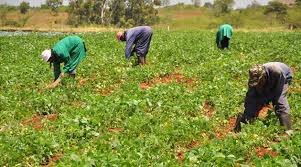
The Tomatoes Growers and Processors Association of Nigeria (TOPAN) has predicted a steady increase in the price of the produce between May and June 2026.
The Kaduna State Chairman TOPAN, Rabiu Zuntu, disclosed this in an interview recently in Lagos.
Zuntu noted that although there is no particular time for tomatoes planting season up north, seasonal weather variations can affect the production of the produce.
“Although we can plant tomatoes all-year-round, we cannot assure quality harvest all-year-round.
“Some farmers are harvesting now, while others are transplanting, and others are harvesting.
“Tomatoes are still available for sale but the price of the produce is gradually on the increase.
“Come May/June, the prices of tomatoes will be very expensive, so now is a good time to stock up the produce. There’s always a scarcity within that period.
“This is because of the nature of the weather in the north around that period, the weather is usually very hot and tomatoes cannot resist such hot temperature,” he said.
Zuntu said the price of tomatoes have started rising up in the north.
“A 50kg rafia basket of tomatoes sells from N20,000 as against N7,000 to N10,000 that was sold earlier in the year.
“While a crate of tomatoes up north is sold between N10,000 and N15,000 as against N5,000 to N6,500 sold earlier in the year.
“In most part of Kano State, where there is bumper harvest, they are rounding off their harvest. So, tomato is not that available there and most buyers have turned to where they can find it now, mostly within Kaduna State and some parts of Plateau State.
“So, that’s why the supply has decreased and the tomato supply and cost is determined by the law of demand and supply,” he said.
A 50kg basket of tomatoes in Lagos, at the moment, sells between N40,000 and N60,000 depending on the size and quality.
The Smallholder Women Farmers Organisation in Nigeria (SWOFON), Oyo State chapter, has said that the lack of irrigation facilities had become a major obstacle to dry season farming in the state.
The Chairperson of SWOFON in Oyo State, Atinuke Akinbade, said this in an interview in Ibadan on Monday.
Akinbade, who shared the experiences of women farmers in the state during the 2025 dry season, said that inadequate access to water for irrigation significantly affected the performance of many farmers during the period.
“It hindered many older farmers from participating in dry season farming and also prevented younger farmers from doing as much as they could in cultivating large acres of land,” she said.
Akinbade explained that farmers who managed to plant during the season struggled to access sufficient water to irrigate their farms, a situation worsened by the effects of climate change.
“Many farmers who depended on streams and wells to water their crops suffered major setbacks because those sources could not provide enough water for irrigation.
“Some farmers had to resort to buying water from commercial water tankers, which increased the cost of production, while at times it was even difficult to get water from the tankers,” she said.
The SWOFON chairperson warned that failure to address the problem could worsen food insecurity in the coming months.
“Even now, rainy season farming has not fully commenced because of the irregular rainfall pattern.
“This is a double burden, and if nothing is done, it may lead to serious hunger later,” she said.
Akinbade, however, acknowledged that the government had organised training for members of the association on home gardening.
She, however, said that little support was provided to address the challenges of dry season farming.
The chairman said that the home garden support package given to members consisted mainly of seedlings and one sprayer.
“They gave us two packs each of maize and pepper seeds, with six seeds in each pack, as well as one sprayer, so that we can grow food for household consumption,” she said.
Earlier, Oluwatoyin Oyedeji, SWOFON Coordinator in Oyo East, explained the severe hardship members of the organisation experienced in sourcing water for irrigation.
“Many farmers are already counting their losses because water was not available to irrigate their farms.
“Those who depended on streams and brooks were badly affected because many of them dried up, while the few that still had water had so little that farmers had to dig deeper into the ground in search of more,” Oyedeji said.
In the same vein, the Women Leader for farmers in Saki East, Musiliu Ashiru, said the absence of irrigation facilities also hampered dry season farming in her area.
According to her, many farmers still engaged in dry season farming have had to pay for water to keep their crops alive.
“Many of them buy water from the dam here to irrigate their crops. It has not been easy for them this year,” Ashiru said.




Senator Abba Moro: It is Time to Go Home
ShareBy Cleopas Agada For seven years in the National Assembly, what has Benue South actually felt? For a man who...
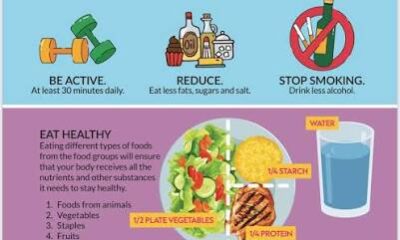

NCDs Fastest-growing Disease Burden in Nigeria — Pate
ShareThe Coordinating Minister of Health and Social Welfare, Prof. Muhammad Pate, said Non-Communicable Diseases (NCDs) have become one of the...


2027: Adeleke Inaugurates Aare Asejere’s Campaign Council
ShareFrom Ayinde Akintade, Osogbo The Governor of Osun State, Senator Ademola Adeleke, yesterday charged newly inaugurated members of the Osun...


INEC Seeks Stakeholders’ Collaboration for Credible, Peaceful Elections
ShareThe Independent National Electoral Commission (INEC) has reaffirmed its commitment to strengthen collaboration with the National Orientation Agency (NOA), security...


Reps Reject Child Marriage, Demand Protection of Girl Child
ShareBy Ubong Ukpong, Abuja The House of Representatives on Thursday unanimously called for urgent and coordinated actions to protect Nigerian...


Court Awards N125, 000 Cost against Odumodublvck
ShareAn Abuja High Court on Wednesday awarded N125, 000 against a rapper, Tochukwu Ojogwu, popularly known as “Odumodublvck”, for asking...


Hunger Changed My Mind, Timini Egbuson on Embracing YouTube movies
ShareNollywood actor Timini Egbuson has reflected on his changing perception of YouTube movies, joking that he might have struggled financially...


Peller Announces Livestream with Peter Obi
SharePopular Nigerian TikTok streamer, Hamzat Adelaja, popularly known as Peller, has announced an upcoming livestream with the presidential candidate of...

Nigeria’s inflation drops from 15.39 Per Cent to 14.63 Per Cent in September
ShareBy Tony Obiechina, Abuja The National Bureau of Statistics (NBS) on Thursday disclosed that Nigeria’s inflation has eased from 15.39...


Senate Oders Investigation into Corps Member’s Death in Enugu
ShareBy Tambaya Julius, AbujaThe Senate has ordered an investigation into the death of a National Youth Service Corps (NYSC) member,...