
Agriculture
Nigeria Losses N400bn Annually from Fish Importation

From Joy Ekeke, Lagos
Nigeria may have been losing at least $1billion (about N400bn) annually from importation of fish, the Deputy Chairman, House of Representatives Committee on Agricultural Institutions, Rep. Awaji Inombek-Abiante (PDP-Rivers), has said.
In order to address the unfortunate situation, the House of Representatives is considering the passage of two bills into law in the fishery industry.
The bills include Brackish Water Fisheries Research Institute Bill and the Fisheries Institute of Nigeria Bill.
Inombek-Abiante, who made this known at the 16th Fellowship Investiture and Launching of N500million Building Fund for National Secretariat of the Fisheries Society of Nigeria(FISON )in Abuja, hosted by the National President of the association, Dr.
Agbaibiaka Lukman Adegoke, called on President Muhammadu Buhari to create a Fisheries and Aqua culture Ministry.Ekiti State Governor Kayode Fayemi, , Plateau State Governor, Governor Simon Lalong, Bauchi State Governor, Bala Mohammed, and Senators Abdullahi Adamu, Ibikunle Amosun, Aliya Sabi-Abdullahi and Muhammad Enagi attended the meeting.
Also at the event, were the Chief Whip of the House of Representatives, Mohammed Monguno and Rep. Abdullahi Garba, Chief of Army Staff, Lt. Gen. Tukur Buratai, Senior Special Assistant to the President on Niger Delta Affairs, Senator Ita Enang and the Emir of Borgu, Dr. Mohammed Dantoro, were st the event, which most of the dignitaries were conferred with Fellowship Wards s of FISON.
At the event, chaired by Barr. Inyang Etim Inyang, Inombek-Abiante recalled that though the Fisheries Institute Bill was passed by the previous assembly, presidential assent was still withheld.
“We came up with this demand to have an institute that will help us to develop that particular segment of the industry. That same bill was passed in the 8th Assembly, transmitted to Mr President; unfortunately it was not signed.
“You have listened to people speak, you have seen the gap in our fish requirement. Apart from that, the records are there; science is tending to encourage us to do more of fish than red meat.
There is Omega 3 requirement for several categories of persons, and you find it in fish. The value change addition that we will have, we are losing it out.
“The total global value of the fishing industry is over $200bn and with the kind of environment we have, we can get as much as 5 to 10 per cent. The 10 per cent of that value will give us something even greater than what we make in the oil and gas sector.
“Why are we keeping a blind eye to these developments? Probably due to ignorance; probably the people who know are not speaking to those who need to know. These two bills are before parliament.
“The bill that is requesting for the establishment of the Brackish Water Fisheries Research Institute has passed every attention in the House of Representatives. It has been transmitted to Senate for concurrence. If the Senate concurs, in no time it will be transmitted to Mr President. It has the potential of opening up the economy of this country.
“If we can conserve what we use; the import value of fish is over $1bn as we speak, that is over N400bn. It can take care of the capital budget requirements of two ministries under this administration. So, the challenge is advocacy. Those who should know have not known. What we have is not adequate”, he said.
According to the legislator, to reap greater gains from the Fisheries industry, a separate Ministry must be created for the sector.

Some residents in Lagos State have expressed concern over the recent surge in the price of tomatoes, forcing many households to adopt alternatives.
The residents made their views known in separate interviews on Wednesday in Lagos.
A market survey showed that a 50kg basket of tomatoes now sells between N115,000 and N125,000, compared to between N35,000 and N40,000 recorded last month.
Olachi Igwe, a resident of Ago Palace, said the scarcity and high cost of tomatoes had disrupted her household’s meal plans.
“I contacted my usual vendor, but she said tomatoes were scarce and difficult to source.
“A small bowl we used to buy for between N3,500 and N4,000 now sells for as high as N6,000 to N7,000, when available.
“For now, my family will resort to palm nut stew (ofe akwu) until prices stabilise,” she said.
Another resident, Mercy Okeleye of FESTAC, said although her family prefers fresh tomatoes, rising prices have forced her to consider cheaper options.
“I cannot do without fresh tomatoes because of the taste, but I may have to buy broken ones, popularly called ‘esha’, which are relatively cheaper.
“I do not consider tomato paste a suitable substitute because it is not purely made from tomatoes,” she said.
Also speaking, Tope Babalola from Dopemu, said she might adjust her cooking methods if prices remain high.
“I have not bought tomatoes in over a month, but if the price is still high, I will use more onions and peppers.
“I will not resort to artificial additives; I prefer natural ingredients for my meals,” she said.
Joan Ogugua, another resident, said she had already switched to tomato paste to cope with the situation.
“I asked my son to buy tomato paste for our meals. I cannot justify spending excessively on fresh tomatoes when other basic needs must be met,” she said.
Also, Oge Ugwu, a civil servant at Lekki, said she would resort to cucumber stew with the recent price hike.
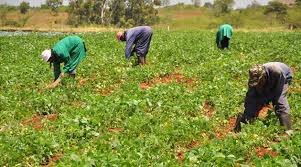
The Tomatoes Growers and Processors Association of Nigeria (TOPAN) has predicted a steady increase in the price of the produce between May and June 2026.
The Kaduna State Chairman TOPAN, Rabiu Zuntu, disclosed this in an interview recently in Lagos.
Zuntu noted that although there is no particular time for tomatoes planting season up north, seasonal weather variations can affect the production of the produce.
“Although we can plant tomatoes all-year-round, we cannot assure quality harvest all-year-round.
“Some farmers are harvesting now, while others are transplanting, and others are harvesting.
“Tomatoes are still available for sale but the price of the produce is gradually on the increase.
“Come May/June, the prices of tomatoes will be very expensive, so now is a good time to stock up the produce. There’s always a scarcity within that period.
“This is because of the nature of the weather in the north around that period, the weather is usually very hot and tomatoes cannot resist such hot temperature,” he said.
Zuntu said the price of tomatoes have started rising up in the north.
“A 50kg rafia basket of tomatoes sells from N20,000 as against N7,000 to N10,000 that was sold earlier in the year.
“While a crate of tomatoes up north is sold between N10,000 and N15,000 as against N5,000 to N6,500 sold earlier in the year.
“In most part of Kano State, where there is bumper harvest, they are rounding off their harvest. So, tomato is not that available there and most buyers have turned to where they can find it now, mostly within Kaduna State and some parts of Plateau State.
“So, that’s why the supply has decreased and the tomato supply and cost is determined by the law of demand and supply,” he said.
A 50kg basket of tomatoes in Lagos, at the moment, sells between N40,000 and N60,000 depending on the size and quality.
The Smallholder Women Farmers Organisation in Nigeria (SWOFON), Oyo State chapter, has said that the lack of irrigation facilities had become a major obstacle to dry season farming in the state.
The Chairperson of SWOFON in Oyo State, Atinuke Akinbade, said this in an interview in Ibadan on Monday.
Akinbade, who shared the experiences of women farmers in the state during the 2025 dry season, said that inadequate access to water for irrigation significantly affected the performance of many farmers during the period.
“It hindered many older farmers from participating in dry season farming and also prevented younger farmers from doing as much as they could in cultivating large acres of land,” she said.
Akinbade explained that farmers who managed to plant during the season struggled to access sufficient water to irrigate their farms, a situation worsened by the effects of climate change.
“Many farmers who depended on streams and wells to water their crops suffered major setbacks because those sources could not provide enough water for irrigation.
“Some farmers had to resort to buying water from commercial water tankers, which increased the cost of production, while at times it was even difficult to get water from the tankers,” she said.
The SWOFON chairperson warned that failure to address the problem could worsen food insecurity in the coming months.
“Even now, rainy season farming has not fully commenced because of the irregular rainfall pattern.
“This is a double burden, and if nothing is done, it may lead to serious hunger later,” she said.
Akinbade, however, acknowledged that the government had organised training for members of the association on home gardening.
She, however, said that little support was provided to address the challenges of dry season farming.
The chairman said that the home garden support package given to members consisted mainly of seedlings and one sprayer.
“They gave us two packs each of maize and pepper seeds, with six seeds in each pack, as well as one sprayer, so that we can grow food for household consumption,” she said.
Earlier, Oluwatoyin Oyedeji, SWOFON Coordinator in Oyo East, explained the severe hardship members of the organisation experienced in sourcing water for irrigation.
“Many farmers are already counting their losses because water was not available to irrigate their farms.
“Those who depended on streams and brooks were badly affected because many of them dried up, while the few that still had water had so little that farmers had to dig deeper into the ground in search of more,” Oyedeji said.
In the same vein, the Women Leader for farmers in Saki East, Musiliu Ashiru, said the absence of irrigation facilities also hampered dry season farming in her area.
According to her, many farmers still engaged in dry season farming have had to pay for water to keep their crops alive.
“Many of them buy water from the dam here to irrigate their crops. It has not been easy for them this year,” Ashiru said.


Nigeria Pledges Stronger Ties with Sao Tome on Maritime Security
ShareBy Tony Obiechina, Abuja The Federal Government has reaffirmed Nigeria’s commitment to strengthening bilateral relations with São Tomé and Príncipe,...
NAICOM Launches Programme to Strengthen Insurance Sector
ShareBy Tony Obiechina, Abuja The National Insurance Commission (NAICOM) has officially launched the Insurance Sector Strengthening Programme (ISSP), a new...
NESG Convenes Pre-Summit Dialogue on Bridging the Gap from Learning to Earning
ShareBy Tony Obiechina, Abuja The Nigerian Economic Summit Group (NESG), in collaboration with the Federal Ministry of Budget and Economic...


Enugu Govt Names Henry Okeke to Polytechnic Iwollo Governing Council
ShareBy Raphael Atuu, Abuja The Enugu State Government has approved the immediate appointment of Barr. Henry Okeke as a member...

NCS, Niger Customs Team Up to Revive Kamba Border Economy
ShareBy Tambaya Julius, Abuja The Nigeria Customs Service (NCS), Kebbi Area Command, has commenced fresh efforts to revive legitimate cross-border...
Equipping Educators for Excellence: Preparing for a New Academic Session
ShareBy Tolulope Sobiye Ogunbowale A new academic session is knocking at the door. But before the first lesson is taught,...
NFF: Why Nigeria Must Follow the Rules, not Sentiments
ShareBy Ken Ekwueme On Tuesday, September 1, 2026, the world football governing body FIFA formally accepted the resignation of Nigeria...


NOA Initiates Five-month Voter Education Exercise in Bauchi
ShareThe National Orientation Agency (NOA) in Bauchi State, says it will conduct a five-month voter education exercise to mobilise participation...


Sanwo-Olu Urges Media to Combat Misinformation Ahead 2027 Elections
ShareLagos State Governor, Babajide Sanwo-Olu has urged the media to uphold professionalism, verify information and combat misinformation ahead of the...


I Think I’d Have Won BBNaija Season 11 – Neche Speaks on Exit
ShareFormer Big Brother Naija housemate Neche said she believes she could have won the show if she had stayed, citing...