
Agriculture
Nigeria Misses out on $180bn Global Cassava Processing Market


By Torough David , Abuja
With a current production capacity of 62.69 million and holding the position of the largest producer of cassava in the world, Nigeria is missing out of the $180 billion global cassava processing market.
The country’s cassava value chain, although hampered by local consumption, has the potential to drive economic growth and attract foreign investments.
Stakeholders in the value chain say that with improved yield, provision of credits for farmers and accessibility of lands, the country could tap into the $180 billion processed market.
The conversion of fermented cassava into high-quality products—such as High-Quality Cassava Flour (HQCF), cassava starch, bioethanol, and sweeteners (glucose and sorbitol) — could aid in cushioning forex scarcity in Nigeria.
“Nigeria, as the world’s largest cassava producer, generates approximately 18 percent of global cassava output but captures merely 2 percent of the crop’s vast $180 billion global processing market,” said Olayinka David-West, dean of Lagos Business School, Pan-Atlantic University.
David-West reiterated that despite cassava’s substantial production scale—feeding millions daily through staple foods like Garri and fufu and sustaining the livelihoods of approximately 14 million smallholder farmers—over 90 percent of Nigeria’s cassava harvest remains relegated to low-value and food-grade uses.
“This significantly constrains farmer incomes and limits broader economic impact,” she added.
Escalating global demand for industrial cassava products offers Nigeria a significant market opportunity to expand beyond traditional uses, she says.
According to the International Trade Centre, global cassava derivative exports have grown over 20 percent annually in recent years, underscoring robust international demand for industrial cassava products.
Meanwhile, Olayinka Majekodunmi, partner at Boston Consulting Group, emphasised that cassava in its HQCF form serves as a strategic alternative to imported wheat flour, essential for Nigeria’s bakery and snack sectors.
This is imperative as Nigeria imports 98 percent of its wheat needs, amounting to an average of $2 billion annually.
“HQCF presents substantial import substitution potential, potentially unlocking a $600 million market. Currently, utilisation remains low at 5 percent, yet scaling to 20 percent is achievable, given existing facilities are underutilised by approximately 50 percent,” he said.
On the investment opportunities in cassava starch, he explained that it is commonly used in paper, textile and pharmaceutical industries.
“Domestic production significantly lags demand, which grows at approximately 5.2 percent annually, representing a substantial market gap. Capturing this gap could realistically secure an additional $485 million, bolstering local manufacturing capabilities.”
But to conveniently tap into this pool of wealth, stakeholders argue that production must first of all be ramped up.
How production can be bolstered
Although current cassava yields average 6 tons per hectare compared to a global benchmark of 25 tons per hectare. The Food and Agriculture Organisation (FAO) estimates that bridging this yield gap could boost production by an additional 11 million metric tons.
“Key investments are needed in superior, disease-resistant varieties, mechanization, agronomic training, and post-harvest handling improvements to reduce losses,” David-West said.
She said cassava processing costs in Nigeria remain high, often quadrupling in off-grid areas due to unreliable power supply.
Hence, most processing facilities operate 50 percent below capacity, further lowering efficiency.
According to her, this calls for strategic investments in modern processing technologies, renewable energy infrastructure, and agro-industrial clusters.
Echoing her words, Majekodunmi said access to affordable finance remains a major challenge. He urged the development of tailored financial instruments such as patient capital and concessional loans, coupled with securing long-term off-take agreements, which will mitigate risks.
Stakeholders believe that the country has what it takes to drive value addition in the sector, but it requires intentional efforts to bolster yield per hectare and production capacity.
Key industrial derivatives
Among cassava derivatives, four key products present immediate high-growth opportunities, collectively representing a market of approximately $2 billion:
High-Quality Cassava Flour
HQCF serves as a strategic alternative to imported wheat flour, essential for Nigeria’s bakery and snack sectors.
With Nigeria importing roughly 98 percent of its wheat consumption—valued at approximately $2 billion annually—HQCF presents substantial import substitution potential, potentially unlocking a $600 million market.
Currently, utilization remains low at 5 percent, yet scaling to 20 percent is achievable, given existing facilities are underutilized by approximately 50 percent.
Industrial starch: Widely used in sectors such as paper, textiles, pharmaceuticals, adhesives, and food additives, local cassava starch offers significant competitive advantages.
Domestic production significantly lags demand, which grows at approximately 5.2 percent annually, representing a substantial market gap.
Capturing this gap could realistically secure an additional $485 million, bolstering local manufacturing capabilities.
Sweeteners (Glucose and Sorbitol)
Nigeria’s rapidly growing sweetener market (18 percent annual growth) remains predominantly import-dependent (95 percent imported), driving up costs for manufacturers.
Cassava-based sweeteners offer a cost-effective alternative, priced considerably lower than imported sucrose.
Companies such as Coca-Cola have indicated strong interest in sourcing locally, underscoring this segment’s immediate scalability and representing a clear $500 million market opportunity.
Bioethanol
Nigeria imports about 26 percent of its ethanol for beverages, pharmaceuticals, and fuel blending, exposing the economy to price volatility.
Cassava-based bioethanol offers significant economic advantages, costing approximately $0.06 per liter less than imported ethanol.
Given Nigeria’s existing ethanol market valued at $420 million, substantial expansion opportunities exist for investors to scale local production.
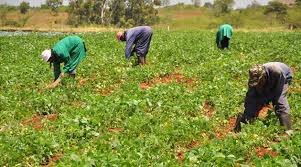
The Tomatoes Growers and Processors Association of Nigeria (TOPAN) has predicted a steady increase in the price of the produce between May and June 2026.
The Kaduna State Chairman TOPAN, Rabiu Zuntu, disclosed this in an interview recently in Lagos.
Zuntu noted that although there is no particular time for tomatoes planting season up north, seasonal weather variations can affect the production of the produce.
“Although we can plant tomatoes all-year-round, we cannot assure quality harvest all-year-round.
“Some farmers are harvesting now, while others are transplanting, and others are harvesting.
“Tomatoes are still available for sale but the price of the produce is gradually on the increase.
“Come May/June, the prices of tomatoes will be very expensive, so now is a good time to stock up the produce. There’s always a scarcity within that period.
“This is because of the nature of the weather in the north around that period, the weather is usually very hot and tomatoes cannot resist such hot temperature,” he said.
Zuntu said the price of tomatoes have started rising up in the north.
“A 50kg rafia basket of tomatoes sells from N20,000 as against N7,000 to N10,000 that was sold earlier in the year.
“While a crate of tomatoes up north is sold between N10,000 and N15,000 as against N5,000 to N6,500 sold earlier in the year.
“In most part of Kano State, where there is bumper harvest, they are rounding off their harvest. So, tomato is not that available there and most buyers have turned to where they can find it now, mostly within Kaduna State and some parts of Plateau State.
“So, that’s why the supply has decreased and the tomato supply and cost is determined by the law of demand and supply,” he said.
A 50kg basket of tomatoes in Lagos, at the moment, sells between N40,000 and N60,000 depending on the size and quality.

The Smallholder Women Farmers Organisation in Nigeria (SWOFON), Oyo State chapter, has said that the lack of irrigation facilities had become a major obstacle to dry season farming in the state.
The Chairperson of SWOFON in Oyo State, Atinuke Akinbade, said this in an interview in Ibadan on Monday.
Akinbade, who shared the experiences of women farmers in the state during the 2025 dry season, said that inadequate access to water for irrigation significantly affected the performance of many farmers during the period.
“It hindered many older farmers from participating in dry season farming and also prevented younger farmers from doing as much as they could in cultivating large acres of land,” she said.
Akinbade explained that farmers who managed to plant during the season struggled to access sufficient water to irrigate their farms, a situation worsened by the effects of climate change.
“Many farmers who depended on streams and wells to water their crops suffered major setbacks because those sources could not provide enough water for irrigation.
“Some farmers had to resort to buying water from commercial water tankers, which increased the cost of production, while at times it was even difficult to get water from the tankers,” she said.
The SWOFON chairperson warned that failure to address the problem could worsen food insecurity in the coming months.
“Even now, rainy season farming has not fully commenced because of the irregular rainfall pattern.
“This is a double burden, and if nothing is done, it may lead to serious hunger later,” she said.
Akinbade, however, acknowledged that the government had organised training for members of the association on home gardening.
She, however, said that little support was provided to address the challenges of dry season farming.
The chairman said that the home garden support package given to members consisted mainly of seedlings and one sprayer.
“They gave us two packs each of maize and pepper seeds, with six seeds in each pack, as well as one sprayer, so that we can grow food for household consumption,” she said.
Earlier, Oluwatoyin Oyedeji, SWOFON Coordinator in Oyo East, explained the severe hardship members of the organisation experienced in sourcing water for irrigation.
“Many farmers are already counting their losses because water was not available to irrigate their farms.
“Those who depended on streams and brooks were badly affected because many of them dried up, while the few that still had water had so little that farmers had to dig deeper into the ground in search of more,” Oyedeji said.
In the same vein, the Women Leader for farmers in Saki East, Musiliu Ashiru, said the absence of irrigation facilities also hampered dry season farming in her area.
According to her, many farmers still engaged in dry season farming have had to pay for water to keep their crops alive.
“Many of them buy water from the dam here to irrigate their crops. It has not been easy for them this year,” Ashiru said.
Nigeria’s agricultural sector has seen a significant surge in investment, rising 224 percent in one year amid escalating insecurity in the country.
Data from the National Bureau of Statistics (NBS) capital importation report showed that foreign direct investment (FDI) in the agric sector hit $167.
3 million in 2025, up 224 percent from $51. 7 million in 2024.On a quarter-on-quarter basis, investment into the sector surged 216 percent to $51.
2 million in the fourth quarter of 2025 from $16.2 million in the corresponding period of 2024.Prior to 2022, investments in the sector had grown consistently at an annual average of 82 percent since 2016, but then reversed in 2022 and continued to decline through 2024, before rebounding in 2025, according to BusinessDay’s analysis.
Experts in the sector attributed the surge to renewed investor interest amid favourable government policies, including importation waivers.
“The economic reforms that restored investors’ confidence and the government’s continuous support to the sector are major drivers of these investments,” said AfricanFarmer Mogaji, chief executive officer, Agbado Value-Chain Ltd
“Also, the country’s growing population always makes the industry attractive for investors, as people must eat. This increased the number of investors, domestically and foreign, who invested in the industry,” Mogaji said.
Nigeria’s agricultural industry experienced several shocks in 2025 that disrupted the food systems and hampered productivity.
High insecurity has significantly impacted farming activities in the country, with the situation intensifying in 2025, forcing many farmers to abandon their farmlands.
Prices of key inputs such as seeds, herbicides, pesticides, fertilisers, and agro machinery tripled in 2025 due to the naira devaluation and spikes in headline inflation.
The surge in production costs, combined with low food prices, eroded farmers’ ability to recover investments made during the 2025 season, leaving many with huge financial losses.
Similarly, the increasing impact of climate change on communities disrupted farming activities during the year. While no country is immune to the impacts of climate change, Nigeria is among the countries that are most vulnerable and least able to cope with the impacts of a changing climate.
The fishing industry, which is one of the sub-sectors of the agricultural industry, attracted a $5.1 million investment in 2025 from zero investments in 2024.
The sector grew by 2.92 percent in 2025 as its performance was significantly impacted by increased youth participation and rising investment in mechanised farming.



DAILY ASSET Publisher’s Son Weds in Grand Celebration of Love
ShareBy David Torough, Abuja Joy, elegance and heartfelt celebration filled the air as Mark Akwaya, son of DAILY ASSET Newspaper...


2027: Gimbiya Eyes Kaduna Guber Seat, Tout Shehu ABG’s ICT, Education, Water Projects
ShareBy Julius Tambaya, Abuja As the race for the 2027 Kaduna State governorship heats up, a prominent female supporter has...


Auto360 Nigeria Graduates New Generation of Skilled Mechanics, Sends Trainees to Industry Internships
ShareBy David Torough, Abuja Auto360 Nigeria Limited has celebrated the graduation of its latest cohort of automobile trainees, marking the...


Aminatu Dahiru Chiroma: Driving Innovation in Aviation and Empowering Communities Across Nigeria
ShareBy Raphael Atuu In an era where visionary leadership is shaping the future of Africa’s economic landscape, Aminatu Dahiru Chiroma...


Gideon Dooyum Inyom, Declares for Buruku Federal Constituency Seat
ShareThe political theatre of Benue State has taken a decisive turn with the declaration of Inyom Dooyum Gideon to contest...


Workers Day: CIPPON Salutes Print Stakeholders, Task FG On Import Duties
ShareAs Nigerians mark workers Day, the President Chartered Institute of Professional Printers of Nigeria (CIPPON), Koko T. Clement has lauded...


Security Guards Allegedly Kill Final Year Student in Kogi
ShareFrom Joseph Amedu, Lokoja Security guards at Nana College of Health, Ibana Okpo in Olamaboro Local Government Area of Kogi state were alleged to have...


Cote D’ivoire Announces 25 Per Cent Reduction in Airport Charges on ECOWAS Flights
ShareThe Ivorian government announced a 25 per cent reduction in passenger and security charges for flights within the Economic Community of West African States (ECOWAS). Three...
Prosperity Cup 2026: Quarter Finalists Emerges
ShareFrom Mike Tayese, Yenagoa Quarter finalists have emerged in Nigeria’s biggest grassroots football fiesta, the Bayelsa Governor’s Football Tournament, tagged the Prosperity Cup,...


SSANU, NASU Begin Indefinite Strike
ShareMembers of the Non-Academic Staff Union of Educational (NASU) and Associated Institutions and the Senior Staff Association of Nigerian Universities...