
NEWS
Nigeria, Senegal Pledge to Strengthen Defence ties


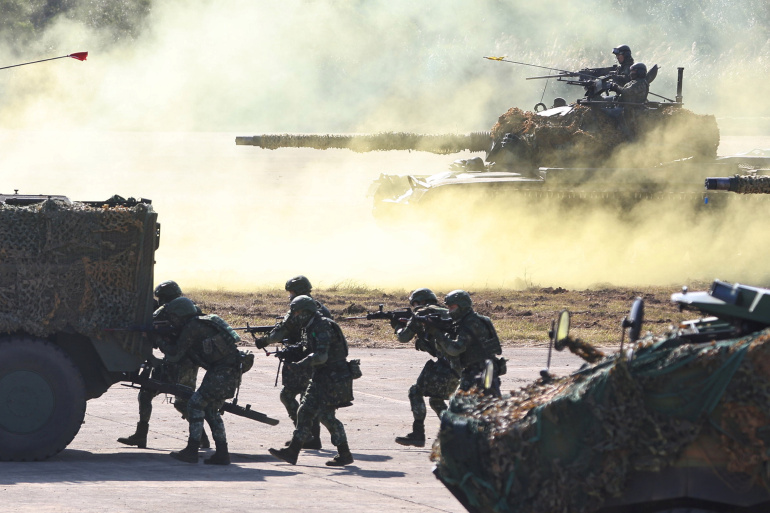
The Chief of Army Staff, Nigerian Army, Maj.-Gen. Faruk Yahaya, and the Inspector General of Senegales Armed Forces, Maj.-Gen. Elhadji Niang, have pledged to strengthen the existing defence ties between Nigeria and Senegal.
They made the pledge when the Senegales military chief visited Army Headquarters on Monday in Abuja.
Earlier, Niang said he was in Army Headquarters to pay a condolence visit on the death of the former Chief of Army Staff, Late Lt.
-Gen. Ibrahim Attahiru and ten other officers who died in a plane crash in May.He described the Nigerian Army as key factor to sustenance of peace and development in the sub-Sahara Africa and pledged the readiness of the Senegalese armed forces to strengthen cooperation with Nigeria.
Niang said that Nigerian army had contributed immensely to sustaining peace in many African countries through peace support operations, adding that Nigerian army’s achievement in peace-keeping operations had not been properly documented.
He pledged that Senegalese military would support and synergise with Nigeria in the ongoing fight against insurgency and other security challenges in the country.
According to him, Nigeria and Senegal are facing common issues hence the need to enhance the cooperation.
Responding, the COAS said that he was delighted that the Senegalese defence chief had solicited for enhanced defence ties considering that fact that some of the security challenges were trans-border in nature.
Yahaya said that Nigeria and Senegal shared common security issues as well as cultural background hence the need to cooperate towards addressing their challenges.
He specifically identified the movement of small arms across the region as a major factor behind the growing security challenges in the sub-region, adding that there was need for the two armed forces to collaborate.
The COAS also suggested that the two countries’ armed forces could further cooperate on training of their officers in their various institutions. (NAN)






By Dan Amasingha, Minna
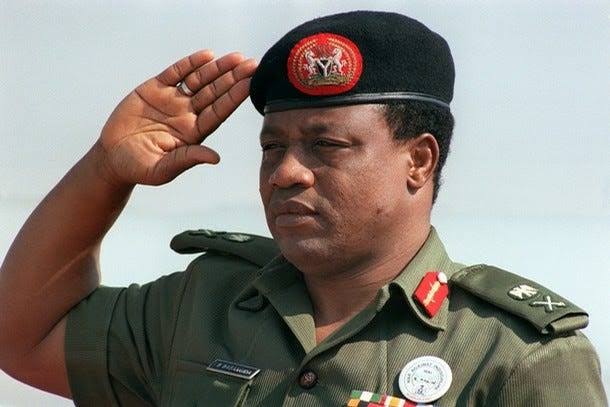
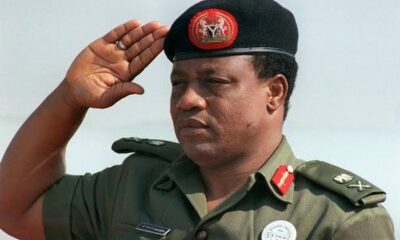
The Nigeria Union of Journalists (NUJ), Niger State Council, has congratulated former Military President, General Ibrahim Badamasi Babangida (rtd.), on his 85th birthday, describing him as an elder statesman whose policies and initiatives continue to shape Nigeria’s political, economic and socio-economic development.
In a congratulatory message signed by the Council Secretary, Comrade Usman Chiji, the NUJ thanked God for preserving the life of the former leader to witness the milestone, saying his 85th birthday provides an opportunity to reflect on his contributions to the nation.
The Council commended Babangida for policies, institutions and infrastructure initiatives introduced during his administration which, it said, continue to have direct impact on the lives of Nigerians.
It specifically cited the creation of additional states and local government areas, as well as the establishment of institutions including the Federal Road Safety Corps (FRSC), National Agricultural Land Development Authority (NALDA) and the Directorate of Food, Roads and Rural Infrastructure (DFRRI).
The NUJ also recalled the deregulation of the electronic media and the economic and financial reforms undertaken under Babangida, which it said created an environment for the emergence of private commercial banks and other enterprises aimed at strengthening the Nigerian economy.
According to the Council, many of the policies and initiatives introduced during the Babangida administration have remained significant milestones in the country’s political and socio-economic development, with successive governments reviewing, remodelling or modifying some of them.
The NUJ described Babangida as an elder statesman, military strategist and former Nigerian leader whose policies and programmes have outlived his administration.
The Council further acknowledged his contributions to regional and international peace, particularly Nigeria’s role in the establishment of the Economic Community of West African States Monitoring Group (ECOMOG), peacekeeping operations in troubled countries and efforts to strengthen Nigeria’s bilateral relations with other nations.
The journalists’ body prayed to God to grant the former military leader continued good health, wisdom and strength, as well as many more years of fulfilment and service to Nigeria.

Academic Staff Union of Universities (ASUU) has authorised 20 federal and state universities across Nigeria to commence varying degrees of industrial action.
The decision was reached during a critical National Executive Council (NEC) meeting held in Abuja between August 8 and 9, 2026.
ASUU National President, Prof.
Christopher Piwuna, disclosed this at the weekend, expressing the union’s deep frustration over the “haphazard implementation” of the landmark December 2025 FGN-ASUU Agreement.The union warned that a full-scale resurgence of campus unrest is now inevitable.
Regarding the 20 approved universities facing looming strikes, the NEC resolved to grant permission for industrial action once individual institutions successfully satisfy internal union requirements.
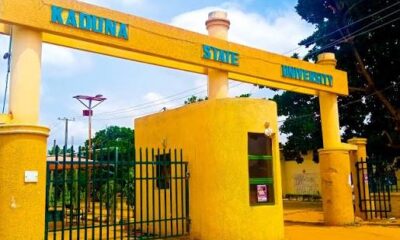
The affected institutions include: Adekunle Ajasin University, Akungba (AAUA); Nasarawa State University, Keffi (NSUK); Ibrahim Badamasi Babangida University, Lapai (IBBUL); University of Medical Sciences, Ondo (UNIMEDO); Gombe State University (GSU), Gombe; Plateau State University (PLASU), Bokkos; Emmanuel Alayande University of Education (EAUED), Oyo; Ambrose Alli University, Ekpoma (AAUE); Olusegun Agagu University of Science and Technology (OAUSTECH), Okitipupa; Abia State University (ABSU), Uturu; University of Education and Entrepreneurship (UEE), Akamkpa; Kaduna State University (KASU), Kaduna.
Others are Aliko Dangote University of Science and Technology (ADUSTECH), Wudil; Northwest University, Kano (NWUK); Enugu State University of Science and Technology (ESUT), Enugu; Imo State University (IMSU), Owerri; Niger Delta University (NDU), Wilberforce Island; University of Africa, Toru-Orua (UAT); Bayelsa Medical University (BMU), Yenagoa; and Taraba State University (TSU), Jalingo.
ASUU also disclosed that the implementation status of universities within the Lagos Zone is currently under review, with separate declarations expected in due course.
Speaking on the core grievances driving the crisis, ASUU noted that while Vice-Chancellors at the federal level face severe challenges due to underfunded monthly salary bills, the situation at the state level is considerably worse.
According to the union, only about 10% or fewer of state governors have openly endorsed the new salary package established in December 2025.
The rest were accused of “playing the ostrich” and passing financial burdens onto Governing Councils that lack the funding to back them.
The union also explicitly blamed officials within the Federal Ministry of Finance and the Office of the Accountant-General of the Federation. These bodies are accused of deliberately stalling promotion arrears, dragging their feet on monthly salary releases, and illegally withholding the remittance of academics’ deductions to their respective Pension Fund Administrations (PFAs).
Furthermore, ASUU raised concerns over the unpaid, withheld three-and-a-half months’ salaries dating back to the 2022 nationwide strike. While ASUU initially praised President Bola Tinubu for releasing four months of those salaries, the refusal to remit the balance has left a “strong bitter taste.”
The union also condemned the prolonged delays in paying the 25/35% wage award and outstanding promotion arrears to its members.
Meanwhile, ASUU issued a stern warning regarding the recent harassment of its branch leaders and members by Vice-Chancellors at ESUT, IMSU, and ABSU.
The NEC declared that it will strictly refuse to call off any industrial action in these specific institutions until all forms of victimization stop completely.
Beyond the immediate academic crisis, the NEC reviewed the worsening socio-political and economic landscape of Nigeria.
The union strongly condemned the ongoing atmosphere of pre-election violence, political killings, and economic instability as the country approaches upcoming election cycles, noting that these existential threats directly undermine the living and working conditions of everyday Nigerians and university lecturers alike.
Despite praising the mediation efforts of Senator Lanre Tejuoso, the Chairman of the Implementation Monitoring Committee (IMC), ASUU maintains that it will stop at nothing to enforce the full scope of the agreement.
The union has announced that it will convene an emergency NEC meeting in the next few weeks to appraise the situation. If the government fails to act swiftly to clear outstanding financial entitlements and halt the harassment of lecturers, a wider, coordinated national academic shutdown may follow.
By Tony Obiechina, Abuja
Nigeria’s headline inflation rate fell to 15.43 per cent in July 2026, down from 15.91 per cent recorded in June, according to the latest Consumer Price Index (CPI) released by the National Bureau of Statistics (NBS).
The July figure also represents a significant decline from the 24.
94 per cent recorded in July 2025, following the recent rebasing of the CPI to a 2024 base year and a 2023 weight reference period. The NBS said the CPI rose to 145.3 points in July, representing a 2.2-point increase from the preceding month.On a month-on-month basis, headline inflation stood at 1.
57 per cent in July, 0.09 percentage points lower than the 1.66 per cent recorded in June.Despite the moderation in headline inflation, food prices continued to exert significant pressure on households, with food inflation rising to 20.31 per cent year-on-year in July, although lower than the 26.20 per cent recorded in July 2025.
More concerning was the month-on-month movement in food prices. Food inflation rose to 5.56 per cent in July from 3.75 per cent in June, representing an increase of 1.82 percentage points.
The NBS attributed the increase to changes in the average prices of several food items, including crayfish, fresh pepper, onions, carrots, rice, water yam, tomatoes, garri, plantain, beef, eggs, guinea corn, ginger and plantain flour.
The NBS attributed the increase to changes in the average prices of several food items, including crayfish, fresh pepper, onions, carrots, rice, water yam, tomatoes, garri, plantain, beef, eggs, guinea corn, ginger and plantain flour.
Food and non-alcoholic beverages remained the largest contributor to headline inflation at 6.18 per cent, followed by restaurants and accommodation services at 1.99 per cent and transport at 1.64 per cent.
By contrast, recreation, sport and culture contributed 0.05 per cent, alcoholic beverages, tobacco and narcotics 0.06 per cent, while insurance and financial services contributed 0.07 per cent.
Core inflation, which excludes volatile agricultural produce and energy prices, stood at 14.97 per cent year-on-year in July, while the month-on-month rate fell sharply to 0.15 per cent from 1.66 per cent in June.
Nigeria’s headline inflation rate fell to 15.43 per cent in July 2026, down from 15.91 per cent recorded in June, according to the latest Consumer Price Index (CPI) released by the National Bureau of Statistics (NBS).
The July figure also represents a significant decline from the 24.94 per cent recorded in July 2025, following the recent rebasing of the CPI to a 2024 base year and a 2023 weight reference period. The NBS said the CPI rose to 145.3 points in July, representing a 2.2-point increase from the preceding month.
On a month-on-month basis, headline inflation stood at 1.57 per cent in July, 0.09 percentage points lower than the 1.66 per cent recorded in June.
Despite the moderation in headline inflation, food prices continued to exert significant pressure on households, with food inflation rising to 20.31 per cent year-on-year in July, although lower than the 26.20 per cent recorded in July 2025.
More concerning was the month-on-month movement in food prices. Food inflation rose to 5.56 per cent in July from 3.75 per cent in June, representing an increase of 1.82 percentage points.
The NBS attributed the increase to changes in the average prices of several food items, including crayfish, fresh pepper, onions, carrots, rice, water yam, tomatoes, garri, plantain, beef, eggs, guinea corn, ginger and plantain flour.
Food and non-alcoholic beverages remained the largest contributor to headline inflation at 6.18 per cent, followed by restaurants and accommodation services at 1.99 per cent and transport at 1.64 per cent.
By contrast, recreation, sport and culture contributed 0.05 per cent, alcoholic beverages, tobacco and narcotics 0.06 per cent, while insurance and financial services contributed 0.07 per cent.
Core inflation, which excludes volatile agricultural produce and energy prices, stood at 14.97 per cent year-on-year in July, while the month-on-month rate fell sharply to 0.15 per cent from 1.66 per cent in June.
The newly introduced CPI sub-indices showed that farm produce recorded a monthly inflation rate of 4.66 per cent in July, while energy prices declined by 2.39 per cent. Services recorded 0.49 per cent, goods 1.70 per cent and imported food 1.19 per cent.
On a year-on-year basis, farm produce recorded 19.62 per cent inflation, energy 4.40 per cent, services 16 per cent, goods 15.33 per cent and imported food 13.24 per cent.
The data also showed significant disparities between urban and rural areas. Urban inflation stood at 16.12 per cent year-on-year in July, compared with 13.77 per cent in rural areas.
Month-on-month urban inflation declined to 1.90 per cent from 2.13 per cent in June, while rural inflation increased to 0.78 per cent from 0.52 per cent.
At the state level, Adamawa recorded the highest year-on-year all-items inflation at 33.03 per cent, followed by Yobe at 25.21 per cent and Anambra at 23.99 per cent. Nasarawa recorded the lowest year-on-year headline inflation at 7.86 per cent, followed by Kebbi and Borno, both at 9.12 per cent.



NUJ Felicitates Babangida at 85
ShareBy Dan Amasingha, Minna The Nigeria Union of Journalists (NUJ), Niger State Council, has congratulated former Military President, General Ibrahim...


Why I Married My Husband In Our Living Room – Ronaldo’s Wife
ShareGeorgina Rodríguez has disclosed that she chose their everyday family space to get married to Cristiano Ronaldo so that their...
ASUU Approves Strike in 20 Varsities over Breached 2025 Agreement
ShareAcademic Staff Union of Universities (ASUU) has authorised 20 federal and state universities across Nigeria to commence varying degrees of...

Nigeria’s Inflation Rate Drops to 15.43 Per Cent in July – NBA
ShareBy Tony Obiechina, Abuja Nigeria’s headline inflation rate fell to 15.43 per cent in July 2026, down from 15.91 per...


Igbinedion Varsity, EduTech Global Partner On Digital Education, Access
ShareBy Julius Tambaya, Abuja Igbinedion University, Okada, one of Nigeria’s leading private universities, has entered into a strategic partnership with...

Xenophobia: FG Evacuates 83 More Nigerians from South Africa
ShareBy David Torough, Abuja The Federal Government has announced the arrival of another batch of 83 Nigerians evacuated from South...

Kaduna Varsity Lecturers’ Exodus Worsens as ASUU Issues Strike Ultimatum
ShareFrom Agbo Emmanuel, Kaduna More than 200 lecturers, including professors and other experienced academic staff, have left Kaduna State University...


NES 32 to Drive National Dialogue on Jobs, Productivity, Shared Prosperity
ShareBy Ayanyinka Ayanlowo Nigerian Economic Summit to Chart the Next Phase of Nigeria’s Economic TransformationThe Nigerian Economic Summit Group (NESG)...


Komaiya Wife Celebrates 29 Years of Marriage, Calls Husband ‘Divine Covering’
ShareBy David Torough, Abuja Pastor Mrs Esther Komaiya has poured out heartfelt tributes to her husband, Pastor Korede Komaiya, as...


FRSC Apprehends Mixed Loader
ShareThe Federal Road Safety Corps (FRSC) has apprehended one Umar Muhammadu for allegedly mixed loading a Mitsubishi Canter with no...