
NEWS
Nigeria’s Inflation Rate Drops to 15.43 Per Cent in July – NBA

By Tony Obiechina, Abuja
Nigeria’s headline inflation rate fell to 15.43 per cent in July 2026, down from 15.91 per cent recorded in June, according to the latest Consumer Price Index (CPI) released by the National Bureau of Statistics (NBS).
The July figure also represents a significant decline from the 24.
94 per cent recorded in July 2025, following the recent rebasing of the CPI to a 2024 base year and a 2023 weight reference period. The NBS said the CPI rose to 145.3 points in July, representing a 2.2-point increase from the preceding month.On a month-on-month basis, headline inflation stood at 1.
57 per cent in July, 0.09 percentage points lower than the 1.66 per cent recorded in June.Despite the moderation in headline inflation, food prices continued to exert significant pressure on households, with food inflation rising to 20.31 per cent year-on-year in July, although lower than the 26.20 per cent recorded in July 2025.
More concerning was the month-on-month movement in food prices. Food inflation rose to 5.56 per cent in July from 3.75 per cent in June, representing an increase of 1.82 percentage points.
The NBS attributed the increase to changes in the average prices of several food items, including crayfish, fresh pepper, onions, carrots, rice, water yam, tomatoes, garri, plantain, beef, eggs, guinea corn, ginger and plantain flour.
The NBS attributed the increase to changes in the average prices of several food items, including crayfish, fresh pepper, onions, carrots, rice, water yam, tomatoes, garri, plantain, beef, eggs, guinea corn, ginger and plantain flour.
Food and non-alcoholic beverages remained the largest contributor to headline inflation at 6.18 per cent, followed by restaurants and accommodation services at 1.99 per cent and transport at 1.64 per cent.
By contrast, recreation, sport and culture contributed 0.05 per cent, alcoholic beverages, tobacco and narcotics 0.06 per cent, while insurance and financial services contributed 0.07 per cent.
Core inflation, which excludes volatile agricultural produce and energy prices, stood at 14.97 per cent year-on-year in July, while the month-on-month rate fell sharply to 0.15 per cent from 1.66 per cent in June.
Nigeria’s headline inflation rate fell to 15.43 per cent in July 2026, down from 15.91 per cent recorded in June, according to the latest Consumer Price Index (CPI) released by the National Bureau of Statistics (NBS).
The July figure also represents a significant decline from the 24.94 per cent recorded in July 2025, following the recent rebasing of the CPI to a 2024 base year and a 2023 weight reference period. The NBS said the CPI rose to 145.3 points in July, representing a 2.2-point increase from the preceding month.
On a month-on-month basis, headline inflation stood at 1.57 per cent in July, 0.09 percentage points lower than the 1.66 per cent recorded in June.
Despite the moderation in headline inflation, food prices continued to exert significant pressure on households, with food inflation rising to 20.31 per cent year-on-year in July, although lower than the 26.20 per cent recorded in July 2025.
More concerning was the month-on-month movement in food prices. Food inflation rose to 5.56 per cent in July from 3.75 per cent in June, representing an increase of 1.82 percentage points.
The NBS attributed the increase to changes in the average prices of several food items, including crayfish, fresh pepper, onions, carrots, rice, water yam, tomatoes, garri, plantain, beef, eggs, guinea corn, ginger and plantain flour.
Food and non-alcoholic beverages remained the largest contributor to headline inflation at 6.18 per cent, followed by restaurants and accommodation services at 1.99 per cent and transport at 1.64 per cent.
By contrast, recreation, sport and culture contributed 0.05 per cent, alcoholic beverages, tobacco and narcotics 0.06 per cent, while insurance and financial services contributed 0.07 per cent.
Core inflation, which excludes volatile agricultural produce and energy prices, stood at 14.97 per cent year-on-year in July, while the month-on-month rate fell sharply to 0.15 per cent from 1.66 per cent in June.
The newly introduced CPI sub-indices showed that farm produce recorded a monthly inflation rate of 4.66 per cent in July, while energy prices declined by 2.39 per cent. Services recorded 0.49 per cent, goods 1.70 per cent and imported food 1.19 per cent.
On a year-on-year basis, farm produce recorded 19.62 per cent inflation, energy 4.40 per cent, services 16 per cent, goods 15.33 per cent and imported food 13.24 per cent.
The data also showed significant disparities between urban and rural areas. Urban inflation stood at 16.12 per cent year-on-year in July, compared with 13.77 per cent in rural areas.
Month-on-month urban inflation declined to 1.90 per cent from 2.13 per cent in June, while rural inflation increased to 0.78 per cent from 0.52 per cent.
At the state level, Adamawa recorded the highest year-on-year all-items inflation at 33.03 per cent, followed by Yobe at 25.21 per cent and Anambra at 23.99 per cent. Nasarawa recorded the lowest year-on-year headline inflation at 7.86 per cent, followed by Kebbi and Borno, both at 9.12 per cent.

By David Torough, Abuja
Nigeria’s scheduled airline capacity rose to 1.19 million seats in September 2026, representing a 37.4 per cent increase compared with the same period in 2025, according to the Federal Airports Authority of Nigeria (FAAN).
The Managing Director of FAAN and Vice President of Airports Council International (ACI) Africa, Olubunmi Kuku, disclosed this on Tuesday in Abuja at the opening of the ACI Africa Conference and Exhibition 2026.
Kuku said Nigeria’s aviation market is now the fourth-largest in Africa, recording more than 18.
8 million domestic and international passengers in 2025, an 11.9 per cent year-on-year increase.She said data from aviation intelligence provider OAG showed that Nigeria recorded the fastest growth in scheduled airline capacity among Africa’s top 10 aviation markets in September 2026.
According to her, the Murtala Muhammed International Airport in Lagos also recorded the fastest growth in scheduled seat capacity among Africa’s 10 largest airports, with a 24.1 per cent increase during the month.
Kuku attributed the growth in Nigeria’s aviation capacity to currency reforms, new aircraft leasing arrangements and increased confidence among international airlines seeking to expand operations to the country.
Speaking on the conference theme, “Next-Gen Airports: Driving Performance and Resilience,” Kuku described it as a strategic mandate for Africa’s aviation industry and a call for coordinated action to strengthen the continent’s airports and airlines.
She cited International Air Transport Association (IATA) data showing that African airlines recorded a 6.4 per cent year-on-year increase in international passenger demand in July 2026.
Kuku noted that Africa’s growth contrasted with a 0.1 per cent decline in global international passenger demand during the same period. She added that the continent’s overall passenger demand increased by 5.2 per cent, placing it second only to Latin America and the Caribbean and above the global average of 0.2 per cent.
According to her, the figures reflect increased movement of people for business, healthcare, family connections and other economic activities across the continent.
However, Kuku cautioned that passenger and capacity growth alone would not resolve the structural challenges confronting Africa’s aviation sector.
She noted that Africa accounts for only about 1 per cent of global air traffic despite being home to approximately 18 per cent of the world’s population. She also highlighted below-average load factors and the fragile financial position of many African airlines.
“In Nigeria alone, with a population exceeding 220 million, we record approximately 19.5 million passengers annually across 28 airports,” she said, adding that the figures demonstrate both the scale of the market and the significant room for further growth.
Kuku identified funding constraints, infrastructure deficits, high operating costs, fragmented connectivity and the need to balance affordable charges with the provision of world-class airport facilities as some of the key challenges facing the sector.
She said the issues were central to the discussions at the ACI Africa conference, which brought together aviation stakeholders from across Africa and beyond.
By David Torough, Abuja
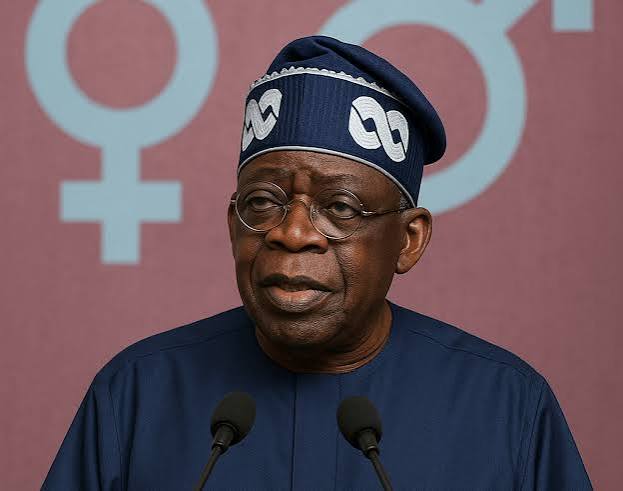
President Bola Tinubu has charged local government councils across Nigeria to turn financial autonomy into tangible development by prioritising food security, healthcare, education, infrastructure, job creation and support for local businesses.
Tinubu gave the directive in a speech delivered by the Secretary to the Government of the Federation, George Akume, at the National Conference for Chairmen of the 774 Local Government Councils and Chairmen of Traditional Rulers’ Councils in Nigeria, which opened in Abuja on Tuesday.
The three-day conference, with the theme, “Cascading President Bola Tinubu’s Renewed Hope Agenda to the Grassroots,” is focused on strengthening the role of local governments and traditional institutions in delivering government programmes to communities.
The President said the effectiveness of government policies should be judged by their impact on ordinary Nigerians rather than by announcements made in the Federal Capital Territory.
“The true test of policy is not what is announced in Abuja, but what changes in our worlds, villages, towns and communities,” Tinubu said.
He urged council chairmen to ensure that residents experience improvements in primary healthcare, basic education, rural roads, access to safe water, agricultural production, small businesses and opportunities for women and young people.
Tinubu said the financial autonomy granted local governments following a Supreme Court judgment had increased the responsibility of elected council officials to provide measurable results.
“Local government autonomy is not an end in itself; rather, it is an instrument for service and development,” he said.
According to the President, council officials have the advantage of understanding the specific challenges confronting their communities, including shortages of medicines in health centres, farmers’ need for support and the lack of opportunities for young people.
He therefore called for evidence-based planning, greater use of technology and reliable statistics in the design and implementation of local development projects.
Tinubu said local governments should evolve into “centres of planning, delivery, early warning and measurable results” instead of remaining passive recipients of Federal Government programmes.
He also urged councils to work actively with the Federal Government as development partners and strengthen their capacity for coordination and innovation.
FG Moves to Track Council Projects Electronically
The Permanent Secretary, Federal Ministry of Special Duties and Intergovernmental Affairs, Dr Onwosoro Maduka Ihemelandu, disclosed that the Federal Government was developing stronger mechanisms to monitor projects and interventions at the local government level.
Ihemelandu said the ministry had identified gaps in project information, geographical identification, implementation monitoring, verification, coordination and access to reliable data for decision-making.
He said the ministry planned to upgrade its existing electronic monitoring system by introducing an E-Tracking component that would allow projects to be monitored collaboratively with local government chairmen and other stakeholders.
The system, he explained, would capture project locations, sectors, implementing authorities and contractors, project costs, timelines, fiscal progress, field evidence, risks and challenges.
According to him, the proposed system would improve the visibility of government projects, strengthen monitoring and verification, and provide timely information for management decisions.
Ihemelandu also said the conference would support the administration’s food security drive, with participants expected to examine the use of modern technology in agriculture and food exports.
He said the programme was linked to an action plan to cultivate 1.5 million hectares of land in communities across the country.
Participants would also be exposed to investment opportunities in rural communities, including presentations on Canadian direct foreign investment.
Traditional Rulers to Support Grassroots Agenda
The Minister of Special Duties and Intergovernmental Affairs, Zaphaniah Bitrus Jisalo, said local governments and traditional rulers were critical to translating the Renewed Hope Agenda into tangible development at the grassroots.
Jisalo said the conference, approved by President Tinubu, was designed to strengthen collaboration among the Federal, state and local governments, with traditional rulers serving as key partners.
He described local government as the tier of government closest to the people and said its effectiveness was essential to translating national policies into practical development outcomes.
The minister said the conference would provide an opportunity to develop strategies for improving service delivery, strengthening intergovernmental relations, enhancing accountability and ensuring that government interventions reached their intended beneficiaries.
He also described traditional rulers as important stakeholders because of their influence and close relationship with communities.

By Tony Obiechina, Abuja
The Central Bank of Nigeria (CBN) came under fresh legislative scrutiny on Tuesday as the House of Representatives moved to investigate its use of delegated legislative powers and alleged financial irregularities, even as Governor Olayemi Cardoso announced a major reset of the Monetary Policy Rate (MPR) to 23 per cent.
The House Committee on Delegated Legislation unanimously resolved to investigate regulations, rules, guidelines, circulars, directives and other subsidiary legislative instruments issued by the apex bank, including their legal basis and financial implications.
The probe followed a motion sponsored by the member representing Bosso/Paikoro Federal Constituency of Niger State, Hon. Baraje Yusuf Kure, who said delegated powers must be exercised within the limits of the 1999 Constitution, as amended, and relevant laws enacted by the National Assembly.
The committee is also to examine whether fees, charges, penalties, expenditures and other financial obligations arising from CBN subsidiary legislation were properly authorised by law.
Deputy Chairman of the committee, Hon. Dominic Okafor, linked the investigation to concerns over the transparency of the CBN’s audited financial statements for 2024 and 2025, referring to allegations contained in the work of the President’s special investigator, Jim Obazee.
Okafor said unresolved questions over the apex bank’s financial reporting could have implications for confidence in government fiscal data, monetary policy, the banking system, foreign investment and Nigeria’s international reputation.
Committee Chairman, Hon. Richard Olufemi Bamisile, consequently directed the CBN to submit its summary consolidated financial statements for the years ended December 31, 2024 and December 31, 2025, together with relevant Financial Reporting Council documents and approvals.
The committee also directed KPMG, the CBN’s auditor, to submit copies of the audited accounts for the two years, while Obazee was asked to provide all evidence and documents supporting the allegations.
All requested documents are to reach the committee by October 6, 2026.
The committee is expected to invite CBN Governor Olayemi Cardoso and other officials of the apex bank, as well as representatives of the Financial Reporting Council, KPMG, E&Y, ICAN, ANAN and economist Bismarck Rewane.
The legislative action came on the same day Cardoso defended the performance of his three-year administration at the CBN, saying the bank had successfully returned to its core mandate of maintaining monetary and financial stability.
Speaking in Abuja after the 307th meeting of the Monetary Policy Committee (MPC), Cardoso said the current management inherited a financial system characterised by declining confidence, currency depreciation, high inflation and a dysfunctional foreign exchange market.
He cited the unification of the foreign exchange market, reduction of excessive Ways and Means financing, rebuilding of external reserves and banking-sector recapitalisation among the major reforms undertaken since 2023.
“At that time, confidence had been lost in the bank and in the country,” Cardoso said, adding that the CBN’s task had been to restore stability and rebuild confidence in the naira and the wider economy.
Against that backdrop, the MPC announced a 350-basis-point reduction in the MPR, from 26.5 per cent to 23 per cent.
The committee also recalibrated the standing facilities corridor to +50/-300 basis points around the MPR, while retaining the Cash Reserve Requirement at 45 per cent for deposit money banks, 16 per cent for merchant banks and 75 per cent for non-Treasury Single Account public-sector deposits.
Cardoso, however, stressed that the rate adjustment should not be interpreted as a shift away from a restrictive monetary policy stance.
“We will stay on the course, which has been a restrictive one, for as long as we have to,” he said, describing the decision as an operational “reset and recalibration” designed to improve monetary policy transmission.
The governor said the gap between the MPR and prevailing interbank rates had weakened the effectiveness of the benchmark, while the adoption of a transaction-based overnight market benchmark had improved transparency in money-market operations.
He said improved economic fundamentals had created room for the adjustment, pointing to moderating inflation, stronger foreign-exchange reserves and improved external-sector conditions.
Nigeria’s gross external reserves stood at $55.25 billion as of September 18, 2026, while the balance-of-payments surplus rose to $3.51 billion in the second quarter from $2.38 billion in the first quarter.
The current-account surplus also increased to $7.54 billion from $4.49 billion.
Inflation continued to moderate, with headline inflation falling marginally to 15.39 per cent in August from 15.43 per cent in July. Food inflation declined to 19.57 per cent, while core inflation fell to 13.29 per cent.
The economy also recorded stronger growth in the second quarter, with real GDP expanding by 4.43 per cent, compared with 3.89 per cent in the first quarter.
Despite the improving indicators, the MPC identified geopolitical tensions and election-related spending as potential sources of renewed inflationary pressure.
Cardoso said the CBN had developed scenarios for managing liquidity during the approaching election cycle and would monitor currency in circulation, monetary aggregates, banking-system liquidity and foreign-exchange demand.
“We are ready,” he said, adding that the apex bank would deploy appropriate instruments to mop up excess liquidity when necessary.
The governor also said increased diaspora remittances had strengthened Nigeria’s external position, with monthly inflows rising from about $200 million when the reforms began to almost $1 billion by July.
He said the CBN’s broader reforms, including stronger oversight of international money-transfer operators and expanded access to Bank Verification Numbers for Nigerians abroad, had contributed to the improvement.
Cardoso further pointed to a newly signed fiscal-monetary coordination agreement between the CBN and the Federal Ministry of Finance as a mechanism for institutionalising coordination as Nigeria moves towards an inflation-targeting framework.
While the CBN presented the rate reset and improving macroeconomic indicators as evidence of progress in monetary policy management, the House investigation is set to subject the bank’s regulatory instruments and financial disclosures to legislative scrutiny.
The committee said it would, after reviewing the documents and hearing from relevant stakeholders, adopt its findings and recommendations and, where necessary, seek further directives from the House.
The MPC’s next meeting is scheduled for November 23 and 24, 2026.




Tompolo’s Grassroots Movement Unveils 44 Vehicles, Other Campaign Materials in Borno
ShareThe PBAT Door-to-Door Movement has commenced mobilisation in Borno State to rally support for the reelection of President Bola Ahmed...


Customs Recruitment: Nearly 3,000 Candidates Screened Without Casualty
ShareBy Tambaya Julius, Abuja The Nigeria Customs Service (NCS) has concluded the final phase of its 2025 recruitment exercise, with...


NUPRC, Indonesia Open Talks on Oil Investments as Pertamina Eyes 2026 Licensing Round
ShareThe Nigerian Upstream Petroleum Regulatory Commission (NUPRC) has opened discussions with Indonesia on petroleum investments, with Indonesian national oil company...


RMAFC Inaugurates Planning Committee for China Oil & Gas Investment Forum
ShareBy Tony Obiechina, Abuja The Revenue Mobilisation Allocation and Fiscal Commission (RMAFC) has inaugurated a Planning Committee to coordinate preparations...
Advancing Food Security through ONSA AgriShield Initiative
ShareBy Chido Onumah The Federal Government is strengthening the connection between national security and food security through the AgriShield Initiative,...


2027: NNPP Warns Public against Dealing with Impostors
ShareThe New Nigeria Peoples Party (NNPP) has warned the public against dealing with impostors parading themselves as candidates and leaders...


2027: INEC Harps on Proper Documentation, Archiving of Operational, Electoral Documents
ShareThe Independent National Electoral Commission (INEC) has stressed the need for proper archiving, cataloguing and documentation of operational and electoral...

Nigeria’s Airline Capacity Hits 1.19m Seats — FAAN
ShareBy David Torough, Abuja Nigeria’s scheduled airline capacity rose to 1.19 million seats in September 2026, representing a 37.4 per...

Tinubu to LGs: Make Local Government Autonomy Work
ShareBy David Torough, Abuja President Bola Tinubu has charged local government councils across Nigeria to turn financial autonomy into tangible...


CBN Faces Reps’ Probe, Slashes Interest Rate to 23 Per Cent
ShareBy Tony Obiechina, Abuja The Central Bank of Nigeria (CBN) came under fresh legislative scrutiny on Tuesday as the House...