
NEWS
Nigeria’s Economy Expands by 3.89 Per Cent in Q1 – NBS

By Tony Obiechina, Abuja
Nigeria’s economy expanded by 3.89 per cent in real terms in the first quarter of 2026, according to the latest Gross Domestic Product report released by the National Bureau of Statistics.
The figure represents an improvement over the 3.
13 per cent growth recorded in the corresponding period of 2025, reflecting stronger performance across key sectors of the economy, particularly agriculture and non-oil activities.According to the NBS, the agriculture sector recorded one of the most significant rebounds during the period under review, growing by 3.
15 per cent compared to the marginal 0.07 per cent growth posted in the first quarter of 2025.The industry sector also recorded improved performance, growing by 3.50 per cent from 3.42 per cent recorded in the corresponding quarter of last year.
Meanwhile, the services sector expanded by 4.31 per cent in Q1 2026, slightly lower than the 4.33 per cent growth recorded in the same period of 2025.
Despite the marginal decline, the sector remained the largest contributor to the nation’s GDP, accounting for 57.73 per cent of aggregate output, compared to 57.50 per cent recorded a year earlier.
The NBS disclosed that aggregate GDP at basic prices stood at N110.79tn in nominal terms during the quarter under review, higher than the N94.05tn recorded in Q1 2025, indicating a year-on-year nominal growth of 17.79 per cent.
The report further showed that Nigeria’s average daily crude oil production declined to 1.55 million barrels per day in the first quarter of 2026, lower than the 1.62 million barrels per day recorded in the corresponding period of 2025 and slightly below the 1.58 million barrels per day produced in the fourth quarter of 2025.
Despite the decline in production volumes, the oil sector recorded real growth of 2.57 per cent year-on-year during the quarter, an improvement from the 1.87 per cent growth posted in the same period of 2025.
However, the growth rate represented a slowdown of 4.22 percentage points when compared with the 6.79 per cent growth recorded in the fourth quarter of 2025.
On a quarter-on-quarter basis, the oil sector recorded a growth rate of 9.31 per cent in Q1 2026.
The sector contributed 3.92 per cent to total real GDP during the quarter under review, slightly lower than the 3.97 per cent contribution recorded in the first quarter of 2025 but higher than the 2.87 per cent contribution posted in the preceding quarter.
The non-oil sector continued to drive overall economic growth, expanding by 3.94 per cent in real terms during the reference quarter. The growth rate was higher than the 3.19 per cent recorded in Q1 2025, although marginally lower than the 3.99 per cent recorded in the fourth quarter of 2025.
According to the NBS, the sector’s growth was driven mainly by Information and Communication Technology, particularly telecommunications, alongside agriculture, trade, cement manufacturing, financial institutions, real estate, construction, and transportation and storage activities, especially road transport.
The non-oil sector accounted for 96.08 per cent of Nigeria’s GDP in real terms during the quarter, slightly higher than the 96.03 per cent contribution recorded in the corresponding period of 2025, but lower than the 97.13 per cent contribution recorded in the fourth quarter of 2025.
Within the Mining and Quarrying sector, crude petroleum and natural gas remained the dominant activities, accounting for 91.08 per cent of the sector’s total contribution in Q1 2026.
The Mining and Quarrying sector recorded nominal growth of 13.92 per cent year-on-year during the review period. Crude oil activity posted the highest growth among the sector’s sub-activities at 16.37 per cent, followed by Quarrying and Other Minerals at 14.55 per cent.
Compared to the first quarter of 2025 and the fourth quarter of 2025, the sector recorded increases of 19.25 percentage points and 41.95 percentage points respectively.
Overall, the Mining and Quarrying sector contributed 4.23 per cent to aggregate GDP in the first quarter of 2026, lower than the 4.38 per cent contribution recorded in the corresponding quarter of 2025 but higher than the 2.15 per cent contribution posted in the preceding quarter.
In real terms, the sector grew by 1.89 per cent year-on-year in Q1 2026, representing a decline of 1.08 percentage points compared to the same quarter of 2025 and a decline of 7.01 percentage points relative to the fourth quarter of 2025.
Quarter-on-quarter, the Mining and Quarrying sector recorded a growth rate of 4.79 per cent in the first quarter of 2026.
Its contribution to real GDP stood at 4.14 per cent during the period under review, lower than the 4.22 per cent recorded in the corresponding quarter of 2025 but higher than the 3.16 per cent contribution recorded in the fourth quarter of 2025.
National fencing coach, Ibrahim Alogba, has expressed confidence that Nigeria will make a strong impression at the 2026 Commonwealth Fencing Championships in Lagos as preparations continue for the competition.
Alogba said on Sunday in Lagos that the country’s fencing team had continued to improve and was determined to compete well against more experienced nations.
He said Nigeria might still be developing in fencing when compared with countries that had spent many years in the sport, but the progress made by Nigerian athletes in recent years had been encouraging.
According to him, the focus remains on building a disciplined and competitive team that can proudly represent the country and challenge strongly on the international stage.
“We are preparing seriously and our athletes understand the importance of this championship because it will be hosted here in Lagos.
“Our goal is to put together a team that is focused, disciplined and ready to compete at a high level.
“We know there are countries with more experience than us, but we are improving steadily and the athletes are becoming more confident with every competition,” he said.
Alogba said one of the biggest factors behind the improvement in the team had been international exposure.
He said that Nigerian fencers who had competed outside the country were beginning to understand better what top-level fencing required.
He said international tournaments had helped the athletes improve their concentration, tactical decisions and ability to remain calm under pressure.
“Competing abroad has helped our fencers a lot because they now understand the speed, discipline and consistency needed at the highest level.
“It has also helped them believe more in themselves because they have seen that the gap is not impossible to close.
“With the right preparation and the right mindset on competition day, we can compete strongly and challenge top teams,” he said.
The coach said while medals could not be guaranteed in sports, the team remained hopeful and fully committed to delivering strong performances.
He added that the immediate target was to reach the advanced stages of the championship and gain valuable results from there.
“For us, every competition is an opportunity to improve and become stronger.
“If we can execute our plans well and stay focused, we believe we can go far and make Nigerians proud,” he said.
Alogba also said the 2025 African Championships gave the team useful lessons and helped the athletes understand the level required to compete against the continent’s best.
He noted that the experience also exposed areas where more work was needed while increasing the team’s confidence ahead of future competitions.
The coach acknowledged the challenge of managing athletes based in Nigeria and others living abroad, but said regular communication and proper structure had made coordination easier.
He said home-based athletes continued to receive steady training locally, while foreign-based athletes also remained connected with the national team and followed expected standards.
“We keep close contact with the athletes outside Nigeria and their international experience is important for the team.
“The goal is to have one standard and one clear direction no matter where the athletes are based,” he said.
Alogba said Nigeria would also take part in the 2026 African Championships in Abidjan later this month as part of efforts to improve performance, gain more exposure and boost rankings.
He said the final list for that competition would be decided based on form, fitness and readiness.
He added that the technical crew remained focused on fielding the strongest possible team while continuing to build for the future.
Alogba expressed optimism that with continued hard work and support, Nigerian fencing would continue to grow and compete better internationally.
He said the country was not preparing only to host the Commonwealth Championships, but also to make a lasting impact.
“We are not going there just to participate.
“We want to compete well, gain more experience and show that Nigerian fencing is moving forward,” he said.
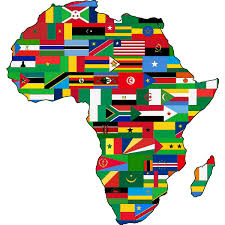
Crowds gathered in the Royal Square in Jersey to mark Africa Week in the island.
The charity Friends of Africa hosts events through the week to share the continent’s culture with the wider community.
As part of the campaign, Friends of Africa helps to set up food stalls, fashion displays and music performances for the public in St Helier.
One of the charity’s founders, Lainah Pentilla said: “We’re sharing my culture, we want to share Jersey’s culture as well and let the community be one.
”The campaign Africa Week has been running in Jersey for the last 11 years and Pentilla said engagement had grown over the years.
“It’s getting bigger and bigger and bigger every year,” she said, adding: “Our aim is for people to know that Jersey is welcoming, Jersey is diverse, Jersey is willing to understand where people are coming from.”
Pentilla added: “My son is born here, he’s a Jersey boy and I just want our young children to be proud of their heritage and be proud to be from Jersey as well
“Jersey is a small island but it’s the most important to make sure that we’re all one and make sure that people are celebrating each other.”

The International Court of Justice (ICJ) has ruled that citizens’ right to strike is protected under a core International Labour Organization (ILO) convention.
The UN World Court, in a landmark advisory opinion of 10 votes to four, settled a long-running dispute between workers and employers worldwide.
Based in The Hague, the ICJ is the United Nations’ principal judicial organ and is composed of 15 judges elected by the UN General Assembly and Security Council.
ICJ ruled “the right to strike of workers and their organizations is protected” under the Freedom of Association and Protection of the Right to Organise Convention, 1948 (No.
87).Convention 87 of 1948 guarantees workers and employers the right to establish and join organizations of their own choosing without prior authorization, ensuring they can operate freely without state interference.
The Court, however, stressed that its opinion did not define the exact scope of the right to strike.
Its conclusion, the judges held, “it does not entail any determination on the precise content, scope or conditions for the exercise of that right.”
The case was referred to the Court by the ILO’s Governing Body in November 2023, after years of disagreement among the agency’s core constituents – governments, employers and workers.
The disagreement bothered on whether Convention No. 87 protects the right to strike, even though the treaty does not explicitly mention strikes.
At the heart of the dispute was whether the right to organize under Convention No. 87 includes the right of workers and their organizations to take strike action.
Employers’ groups stress that the convention contains no provision whose ordinary meaning implies such a right, and that the treaty’s drafting history showed no intention to include strike action.
Workers’ representatives, by contrast, argue that the right to strike is inherent in freedom of association and has long been recognized by ILO supervisory bodies.
The ILO said its Governing Body is expected to consider the matter at its November session, including any follow-up.
The Court acknowledged that Convention No. 87 “does not contain an explicit reference to the right to strike”.
ICJ, however, said the absence of such a provision “does not necessarily mean that the issue is excluded” from the treaty.
The judges found that strike action could fall within the ordinary meaning of workers’ organizations’ “activities” under the Convention.
The judges added that strike action could also fall within provisions protecting the right of workers and employers to form organizations and defend their interests.
While the Court was unanimous that it had jurisdiction and should answer the ILO’s request, four judges dissented from the central conclusion.
The case was only the second time in ILO history that a question concerning interpretation of an international labour convention had been referred, and the first such request to the ICJ since its creation in 1945.
ICJ advisory opinions are not binding judgments but they carry significant legal and political weight, shaping debates and national and international law.



Nigeria’s Economy Expands by 3.89 Per Cent in Q1 – NBS
ShareBy Tony Obiechina, Abuja Nigeria’s economy expanded by 3.89 per cent in real terms in the first quarter of 2026,...


Gunmen Abduct 10 from Emir’s Palace, Attack Police Station in Kwara
ShareBy Julius Tambaya, Abuja The Kwara State Police Command has confirmed that gunmen have kidnapped 10 people from the Yashikira...

INEC Rejects Court Nullification of 2027 Election Timetable
ShareYouth Party Suit Hypothetical, Lacks Merit, Says Commission The Independent National Electoral Commission (INEC) has approached the Court of Appeal...
ATAF Generates $907.8m in Tax Assessments in 2025
ShareBy Tony Obiechina, Abuja The African Tax Administration Forum (ATAF) ATAF-supported audit interventions in member countries generated USD 907.8 million...

Tin-Can Customs Records N1.61tr under Onyeka Leadership
ShareImmediate past Customs Area Controller, Nigeria Customs Service (NCS), Tin-Can Island Port Command, Assistant Comptroller-General Frank Onyeka, has handed over...

Wabara Lauds Otti over Ariaria Int. Mkt Project, Proposed Abia Seaport
ShareThe former Senate President, Adolphus Wabara, has commended Gov. Alex Otti for his transformative agenda, including the ongoing remodeling of...
Efiko Relaunches EPaperVendor Platform with Expanded Knowledge Resources.
ShareBy Raphael Atuu, Abuja Efiko Management Consulting has unveiled a revamped version of its digital newspaper and knowledge platform, EPaperVendor,...


Sallah: Dutse Residents Groan over Soaring Ram Price
ShareSome residents of Dutse in Jigawa have decried the rising price of ram and other sacrificial animals for the Eid-el-Kabir...
Hamzat, Adeniyi, Others Advocate Multi-stakeholder Collaboration on National Security Risks
ShareStakeholders at the maiden Enterprise Security Risk Management Conference in Lagos have called for stronger collaboration, intelligence-driven systems and technology-based...
Zaria Fistula Centre Repairs over 2,000 Cases, Flags Rising Medical Quackery
ShareThe Hajiya Gambo Sawaba General Hospital (HGSGH) Fistula Centre, Zaria, has successfully repaired over 2,000 obstetric fistula cases since its...