
Education
NIPR Presidential Aspirant, Neliaku Promises Africa’s First PR University

By Tony Obiechina, Abuja
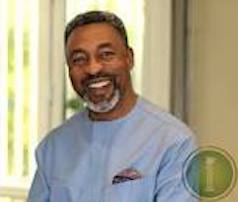
A leading candidate for the presidency of the Nigerian Institute of Public Relations (NIPR), Dr. Ike Neliaku, has promised to facilitate the establishment of Africa’s first Public Relations University in Nigeria and to initiate the development of a ‘Nigerian Reputation House’ in Abuja if and when elected.
Neliaku, who disclosed this during a chat with Newsmen in Abuja at the weekend, said he would conduct feasibility and viability studies for the eventual establishment of an NIPR-owned PR university and “expend the curriculum of, and transform the current, education advisory board into a Public relations School, to be a finishing school for PR practitioners in Nigeria and a prelude to Public Relations University of Nigeria.
”He also promised to reposition the national secretariat of the Institute “in terms of quality of staff, in terms of where it is located, in terms of activities, in terms of equipping it and in terms of repackaging it, because that is our first foot forward.”
He lamented that the NIPR was currently using a rented facility as its national secretariat, saying, “an institute that is 60 years this year – that is a no-no and it requires somebody that has the capacity and network to be able to do that. God so kind, we were able to secure a land from the Federal Capital Territory, for the national secretariat of the institute. But before that is done, we just must relocate from the plaza where we are to somewhere that is more befitting. This is because public relations is an image-making thing. It is a perception management platform. You can’t build reputation if your reputation has not been sorted out. You can’t make image if you don’t have image yourself.”
As a way of enhancing membership value and professional development, Neliaku, a respected Fellow of the NIPR, said he planned to complete the ‘cadreisation’ process of public relations practice in both the public and private sectors and deepen professional development programmes tailored to enhance skills and competencies of NIPR members.
“I will ensure that the Institute gives value addition to its members, both in terms of programmes and in terms of development. That is very key, because most times, people ask ‘what do we gain?’, he said.
He explained that the process of ‘cadreisation’ was on-going but that “we now have to complete it so that people can actually be happy to work as Public Relations officers in government in in the private sector so that when they retire, they can use it; they are certified by the Institute, they can retire as PR consultants and become PR experts all over the world.”
Neliaku, who served as Special Assistants to several ministers from 1992-2015, further said he would, if elected president of the NIPR, ensure the digitization of the Institute’s operations by establishing an electronic database system to effectively manage information related to NIPR members in teal-time nationwide.
He listed other priority areas to include empowering state chapters for greater viability and sustainability, ensuring regular compliance and strengthening of the rank and status of NIPR Fellows and, initiating and executing special projects for sustainable revenue generation.
Asked to explain his interest in become the President of the NIPR, Neliaku said, “I have always seen myself as a natural phenomenon in public relations. I began my career as far back as 1987 in the University of Jos when I was appointed Public Relations officer for a campus enterprise. At that early age I had not known public relations as an institution, but it’s something that I always enjoyed. And I enjoyed my work and I did so well by the Grace of God. And then, thereafter, I did youth service at the Nigeria Police Force, Imo State Police Command.
“ I served in the Public Relations department under the then Police Public Relations officer who is now retired. So, I did my one-year national service under him. Based on the work that I did, I became the best youth corps member in my local government. I became the best in the state and I became one of the best in the nation. Consequently, I was given a national award. That was during the era President Babangida. And that national award comes with an automatic employment. So, I found myself in the ministry of information as an information officer and then I began my career from there.
“Then I joined the institute because all information officers are expected to be members of NIPR. That’s how I enrolled into the institute as an associate. By 1995, I became a full member of the institute and by 2005, I became a fellow of the institute. And throughout my activities, I have eaten PR, I have spoken PR, I have slept on PR, I have woken up on public relations. So, it became part of me.
“I have also served in many other areas for the institute both at the state, chapter and national levels. In 2021, I was elected into the governing council. That gave me the opportunity to come to the close range with leadership of the institute, challenges of the institute, prospects of the institute, dynamics of the institute and I began to nurture the idea that more needed to be done.
“I had the opportunity of initiating a programme which was accepted by the governing council and that was the citizens summit for national integration for peace and security. Council felt it was a programme to take on and they graciously approved that I should chair the national planning committee for the citizens’ summit. Through that platform, I could see so many things that I thought could be done for the institute if given the opportunity. In terms of programmes, projects and other things, I see that we can do more.
On his chances in the August 24, 2023 NIPR elections, Dr. Neliaku said: “Looking at the dynamics of what is to be done, and knowing that I’m skilled and gifted, in most of those areas, I have shown interest. Most importantly, you cannot lead a people unless they want you to lead them. I have a very vibrant chapter that has called on me to come out. They felt I should be encouraged to run for this office. I must be honest and I must give it to them that they were the ones that started the process. The capacity is there, the understanding of what is required is there, the right emotional intelligence is there. In terms of the network, it is there. In terms of enjoying the respect of your colleagues, it is there. I will be denying the institute the great opportunity to turn things around.
Academic Staff Union of Universities (ASUU) has authorised 20 federal and state universities across Nigeria to commence varying degrees of industrial action.
The decision was reached during a critical National Executive Council (NEC) meeting held in Abuja between August 8 and 9, 2026.
ASUU National President, Prof.
Christopher Piwuna, disclosed this at the weekend, expressing the union’s deep frustration over the “haphazard implementation” of the landmark December 2025 FGN-ASUU Agreement.The union warned that a full-scale resurgence of campus unrest is now inevitable.
Regarding the 20 approved universities facing looming strikes, the NEC resolved to grant permission for industrial action once individual institutions successfully satisfy internal union requirements.
The affected institutions include: Adekunle Ajasin University, Akungba (AAUA); Nasarawa State University, Keffi (NSUK); Ibrahim Badamasi Babangida University, Lapai (IBBUL); University of Medical Sciences, Ondo (UNIMEDO); Gombe State University (GSU), Gombe; Plateau State University (PLASU), Bokkos; Emmanuel Alayande University of Education (EAUED), Oyo; Ambrose Alli University, Ekpoma (AAUE); Olusegun Agagu University of Science and Technology (OAUSTECH), Okitipupa; Abia State University (ABSU), Uturu; University of Education and Entrepreneurship (UEE), Akamkpa; Kaduna State University (KASU), Kaduna.
Others are Aliko Dangote University of Science and Technology (ADUSTECH), Wudil; Northwest University, Kano (NWUK); Enugu State University of Science and Technology (ESUT), Enugu; Imo State University (IMSU), Owerri; Niger Delta University (NDU), Wilberforce Island; University of Africa, Toru-Orua (UAT); Bayelsa Medical University (BMU), Yenagoa; and Taraba State University (TSU), Jalingo.
ASUU also disclosed that the implementation status of universities within the Lagos Zone is currently under review, with separate declarations expected in due course.
Speaking on the core grievances driving the crisis, ASUU noted that while Vice-Chancellors at the federal level face severe challenges due to underfunded monthly salary bills, the situation at the state level is considerably worse.
According to the union, only about 10% or fewer of state governors have openly endorsed the new salary package established in December 2025.
The rest were accused of “playing the ostrich” and passing financial burdens onto Governing Councils that lack the funding to back them.
The union also explicitly blamed officials within the Federal Ministry of Finance and the Office of the Accountant-General of the Federation. These bodies are accused of deliberately stalling promotion arrears, dragging their feet on monthly salary releases, and illegally withholding the remittance of academics’ deductions to their respective Pension Fund Administrations (PFAs).
Furthermore, ASUU raised concerns over the unpaid, withheld three-and-a-half months’ salaries dating back to the 2022 nationwide strike. While ASUU initially praised President Bola Tinubu for releasing four months of those salaries, the refusal to remit the balance has left a “strong bitter taste.”
The union also condemned the prolonged delays in paying the 25/35% wage award and outstanding promotion arrears to its members.
Meanwhile, ASUU issued a stern warning regarding the recent harassment of its branch leaders and members by Vice-Chancellors at ESUT, IMSU, and ABSU.
The NEC declared that it will strictly refuse to call off any industrial action in these specific institutions until all forms of victimization stop completely.
Beyond the immediate academic crisis, the NEC reviewed the worsening socio-political and economic landscape of Nigeria.
The union strongly condemned the ongoing atmosphere of pre-election violence, political killings, and economic instability as the country approaches upcoming election cycles, noting that these existential threats directly undermine the living and working conditions of everyday Nigerians and university lecturers alike.
Despite praising the mediation efforts of Senator Lanre Tejuoso, the Chairman of the Implementation Monitoring Committee (IMC), ASUU maintains that it will stop at nothing to enforce the full scope of the agreement.
The union has announced that it will convene an emergency NEC meeting in the next few weeks to appraise the situation. If the government fails to act swiftly to clear outstanding financial entitlements and halt the harassment of lecturers, a wider, coordinated national academic shutdown may follow.
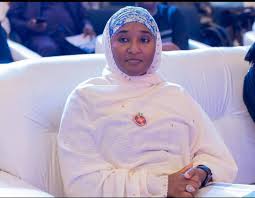
The Minister of State for Education, Prof. Suwaiba Ahmad has expressed satisfaction with the conduct of the National Examinations Council (NECO) Computer-Based Test (CBT) Senior School Certificate Examination,
Ahmad, while monitoring the ongoing examination at Redeemers Teap School and Anglican Girls’ Grammar School on Wednesday in Abuja, described the exercise as a major step towards eliminating examination malpractice.
She said feedback from candidates at both centres indicated that most of them preferred the CBT format to the traditional paper-based examination.
According to her, the candidates also confirmed that they experienced no technical glitches and that the examinations commenced on schedule.
”I spoke with a lot of the students and most of them said they prefer the CBT examination.
”They also confirmed that they had not seen the examination questions before the test and that each candidate answered a different set of questions randomly.
”The CBT makes communication between candidates impossible and is one of the best ways of tackling examination malpractice,” she said.
The minister said the successful deployment of CBT represented significant progress in the education sector, adding that the government would only proceed with full transition after ensuring adequate infrastructure nationwide.
”We will not begin the full transition until we have everything in place because we do not want to put any student at a disadvantage.
”We are working with the National Assembly, state governors, private partners and other stakeholders to provide the facilities required for a seamless nationwide transition,” she said.
Ahmad added that the adoption of CBT would ultimately improve the quality of education by promoting merit and integrity in examinations.
Also speaking, the Registrar of NECO, Prof. Ibrahim Wushishi, said the council recorded no technical hitch since the commencement of the examination.
”They assured me that since the commencement of this year’s examination, they have not experienced any technical glitch. The exams were ready, they started on time, no hiccups, no network problems, nothing like that.”
He disclosed that 1,378,048 candidates registered for this year’s Senior School Certificate Examination, with female candidates slightly outnumbering their male counterparts.
According to him, the increasing participation of girls reflects the impact of government policies promoting girl-child education.
Wushishi also said NECO had about 10 CBT centres in the Federal Capital Territory (FCT), adding that the council is expected to release the examination results by the first week of September to support the 2026 admission process.
He reaffirmed that the CBT system, through question randomisation, had greatly reduced opportunities for examination malpractice while enhancing the credibility of the examination process.
One of the candidates, Ambassador Alabi, from Redeemer’s teap described the CBT experience as seamless and more convenient than the traditional paper-based examination.
Another Candidate from the Anglican girls school Isaac Abioro said CBT examination has been efficient and easy to answer questions and there have not been any technical glitch in the process so far
On her part the Principal of Anglican Girls’ Grammar School, Mrs Nkiruka Nwafor, said the transition to CBT was preparing students for a technology-driven future.
According to her, the school adopted the system early to familiarise students with computer-based examinations before external assessments.
”The CBT experience is what we’ve all been waiting for. The future our girls are going into is dynamic and heavily ICT-driven.
”We are excited that our proprietor got on board. We have also introduced CBT for some of our internal examinations so that from JS1 and JS2, the students gradually get used to the system. So it’s about time, and it’s good that it’s happening,” she said.
The monitoring exercise at Redeemer’s Teap Secondary School and Anglican Girls’ Grammar School showed candidates writing the examination in an orderly environment without reported technical challenges.
By Tony Obiechina, Abuja
The Federal Government has suspended the proposed review of registration fees for the 2027 West African Senior School Certificate Examination (WASSCE) and the National Examinations Council (NECO) Senior School Certificate Examination (SSCE).
The federal government last week announced the jacking up of the fees from N27,500 to N50,000.
However, in a statement on Monday July 13, 2026, signed by Director, Press and Public Relations, Boriowo Folasade, the Federal Ministry of Education announced that the letter conveying the proposed fee adjustment, dated June 18, 2026, has been withdrawn to allow for a comprehensive review and broader consultations with all relevant stakeholders before a final decision is taken.
According to the statement, the Ministry acknowledged the concerns and constructive feedback received from the public and appreciates the keen interest shown by Nigerians in matters relating to access to quality education.
The statement read: “The proposed review was informed by the prevailing economic realities and the rising cost of conducting credible national examinations.
“The current examination registration fees have remained largely unchanged for several years despite significant increases in operational costs, including logistics, security, printing of examination materials, technology deployment, quality assurance and other essential services required to maintain the integrity and credibility of public examinations across the country.
“Nevertheless, the Honourable Minister of Education, Dr. Maruf Tunji Alausa, has directed that the proposal be placed on hold in line with the Federal Government’s commitment to inclusive, transparent and evidence-based policymaking.
“This decision underscores the Ministry’s determination to ensure that policies affecting millions of Nigerian students and their families are carefully considered, socially responsive and reflect the collective interest of the nation.
“As part of the fresh review process, the Ministry will further engage extensively with examination bodies, State Ministries of Education, school proprietors and administrators, parents’ associations, organised labour, education stakeholders and other critical partners to ensure that any future decision is fair, sustainable, transparent and responsive to prevailing realities while safeguarding access to education.
“Accordingly, the proposed review of examination registration fees will not take effect, as earlier communicated, pending the conclusion of the consultation process.
“The Federal Ministry of Education reassures Nigerians that the welfare of students, equitable access to quality education and responsible policy decisions remain at the heart of the Renewed Hope Agenda of President Bola Tinubu, for the education sector.
“The Ministry appreciates the understanding, patience and continued support of all stakeholders and remains committed to keeping the public fully informed throughout the consultation process.”, it added.



NDC Eti-Osa Primary: Youths Reject Alleged Imposition, Demand Justice for Akano
Share By Tambaya Julius, Abuja Nigeria Democratic Congress (NDC) candidate, for the Lagos State House of Assembly seat for Eti-Osa...
Cheap Surgery, Costly Injustice
ShareBy Fransiscus Nanga Roka The flourishing market in overseas cosmetic surgery offers you a dream — the promise of a...

NUJ Felicitates Babangida at 85
ShareBy Dan Amasingha, Minna The Nigeria Union of Journalists (NUJ), Niger State Council, has congratulated former Military President, General Ibrahim...


Why I Married My Husband In Our Living Room – Ronaldo’s Wife
ShareGeorgina Rodríguez has disclosed that she chose their everyday family space to get married to Cristiano Ronaldo so that their...
ASUU Approves Strike in 20 Varsities over Breached 2025 Agreement
ShareAcademic Staff Union of Universities (ASUU) has authorised 20 federal and state universities across Nigeria to commence varying degrees of...

Nigeria’s Inflation Rate Drops to 15.43 Per Cent in July – NBA
ShareBy Tony Obiechina, Abuja Nigeria’s headline inflation rate fell to 15.43 per cent in July 2026, down from 15.91 per...

Igbinedion Varsity, EduTech Global Partner On Digital Education, Access
ShareBy Julius Tambaya, Abuja Igbinedion University, Okada, one of Nigeria’s leading private universities, has entered into a strategic partnership with...


Xenophobia: FG Evacuates 83 More Nigerians from South Africa
ShareBy David Torough, Abuja The Federal Government has announced the arrival of another batch of 83 Nigerians evacuated from South...
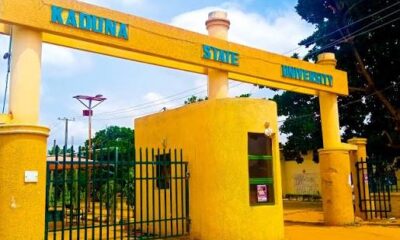

Kaduna Varsity Lecturers’ Exodus Worsens as ASUU Issues Strike Ultimatum
ShareFrom Agbo Emmanuel, Kaduna More than 200 lecturers, including professors and other experienced academic staff, have left Kaduna State University...


NES 32 to Drive National Dialogue on Jobs, Productivity, Shared Prosperity
ShareBy Ayanyinka Ayanlowo Nigerian Economic Summit to Chart the Next Phase of Nigeria’s Economic TransformationThe Nigerian Economic Summit Group (NESG)...