
Oil & Gas
NNPC Weekly Review: Facts Behind NNPC N287bn Profit after 4 Decades

The Nigerian National Petroleum Corporation (NNPC) has made the country proud in the week with the release of its 2020 audited report and the posting of ₦287 billion profit after tax in the 2020 financial year.
This achievement was the first of its kind since its 44 years existence.
The Group Managing Director, Malam Mele Kyari, while addressing newsmen in Abuja gave insight into the measures adopted by his management to achieve the feat.
He attributed the turn-around of the Corporation from a loss of ₦803bn in 2018 to profit of ₦287bn in 2020 to the aggressive implementation of cost-cutting measures, improved efficiency through business automation, emphasis on commercially-focused investments and non-interference in the management of the Corporation from any quarters.
Kyari also added that the Corporation saved a lot of cost through contract renegotiation by up to 30 per cent on the heels of the Covid-19 pandemic, introduction of technology that drastically cut travel cost through reduction in in-person meetings and the general automation of processes that enhanced efficiency across the group’s businesses.
He said that Management’s focus on the prioritisation of investment and staff welfare also helped in boosting the Corporation’s overall productivity and bottom line.
Also, the Minister of State for Petroleum Resources, Chief Timipre Sylva, congratulated the GMD, Management and staff of the Corporation on the feat of posting profit for the first time since its incorporation in 1977.
He said NNPC’s emergence from loss into profitability, coming shortly after the signing into law of the Petroleum Industry Bill, was a proud moment for him, adding that this was a season of achievements for the nation’s oil and gas sector.
Still on the week under review, the Nigerian Petroleum Development Company Limited (NPDC) a subsidiary of the NNPC pledged cooperation with the Ogoni people to resume oil exploration in the abandoned oil wells for the benefit of the community and the country.
The Managing Director of NPDC, Mr Mohammed Ali-Zarah, said the company understood the concerns and yearnings of the Ogoni people and shared in their pain.
He said NPDC and the Federal Government would work with the Ogoni people to bring development, employment and growth to the land, remediate the environment and ensure that future exploration and production activities do not impact negatively on the environment.
Ali-Zarah further said the event organized by the Ogoni Liberation Initiative and the large turn-out of people, including traditional rulers, have buoyed NPDC’s confidence in its re-entry plan.
He observed that it was in the best interest of the country to speedily restore the environment of Ogoniland and create the needed condition for the social economic development of the communities.
On the communique submitted by the Ogoni Liberation Initiative signed by leaders of various communities that make up Ogoni land, Mr Ali-Zarah assured them that he would send the document to the management of the NNPC for onward transmission to the relevant quarters, including the Presidency.
Earlier, the Convener and leader of the Ogoni Liberation Initiative, organizers of the event, Rev. Douglas Fabeke, said the Ogoni people welcomed with great joy the intervention of the Federal Government and the takeover of the oil assets by NPDC following the judgement of the Appeal Court in Abuja.
He described the judgment and subsequent takeover of the assets by NPDC as liberation for the Ogoni people, stressing that the people of Ogoni have “looked forward to this freedom over the years”.
Rev. Fabeke assured the Federal Government that the people of Ogoni would support all efforts aimed at restoring the environment and exploring its huge natural resources for the benefit of the people.
He called on Ogoni leaders to eschew bitterness and work with the Federal Government to ensure that the people benefitted from the resources in their land.
He submitted a communique on behalf of the people of Ogoni to the Federal Government as the request of Ogoni people and as condition for the mutual relationship between the people and NPDC.
Oil production operations were suspended in Ogoni land in the early 1990s due to disruptions caused by local unrest. The oilfields and other installations have since largely remained dormant.
Hope was, however, rekindled recently following an Appeal Court judgment that paved the way for NPDC to take over the operatorship of the oil assets in Ogoni land from Shell.
Also, the GMD received accolades from the House of Representatives Committee on Finance for providing detailed explanations on some burning oil industry issues at an interactive session on the 2022-2024 Medium Term Expenditure and Revenue Framework (MTERF) and Fiscal Strategy Paper (FSP).
Chairman of the House Committee on Finance, Hon. Abiodun Faleke, commended the GMD for providing an in-depth explanation and insider perspective on some issues surrounding the operations of the NNPC and the oil industry stating: “You have made our day. The committee is better informed based on explanations provided by the GMD.”
Kyari, in his presentation, provided a base oil price scenario in the medium term as follows: 57 dollar per barrel for 2022, 61dollar per barrel for 2023 and 62 dollar per barrel for 2023.
He explained that the assumptions were arrived at after a careful appraisal of the three-year historical dated Brent Oil Price average of 59.07 dollar per barrel premised on Platts Spot Prices.
“Price growth is to be moderated by the lingering concerns over COVID-19, increased energy efficiency, switching due to increased utilization of gas and alternatives for electricity generation. These are reflected in the Medium Term Revenue Framework’’ Kyari said.
On the perennial issue of smuggling of petroleum products, Kyari implored the National Assembly to come to the aid of the Corporation in battling the menace, noting that the Corporation, based on the directive of Mr President, had mobilised some federal agencies like the Customs, the Economic and Financial Crimes Commission (EFCC), the police, Civil Defence Corps and others, to find workable solutions to the menace.
On the propriety of establishing NNPC Retail stations in neigbouring countries to curb the challenge of illegal haulage of petroleum products across the border, Kyari said though the NNPC once considered the option, it had to jettison the idea when it became imperative that the measure would be counterproductive.
He explained that people who are smuggling are not looking for officially priced petroleum products noting that going ahead to establish NNPC Retail stations would not yield the desired result since the people who take products across the border are not interested in selling at the official prevailing prices at approved stations but are interested in under the counter deals.
The GMD also provided detailed explanation on the Corporation’s equity shareholding interest in Dangote Refinery, noting that the package which was at the instance of NNPC is designed to guarantee national energy security.
He said the equity interest was secured after due consideration of the national interest and best possible options.
“We will have right to 20 per cent of production from this facility. We structured our equity participation on the basis that the refinery must buy at least 300,000 barrels of crude oil per day of our production. This guarantees our market at a period where every country is struggling to find market for their crude oil’’
In the week under review, Sylva and Kyari were honoured for their leadership and transformational roles in the nation’s oil and gas industry at the 2021 Offshore Technology Conference (OTC), in Houston, Texas, United States.
Sylva bagged the Africa Leadership Award while Kyari was conferred with the Transformational Leadership Award at the Energy and Corporate Africa Leadership Award Night/Dinner.
Receiving the award on behalf of the GMD, the corporation’s Group Executive Director, Upstream, Mr Adokiye Tombomieye said the award would spur the NNPC management to remain focused on delivering its mandate to Nigerians, by making the NNPC an integrated energy company of global excellence.
The Nigeria petroleum industry under the leadership of President Muhammadu Buhari, Minister of State, Chief Timipre Sylva and the Group Managing Director of the NNPC, Malam Mele Kyari has undergone a remarkable transformation in recent years, the climax of which was the signing of the Petroleum Industry Act, PIA, by the president on Aug. 16.
Commenting on the Petroleum Industry Act (PIA) signed by the president, Kyari described it as a big relief to the petroleum industry which would bring prosperity not only to the host communities, but to all Nigerians.
He said the PIA has taken the interest of all stakeholders into consideration, adding that there would be no difficulties in the implementation of the new law.
Also in the week , the NNPC Advance Leadership Programme Class 099 extended its hand of charity to the Mararaba Gurku community in Nasarawa State with the rehabilitation and donation of equipment to the Primary Healthcare Centre in the community.
Speaking at the commissioning and handing over of the project, the Manager, Leadership Development of the Talent Management Department, Mrs Nkechi Anaedobe, said that the Corporate Social Responsibility project was a practical display of the leadership principles taught to members of the class, stressing that one cannot be a leader without thinking of others.
The President of the Class which is also known as “Phoenix”, Mr. Ahoemwen Aibangbee, explained that the choice of the project was informed by the general poor state of healthcare facilities and services in Nigeria.
Also, Chairman of the CSR committee of the class, Mr Adams Agbo, explained that the choice of the location of the project was informed by the huge population of Nigerians who reside in the community, adding that the project was targeted at impacting as many people as possible in keeping with Corporation’s slogan: “We touch your lives in many positive ways”.
Receiving the donated items, the officer in charge of the PHC, Mrs Dorcas Haruna, said the centre would be able to admit eight patients at a time, adding that they would put the power generating set and other equipment to good use.
She also thanked the class and the NNPC for this generous gesture.
The intervention of the NNPC ALP Class 099 in the health Centre include the painting of the exterior of the Centre, installation of interlocking tiles, donation of a 7.5KVA generator, two delivery beds, three observation beds, sampling bottles for laboratories, eight complete sets of hospital beds which include mattresses, side lockers and drip stands.
A subsidiary of the corporation, the Gas Aggregation Company of Nigeria (GACN) and the Kaduna State Government have signed a Memorandum of Understanding (MoU) for utilisation and expansion of gas supply in the state.
Speaking at the MoU Execution Kyari, described the moment as yet another watershed in the Federal Government’s Decade of Gas initiative which is aimed at utilising the nation’s abundant gas resources to power the nation’s economy through a number of strategic gas expansion projects such as the ongoing OB3 and Ajaokuta-Kaduna-Kano Gas Pipeline Projects.
The event which was facilitated by the Gas Aggregation Company of Nigeria (GACN) would ensure long-term involvement and support of Kaduna State Government and key gas sector players such as the Nigerian Gas Company (NGC), the Nigerian Gas Marketing Company (NGMC) and virtual pipeline companies to provide gas supply assurance to industries within the state on competitive terms.
“We all know that Kaduna used to be a hub when it comes to industries. It is our hope that this MoU signing will help provide the gas needed for some of those industries to come back to life,” Kyari stated.
He said the Corporation was committed to the commercialisation of Nigeria’s abundant natural gas resources to support balanced economic growth and job creation across the country, stressing that as the world transits to low carbon energy, the nation’s huge gas resources would continue to be an important source of clean energy for today and the future.
“There is no better way of making cheaper and cleaner energy than delivering gas into the domestic market,” he declared.
The NNPC helmsman further stated that the Corporation would continue to engage with stakeholders and partners to secure early market and ensure that the economic benefits of the AKK gas pipeline were maximized.
“NNPC is leading this coordinated effort with State Governments and private sector investors to develop demand framework for immediate and long-term gas supply solutions ahead of the completion of the AKK gas pipeline project,” he noted.
The GMD also expressed gratitude to the Kaduna Government for hosting NNPC’s facilities such as the Refinery complex, the Depot, the ongoing AKK gas pipeline and Independent Power Plant Projects (IPPs).
Responding, Gov. Nasiru el-Rufai said Kaduna State Government was delighted with the prospect of having an additional energy source to power businesses in the state.
“We wholeheartedly welcome this project. Gas provides a cost-effective option for powering factories, homes and vehicles. For the Kaduna State Government, this project is a welcome boost to our investment and job creation strategy.
“It will create jobs and provide skills for artisans who will work on the gas pipelines and associated infrastructure. Beyond that, this project will power the industries that have responded with enthusiasm to our investment promotion campaign,” el-Rufai stated.
He particularly thanked the GMD NNPC and the Gas Aggregation Company of Nigeria for the gas utilization and expansion initiative and zeal displayed by to deliver the project.
“Let there be no doubt that the Kaduna State Government is committed to this MoU and the realisation of its goals in the interest of the people of Kaduna State,” Governor el-Rufai concluded.
The MoU was signed by Mallam Kyari on behalf of the Corporation while the Kaduna State Governor, Mallam Nasiru el-Rufai signed on behalf of the State Government.
Global Crude Oil Outlook
Oil prices hold above 70 dollars after two-day rally
Oil prices dropped on Wednesday but stayed above 70 dollars a barrel, taking a breather after recent days’ strong rally as Mexico was set to resume crude production following a major outage.
Brent crude fell 33 cents, or 0.46 per cent, to 70.72 dollars a barrel by 0904 GMT, while U.S. West Texas Intermediate (WTI) crude was down 40 cents, or 0.59 per cent, to 67.14 dollars.
Both benchmark contracts rose by about eight per cent over the previous two days. The rally erased most of the slump from a seven-day losing streak on the back of a resurgence in COVID-19 cases.
A second consecutive day of price rally in the crude market had also spurred some profit-taking, while American Petroleum Institute data showing a less-than-expected decline in U.S. oil inventories last week added to the downward pressure.
Prices rallied in previous sessions after Mexican supply fell by more than 400,000 barrels per day after a fire on an oil platform. The state oil firm said it expected to resume production by Aug. 30.
American Petroleum Institute data showed crude inventories fell 1.6 million barrels for the week ended Aug. 20, while gasoline stockpiles fell 1 million barrels, according to sources, who spoke on condition of anonymity.
Analysts were expecting crude stockpiles to fall by 2.7 million barrel and gasoline stocks to drop by 1.6 million barrels, according to a Reuters poll.
Official data from the U.S. Energy Information Administration is due to be released.
Last week’s losses were driven by fears that the spread of the highly contagious Delta variant of the coronavirus in Asia would slow the region’s economic recovery.
In a promising sign that the spread of Delta infections was easing in China, the country reported 20 new confirmed coronavirus cases for Aug. 24 down from 35 a day earlier. (NAN)


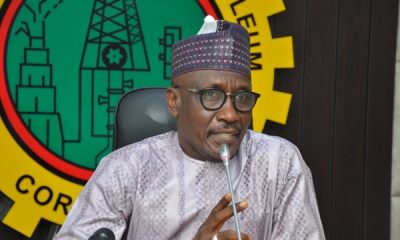





The Managing Director of Chevron Nigeria Limited, Jim Swartz, has highlighted key areas that would sustain Nigeria’s energy transition growth pathway.
Swartz, is of the opinion that strong collaboration and partnership are key to sustain the country’s energy needs.
Speaking at the just-concluded 49th Nigerian Annual International Conference and Exhibition (NAICE) in Lagos, Swartz, said no one player can deliver the scale of projects required to achieve the goals set by the country alone.
He declared that Collaboration is essential because no single company, institution, or stakeholder can address the opportunities and challenges of the intersector alone.
And technology will remain a key driver of safer operations, stronger performance, and the future that we will deliver. For Nigeria, the opportunity is significant.The conference with the theme “Thriving in the Evolving Global Energy Landscape: Collaborative Growth and Resilience,” focused on how Nigeria can compete for capital and sustain production amid global volatility.
The managing director listed four pillars he believed are essential to define a resilient energy future.
These include continued investment, enabling long-term policies, competitive local capacity development, and strong partnerships.
He continued, “Building a resilient energy future requires continued investment, enabling policies that are resilient for the long-term, local capacity development that’s competitive and durable as well, and strong partnerships across governments, regulators, industry, and the technical community,”.
He said Chevron has invested in Nigeria for more than six decades, noting the company’s role in building the foundation of the industry and in developing technical capacity.
The firm therefore called for stronger collaboration across government, regulators and industry operators as the foundation for building a resilient oil and gas sector that can deliver growth, jobs and energy security for Nigeria.
By David Torough, Abuja
The Nigerian National Petroleum Company Limited (NNPC) said it saved $3.4bn through contract restructuring and optimisation over the past year, while increasing its contribution to government revenue to N19.
5tn and boosting crude oil and gas production.Group Chief Executive Officer, Bayo Ojulari, disclosed the figures on Tuesday while presenting the company’s one-year performance scorecard at the opening of the 25th NOG Energy Week in Abuja.
According to Ojulari, the contract optimisation programme reduced operating costs by $3.
4bn without disrupting operations, strengthening commercial efficiency and improving the competitiveness of Nigeria’s oil and gas industry.The scorecard showed that crude oil production rose by six per cent year-on-year to 569.7 million barrels, while gas production increased by 8.1 per cent to 2,576 billion standard cubic feet. NNPC’s contribution to government revenue also climbed by 21.8 per cent to N19.5tn.
Ojulari said Nigeria’s crude oil production has reached about 1.71 million barrels per day, the highest level in five years, while NNPC Exploration and Production Limited achieved a record output of 365,000 barrels per day.
He said the company aims to increase crude oil production to two million barrels per day by 2027 and three million barrels per day by 2030. Gas production is projected to rise from 7.62 billion cubic feet per day this year to 10 billion cubic feet per day in 2027 and 12 billion cubic feet per day by 2030.
The NNPC boss also reported significant improvements in export infrastructure, noting that crude export terminals recorded an average 98 per cent recovery factor between April 2025 and May 2026. He added that major evacuation pipelines, including the Trans Niger, Trans Escravos, Trans Ramos, Trans Forcados and Oando-Brass lines, are operating at 100 per cent availability.
Ojulari further disclosed that NNPC maintained 100 per cent compliance with its Joint Venture cash-call obligations throughout 2025 and into June 2026, although some partners remained in default, increasing the company’s funding responsibilities.
On the commercial front, he said NNPC signed gas sale and purchase agreements covering 1.29 billion standard cubic feet per day for long-term LNG feed gas and 750 million standard cubic feet per day for domestic industrial gas supply to DFL FZE and Dangote Refinery. The agreements are expected to attract more than $20bn in investments, with seven additional transactions under negotiation.
He also highlighted governance reforms, including the resumption of monthly remittances to the Federation Account in July 2025, the restoration of monthly business performance reporting and the company’s first earnings call in November 2025.
Ojulari urged governments, investors, regulators and operators across Africa to strengthen collaboration, arguing that strategic partnerships would be critical to unlocking the continent’s energy potential and attracting greater investment.
The Organization of the Petroleum Exporting Countries (OPEC), has revised downward its 2026 global oil demand growth estimates, citing expected slower consumption growth in advanced economies, where collective demand will rise by only 100,000 barrels per day.
The cartel said it now expects global oil demand growth to reach 1.
2 million barrels per day in 2026, down from its previous forecast of 1. 4 million barrels per day, explaining that the revision would bring total global oil consumption to 106.3 million barrels per day.In Europe, oil demand will decline by 30,000 barrels per day as weaker economic activity weighs on consumption, OPEC, said in its monthly oil market report.
The OPEC also expects some Asian economies, particularly Japan, to record slower demand growth. The organization forecast Japanese oil consumption to fall by 80,000 barrels per day.
However, strong demand from major emerging economies partly offset these weaker signals.
The OPEC said China would add 250,000 barrels per day to global demand, supported by its petrochemical industry. The organization also forecast India to increase demand by 200,000 barrels per day, driven by infrastructure spending and growth in vehicle ownership. Overall, OPEC expects emerging economies and developing countries to contribute an additional 1.1 million barrels per day to global oil consumption in 2026.
The OPEC’s revision aligns with a broader reassessment of global oil demand expectations.
In its May 2026 report, the International Energy Agency projected a much sharper downturn. The agency forecast a contraction of 420,000 barrels per day in global oil demand for the full year rather than a slowdown in growth.
The gap between the two institutions now exceeds 1 million barrels per day, highlighting the uncertainty surrounding the market outlook.
Both reports identified the near-closure of the Strait of Hormuz as a major factor behind market instability. According to the U.S. Energy Information Administration, six Gulf countries collectively reduced production by 10.5 million barrels per day in April, marking what the agency described as an unprecedented contraction outside pandemic periods.
As supply shortages intensified, oil producers outside the Middle East moved to increase production to offset part of the missing volumes. Several African producers, including Nigeria, Libya and Angola, benefited from rising demand for Atlantic Basin crude among Asian and European buyers that lost access to Gulf oil supplies, according to the IEA.
However, not all African producers can fully capitalize on the opportunity. Nigeria, Africa’s largest oil producer and an OPEC member, nonetheless showed encouraging momentum. According to provisional data published on May 15 by the Nigerian Upstream Petroleum Regulatory Commission, the country increased oil production from 1.546 million barrels per day in March to 1.663 million barrels per day in April 2026.




Rethinking the CBN’s Mandate: Lessons from Malaysia for Nigeria
ShareBy Uche Uwaleke During a recent academic study tour of key financial institutions in Malaysia with some of my PhD...

Tinubu, Shettima not Elected by Muslims Alone, Northern Christian Chair Slams Cleric
ShareChairman of the Northern Christian Association, NCA, Rev. Joseph Hayab, has said President Bola Tinubu and Vice President Kashim Shettima...

Dangote Confident on Group’s Projected $100bn Revenue Target By 2030
ShareAliko Dangote, has expressed confidence in his company meeting estimated revenue growth in the next four years. He said detailed...


Chevron Says Competitive Local Capacity Devt to Define Nigeria’s Energy Future
ShareThe Managing Director of Chevron Nigeria Limited, Jim Swartz, has highlighted key areas that would sustain Nigeria’s energy transition growth...
Reading the Early Signals of Nigeria’s 2027 Presidential Contest
ShareBy Tom Chiahemen In Chinua Achebe’s Things Fall Apart, the wrestling arena was more than a place where strong men...
Dressing, Addressing, and Redressing Nigeria’s Lawyers and Judges
ShareBy Chidi Anselm Odinkalu On 20 June 2011, Willy Mutunga assumed office as the first Chief Justice of Kenya under...


Kyari Charges BOA to Explore Blended Finance, Guarantees to Boost Agric Lending
ShareBy Raphael Atuu, Abuja The Minister of Agriculture and Food Security, Sen. Abubakar Kyari, said the Federal Government is repositioning...


Akume Hails Tinubu’s Infrastructure, Education, Security Achievements
ShareBy David Torough, Abuja The Secretary to the Government of the Federation (SGF), Senator George Akume, has commended President Bola...

Enugu Civil Service Commission Gets New Chairman
ShareFrom Sylvia Udegbunam, Enugu Enugu State Governor Peter Mbah has appointed the former Permanent Secretary, State Ministry of Information, Chris...
FACAN Petitions EFCC over Alleged N150m Fraud, Impersonation in Benue
ShareFrom Attah Ede, Makurdi The Federation of Agricultural Commodity Association (FACAN), Benue State chapter, has petitioned the Economic and Financial...