
POLITICS
No Regrets Criticizing CBN, It Must Focus on Monetary Stability, Inflation – Ndume

By Eze Okechukwu, Abuja
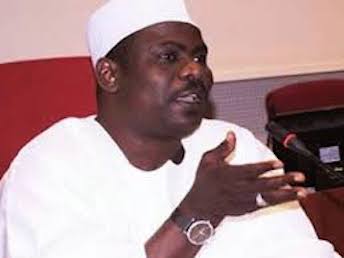
Chief Whip of the Senate, Senator Mohammed Ali Ndume, has said he has no regrets for criticising plans by the Central Bank of Nigeria (CBN) to relocate some departments of the apex bank from its headquarters in Abuja to Lagos State.
The lawmaker said his intervention was based on reality and the irrelevance of the action by the leadership of the CBN.
The Borno South senator said since his intervention, some elements have been using a section of the media to attack his personality and question the credentials of his daughter who is a staff of the CBN.
He said though he’s a lawmaker, his daughter and children are qualified to work in any government agency as long as they’ve the needed credentials adding “the subtle blackmail will not stop or deter me from pointing out lapses in government. It is my own way of assisting President Bola Ahmed Tinubu in succeeding.”
He said he’ll never be deterred from speaking truth to power whenever those saddled with the responsibility of managing the affairs of the country err.
The lawmaker challenged those attacking him and claiming that he harbours ill-feelings against the Yorubas to show their pan-Nigerian credentials, revealing that his two daughters are married to Yoruba men and have both given him five Yoruba grandchildren.
Instead, Ndume called on the CBN Governor to focus on stabilising the monetary situation in the country, especially the spiraling exchange rate and the rising inflation, rather than dwelling on relocation of departments to an already-populated Lagos State.
He said as a senator, he has the right to make certain interventions, while clearing the air on claims that he is the mouthpiece of certain groups.
Ndume said he doesn’t speak for the North, nor Northern senators, but in the interest of Nigerians and President Tinubu who he has enormous respect for.
He said: “I stand by what I’ve said about the relocation of FAAN and some departments of the CBN to Lagos State. If it is about decongestion, Lagos is not the right place. There are CBN offices in all the states of the Federation. Why move the departments to Lagos that is already populated?
“Since my intervention, people have been using a particular newspaper to attack me and saying that I hate the Yorubas. They’re ignorant and they don’t know what they’re saying.
“My two daughters are married to Yoruba men, one from Lagos State and the other from Kwara State. And I’ve five grandchildren who are Yoruba. How can I hate them and allow my daughters to marry them? Those saying I hate the Yorubas, how many of their sons and daughters are married to Hausas or Northerners? I’m a true Nigerian.
“They’ve also been questioning the fact that my daughter works at the CBN. They should check her records. She’s a Nigerian and she’s qualified to work anywhere, including the CBN.
“I’ve been the one pleading with her to remain there. She’s almost done with her PhD and she wants to go to the classroom as a lecturer. She’s a brilliant lady.
“Instead of these attacks on my person, the CBN should do its job and address the rising inflation and stabilize our exchange rates. They should leave me alone.
“President Tinubu is my friend and he knows that I support him 100%. He appreciates honest feedback and will not tolerate what these people around him who are becoming a political cartel are doing.
“I’ll continue to speak the truth and point out areas where corrections are needed. That’s my job as a senator. It is not personal at all.”






From Rabiu Sanusi, Kano
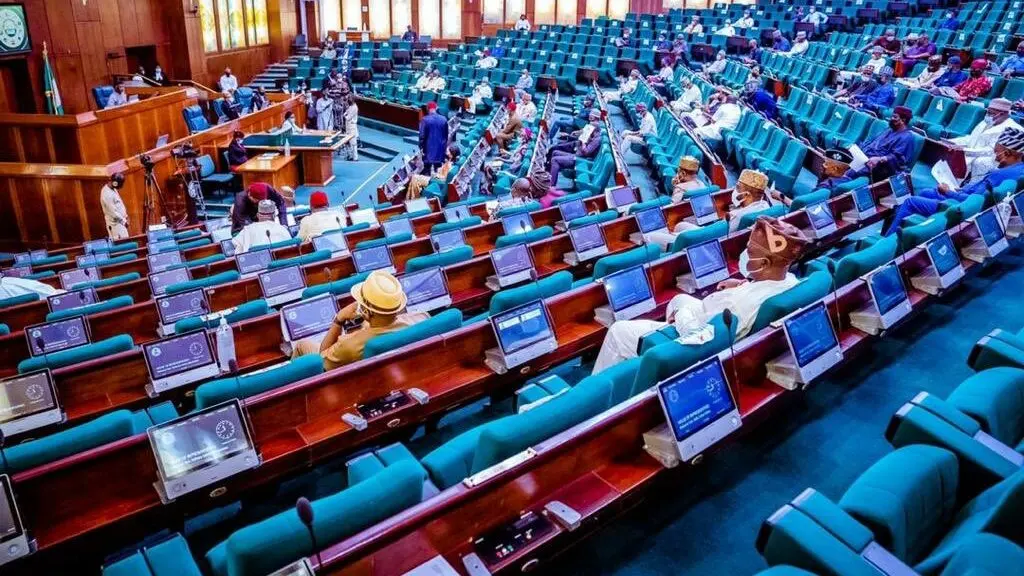
The House of Representatives has backed plans to increase Nigeria’s strategic petroleum reserve from 20 days to 90 days by 2027 in a move aimed at strengthening the country’s fuel security and ensuring a more reliable supply of petroleum products.
Chairman of the House Committee on Petroleum Resources (Downstream), Ugochinyere Ikeagwuonu, disclosed this in Abuja during a technical briefing, where the committee also passed a vote of confidence in the administration of President Bola Tinubu over its efforts to secure the nation’s petroleum pipelines.
Ikeagwuonu said the proposed expansion of the strategic reserve would be supported by sustained domestic petroleum supply, reducing the country’s vulnerability to supply disruptions.
The committee further reported that contributions from local refineries to Nigeria’s national petrol supply had increased by more than 75 per cent, with the country recording over 25 days of supply sufficiency and no reported shortfalls so far.
The development, according to the committee’s briefing, highlights the growing role of domestic refining in supporting the nation’s energy security.
In a related development, the committee established two subcommittees to investigate separate petitions concerning gas distribution licences issued by the Nigerian Midstream and Downstream Petroleum Regulatory Authority (NMDPRA) and allegations of abuse of office against Mumuni Dagazau, Executive Vice President, Downstream of the Nigerian National Petroleum Company Limited (NNPC Limited).
The proposed 90-day reserve target represents a significant policy ambition for Nigeria petroleum sector as the country seeks to strengthen supply resilience, improve energy security and reduce exposure to disruptions in fuel distribution.
The outcome of the planned investigations and progress towards the 2027 reserve target will remain important issues for the downstream petroleum industry.
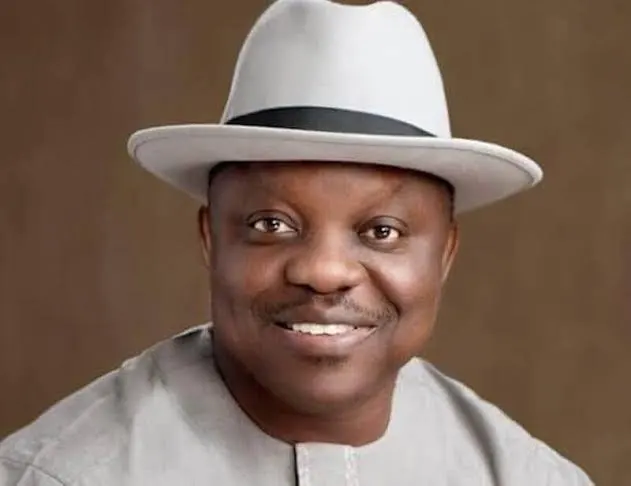
From Francis Sadhere, Delta
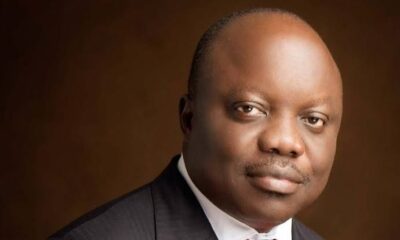
Former Governor of Delta State, Dr. Emmanuel Eweta Uduaghan, has died. He was 71.
Uduaghan, who governed the state from 2007 to 2015, reportedly passed away on the morning of Monday, October 19, 2026.
His death was announced in a statement signed by Toju Anire Uduaghan on behalf of the family, which described his passing as a devastating loss to the family, Delta State and Nigeria.
The family said the former governor was a beloved father, brother, uncle and patriarch, whose life and service touched many people across the state and the country.
“His passing has left us devastated. Words can hardly express the depth of our sorrow at the loss of a man who meant so much to our family and whose life and service touched countless others across Delta State and Nigeria,” the statement said.
Uduaghan held several key positions in the Delta State Government before becoming governor. He served as Commissioner for Health from 1999 to 2003 and Secretary to the State Government from 2003 to 2007.
He subsequently emerged as governor in 2007 and remained in office until 2015, during which the family said he demonstrated commitment to the human and infrastructural development of the state.
The family described his death as a profound loss, noting that he was a source of strength, a father figure and a respected elder whose memories and legacy would remain cherished.
“We are grateful to Almighty God for his life, his service, and the legacy he leaves behind,” the statement added.
The family prayed for the repose of his soul and divine comfort for relatives, friends, associates, former colleagues and others mourning his death.
“Your memory will forever remain in our hearts, and your legacy will endure in the lives of those you touched,” the family said in its farewell message.
Uduaghan’s death marks the loss of a former leader who occupied prominent positions in Delta State’s political and administrative history.
The family concluded its announcement with a prayer for his peaceful repose, saying, “May your gentle soul rest in perfect peace. Amen.”
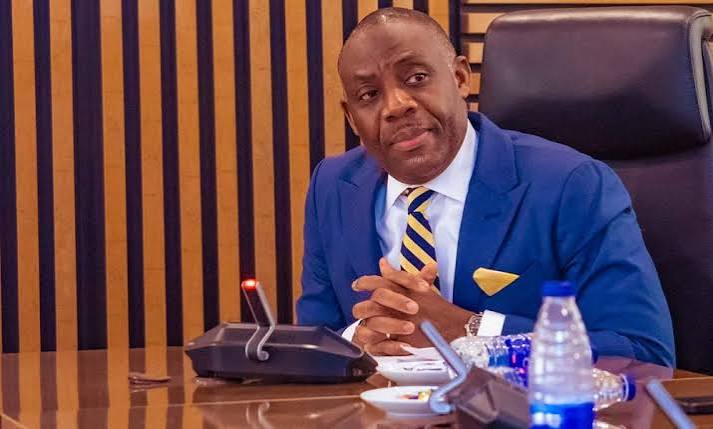
By Tambaya Julius, Abuja
The Federal Government has urged vice-chancellors of Nigerian universities to introduce degree programmes that address critical manpower shortages and meet the growing demand for specialised healthcare and social services.
The proposed programmes include Audiology, Occupational Therapy, Speech and Language Therapy, Clinical Psychology and Medical Social Work.
The government said expanding training in these fields would help bridge gaps in specialist care and create more employment opportunities for Nigerian graduates.The Minister of Education, Dr.
Tunji Alausa, also reaffirmed the Federal Government’s commitment to establishing autism centres across the six geopolitical zones to improve access to specialised care and support for persons on the autism spectrum and their families.Alausa said universities must align their academic programmes with national workforce needs and emerging societal challenges, stressing the importance of equipping graduates with practical skills for professional practice and employment.
He explained that developing the proposed programmes would strengthen Nigeria’s capacity to provide essential services locally, reduce dependence on limited specialist services and produce professionals capable of meeting the needs of the population.
The planned autism centres are expected to provide access to diagnosis, therapeutic services and research, while serving as regional support hubs for families, healthcare professionals and educational institutions.
The minister said the initiatives reflect the Federal Government’s commitment to strengthening local capacity and improving support for persons with autism and other developmental conditions.
He assured stakeholders that the government would continue to pursue reforms aimed at expanding access to relevant education, strengthening institutional capacity and promoting skills development.
Alausa also commended the Chairman of the Federal Government Committee for the Advancement of Audiology, Occupational Therapy and Speech and Language Therapy, Dr. Victoria Amu, for her dedication and commitment to advancing the specialised fields.
He urged vice-chancellors and other university administrators to work closely with Amu, relevant regulatory agencies and professional bodies to facilitate the introduction of the proposed programmes.
According to him, such collaboration would help ensure that the programmes meet the required academic and professional standards.
The minister reiterated the government’s commitment to building a responsive and inclusive higher education system that equips Nigerians with relevant skills, addresses critical manpower gaps and expands access to essential specialised services.
He added that the initiatives form part of broader efforts to develop human capital, improve service delivery and ensure that Nigeria’s education system responds effectively to national priorities and the needs of its citizens.



Adeniyi, JAMB Registrar Seek Operational Synergy
ShareBy Tambaya Julius, Abuja The Nigeria Customs Service (NCS) and the Joint Admissions and Matriculation Board (JAMB) are considering areas...


NLC Suspends FCT Indefinite Strike
ShareThe Nigeria Labour Congress (NLC), Federal Capital Territory (FCT) Council, has suspended its indefinite strike and directed all affected workers,...


APC Dismisses Alleged Plot to Assassinate Atiku
ShareThe All Progressives Congress (APC) Presidential Campaign Council (PCC) has dismissed allegations that the Federal Government is plotting to assassinate...

2027: We’ll Deliver Rivers, FCT for Tinubu – Wike
ShareBy Laide Akinboade, Abuja The Minister of the Federal Capital Territory (FCT), Nyesom Wike, has declared that the All Progressives...

Tinubu’s Three Bills and the Burden of Government
ShareBy Tom Chiahemen A government that asks its citizens to endure the pain of economic reform must demonstrate a corresponding...
DMO Raises N2.02trn As FGN Bond Yields Rise To 17.29 Per Cent
ShareBy Tony Obiechina, Abuja Yields on Federal Government of Nigeria (FGN) bonds increased by as much as 50 basis points...

Anxiety Grips FCT Residents As FG Confirms Ebola Disease Case
ShareBy Laide Akinboade, Abuja The Federal Government (FG), on yesterday confirmed one case of Ebola disease in the Federal Capital...

Again, Tinubu Rules Out Return to Petrol Subsidy Regime
ShareBy Tambaya Julius, Abuja President Bola Ahmed Tinubu has ruled out a return to petrol subsidy, insisting that his administration...

Former Delta Governor Uduaghan Dies at 70
ShareFrom Francis Sadhere, Delta Former Governor of Delta State, Dr. Emmanuel Eweta Uduaghan, has died. Uduaghan, who governed the state...


Customs Opens Review for Disqualified Recruits, Flags 397 Applicants
ShareBy Tambaya Julius, Abuja The Nigeria Customs Service (NCS) has opened a review process for applicants disqualified during its recent...