
BUSINESS
Oil Exports to Drop as Shell Declares Force Majeure on Forcados Crude


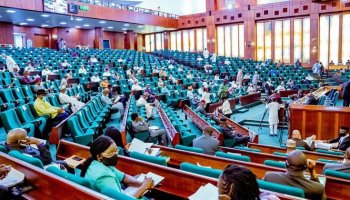







The Small and Medium Enterprises Development Agency of Nigeria (SMEDAN) said it will deepen business formalisation, expand access to affordable financing and unveil a new national MSMEs policy in 2026.
The Director-General of SMEDAN, Charles Odii, told newsmen in Abuja on Wednesday that 2026 would mark a major turning point for Nigeria’s small business ecosystem.
Odii said that several initiatives being rolled out were outcomes of reforms and groundwork laid over the past 18 to 24 months.
He said SMEDAN was targeting the registration of over 250,000 new enterprises by the first quarter, 2026, with discussions ongoing to expand the figure by an additional one million businesses.
According to him, the formalisation drive will help small businesses gain visibility, access government support programmes and contribute meaningfully to economic growth.
The SMEDAN boss also disclosed that the agency would unveil a reviewed National MSME Policy in 2026, following the expiration of the current five-year policy framework.
He said the review process was ongoing and would be completed in the first quarter of the year.
Odii said: “Small business owners across the 36 states and the Federal Capital Territory will be actively involved.
“We cannot sit in Abuja and write policies for small businesses. We want MSMEs themselves to tell us what is working, what is not working, and what policies they need.”
He added that the new policy would also explore social inclusion measures, including support for rehabilitated inmates through skills training and reintegration into the MSME value chain.
On financing, the director-general said SMEDAN was brokering over N12 billion in single-digit funding for small businesses in partnership with the Bank of Industry and state governments.
He said about 500,000 enterprises had already accessed similar funding, but the agency was pushing to scale the number to over three million beneficiaries to reflect the size of Nigeria’s MSME sector.
He explained that the loans, priced between nine and 9.5 per cent interest, were designed strictly for business expansion, equipment procurement and working capital.
Odii identified capacity development as a major priority of the agency and one of its main focus for 2026.
“SMEDAN plans to significantly expand its entrepreneurship and business management training programmes to improve MSMEs’ readiness for financing,” he said.
The SMEDAN boss said although funds were available in the financial system, many small businesses lacked the skills and structure required to access them.
He added that access to business infrastructure, including shared workspaces and industrial clusters, would be expanded through partnerships with receptive state governments.(NAN)

By Eddy Ochigbo
The Nigerian Content Development Management Board (NCDMB) has reaffirmed its determination to increase the current from 56% to100% local content in Africa between now and next decade, to align with President Ahmed Tinubu’s “Nigeria First” policy, aimed at boosting local production and reducing dependence on imports in critical sectors of national economy.
Director Corporate Services NCDMB, Dr Abdulmalik Halilu who drop the hint during the week at a capacity building workshop for media stakeholders in Abuja, disclosed that NCDMB, was in good stead to attain 100% Local content in less than no time due to impactful steps being taken by the board.
Innovative steps being by the board, be said, were put in place under the leadership of Executive Secretary, Engr. Felix Omatsola Ogbe. While hinging the milestones attained by the board on the establishment of the Nigerian Oil and Gas Industry Development Content Act (NOGICD) – a sole agency of the federal government responsible for driving Nigerian content in the oil and gas industry – Halilu urged Oil and Gas Correspondents to place high premium on the core operations of NCDMB, rather than their day to day reportage of policy matters.The media capacity building workshop themed: The Role of Media and Communications in Sustaining Nigerian Content Development”, challenged the media to deploy its expertise and professionalism to boost Nigeria’s sustained campaign in championing local content development in Africa.
“The media should to do more in the reportage of activities of the board by moving from reporting policy matters, and throw more light on core operations of the Nigerian content performance in the oil and gas industry”, he volunteered.
Meanwhile, NCDMB”s move is to ensure that for every N100 spent in the industry by operators and service companies, N56 is now retained in-country in terms of value addition local assets, goods, expertise to target 70 per cent local content by 2027. The workshop stressed the need for the media to interrogate the board’s activities and keep Nigerians abreast of the ongoing silent revolution in nation’s local content trajectory.
On his part, Dr Obinna Ezeobi, General Manager, Corporate Services, reiterated that the Nigerian content has become so widespread the world over that a good number of African countries are now seeking ways to optimise value from their oil and gas resources, turning to Nigeria’s local implementation as a case study.
Earlier, Mr Azubuike Ishiekwene, Editor-in-Chief of Leadership Newspapers, who delivered a paper on why “Good Journalism is not Enough: Creating Sustainable Income from your Content in Digital Age”, maintained that good journalism is no longer in vogue because of the collapse of traditional newsroom revenue and the under payment and casualisation of Journalists, especially beat reporters. He reasoned that the Journalist as knowledge worker, a trusted interpreter, public educator and a market signaler must live above board because digital age did kill journalism, it killed dependency.
By and large, the media capacity building workshop, among things touched on:
- Formulation and implementation of policies and monitoring its socioeconomic impact;
- Provision of the economic and social capital, necessary for the growth of industries; and
- Provision of enabling business environment to support production and consumption of goods and services by local supply chain.
The Debt Management Office (DMO) said that its World Bank-assisted workshop on borrowing guidelines was designed to intimate subnational entities within Northern Nigeria on proper borrowing ethics.
The Director-General of the DMO, Patience Oniha, said this at the workshop on Borrowing Guidelines organised for top policy makers in Abuja on Tuesday.
He said that the workshop was under the aegis of States Action on Business Enabling Reforms (SABER).
He said it was important to align borrowing practices within the states with that of the Federal Government.
Oniha said that borrowing needed several layers of approvals and debt managers needed to understand why those approvals are required.
“Debt is such an important fiscal variable that involves several stakeholders, that is why we have a diverse group here.
“The objective is that after this workshop, your collaboration with your different states will be stronger.
“We need to keep empowering people with knowledge about creating skills so that work goes on smoothly.
“How do we make the process work? How do we make the subnational governments understand the process of borrowing so that they can raise the funds that they need for development?
“If they have not understood the process, they cannot comply and they cannot raise the funds,” she said.
Oniha said that the idea was to equip the states with all the skills and knowledge they needed, so that each time they want to borrow, they are ready and the process is smooth.
“Ultimately, the expectation is that the funds that they raise will be used for development in the state.”
She commended the World Bank for its interest in activities around public debt management in Nigeria.
“Debt is such an important fiscal variable that we cannot stop talking about it. We must get it right to make it sustainable.
“You can see what has happened to countries that have had to restructure their debts, the problems they went through; the downgrading by the international debt rating agencies; and their inability to borrow.
“Because debt is important, there are laws around borrowing. You want the borrowing process to be transparent, so it is not just one person that took the decision.
“The purpose has to be clear; the loan has to be properly documented; it should be monitored, it should be reported so that you can service it.
“When you do not service it, the consequences are not good. So, let us talk about debt sustainability. How will you know what to do? How will you know when to stop?” Oniha queried.
The Acting Head of Service, Federal Capital Territory (FCT), Nancy Nathan, described the workshop as an intersection of opportunity and responsibility.
Nathan said that the workshop was tied to equipping states and the FCT with the knowledge and tools necessary to navigate the complexity of the borrowing process
According to her, in a rapidly evolving economic landscape, access to finance is not just a necessity but a critical enabler for development.
“This workshop is aimed to demystify the borrowing process and clarify documentation requirements.
“It will empower our top policymakers to make informed decisions that will ultimately enhance our capacity to meet the financial needs of our respective states.
“As we embark on this journey of learning and collaboration, let us engage openly, share our insights, and push past limits that will drive our collective success,” Nathan said.


Nigeria Clinches Bronze in Judo at 4th African Youth Games
ShareTeam Nigeria clinched a bronze medal in judo at the ongoing 4th African Youth Games after winning the 63kg category bout against Zimbabwe. The...

NCDMB Set to Attain 100 Per Cent Local Content in Africa
ShareBy Eddy Ochigbo, Abuja The Nigerian Content Development Management Board (NCDMB) has reaffirmed its determination to increase the current from...


Trump Expands US Travel Ban to Five More Countries
SharePresident Donald Trump has expanded a US travel ban, barring nationals of five additional countries and people travelling on Palestinian Authority-issued documents from entering the US. The White...


Farouk Ahmed, Gbenga Komolafe Resign after Dangote Petition
ShareBy Eze Okechukwu, Abuja President Bola Tinubu has nominated new chief executives for Nigeria’s two foremost petroleum regulatory agencies following the resignation...

NLC Stages Nationwide Strike over Insecurity
ShareLabour Takes Nationwide Protest to Streets over Insecurity The Nigeria Labour Congress (NLC) yesterday led a nationwide protest across major...

Presidency Transmits N43.5trn 2026 Appropriation Bill to Reps
SharePresident Bola Tinubu yesterday, transmitted the appropriation (Repeal and Re-enactment Bill 2024/2025 bill to the House of Representatives for consideration and expected approval...
SMEDAN Unveils MSMEs New Policy in 2026, Targets Funding Expansion
ShareThe Small and Medium Enterprises Development Agency of Nigeria (SMEDAN) said it will deepen business formalisation, expand access to affordable financing and unveil a new national MSMEs policy in 2026....

NCDMB set to Attain 100% Local Content in Africa
ShareBy Eddy Ochigbo The Nigerian Content Development Management Board (NCDMB) has reaffirmed its determination to increase the current from 56%...

The Man Rotimi Makinde: A True Progressive by All Standards
ShareBy Kolapo Ogundare It is impressive to note that many well-meaning Nigerians are now coming out, recounting several good deeds...
FG, NBS Launch Nationwide MICS7 Survey
ShareFrom Francis Sadhere, Delta The Federal Government of Nigeria, through the National Bureau of Statistics (NBS), has officially launched the...