
NEWS
Oil Industry Investments Not Stifled by Local Content, Says Nwapa

From Mike Tayese, Yenagoa
The Nigerian Content Academy Lecture Series organised by the Nigerian Content Development and Monitoring Board (NCDMB) got off to a thought-provoking start on Friday with a panoramic overview of local content strategy and implementation in the Nigerian oil and gas industry and a word of caution to industry players to not trifle with the initiative.
In a presentation on the topic “Staying the Nigerian Content Course in the Midst of Delivery Challenges,” the pioneer Executive Secretary of the NCDMB, Dr. Ernest Nwapa, addressed several industry issues, dismissing the notion that the absence of final investment decisions (FIDs) in the country’s oil and gas sector over a period of time was caused by stringent implementation of local content policies by the NCDMB.According to him, “There are many government policies that are affecting FIDs.” He admitted that the oil and gas industry stakeholders face “an increasingly complex environment shaped by global energy trends, shifting investment patterns and heightened expectations for local participation and value addition.”On suggestions that the future of local content policies is under intense scrutiny, Dr. Nwapa, a one-time Group General Manager, Nigerian Content Division of the Nigerian National Petroleum Corporation (2005-2010) noted that such unfounded fears had always been advocated by some industry stakeholders averse to the idea of local content.He drew attention to some unhealthy trends in the oil and gas industry, noting that “there are unintended ambiguities in the Presidential Directives” introduced in February 2024. Such ambiguities, he pointed out, need to be addressed by stakeholders.He regretted that the ambiguities in the Presidential Directives have created systemic problems, and that there has to be “institutional adjustment to re-enact the authority in the NCDMB directives.” He decried what he described as “lack of respect for the authority of the NCDMB within some industry stakeholder groups,” arguing that “When the Board writes a letter and says this is what stands on Nigerian Content, nobody questions it.” Continuing, he declared, “If you challenge a letter from the NCDMB, it wouldn’t stand.”He said it is wrong for any agency to put aside a letter from the Board and continue doing things in its own way. Dr. Nwapa, a fellow of the Nigerian Society of Engineers (FNSE), pointed out that Nigerian Content has been a national aspiration with mixed results since the Nigerian economic development model was conceived.According to him, statutes like the Petroleum Act, 1969, the Joint Venture (JV) agreements, the Petroleum Technology Development Fund (PTDF), and creation of NAPIMS, all had been conceived to achieve some measure of local content.There was also the Coastal and Inland Shipping (Cabotage) Act, 2003. But all these were incomparable to the Nigerian Oil and Gas Industry Content Development (NOGICD) Act, 2010.In his words, “Our young engineers, our young technicians now have places to go to acquire practical skills” because a lot of projects are going on in the country.For specifics, he declared, “If you look at the number of Nigerians that worked in Egina at the Integration Yard [SHI-MCI Fabrication and Integration Yard, Tarkwa Bay, Lagos], it’s not something you can just underestimate. So we need to know there are serious consequences for failure of what we’ve started.”Dr. Nwapa argued that “Things around high costs of local content…are things that we have to continue to work on to see how we can have them reduced.” He argued further that if you don’t start practising local content and get your people involved, the costs gap will be wider and wider, “so it’s either you decide to bite the bullet right now and use activities within your local economy to drive the costs to competitive levels or you can forget about it and not do it at all.”He advised that the cost of projects needs to be evaluated on a project-by-project basis and handled strategically by the Board. He insisted that “NCDMB has “the power to do that, working with the industry players,” who would provide the information and matrices. Dr. Nwapa also advised that the Nigerian Content Academy, a division of the NCDMB, should be “a place where we test theories, and we go outside to the field and have strong workshop discussions and analysis, and proffer practical recommendations,” which could be taken to the NCDMB Executive Secretary or right up to The Presidency.When the moderator of the Lecture Series and Director of the Academy, Dr. Ama Ikuru, asked for questions and comments from participants, Simeon Ogari, Nigerian Content Manager of SEPLAT Energy Limited, sought to know why there is Nigerian Oil and Gas Industry Content (NOGIC) Joint Qualification System (JQS) and a parallel JQS operated by NIPEX [Nigerian Petroleum Exchange].Nwapa said the situation had been so for some time but that it has not disrupted industry activities, and that differences could be sorted out in time. Other participants who sought clarifications include Mr. Isoboye Amachree, of Oando PLC, Kamselem Mohammed and Naboth Onyesoh, Director, Legal Services, of NCDMB.The Nigerian Content Academy Lecture Series are held weekly and are intended to raise awareness of trends and issues in the oil and gas industry, and thus empower Nigerians to take full advantage of economic opportunities in that sector.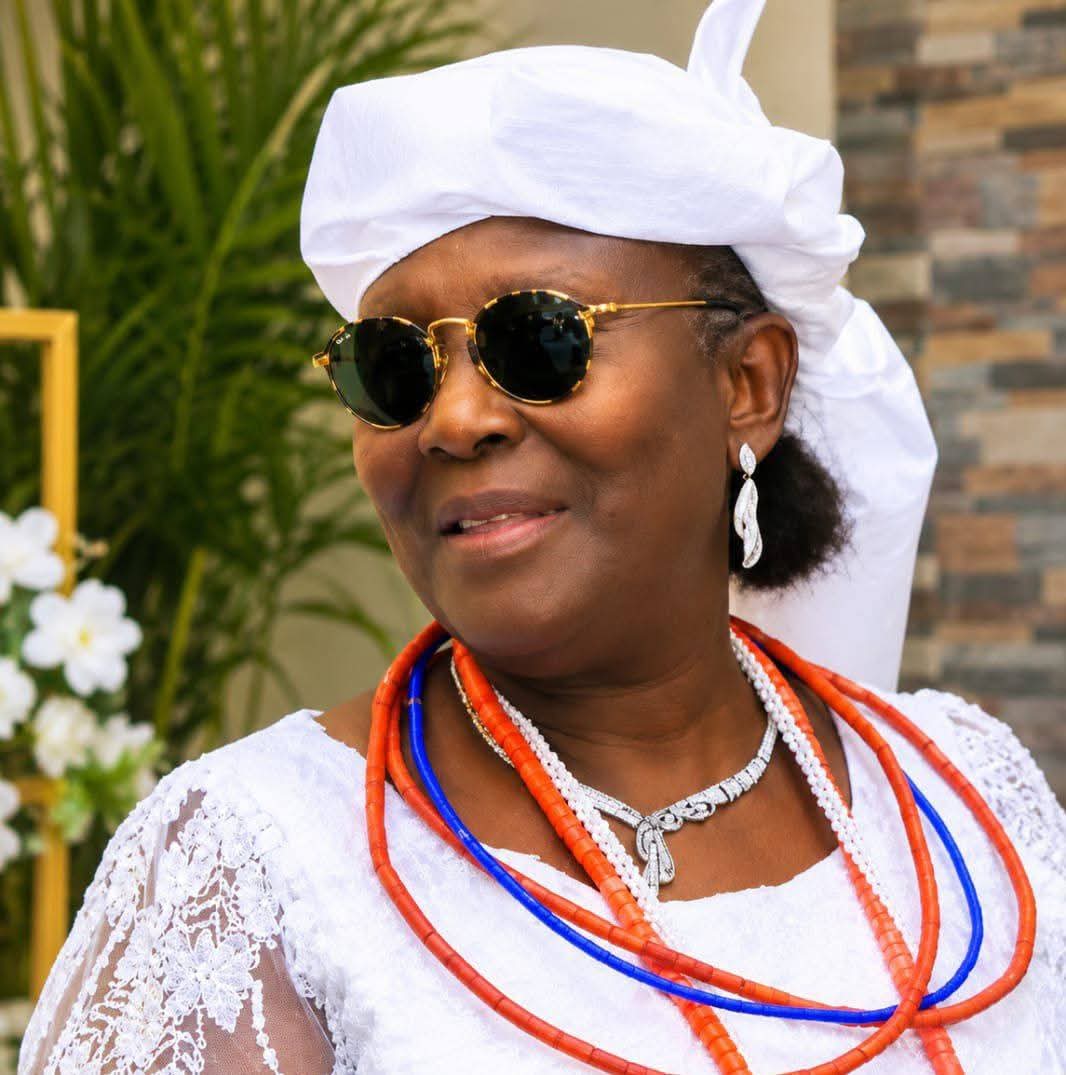
By Francis Sadhere, Warri
Chief (Mrs) Esther Orighomisan Okotie-Eboh, Coordinator of Felix Omagbemi Ogbe Group (FOOG) Women Support Group for President Tinubu, has called on Nigerians to support President Bola Tinubu’s re-election bid in 2027, urging critics of the administration to present credible alternatives to its policies.
Okotie-Eboh said those opposing the Tinubu administration should go beyond criticism and explain how their proposed policies would improve the lives of Nigerians.
She argued that political opponents had a responsibility to provide concrete reasons for rejecting the government’s programmes and demonstrate what they would do differently if elected.
According to her, critics should be able to present at least five to 10 clear reasons for their positions, rather than engage in endless consultations and political discussions without offering practical solutions.
She maintained that Nigerians deserved constructive political engagement backed by workable policies and measurable commitments.
The FOOG Women Support for Tinubu director-general also cautioned against comparing the Tinubu administration directly with previous governments, arguing that each administration faced peculiar challenges that required different approaches.
According to her, differences in prevailing circumstances, economic realities and governance challenges should be taken into consideration when assessing the performance of successive administrations.
She maintained that the Tinubu administration should be assessed within the context of the challenges confronting it and the policies being implemented to address them.
Okotie-Eboh likened governance to building a house, stressing that a solid foundation and a clear plan were necessary to achieve lasting results.
“Governance is like building a house. You must first lay a solid foundation and have a clear plan before you can complete the building,” she said.
She added that abandoning a project halfway through could undermine the desired outcome, arguing that the Tinubu administration should be given the opportunity to implement its policies and deliver on its promises.
Okotie-Eboh further maintained that governments needed sufficient time and space to execute their programmes and address the challenges confronting their countries.
Citing developments in other parts of the world, including the United States and efforts to resolve the Russia-Ukraine war, she argued that governance required continuity and sustained efforts to achieve meaningful progress.
She warned against what she described as a tendency to move backwards by constantly disrupting the process of governance, insisting that elected administrations should be assessed based on their performance and tangible results.
According to her, Nigerians should critically examine the alternatives being proposed by opposition politicians before deciding whether to support a change of government.
“The question Nigerians should ask is simple: what are the alternatives being offered by those criticising the government? Let them tell us what they intend to do, how they plan to do it and how their proposals will improve the lives of ordinary citizens,” she said.
She stressed that anyone seeking the mandate of Nigerians must be prepared to articulate clear policies and demonstrate how such policies would translate into better governance.
Okotie-Eboh maintained that the country needed issue-based political engagement rather than rhetoric, adding that Nigerians deserved concrete policies, clear explanations and measurable results from those seeking public office.
She therefore called on Nigerians to support Tinubu’s re-election bid in 2027, saying continuity would give the administration the opportunity to pursue its programmes and work towards achieving its objectives.
End
PHOTO: Chief (Mrs) Esther Orighomisan Okotie-Eboh, Coordinator of Felix Omagbemi Ogbe Group (FOOG) Women Support Group for President Tinubu.
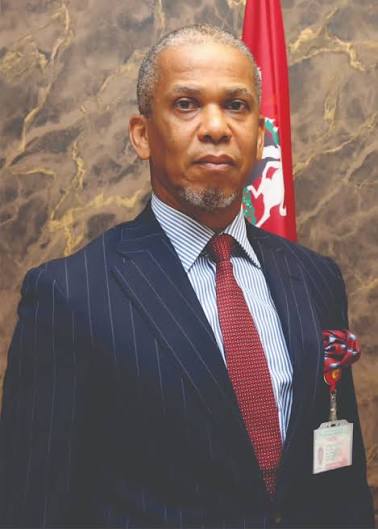
The University of Agriculture, Orerokpe Bill, sponsored by Senator Ede Dafinone, representing Delta Central Senatorial District, has passed through its third reading in the Senate.
Dafinone announced the development in a statement, describing the passage of the bill as a major step towards expanding access to education, promoting agricultural development and creating opportunities for young people in Delta State.
The senator said the proposed institution would help unlock the agricultural potential of the area while providing greater educational opportunities for future generations.
“This is more than the passage of a bill; it is a statement of purpose, a promise of progress, and an investment in generations yet unborn,” he said.
Dafinone urged constituents and other stakeholders to sustain their support for the proposed university, stressing the need to translate the legislative milestone into lasting benefits for the people.
He said the initiative was aimed at strengthening education, encouraging agricultural innovation and creating opportunities that would benefit generations to come.
“The future of our children is too important to leave to chance. Together, let us champion education, drive agricultural innovation, create opportunities, and build a legacy that generations will celebrate,” the senator said.
He described the passage of the bill as a significant milestone in the effort to advance development in Delta Central and expressed optimism about the vision behind the proposed institution.

A Kwara based Public Affairs Analyst, Comrade Ishowo Olanrewaju, weekend called on the Kwara State government to urgently convert the recently established Kwara State University of Education (KWASUED) to a specialised medical university to address the worsening and chronic shortage of doctors and other healthcare professionals in the state hospitals.
He therefore cited the Bayelsa Medical University in Bayelsa State, the state University of Medicine and Applied Sciences in Enugu State, and the University of Medical Sciences in Ondo State as existing examples.
Ishowo made the call in Ilorin while speaking with newsmen on the sidelines of the incessant strike embarked upon by medical doctors in the state hospitals.
Ishowo however expressed concern over the shortage of medical personnel in the state, noting that the available doctors were already overstretched and overwhelmed by the sheer volume of patients they were required to attend to daily.
He lamented that this situation made industrial action embarked upon by the doctors particularly troubling.
He argued that the state government should have prioritised a medical university over a university of education, insisting that Kwara’s more pressing challenge was the severe shortage of healthcare professionals rather than educators.
According to him, existing institutions, including the University of Ilorin, Kwara State University (KWASU) and Al-Hikmah University, already have faculties of education that produce graduates annually.
He added that several public and private colleges of education across the state also train teachers.
“The number of educators we produce far exceeds what we need or can employ. Our challenge is not a lack of teachers. It is a dangerous shortage of doctors, nurses and other medical professionals.
“That reality should have informed the government’s decision when it was considering establishing a new university,” he said.
Ishowo maintained that establishing a specialised medical university would help build a steady supply of doctors and other healthcare professionals to meet the state’s needs and serve other parts of the country.
“To address the persistent shortage of doctors and other medical personnel, I am calling for the conversion of KWASUED into a specialised medical institution,” he said.
He also proposed scholarships for Kwara indigenes admitted to the proposed institution, with beneficiaries required to sign a five-year service bond to work in the state after graduation before seeking opportunities elsewhere.
Ishowo said the arrangement would help retain locally trained medical professionals and strengthen the state’s healthcare system.
“Let the government provide scholarships for Kwara indigenes who want to study medicine and other related health courses, and bond them to serve the state for five years post-graduation.
“This is how we begin to systematically solve the shortage of medical personnel that has plagued us for years,” Ishowo noted.
He further stated that some state governments across Nigeria had already recognised the value of dedicated medical universities and taken steps to establish them.
According to Ishowo, “The Lagos State government is also pursuing plans to establish a standard one university of medicine and health sciences to tackle the doctor and healthcare worker deficit in the state.
“These states identified a need and responded to it strategically. Kwara can and should do the same. The conversion of KWASUED into a specialized medical university will be a response to a documented crisis that is costing Kwarans their health and their lives.”



2027: FOOG Women Coordinator Urges Nigerians to Support Tinubu’s Re-election Bid
ShareBy Francis Sadhere, Warri Chief (Mrs) Esther Orighomisan Okotie-Eboh, Coordinator of Felix Omagbemi Ogbe Group (FOOG) Women Support Group for...
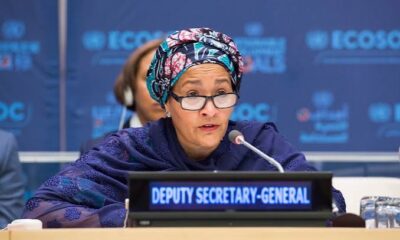

UN, EU Seek Trust, Technology to Strengthen Africa’s Counter-Terrorism Fight
ShareUN Deputy Secretary-General Amina Mohammed, has called for stronger intelligence sharing, public trust and responsible use of emerging technologies to...


University of Agriculture, Orerokpe Bill, Passes Third Reading in Senate
ShareThe University of Agriculture, Orerokpe Bill, sponsored by Senator Ede Dafinone, representing Delta Central Senatorial District, has passed through its...


Ishowo Urges Kwara to Convert KWASUED to Medical Varsity
ShareA Kwara based Public Affairs Analyst, Comrade Ishowo Olanrewaju, weekend called on the Kwara State government to urgently convert the...
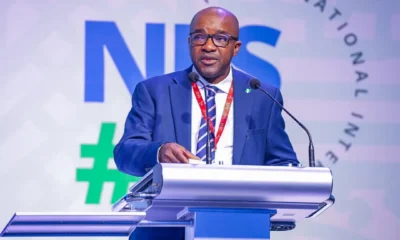

NESG Chairman Urges Shift from Economic Reforms
ShareChairman, Nigerian Economic Summit Group (NESG), Olaniyi Yusuf has urged the Federal Government to translate economic reforms into tangible results,...
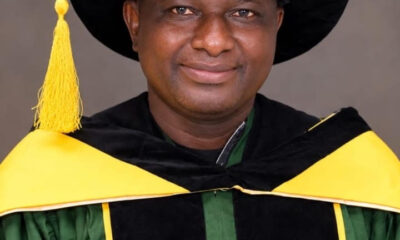

Yakubu Receives Fellowship Of Nigerian Institute Of Town Planners
ShareBy Raphael Atuu, Abuja TPL Chief Amb Hon. Stephen Shekwonce Yakubu, the District Head (Hakimi of Garki Shekwope), had his...


Much Ado About the PBAT Door-to-Door Movement
ShareBy Catherine Agbo In the unfolding drama of Nigerian political discourse, few things excite the commentary circuit quite like a...

WAHO, ECOWAS Countries Move to Tackle Health Worker Shortages, Brain Drain
ShareBy David Torough, Abuja The West African Health Organization (WAHO) has called for stronger regional collaboration and practical policy interventions...

Afreximbank’s Net Income Rises 24 Per Cent to $813.5 Million in Nine Months
ShareThe African Export-Import Bank (Afreximbank) and its subsidiaries have reported a 24 per cent increase in net income for the...
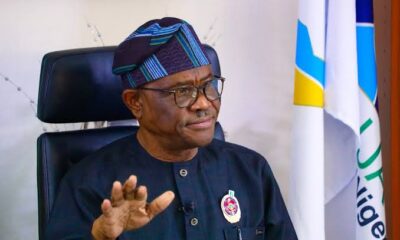

Wike-Led FCTA Committed to Quality Healthcare, Stronger Medical Institutions – Mahmoud
ShareBy Laide Akinboade, Abuja The Minister of State, Federal Capital Territory (FCT), Dr. Mariya Mahmoud, has reaffirmed the commitment of...