
OPINION
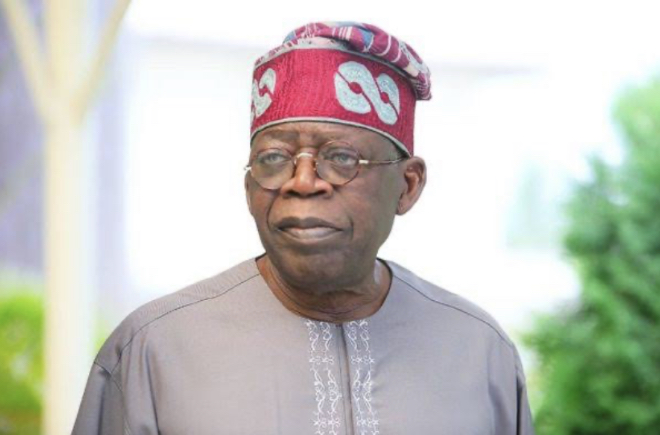
Open Letter to President-elect, Asiwaju Bola Ahmed Tinubu

By Jude Opara
Dear Mr. President-elect, let me start by congratulating you on your declaration as the winner of the February 25, Presidential election. I have decided to write you as a citizen and stakeholder in the Nigerian project.
The Independent National Electoral Commission (INEC) in the early hours of Wednesday, March 1, 2023 declared you as the President-elect of the Federal Republic of Nigeria, despite the deluge of complaints and outright rejections that have followed the conduct of the election and your subsequent declaration as the winner of the election.
Sir, with your declaration, it means that you are going to be the driver of the Nigerian train and as one of the about 200 million passengers in that train, I will pray for you to succeed in driving us to our desired destination of development, peace and progress.
In fact it is incumbent on every Nigerian including yourself to continue to work and pray for your successful leadership because anything to the contrary will spell doom for everybody.
I know that success usually has many relations, but it is important and incumbent upon you to be very careful especially of those who are very close to you. Some of them are now behaving as if they love you more than you love yourself. I will advise you to use the recent experience of out-going President Muhammadu Buhari over the controversial new Naira policy as a lesson. Most of those who used to idolize him a few years ago recently have the nerves to not only talk back at him but even to insult him on National television. Sir, don’t be deceived that they were fighting for you, no! They were only warming their way towards you because they believe you are the new man of power. This also means that very soon, they will see you as expiring and they will warm themselves towards the very person that will succeed you. Remember that most of them had in the past made scathing remarks about you. Take it or leave it, those comments they made then are how they truly view and value you and not this eye service of bowing down before you.
Your Excellency, you said it has been your age long ambition to become the president of Nigeria. Today you are just one more step to realizing that goal. But remember that four years or even eight years is not eternity, therefore it will be good if you run the country in such a way that after your tenure, your hard earned respect remains with you. Above all, run the nation in a manner that will even surprise those who never supported your ambition.
Nigeria is like a patient in an Intensive Care Unit (ICU), this also suggests that she needs a specialist to handle her case; and we must all put up our utmost best in reviving her. You as the chief physician must not allow yourself to be derailed. You must be ready to be on your feet for 24 hours, there will be little or no room for complacency.
Sir, the mood of the nation says it all that your election is tainted. Many Nigerians are not happy, not because you were declared but because of the process which they believe was fraught with irregularities. INEC did not help matters by failing in using the much advertised Bimodal Voters Accreditation System (BVAS) and the INEC Result Viewing Portal (IReV) to upload and transmit election results real time from the polling units. If they had done that, many people would have willingly accepted you as the rightfully elected President-elect.
This also means that you have an arduous task ahead of you. You must have to build confidence and the best way to go about it is by bending backwards to woo everybody. Don’t think it is not important because you need them to succeed. Please continue to be on the conciliatory path as long as it takes; don’t listen to those who will tell you that they don’t matter.
Most importantly Sir, the way some members of your Presidential campaign Council (PCC) are going about, if unchecked could cause more crisis in the polity. The likes of Dele Alake, Festus Keyamo and Femi Fani-kayode must be told that while it is their right to support you, they don’t have the right to insult those who contested election against you. Their decision to challenge your victory, if not for anything will enrich our jurisprudence whether they succeed or not.
Your Excellency, after your inauguration, it will be nice for you to follow the good example of former President Umaru Yar’Adua who in 2007 acknowledged that the process the brought him to power was faulty. That led to the emergence of the Justice Mohammed Uwais Electoral Reforms Committee. Ignore those who will tell you not to accept that you came to power through a faulty process.
Nigeria is most fragmented today and we all need to put hands together to unite her and build confidence. Don’t make the mistake your predecessor did by dividing the country on the bases of 5% and 97%. I remember then that shortly after his election in 2015, President Buhari openly became very partisan and those who kicked against lopsided policies and appointments were labeled as ‘wailers’ while those who believed that whatever he did was right were known as the ‘hailers’. But few years down the line, all the hailers have disappeared; in fact most of them have become wailers. Therefore, try as much as you can to be the President of all Nigerians whether they voted for you or not.
Your Excellency, it is good your party has the majority in the Senate and the House of Representatives. One cardinal problem bedeviling Nigerian is the system of government we are operating. The centre is too heavy and needs to be outsourced. Some people including your Vice, Sen. Kashim Shettima don’t want to hear the word ‘Restructuring’, but the truth remains that given our diverse nature, that seems to be the only path to real growth. The federalism we are practicing is faulty and can’t engender development. It is only a madman that will do the same thing over and over and still expect a different result.
I believe you truly want to develop Nigeria, so you must do whatever is necessary to get that done. You are touted to be the darling of the North, so I don’t think you will have much stress convincing them to see the larger picture which will be a win, win for everybody.
Sir, in the next few weeks, you will be sworn in as the Commander in Chief of the Armed Forces of the Federal Republic of Nigeria. When you become the C-in-C, there is a snowballing issue you must urgently address and put an end to before it blows up on our faces. In Lagos, which incidentally is your state, the ugly trend of bullying people on the basis of their tribe must stop. We have heard and in fact seen videos of thugs threatening people not to vote because they were believed not to be supporters of your party. I am sure that there are many Yoruba people who live outside the South West and they also voted for you. We have not heard that their host compatriots were bullying and telling them whom to vote. Therefore the recent attacks on some Igbo people living in Lagos for allegedly voting for the candidate of the Labour Party (LP), Mr. Peter Obi must not condoned.
The Nigerian Constitution to the best of my knowledge still gives every Nigerian citizen the right to reside in any part of the country of their choice. As long as an Igbo man or women lives within the law, nobody should harass him. So, you have the duty of calling the likes of the Oba of Lagos and MC Oluomo who have variously threatened the Igbo to order because if the beautiful city of Lagos erupts, nobody will win.
Finally, since your announcement as the winner, there has been an uneasy calm. Interestingly, your closest challengers, Atiku Abubakar of the Peoples Democratic Party (PDP) and Peter Obi of the Labour Party (LP) have indicated their intention to challenge our emergence in Court. Please, if any of them succeeds in getting a favourable judgement that means you are off the seat, also talk to your supports to remain calm. You know that both Atiku and Obi also come from places where there are youths; they have not taken to the street to register their displeasure; also tell your own supporters to do so should the table turn tomorrow.
May your reign bring forth the good tidings of peace, love and development for our dear country, Nigeria.



By Ukertor Gabriel Moti
The recent resurgence and continued anti-immigrant campaigns in South Africa, spearheaded by groups such as March and March and the Dudula Movement, has once again thrust Nigerians into the centre of a contentious continental debate.
Their central claim is both familiar and troubling: Nigerians are allegedly responsible for a disproportionate share of crime in South Africa and should therefore leave the country.
Such assertions have become potent political slogans, resonating with sections of the public frustrated by rising crime, unemployment and economic hardship.
Yet, while slogans may be emotionally persuasive, they are not substitutes for empirical evidence.Recent statistics released by South Africa’s Minister of Correctional Services, Dr. Pieter Groenewald, invite a more sober and evidence-based assessment of the issue.
According to official prison figures, approximately 84 per cent of inmates in South African correctional facilities are South African citizens, while foreign nationals account for about 16 per cent of the prison population.
Within that foreign-national population, Nigerians constitute approximately 8 per cent. These figures broadly correspond with data from the Department of Correctional Services, which similarly indicate that foreign nationals make up roughly 15–16 per cent of South Africa’s prison population.
Far from validating the widespread narrative that Nigerians are the primary drivers of crime in South Africa, these statistics expose the dangers of selective interpretation and collective stereotyping. They compel us to distinguish between evidence and prejudice, between criminal behaviour and national identity.
At the heart of this debate lies one of the most persistent errors in public discourse: the fallacy of collective guilt. In criminology and public policy, this is closely related to what statisticians describe as the ecological fallacy: drawing conclusions about an entire population based on the behaviour of only a fraction of its members.
No serious scholar would argue that because 84 per cent of South African prisoners are South Africans, South Africans as a people are inherently criminal. Such reasoning would rightly be condemned as irrational and prejudicial.
By the same token, it is equally indefensible to label Nigerians collectively as criminals because some Nigerians have committed offences. Crime is an individual act; nationality is a collective identity. Democratic societies punish individuals for crimes they commit, not entire communities for crimes committed by a few.
The statistics themselves also require careful contextualisation. It is essential to understand that Nigerians constituting approximately 8 per cent of foreign inmates does not mean that Nigerians account for 8 per cent of the entire prison population.
Rather, they represent only one segment of the foreign-national prison population. More importantly, imprisonment figures alone are insufficient to establish that any nationality is inherently more criminal than another.
Such a conclusion would require considerably more information, including the total Nigerian population residing in South Africa, arrest rates by nationality, conviction rates, the categories of offences committed, sentence lengths, and the distinction between immigration-related offences and serious violent crimes.
Without these critical denominators, sweeping conclusions are statistically unsound. Evidence-based policymaking depends not merely on raw numbers but on properly interpreted rates and contextual analysis.
The persistence of xenophobic narratives also reflects deeper governance challenges. South Africa continues to grapple with structural problems that include persistently high unemployment, severe income inequality, sluggish economic growth, organised crime, corruption and mounting pressure on public services. These realities understandably generate public frustration.
However, history demonstrates that where governments struggle to address structural socio-economic challenges, political actors often redirect public anger towards migrants, who become convenient scapegoats because they are politically vulnerable and highly visible.
This pattern is not unique to South Africa; it has appeared repeatedly across different regions of the world whenever economic anxiety intersects with identity politics.
Equally concerning is the selective deployment of statistics in public debate. Statistics, when divorced from context, can become powerful instruments of misinformation. If one simply announces that foreign nationals constitute 16 per cent of South Africa’s prison population, while deliberately omitting the fact that South Africans constitute the remaining 84 per cent, the public is likely to draw distorted conclusions.
Similarly, repeatedly highlighting crimes committed by Nigerians without acknowledging the overwhelming majority of law-abiding Nigerians who contribute positively to South African society reinforces stereotypes rather than promotes informed public understanding. Responsible public policy demands statistical honesty rather than selective presentation of evidence.
Indeed, crime itself has no nationality. Contemporary criminal enterprises increasingly operate across borders, involving individuals of different nationalities working within sophisticated transnational networks engaged in cybercrime, drug trafficking, human trafficking, financial crimes and money laundering.
No country possesses a monopoly on criminality, nor does any nationality possess immunity from criminal conduct. Consequently, effective law enforcement should focus on criminal behaviour and organised criminal networks rather than on nationality. The constitutional principle of equality before the law demands precisely such an approach.
Beyond domestic politics, the continued portrayal of Nigerians as criminals carries significant diplomatic implications. Nigeria and South Africa are Africa’s two largest economies and occupy pivotal positions in shaping continental affairs.
Together, they play indispensable roles in African Union reforms, regional peace and security, the implementation of the African Continental Free Trade Area (AfCFTA), continental investment and Africa’s broader diplomatic engagement with the rest of the world.
Persistent xenophobic rhetoric therefore extends beyond domestic political mobilisation; it weakens African solidarity, discourages cross-border investment, undermines regional integration and damages the international reputations of both countries. The costs of prejudice are borne not only by migrants but also by the broader project of African unity and economic transformation.
Several important policy lessons emerge from this analysis. Governments should prioritise evidence-based public communication by presenting crime statistics with adequate context to minimise public misunderstanding and prevent the manipulation of public opinion.
Law enforcement agencies should adopt intelligence-led policing strategies that target criminal networks regardless of nationality rather than relying on ethnic or national profiling. Immigration management must also distinguish clearly between undocumented migration and criminality, recognising that violations of immigration laws should not automatically be equated with violent or organised crime.
Furthermore, Nigeria and South Africa should deepen bilateral cooperation through enhanced intelligence sharing, extradition arrangements, cybercrime investigations and joint efforts against human trafficking and organised crime. Such collaboration offers a far more effective response to transnational crime than xenophobic mobilisation.
Equally important is the responsibility of universities, civil society organisations and the media to promote statistical literacy, challenge misinformation and foster balanced public discourse on migration and crime.
This debate transcends South Africa itself. It raises a profound question for the African continent: can Africa genuinely aspire to continental integration under the African Continental Free Trade Area while simultaneously allowing xenophobic nationalism to shape relations among Africans?
The vision articulated in the African Union’s Agenda 2063 is that of an integrated continent characterised by the free movement of people, goods, services and ideas. That vision cannot coexist with the indiscriminate criminalisation of fellow Africans based solely on nationality.
None of this should be interpreted as an attempt to excuse criminality. Every individual who violates the law, whether Nigerian, South African or of any other nationality, should be investigated, prosecuted and punished in accordance with the law. Justice demands nothing less.
However, justice equally demands that criminal responsibility remain individual rather than collective. The distinction between personal criminal liability and collective national identity lies at the very heart of constitutional democracy, sound criminology and evidence-based public policy.
The prison statistics released by South Africa’s correctional authorities therefore provide an important lesson. They neither absolve criminals nor validate xenophobic stereotypes.
Instead, they remind us that societies governed by evidence prosecute crime wherever it exists, while societies governed by prejudice risk confusing nationality with criminality.
The real challenge confronting South Africa is not the nationality of offenders but the quality of governance, the effectiveness of law enforcement and the political will to address the structural conditions that breed crime.
Crime must be confronted firmly and impartially, but prejudice must never be allowed to masquerade as public policy.

By Fransiscus Nanga Roka
UNICEF calls on the international community to take urgent action: Extreme heatwaves are no longer just an environmental problem. They have now reached a global human rights emergency.
The savagery of increasingly hot climate kills people, destroys ecosystems, dismantles admittance to clean water and undermines the absolute bases of wellbeing and home. But these deadly heatwaves also reveal a far more profound, systemic failing: the global failure to address climate justice, public health and political responsibility as interconnected struggles.Record shattering heatwaves, sometimes at temperatures beyond human tolerance levels are causing deadly heat strokes and respiratory distress leading to mass casualties.
These are not merely individual tragedies; these are collective catastrophes. Temperatures soar beyond 40°C (104°F) in much of the world, with heatstroke raising body temperatures to lethal levels and symptoms including dizziness, breathlessness but also organ failure and death.The informal workers, farm laborers, construction workers and motorcycle taxi drivers who are always the most vulnerable, have to spend time in the sweltering heat because they need money. The end result: no legal protections or access to healthcare, coupled with an agonizing choice for these workers: either risk severe heat exposure or lose their livelihoods and means to survive.
In contrast, urban poor communities without affordable electricity or air conditioning appliances have remained to suffer extreme indoor heat. The inconsistent accessibility to cooling technology provides a grim message, heatwaves are also an equal rights crisis. The marginalised have been priced out of thermal protection.
Droughts worsen with the extreme heat that saps groundwater and surface water resources in a merciless fashion. Elastic Protect is helping secure access to safe and clean drinking water for hundreds or possibly thousands, if not millions of people around the globe. Shortages in public sanitation facilities collapse and generate public outbreaks of waterborne disease offering deadly consequences to entire communities.
This multi level crisis not only threatens essential human rights to health, water and sanitation established in international law. The right to a dignified life also evaporates when the water is depleted, which contributes to health epidemics and society unrest.
And the answer is this crisis, at the root of it is political inertia, corporate greed. As fossil fuel corporations combined with state support and lax rules are remorselessly pressing ahead with fuelling the climate emergency (see below), Amnesty International and other human rights monitors have pointed to the dangerous implications of this exploitation. Profit motives triumph over planetary and human wellbeing, essentially chaining societies to horrific emissions that will lay vulnerable populations further at risk.
A global scale human rights emergency is a turning point to the reality of extreme heat, governments must act now and decisively. The senseless destruction of life and place wrought by ceaseless heat waves is not just an environmental frailty, but a direct violation of the rights to health, water, and to a dignified existence. As a result governments need to clearly define extreme heat as a human rights crisis, and seek to create national action plans that holistically manage the protection of their citizens, particularly the most disadvantaged.
Governments should first invest decisively in climate-resilient public services. This starts by developing and deploying high-precision heat early-warning systems capable of predicting imminent extreme temperature rises so that communities and authorities can be prepared. And, in parallel to such systems, there needs to be cooling centers available for vulnerable populations, particularly in cities and historically, disadvantaged areas where indoor heat exposure is untenable without air conditioning. These centers are critical for providing emergency refuge and life-saving assistance when the hottest temperatures hit. This should be complemented at the community level by outreach programs, trained to prevent, recognizing and treating heat illnesses. Frontline health workers should actively approach vulnerable groups belonging to them, such as the elderly, children and outdoor laborers, provide heat stress prevention education and offer treatment.
Providing equitable water opportunities is another cornerstone of a successful response; These curbs can include preventing over extraction and pollution at key water basins by enforcing regulations. Promote sustainable water management techniques, such as rainwater harvesting, groundwater recharge and efficient absorption approaches. Water policies must target poor, vulnerable people who suffer the greatest scarcity and create minimum standards for access to adequate clean water for drinking, sanitation, and hygiene. This is crucial to contain the proliferation of diarrheal diseases that in this way become endemic in drought and heat crises.
It is a moral and legal responsibility to protect informal and outdoor workers from extreme heat exposure. Working Hourspeak heat periods; provision of shaded rest areas and ready access to safe drinking water. If enforced these measures can relieve heat stress for millions who would otherwise have to continue working. Governments need to work with employer and labor organizations in order to monitor conditions and ensure compliance.
Phasing fossil fuel out of the energy system is a systemic, long-range solution to extreme heat because it addresses its underlying driver: climate change. Part of a just energy transition is to end subsidies that keep carbon intensive industries afloat, and hold corporations accountable for their emissions and human rights impacts. Investments should target scaling renewable energy infrastructure in places where the needs are greatest, especially on coastal peripheries and in drought-prone, more vulnerable areas of countries such as India and China; further developing robust electricity systems can better meet increased cooling capacity requirements and facilitate economic development while prioritizing low-emission sources.
Last but not least, climate governance needs to become transparent and equitable and anchored in human rights. Governments must involve marginalized communities in participatory policy-making processes that make climate action plans accountable to the affected. To avoid tackling existing injustices while building resilience for all, policies must be explicitly rooted in some recognition of social justice. Ensuring such inclusive governance is which will lead to sustainable, just and effective climate solutions.
In a nutshell, reversing the tide of this climate collision will require governments to take bold action across sectors, from protecting public health and ensuring water security to implementing labour protections energy transformation, and building justice in governance. These coordinated efforts are key, not only to saving lives today but also to ensuring the human rights of people today and generations to come in a world which is becoming increasingly unlivable.
Climate scientists define extreme heatwaves as avoidable humanitarian crises driven by political choices instead of natural disasters. As long as we close our eyes to the crushing devastation of this planetary fever on human rights, lives will be lost in their millions, social inequalities will widen and with them, dreams of health, water and sanitation as a universal right will blossom no more under the burning sun. It is time to face the climate killers causing this crisis. Who will step up to save mankind from the heat?
Fransiscus Nanga Roka, Faculty of Law University 17 August 1945 Surabaya and Managing Partner Law Firm Victorious Indonesia.
By Tunde Rahman
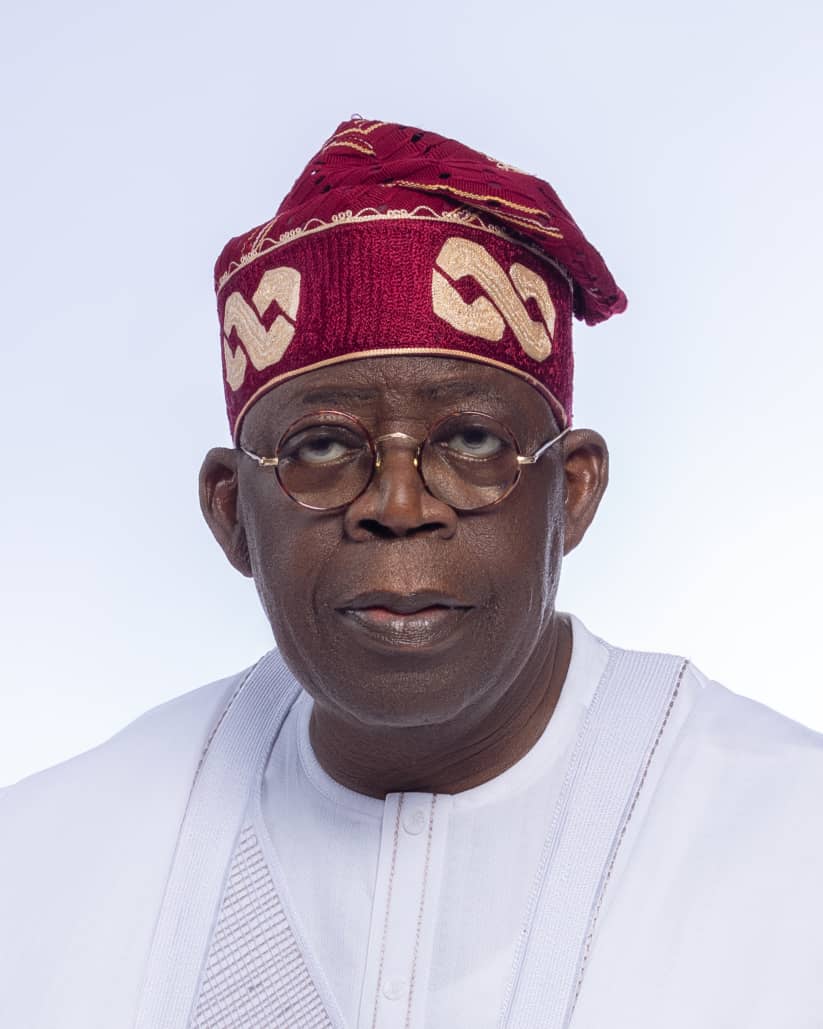
WHEN the 2023 presidential election results were announced, many analysts and commentators gave a largely unanimous verdict regarding the voting pattern in the South-east. The region had voted almost entirely along the ethnic line.
The figures told part of the story: Mr Peter Obi of the Labour Party swept the zone with over 1. 8 million votes.In comparison, Asiwaju Bola Tinubu of the All Progressives Congress recorded just about 127,000 votes across the five South-east states. Three years into the President Tinubu administration, that electoral map is already being redrawn not by rhetoric, but by landmark projects, appointments in strategic positions and deliberate political engagement.
The South-east has historically complained of federal neglect, specifically in relation to federal presence. President Tinubu has moved to close that gap with visible infrastructure projects. The federal projects, completed or ongoing in the zone, are now too numerous and one could easily lose count. They include the renewed federal push on the Enugu-Onitsha Expressway, Calabar-Ebonyi-Benue Trans-Saharan Superhighway, Enugu-Port Harcourt Road, and the Second Niger Bridge access roads.
For a region whose economy runs on trade, fixing these arteries will directly impact businesses in Onitsha, Aba, Nnewi, and other commercial hubs in the region. I saw some of these iconic roads and the high quality of work being done during a recent National Media inspection tour of the federal and state government projects in the South-east organised by the Renewed Hope Ambassadors in collaboration with the Presidential Media Team.
President Tinubu has also committed to the Eastern Rail Corridor from Port Harcourt to Maiduguri, under which the South-east segment is prioritised. This revives a transport mode that collapsed decades ago. The import becomes even more significant when some facts are considered. Some of the projects now being brought to life under President Tinubu, according to the Minister of Works, Engineer Dave Umahi, were conceived during the colonial era but left unrealised for decades.
Such renaissance is not limited to road infrastructure. On energy, the inclusion of South-east states in the Siemens Power project and renewed attention to gas infrastructure to power industrial clusters in Aba and Nnewi is important.
During the inspection tour, we visited the ANOH gas project (Assa North-Ohaji South Gas project), one of Nigeria’s largest natural gas development projects and a cornerstone of the Federal Government’s decade-long gas initiative. The processing plant, operated by ANOH Gas Company as a 50-50 joint venture between Seplat Energy Plc and Nigerian Gas Infrastructure Company, a subsidiary of NNPC Limited, was inaugurated by President Tinubu on May 15, 2024. It is already supplying processed gas to offtakers like Indorama Petrochemical Company.
The road and rail projects that crisscross the South-east landscape are not campaign promises. They are budget lines with contractors on site. In politics, delivery takes slogans for lunch. Inclusion in government and important appointments for South-easterners also matter. The 2023 figures showed APC’s vote deficit. However, the 2023-2026 appointments show a deliberate effort to correct the
representation deficit. Key South-Easterners now hold strategic positions in foreign affairs, defence, works, science & tech, and security agencies. The Minister of Foreign Affairs, Mrs Bianca Odumegwu-Ojukwu, from Anambra State (although Enugu-born), for instance, is today the biggest female political appointee in the Federal Executive Council.
Beyond the titles, the message is clear: the South-East is being brought to the centre of decision-making, not kept at the margins. This has started shifting the conversation from “exclusion” to “what more can we get done together.” The President’s economic reforms, such as unification of foreign exchange rates, removal of fuel subsidy, and recalibration of tax, may be tough. Still, the South-East is positioned to benefit most from the pivot to production and exports.
Aba’s Made-in-Nigeria campaign, Onitsha’s trading network, and Nnewi’s manufacturing base are being linked directly to federal grants, CBN intervention funds, and export support. And with the recent formal handover of the Akanu Ibiam International Airport, Enugu, to the concessionaire, the region’s logistics and commercial hub dream has received a massive boost.
The Tinubu administration is treating the South-east not just as a voting bloc, but as Nigeria’s industrial engine. In terms of political realignment, the numbers are also moving up. Elections are about addition. In 2023, APC polled 127,370 votes in the South-east.
The goal of the Tinubu administration for 2027 is not to win every state on day one, but to grow that base state by state, LGA by LGA. That growth is already visible: from not a single state in 2019, two states in 2023, APC has now moved to three.
The other two states in the zone are not opposed to President Tinubu. Anambra State Governor Chukwuma Soludo of the All Progressives Grand Alliance and his Abia State counterpart, Governor Alex Otti of the Labour Party, are strong supporters of President Tinubu, his reforms and reelection plans.
All the governors, not only South-East governors, acknowledge and say President Tinubu’s reforms have freed resources to the subnationals, which have, in turn, enabled them to engage in infrastructure projects. Governor Hope Uzodimma, who is also the Chairman of the Progressive Governors, has remained vocal in his support for the President and loud campaign for his second term.
Uzodimma is the Director-General of the Renewed Hope Ambassadors, the main campaign group for Tinubu’s reelection. Speaking at a state dinner for the National Media Team comprising over 50 journalists, editors and members of the Presidential Communications Team in Owerri, Imo State capital, two weeks ago, Uzodimma described President Tinubu as the Lee Kuan Yew of Nigeria. “In President Tinubu, I have seen another Lee Kuan Yew,” he said, praising the President’s bold economic reforms and expressing confidence that his performance would secure him a second term in 2027. “The old order is gone and there is now a new order. President Tinubu knew exactly what he came to do. He started implementing the reforms immediately because he understood the task before him,” he said.
Importantly, governors and stakeholders in the South-East zone are now in regular dialogue with the Presidency. Federal projects are being inaugurated with bipartisan presence. Youth and business groups who sat out in 2023 are now engaging with APC structures because they see tangible projects in their communities.
Politics in the South-East has always been pragmatic. Where federal presence is felt, political alignment follows. The 2023 electoral map showed where President Tinubu and APC were. Now, President Tinubu’s governance story in the South-East is showing where things are headed.
By linking infrastructure delivery with political inclusion and economic empowerment, the administration is redrawing the South-East political map from one defined only by election-day figures, to one defined by roads constructed, factories powered, and people included in governance.
The South-East deserves to be at the centre of Nigeria’s growth story. Under President Tinubu, I dare say that repositioning has begun.
Rahman is Senior Special Assistant to the President on Media & Special Duties.
Necessity of Nigeria’s Response to Xenophobia in South Africa
As the federal government collaborates with public-spirited airliners to bring back hundreds of Nigerians stranded in South Africa, the latest wave of xenophobia and Afrophobia in that country deserves a drastic response from the Federal Government of Nigeria. Days ago, the sixth evacuation flight returned to Nigeria.
It is appalling that the voluntary repatriations were delayed, and Nigeria still lacks a concerted response to the undignified treatment of citizens globally. Beyond the rancorous debates at the National Assembly, it is high time Nigeria took drastic reciprocal action, at least to announce to South Africa and other unfriendly countries that the dignity and respect of Nigerians are no longer negotiable.
The ongoing xenophobia in South Africa is neither the first nor most likely the last. Socioeconomic struggles for scarce resources and jobs routinely motivate anti-migrant crises. Unlike the past episodes in South Africa, the current protest has been deeply politicised and weaponised into a well-organised and publicised Afrophobia and mob violence against fellow Africans.
For context, South Africa faces structural challenges, with attendant social anger over high unemployment, livelihood security, healthcare, and housing. Decades after independence, 72 per cent of arable land and economic power remains in the care of the white minority. Instead of addressing these structural inequalities, political elites and sections of capital often channel public frustration towards migrants and refugees.
Coinciding with preparations for the November provincial elections, Afrophobia functions as a political diversion for the current administration’s inadequacies and failure of the post-Apartheid transformation plan in meeting the socioeconomic demands of average unemployed South Africans. The unemployed South African worker is encouraged to blame Zimbabwean and Nigerian street vendors, Ethiopian spaza shop owners, and Somali and Congolese traders instead of asking why wealth remains concentrated, why services collapse, and why economic opportunities are so scarce.
According to reports from the United Nations and the International Organisation for Migration, South Africa’s immigrant population is estimated at between three million and four million, accounting for approximately four to six per cent of the country’s total population.
Among them are the estimated 30,000 to 50,000 Nigerians in South Africa as of 2022. In contrast, the unemployment rate stands at around 32 to 33 per cent, rising to approximately 41 to 43 per cent when discouraged job seekers are included.
Young people constitute a significant proportion of these figures, with youth unemployment exceeding 45 to 60 per cent in some measures. So, how do the migrants account for the spike in unemployment, or do the political elites aim to shoehorn millions of poorly educated and disenchanted South Africans into the “stolen jobs” undesirable migrants have left behind? It is clearer that the current self-destruct spell on the rainbow nation is more political and a fool’s errand of chasing foreigners away as the solution to endemic social vices and economic exclusion.
In the wake of the June 30 deadline for all ‘illegal’ immigrants to flee South Africa, no fewer than 10,000 Africans have been repatriated by countries like Nigeria, Ghana, Zimbabwe, Malawi, and DR Congo. The South African minister in the presidency, Khumbudzo Ntshavheni, warned that fabricated videos were being circulated to undermine South Africa’s international reputation. Indeed!
It is a shame that modern Africa’s hatred for fellow Africans has assumed this self-destructive dimension. Post-Apartheid South Africa clearly loves its oppressors (whites) more than it does its fellow blacks.
This is evident in street protests and xenophobic violence culminating in the beatings, humiliation, and killing of their brothers and sisters whose forebears were actively instrumental to the independence South Africans enjoy today. Notably, those migrants who are now ridiculed as “illegal” or “undocumented” were created by immigration policies.
Many migrants initially entered South Africa legally and later became undocumented because of the dysfunction and hostility of the Department of Home Affairs. Applications are lost, permits are delayed, and people are effectively rendered illegal through bureaucratic exclusion.
From a continental perspective, the development is a betrayal of the old solidarity and Pan-Africanism. It made a mockery of the ethos of Ubuntu (“I am because we are”) a jussive value and the philosophical driving force through which African countries rallied behind South Africa in friendship, shared identity and brotherhood during the dark colonial era.
For instance, Nigerians’ contributions in resources and armaments to the apartheid struggle are blighted by the epistemic ignorance of the current generation of South Africans. Nigeria’s Prime Minister, Sir Abubakar Tafawa Balewa, wrote to the African National Congress in solidarity as early as April 1961, within a year of Nigeria’s own independence, and Nigeria went on to chair the United Nations Special Committee against Apartheid until 1994. From the South African Relief Fund paid by every civil servant, Nigeria funded the ANC and the Pan Africanist Congress for decades, hosted South African exiles, offered scholarships to South African students, and sent teachers, doctors, and architects into the struggle. Estimates of Nigeria’s total financial contribution to the anti-apartheid cause range into tens of billions of dollars. Nelson Mandela himself, on a visit to Lagos in 1990, thanked Nigeria as among the most generous of the movement’s benefactors.
Suffice to state that anti-immigrant protest documented or undocumented – is a modern phenomenon. Growing anti-migrant sentiment is not unique to South Africa; similar trends have emerged in countries such as the United States, the United Kingdom, and elsewhere.
Recall that Nigeria once experienced the Ghana-must-go episode, which saw the exodus of hordes of Ghanaian-origin teachers and students. The same malaise, though at a higher temperature, is afflicting South Africa, with a detestable uprising against Africans while the whites, Chinese, Indians and so on are securely protected. In that light, it is high time for Nigeria and every African nation whose citizens have been hunted, humiliated, or killed on South African soil to reconsider the terms of friendship with Pretoria.
Specifically, it behoves the Nigerian government to take a proactive measure to push back on the insidious hatred of the South Africans. Be it for killings of Nigerians, street humiliation or unprovoked aggression against kids, the onus is on the Nigerian government to reciprocate for each of the xenophobic aggressions against Nigerians.
Reciprocity is permissible in international diplomacy, and the odds favour whoever acts decisively. The Nigerian officials should not just demand compensation or allow the National Association of Nigerian Students (NANS) to take the law into their hands.
Nigeria must identify South African business establishments in Nigeria as those of the country that stripped Nigerians of dignity and respect. Those business interests would send the message home and across the world that Nigerian citizens can no longer be maltreated without dire consequences.
The long-term measure is for the Nigerian government to also fix Nigeria and make it liveable for all. The well-established fact is that more than half of Nigerians slaving away as irregular migrants in South Africa and around the world would not venture if Nigeria gave prospects for their hopes and aspirations.
This is also evident in the accounts of those who were repatriated from South Africa, with the impression that many lack sufficient skills to improve their chances of integration into the challenging economic environment. A more functional South Africa would have avoided the current xenophobic episode.
The misguided average South Africans are growing Afrophobic with the hope that it will ‘fix’ their country. Nigeria should delay no further till the day Nigerians, in protests, start leading mass protests against the government in the bid to ‘fix’ the country.



Troops Rescue 359 Victims, Arrest Terror Suspects, Destroy Oil Theft Networks Nationwide – DHQ
ShareBy David Torough, Abuja The Defence Headquarters (DHQ) has announced significant operational gains by the Armed Forces of Nigeria (AFN)...

UNICEF Support Benue Govt With 400 School-in-a-Box Kits For BRACE-UP Project.
ShareFrom Attah Ede, Makurdi The United Nations Children Fund, UNICEF with funding from Swedish International Development Cooperation Agency(SIDA), has supported...
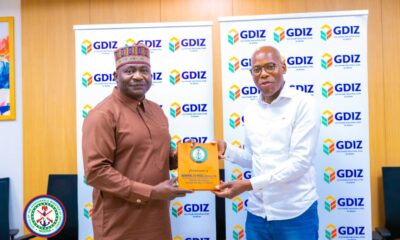

Nigeria, Benin Republic Collaborate on Regional Security
ShareBy Tony Obiechina, Abuja The Minister of Defence, General Christopher Gwabin Musa has successfully concluded a strategic three-day working visit...
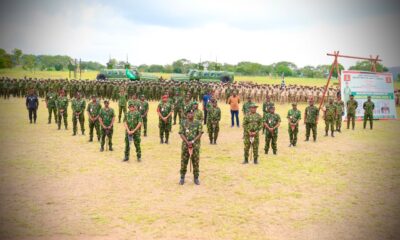

Nigerian Army Expands Combat Capability, Tasks Newly Trained Troops on Professionalism
ShareBy David Torough, Abuja The Nigerian Army has intensified efforts to strengthen its operational capability with the graduation of soldiers...

RMAFC Set to Enforce Oil Host Community Accountability
ShareBy Tony Obiechina, Abuja The Revenue Mobilisation Allocation and Fiscal Commission (RMAFC) has given the Nigerian Upstream Petroleum Regulatory Commission...
UNICEF Renovates Classrooms, Donates Educational Materials to IDPs Children in Benue
ShareFrom Attah Ede, Makurdi The United Nations Children’s Fund (UNICEF) with support from Swedish International Development Agency (Sida) has renovated...


NAMA Demands 56 Per Cent Share, Aviation Varsity 10 Per Cent of Aviation Statutory Charges
ShareBy Ubong Ukpong, Abuja The Nigerian Airspace Management Agency (NAMA) on Thursday, asked the National Assembly to increase its share...
FCT Closes Unregulated Motor Parks as New Bus Terminals Become Operational
ShareBy Laide Akinboade, Abuja The Federal Capital Territory (FCT) Administration (FCTA), on Thursday, said it has concluded arrangements to clamp...
Mahmoud Urges MAN to Embrace Smart Technology, Capital Restructuring For Growth
ShareBy Laide Akinboade, Abuja The Minister of State, Federal Capital Territory (FCT), Dr. Mariya Mahmoud, has called on manufacturers to...

Advertising, Creative Industries Key Drivers of Economic Growth – Idris
ShareBy David Torough, Abuja The Minister of Information and National Orientation, Mohammed Idris, has said the Tinubu Administration recognises Nigeria’s...