
NEWS
Osun Amotekun Commander Assures Residents of Adequate Security Ahead August 15 Guber Poll

From Ayinde Akintade, Osogbo
The Corps Commander of the Osun Amotekun Corps, Hon. Adekunle Isaac Omoyele, has reaffirmed the readiness of the corps to ensure maximum security before, during and after the forthcoming gubernatorial election in Osun State, while calling for a peaceful, transparent and violence-free electoral process.
Dr.
Omoyele made this assurance while receiving representatives of the Kimpact Development Initiative (KDI) at the headquarters of the Osun Amotekun Corps in Osogbo, during a strategic engagement focused on election security, intelligence gathering and public safety.Speaking during the visit, the representative of KDI, Oluwafemi Adebayo, commended the leadership of the Osun Amotekun Corps for receiving the delegation and described the visit as part of efforts to strengthen collaboration with security agencies and grassroots security outfits ahead of the election.
According to him, KDI’s mission is to work closely with security stakeholders in intelligence gathering and election monitoring to ensure the safety of residents, electoral officials and observers expected in the state during the electoral exercise.
Adebayo explained that KDI, a non-governmental and non-profit organisation established in 2014, has been carrying out security intelligence tracking across Osun State over the past three months in preparation for the election.
He stated that the organisation visited the Corps Commander to benefit from his wealth of experience in the security sector and to gain deeper insight into the security architecture of the state, including areas considered security flashpoints.
He further disclosed that KDI was one of the organisations behind the “Vote No Fight” campaign during previous elections in Osun State and across Nigeria, adding that the group remains committed to promoting peaceful democratic participation and reducing electoral violence.
“We are going round the nook and crannies of the state to understand the situation on ground and ensure that residents, visitors and election observers are adequately protected during the election period,” he said.
Adebayo also applauded the Osun Amotekun Corps for what he described as its outstanding performance in maintaining peace and security across the state.
The Field Commander of the Corps, Dr. Capt. Olusoji Benedict Akanni, appreciated the KDI delegation for recognising the importance of community-based security outfits in maintaining peace and stability.
He noted that the Osun Amotekun Corps remains committed to the protection of lives and property, stressing that the intelligence and operations units of the corps are working tirelessly to ensure peace and rapid response to any form of security threat.
“There is no cause for alarm. Our intelligence network and operational structures are active and fully prepared to respond to any emergency or security breach in any part of the state,” Akanni stated.
In his remarks, the Corps Commander, High Chief Dr. Hon. Adekunle Isaac Omoyele, applauded KDI for finding the Osun Amotekun Corps worthy of collaboration in the collective fight against insecurity through intelligence sharing and strategic partnership.
Omoyele maintained that Osun State remains peaceful and secure, noting that the current stability being enjoyed in the state is a product of years of strategic security planning and collaboration among stakeholders.
Reflecting on his experience in security operations, he recalled his role during the period when incidents of kidnapping and armed robbery were rampant in parts of the state, including Ikirun, Iree and Iragbiji.
He explained that while serving as OC SARS at the time, strategic committees and security interventions were established to tackle criminal activities, leading to the restoration of peace in affected communities.
Speaking on electoral reforms, Dr. Omoyele advocated for the adoption of electronic voting in Nigeria, describing it as a modern solution capable of reducing electoral violence, vote manipulation and unnecessary exposure of voters to danger during elections.
According to him, electronic voting would enable citizens to cast their votes safely from their homes or designated locations without overcrowding polling units.
Using banking technology as an example, he noted that if Nigerians can conveniently use Automated Teller Machines (ATM) and carry out financial transactions electronically, then the country can also deploy technology-driven voting systems to ensure credible elections.
He stressed that a properly designed electronic voting application with strong security features would prevent double voting and significantly curb election-related criminal activities.
“Electronic voting will promote peaceful and transparent elections. With technology, people can vote safely from anywhere, just as it is done in some advanced countries,” he added.
The Corps Commander also called on the government to prioritise the welfare and safety of security personnel deployed for election duties.
He observed that many officers drafted from outside states often face accommodation challenges during elections, forcing some to sleep in poor conditions, which affects their alertness and effectiveness while on duty.
Omoyele therefore recommended the establishment of standard recreation and accommodation centres in states across the country to provide decent welfare facilities for security personnel, election observers and monitors during major electoral exercises.
He assured residents of Osun State that the Osun Amotekun Corps would continue to uphold its mandate of protecting lives and property and ensuring a peaceful atmosphere throughout the election period.
Present at the meeting were members of the management team of the Osun Amotekun Corps, including the Director of Administration and Supply, Dayo Adigun; Director of Finance and Account, Grace Omitade; and the Public Relations Officer, Yusuf Idowu Abass. Members of the KDI delegation present at the meeting included Umar Damassabe Muhammed, Bunmi Ewelade and Hussein Gabriel.

From Yagana Ali, Yola
Governorship aspirant under the platform of the All Progressives Congress (APC), Comrade Salihu Mustapha, has stressed the importance of empowering traditional institutions to strengthen security, promote economic growth, and accelerate grassroots development across Adamawa State.
Mustapha made this statement during a visit to Borong community, where he received a warm welcome from community leaders, youths, and residents.
Speaking during the visit, the APC aspirant said traditional rulers occupy strategic positions in society and should be fully integrated into governance and community development efforts.
According to him, traditional institutions remain critical in maintaining peace, resolving conflict, preserving cultural values, and supporting government efforts in addressing insecurity at the grassroots.
He noted that empowering local communities through their traditional leadership structures would create a more inclusive system capable of driving sustainable development and economic progress.
“Traditional rulers are closer to the people and understand the challenges facing their communities. Strengthening these institutions will go a long way in improving security and fostering development at the grassroots,” Mustapha stated.
The governorship hopeful further assured the people of his commitment to improving infrastructure, supporting local economies, and implementing people-oriented policies aimed at uplifting rural communities.
Responding on behalf of the community, the Murum Bula praised Mustapha for identifying with the people of Borong and described him as a leader with passion for grassroots development.
The traditional ruler expressed confidence that with Mustapha’s personality, experience, and style of leadership, communities across Adamawa State would witness meaningful development if he is elected into office.
He also appealed to the APC governorship aspirant to give priority attention to the road linking Borong community, describing it as a major challenge affecting transportation, trade, and socio-economic activities in the area.
The monarch said rehabilitation of the road would greatly improve the living conditions of residents and open up the community for greater economic opportunities.
From Rabiu Sanusi, Kano
The Kano state government has vowed to continue collaboration with Federal Government and Development Partners on educational development.
The Kano State Governor, Abba Yusuf made the statement while the State Minister for Education, Professor Suwaiba Sa’id Ahmed paid him a courtesy visit in Government House.
This was contained in a press release issued by Mustapha Muhammad, the Chief Press Secretary to the Kano State Governor, Alhaji Abba Kabir Yusuf.
“We will continue to collaborate, support every move in developing education in Kano state,” the Governor has said.
He added that the Adolescent Girls Initiative for Learning and Empowerment (AGILE) project has become a beacon of hope strengthening education through infrastructural development and teachers as well.
Earlier on, the Minister of State for Education, Professor Suwaiba Sa’id Ahmed informed the Governor that the state has successfully secured World Bank No Objection on the 49 newly schools that will gulp twenty three billion naira (N23b), adding that the contractors have been mobilized.
This according to the Minister will expand access to education for underserved communities.
She commended the government on the quality of the projects at schools, making a reference to schools she visited, urging the AGILE project to emulate from the State government.
By Raphael Atuu, Abuja
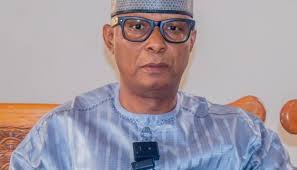
Minister of Housing and Urban Development, Muttaqha Rabe Darma, has reaffirmed the commitment of the federal government to transforming Nigeria’s informal settlements into dignified, liveable communities, describing it as a priority of the present administration.
Darma made this commitment during a courtesy visit to his office by the Nigeria Institute of Town Planners (NITP), led by its National President, Dr.
Ogbonna Chime.The Minister identified specific areas in Nigeria, such as Makoko in Lagos state, Gishiri in Abuja, some settlements in Kano and Port Harcourt that requires upgrading from slum conditions, pledging that the ministry’s forthcoming urban development policy would prioritise upgrading these areas to make them habitable for the people living there.
Acknowledging that a regional and urban development law enacted in 1992 has yet to be implemented, Minister Darma committed to thoroughly reviewing the law, noting that collaboration with the RegionalDevelopment Ministry would be essential in determining how to achieve full implementation, He also invited the NITP to provide further guidance on the matter.
On encouraging the use of indigenous experts, the Minister reaffirmed the administration’s unwavering commitment to utilising indigenous consultants exclusively, describing this as a deliberate strategy to drive employment, transfer skills, and grow local capacity in the built environment sector.
“The Ministry already trained individually about 2000 of them to get skills in the built environment, and these young people are all over Nigeria applying what they learnt”, he informed.
Addressing the challenge of replacing retired staff earlier mentioned by the guests from NITP, Darma called on professionals and public servants to embrace innovation and Artificial Intelligence (AI), noting that technology would increasingly shape the future of work.
He stressed that AI would not replace people who understand and effectively use technology, encouraging continuous learning and upskilling among professionals.
Responding to the funding request the Minister told the NITP and professional bodies to think outside the box and find ways and means that will keep them on stream as they are considered professionals.
Accordingly, Darma invited the Institute to submit further recommendations and professional input for consideration in the Ministry’s forthcoming strategic development plan.
On the invitation to the upcoming NITP 60th anniversary in October, the Minister offered to attend the event personally, hoping that the already scheduled political activities do not conflict with it.
The National President of the NITP, Dr. Ogbonna Chime, told the minister that their visit was to formally welcome him to the Ministry and reaffirm the Institute’s readiness to work and support the Ministry in achieving its mandate.
He appealed to the Minister to sustain efforts towards the full implementation of the 1992 Urban and Regional Planning Law, describing it as critical to effective physical planning and urban development in the country.
Dr. Ogbonna also called for increased attention to urban development initiatives, engagement of indigenous town planning consultants for government projects, replacement of retired town planners and other built environment professionals in the Ministry, as well as improved funding for regulatory bodies in the sector to strengthen professional standards and reduce unemployment.
He further invited the Minister to the 60th anniversary celebration and 57th International Conference of the Nigerian Institute of Town Planners scheduled to hold in Lagos State, in October this year.


Osun Amotekun Commander Assures Residents of Adequate Security Ahead August 15 Guber Poll
ShareFrom Ayinde Akintade, Osogbo The Corps Commander of the Osun Amotekun Corps, Hon. Adekunle Isaac Omoyele, has reaffirmed the readiness...


Mustapha Calls for Empowerment of Traditional Institutions
ShareFrom Yagana Ali, Yola Governorship aspirant under the platform of the All Progressives Congress (APC), Comrade Salihu Mustapha, has stressed...

Kano Partners FG on Education
ShareFrom Rabiu Sanusi, Kano The Kano state government has vowed to continue collaboration with Federal Government and Development Partners on...

Housing Minister Reaffirms Commitment to Slums Upgrade, Modernising Urban Landscape in Nigeria
ShareBy Raphael Atuu, Abuja Minister of Housing and Urban Development, Muttaqha Rabe Darma, has reaffirmed the commitment of the federal...
ShareKano Censorship Board Suspends Two Kannywood Actors over Indecent Video From Aliyu Askira, Kano The Kano State Censorship Board has...
Pastoralists Commit to Tinubu’s Livestock Vision, Back National Ranching Policy
ShareBy Raphael Atuu, Abuja The Federal Ministry of Livestock Development has reaffirmed its commitment to transforming Nigeria’s livestock sector following...
Vision 2063: OWORAC Cautions on Water Privatisation
ShareFrom Sylvia Udegbunam, Enugu The Our Water Our Right Africa Coalition (OWORAC) has raised concerns about Africa’s growing push towards...
LGC Boss Rewards Outstanding Students, Teachers at MAIFATA Prize Award Day in Kano
ShareFrom Rabiu Sanusi, Kano The Chairman of Bichi Local Government Council, Hon. Hamza Sule Maifata, has reaffirmed his administration’s commitment...


AFAN Seeks Early Distribution of Farm Inputs to Boost Food Production in Benue
ShareFrom Attah Ede, Makurdi All Farmers Association of Nigeria (AFAN), Benue State chapter, has called on Federal and State governments...


Dangote Industrialising Africa, Says NCCIMA DG
ShareThe Director General of the Niger Chamber of Commerce, Industry, Mines and Agriculture (NCCIMA), Adamu Salihu, has described the Dangote...