
COVER
Outrage as Enugu Govt Squanders N58bn in One Month, Seeks N170bn Loans

By Sylvia Udegbunam, Enugu
Contrary to claims that part of the N170 billion loan recently approved by the Enugu State House of Assembly was to help in financing the N58 billion supplementary budget, investigations have revealed that the government has already exhausted the sum from the coffers of the state government.
A member of the State Assembly who spoke on anonymity, alleged that findings have indicated that the government has drawn down on the budget, which suggested nondisclosure of the purpose for which the loan facility was going to be put.
The state government stirred controversy following the approval of the N170 billion loan facility by the Enugu State House of Assembly as stakeholders accused the governor of piling debts on the state even when there are no indications of any capital projects on ground to justify the demand.
DAILY ASSET recalls that on September 12, the House of Assembly approved the N58 billion supplementary budget for the government, and while presenting the request for the loan facilities gave the impression that the money was to help in financing the supplementary budget.
According to findings, the loan which was given expedited approval by the state assembly, will raise the state’s debt profile to more than N300 billion – a development that has alarmed the people of the state, who have been wondering how the government wants to finance the piling debts.
This is even as most of the loans were said to be chargeable to the state’s internally generated revenue (IGR) of the state that is largely opaque, with little or no reporting as the state generates only N31 billion per annum from IGR which is five times lower the amount of the loan approval.
It therefore means that it would take more than five years for the state to successfully service and repay the loan, contrary to the advertised repayment plan for the loan, which was said to be 48 months (four years).
Meanwhile, the average receipts from the federation account to Enugu State is N6.7 billion monthly, indicating that the government will use all its monthly receivable to pay for the loan, and it will take more than 25 months to offset the debt.
Reacting to the development, the Enugu State chapter of the Labour Party had issued a statement Tuesday, faulted the loan and described it as catastrophic.
In a statement signed by the Chairman of the party, Casmir Agbo, and Publicity Secretary, Onuora Odo, said, “We are expressing our shock and indignation over the borrowing disposition of Mbah-led administration.
“We are not of the view that the government should not borrow, we are simply alarmed and shocked at the clinical precision and catastrophic rapidity with which the borrowing occurs. Moreso when the loans are not channelled towards any infrastructural developments.
“You can observe that both the social and the mainstream media have been on fire since the 9th day of October 2023 when the request made in writing to the leadership of the State Assembly hit the media space.
“The purpose of the loan was not stated but, we are strongly persuaded that the purpose is tailored towards self-enrichment and satisfaction of personal greed.
“Sadly, the level of infrastructural decay in Enugu is nothing to cheer about and the governor is busy scooping monies from left, right, and center.”
On Wednesday, the Human Rights Writers Association of Nigeria (HURIWA) also issued a statement condemning the loan request, describing it as deeply alarming.
“The approval process within the state Assembly was astonishingly rushed, devoid of the requisite due diligence and public discourse essential for decisions of such financial magnitude. This hastiness has left the people of Enugu State in the dark regarding the loan specifics and its intended benefits for the state. This lack of transparency and accountability undermines the principles of good governance.
“Responsible governance should prioritize the citizens’ welfare. Leaders must ensure that public funds are employed for the people’s benefit. Governor Peter Mbah and the Enugu State House of Assembly must be held accountable for their actions and decisions.
“The people of Enugu State deserve leaders who prioritize their welfare and are committed to responsibly managing public funds,” the Labour Party lamented.
However, the Special Adviser to the Governor on Media, Dan Nwomeh, who responded to a call for clarification described this as falsehood.
Nwomeh said the issue of Enugu State government using N58 billion supplementary budget in a month, “it’s total falsehood.”
According to him, supplementary budget is a law and you make the supplementary budget detailing everything you are going to do with that budget.

By Laide Akinboade, Abuja
As part of efforts to reposition the newspaper for optimum corporate performance, the management of Asset Newspapers Limited, Publishers of DAILY ASSET, has announced the appointment of David Torough as the Editor of the Abuja-based national daily.
A statement by the management said the appointments were part of the company’s new strategy to further penetrate the various states in the country and raise its readership and patronage.
“DAILY ASSET is widely acceptable across the country and to maintain our leadership position, we need to increase management presence, hence the need to create new Bureau offices in some locations outside Abuja and Lagos,” the statement quoted the Publisher/ Editor-in-Chief, Dr Cletus Akwaya to have said.
In a statement yesterday, Publisher and Editor-in-Chief of the fast-growing daily, Dr. Cletus Akwaya said the appointment was part of the new strategy to properly situate the paper for better productivity.
“DAILY ASSET has a commitment with the Nigerian people. We are determined to weather the storm and give Nigerian readers a Newspaper that satisfies their yearnings and reading pleasure and we can only do that with the right set of professionals,” the statement said.
Akwaya, a former Commissioner of Information from Benue State said the difficult times being faced by Nigerians posed a great challenge to the media as the people deserved credible information with which to make choices.
“We have a bond with the people, to offer credible information at all times in the best tradition of the Nigerian Press and on this scale of objectivity, truth and fairness, we pledge to remain steadfast no matter the challenges,” Akwaya was quoted to have said.
He said the newspaper will maiantin its daily print run and circulation to all states of the federation and urged advertisers to take advantage of the deep penetration of the Daily Asset brand to send their messages.
Torough, the new Editor has had a steady rise in the Newspaper in the last five years.
A graduate of Mass communication of the Benue State University, Makurdi, Torough joined the company in 2022 as Benue State Correspondent. He was spotted for his brilliance and redeployed to Abuja the following year and promoted to Deputy News Editor. He was subswuently named Deputy Editor of the paper, a position he held until the recent appointment.
Torough has attended several journalistic workshops and trainings to properly equip himself for the task ahead.
The statement also said the Management named Eze Okechukwu as Deputy Editor.
Before his elevation as Deputy Editor, Eze has been Deputy Politics Editor and DAILY ASSET Newspaper correspondent covering the Senate, having joined the organization in 2021.
Born on March 10, 1975, Eze holds a Masters Degree in Mass Communication from the Enugu State University of Science and Technology.
Eze began his journalism career with Daily Star, Enugu and later worked with Daily Trust Newspaper, Abuja as sports reporter.
Aside from his journalistic excellence, he has a great deal of passion for sports.

From Ngutor Dekera, Kaduna and Aliyu Askira, Kano
Northern governors and traditional rulers yesterday called for the suspension of mining activities across the region for six months, blaming illegal mining for worsening insecurity in many states.
The resolution was contained in a communiqué issued after a joint meeting of the Northern States Governors’ Forum and the Northern Traditional Rulers’ Council held at the Sir Kashim Ibrahim House, Kaduna. The meeting, chaired by the Gombe State Governor and NSGF Chairman, Muhammadu Yahaya, had in attendance the 19 northern governors and chairmen of the 19 states’ traditional councils.The Forum expressed concern over the escalating violence in parts of the North, including the killings and abductions recently recorded in Kebbi, Kwara, Kogi, Niger, Sokoto, Jigawa and Kano states, as well as renewed Boko Haram attacks in Borno and Yobe.“The Forum extends its deepest condolences and solidarity to the governments and good people of the affected states,” the communiqué said, noting that the attacks on schoolchildren and other citizens had become “unacceptable tragedies” that required urgent collective action.It commended President Bola Tinubu for what it described as the Federal Government’s “firm response” to recent abductions and insurgency threats, especially the rescue of some abducted pupils.The governors also saluted security agencies for their sacrifices on the frontlines.“We resolved to renew our support for every step taken by the President and Commander-in-Chief to take the fight to insurgents’ enclaves in order to end the criminality,” the Forum stated.A major highlight of the meeting was the North’s renewed push for the establishment of state police, with governors and traditional rulers insisting that decentralised policing had become inevitable.“The Forum reaffirms its wholehearted support and commitment to the establishment of state police,” the communiqué added, urging federal and state lawmakers from the region to “expedite action for its actualisation.”On illegal mining, the governors said criminal mining networks were fuelling violence and providing resources for armed groups.As a corrective measure, they asked Tinubu to direct the Minister of Solid Minerals to impose a six-month suspension of mining activities in order to allow for a full audit and revalidation of licences.“The Forum observed that illegal mining has become a major contributory factor to the security crises in Northern Nigeria. “We strongly recommend a suspension of mining exploration for six months to allow proper audit and to arrest the menace of artisanal illegal mining,” it said.To strengthen the fight against insecurity, the governors also announced the creation of a regional Security Trust Fund.Under the proposed arrangement, each state and its local governments will contribute ₦1bn monthly, to be deducted at source under an agreed framework.They said the fund would help provide sustainable financing for joint operations, intelligence-driven interventions and coordinated security responses across the region.At the end of the meeting, the Forum reaffirmed its commitment to unity and collective responsibility.“Only through unity, peer review and cooperation can we overcome the pressing challenges before us,” it declared.The Forum agreed to reconvene on a date to be announced.Meanwhile, Nigeria’s worsening security crisis took a grim turn on Monday as bandits launched fresh attacks in Kano State, abducting 25 villagers, even as the Federal Government raced to secure the release of more than 300 Catholic school children kidnapped in Niger State.In the early hours of Monday, armed bandits invaded Unguwar Tsamiya—popularly called Dabawa—in Shanono Local Government Area of Kano State, whisking away nine men and two women after shooting into the air and assaulting residents. The attackers also rustled two cows.A resident lamented the community’s helplessness: “We cannot do otherwise; most of us cannot leave because we have nowhere to go. This is our place, our land and everything is here.”The assault came less than 24 hours after a similar attack on Yan Kamaye in Tsanyawa LGA, a community along the volatile Katsina border.In Niger State, National Security Adviser Nuhu Ribadu has assured distraught families of St. Mary’s Co-Education School, Kontagora that the more than 300 students and staff abducted on November 21 will return home “soon.” Ribadu, who led a high-level federal delegation to the school on Monday, said the abductees are safe, though he offered no specifics on their location or the status of rescue operations.According to Daniel Atori, spokesman for the Catholic bishop overseeing the school, the NSA reassured officials: “The children are where they are and will come back safely.”The St. Mary’s attack is part of a worrying resurgence of mass kidnappings reminiscent of the 2014 Chibok schoolgirls’ abduction. Security analysts warn that banditry has evolved into a “structured, profit-seeking industry,” with hundreds of Nigerians abducted in November alone.The Kontagora school abduction occurred the same week 25 girls were kidnapped in Kebbi State—victims who authorities say have since been rescued through “non-kinetic” means. About 50 of the St. Mary’s hostages have also managed to escape.Ribadu’s delegation, which included the Minister of Humanitarian Affairs and the Director-General of the Department of State Services (DSS), reaffirmed the government’s commitment to securing the freedom of all abducted citizens.As communities from Kano to Niger continue to bear the brunt of these violent incursions, the escalating spate of kidnappings underscores the urgent national demand for a more decisive and coordinated security response.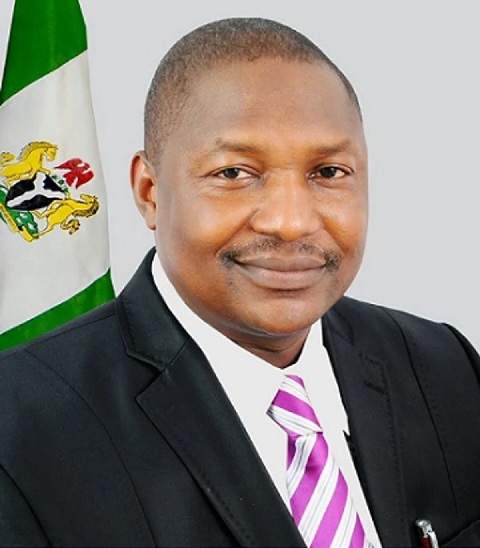
By David Torough, Abuja
The Economic and Financial Crimes Commission (EFCC) said former Attorney‑General of the Federation and Minister of Justice, Abubakar Malami, will face a team of interrogators at its office daily throughout December.
A credible source in the EFCC said on Monday that the daily appearance was part of an ongoing investigation into the whereabouts of an alleged 490 million dollars Abacha loot secured through a Mutual Legal Assistance (MLAT) request. The source said that Malami, who was summoned for interrogation by the EFCC on Saturday, was barred from leaving Nigeria for the next one month.According to the source, one of the conditions for his release on Saturday was that he should report daily to the EFCC Headquarters in Abuja for further interrogation.The source said Malami would have to appear daily at the anti-graft office due to the volume of the investigation and the seriousness of the charges against him.”We seized his passport, it is the normal routine during investigation, but he has to report at the EFCC headquarters in Abuja every day for the next month.”He will be reporting for further investigation throughout December.”He will be reporting every day, starting from Dec. 1st to Dec. 31st.He will appear before the team of investigators for the entire month of December.”He will be reporting to EFCC for investigation for the period because of the volume of the investigation and the seriousness of the charges against him,” the source added.According to the source, a fact sheet on the former minister revealed that Malami had several issues to clarify with the EFCC within the coming weeks.“We have asked him to explain the whereabouts of the $490 million Abacha loot secured through MLAT.“We didn’t say he stole money, but he should account for the loot. This is one of the issues he will clarify to our investigators.”The commission cited the large volume of documents he must review and the need for extensive interviews as reasons for seizing his passport.The source said EFCC would not engage in a war of words but would release its findings after a thorough investigation.Malami, in a statement by his media aide, Mohammed Doka, on Monday in Abuja, however, described the EFCC investigation as a political witch‑hunt.He confirmed he honored an EFCC invitation on Nov. 28, describing the engagement as fruitful and expressing confidence that the probe would vindicate him.Malami described the EFCC’s allegations as baseless, illogical and devoid of substance, insisting they collapse under factual scrutiny.


Nigeria’s Inflation Rate Drops to 15.43 Per Cent in July – NBA
ShareBy Tony Obiechina, Abuja Nigeria’s headline inflation rate fell to 15.43 per cent in July 2026, down from 15.91 per...

Igbinedion Varsity, EduTech Global Partner On Digital Education, Access
ShareBy Julius Tambaya, Abuja Igbinedion University, Okada, one of Nigeria’s leading private universities, has entered into a strategic partnership with...

Xenophobia: FG Evacuates 83 More Nigerians from South Africa
ShareBy David Torough, Abuja The Federal Government has announced the arrival of another batch of 83 Nigerians evacuated from South...

Kaduna Varsity Lecturers’ Exodus Worsens as ASUU Issues Strike Ultimatum
ShareFrom Agbo Emmanuel, Kaduna More than 200 lecturers, including professors and other experienced academic staff, have left Kaduna State University...

NES 32 to Drive National Dialogue on Jobs, Productivity, Shared Prosperity
ShareBy Ayanyinka Ayanlowo Nigerian Economic Summit to Chart the Next Phase of Nigeria’s Economic TransformationThe Nigerian Economic Summit Group (NESG)...


Komaiya Wife Celebrates 29 Years of Marriage, Calls Husband ‘Divine Covering’
ShareBy David Torough, Abuja Pastor Mrs Esther Komaiya has poured out heartfelt tributes to her husband, Pastor Korede Komaiya, as...


FRSC Apprehends Mixed Loader
ShareThe Federal Road Safety Corps (FRSC) has apprehended one Umar Muhammadu for allegedly mixed loading a Mitsubishi Canter with no...

NYSC Hails Corps Members’ Discipline, Commitment during Osun Governorship Election
ShareThe Osun Coordinator of National Youth Service Corps (NYSC), Ekeng Kubiangha, has commended corps members deployed as ad hoc staff...

NiMet Predicts Three-day Cloudy, Thundery Weather Activities
ShareThe Nigerian Meteorological Agency (NiMet) has predicted cloudiness and thunderstorms from Sunday to Tuesday across the country. NiMet weather outlook...

Wike Signs 26,272 C of Os in Three Years of Tinubu’s Administration
ShareThe Minister of the Federal Capital Territory (FCT), Mr Nyesom Wike, has signed 26,272 Certificates of Occupancy (C of Os)...