
Foreign News
Pakistani Strikes Kill 36 Civilians, Wound 163


Pakistani strikes in three eastern provinces of Afghanistan killed 36 civilians and wounded 163, the Taliban government’s deputy spokesman said on Monday.
“The attacks carried out last night resulted in the martyrdom of 36 civilians, including women and children, while 163 others sustained injuries,” Hamdullah Fitrat posted on his X account.
Pakistani security forces Sunday carried out a ground operation along the Pakistan-Afghanistan border, followed by “calibrated strikes” against militant hideouts and safe havens, officials said.
In a post on X, Pakistani Information Minister Attaullah Tarar said the operation was launched in response to multiple militant attacks across the country. There was no immediate response from Afghanistan.
Pakistan has witnessed a surge in militant attacks targeting police and security forces in recent years. Authorities have blamed the Pakistani Taliban, known as Tehrik-e-Taliban Pakistan, or TTP, and allied militant groups for most of the violence.
It comes a day after militants armed with guns and explosives targeted the regional headquarters of the paramilitary Rangers in the southern port city of Karachi, killing three soldiers. Security forces killed three attackers and arrested another assailant, whom the military identified as an Afghan national in wounded condition.
Jamaat-ul-Ahrar, a breakaway faction of the Pakistani Taliban, claimed responsibility for the Karachi attack in a statement Saturday night.
Tarar said Pakistan’s latest operation along the Afghan border targeted hideouts and safe havens of the Pakistani Taliban. The Pakistani Taliban are a separate militant group from the Afghan Taliban, although the two are allies. The Afghan Taliban returned to power in neighboring Afghanistan in 2021.
The latest operations are likely to further strain already tense relations between Islamabad and Kabul.
Sunday’s cross-border strikes and ground operation came less than three weeks after Pakistan’s military launched airstrikes on what it said were militant hideouts in Afghanistan. They ended about a month of relative calm following what Islamabad had described as an “open war” between the neighboring countries, despite international efforts to broker a lasting peace.
The escalation follows months of tit-for-tat military action between the two countries. Hundreds of people have been killed in cross-border fighting since February, when Afghanistan launched retaliatory strikes after Pakistan carried out airstrikes inside Afghan territory.
Multiple rounds of internationally mediated peace talks have failed to secure a lasting ceasefire. China also hosted the two sides in April and Beijing later said Pakistan and Afghanistan had agreed not to escalate their conflict and to explore a solution.
Pakistan since last year has carried out multiple strikes along the border and inside Afghanistan, targeting alleged hideouts of TTP and other militants. Pakistan accuses Afghanistan’s Afghan Taliban government of harboring militants who carry out deadly attacks inside Pakistan, especially the TTP. Kabul denies the charge.

Researchers with the Pan American Health Organisation (PAHO), a sub-agency of the World Health Organisation (WHO) said nearly 470 million people across North and South America have at least one neurological disorder,
According to a new study published in The Lancet Regional Health Americas, the figure represents two in five people living in the Americas and includes conditions such as migraine, stroke, epilepsy and Alzheimer’s disease
PAHO, in a statement on Wednesday stated that neurological disorders affect the brain, spinal cord and peripheral nerves and can impair movement, memory, learning, communication and behaviour,
The study also found that age-adjusted death rates have declined since 1990, meaning more people now survive these conditions and require access to long-term care and support services.
However, not all people living in the Americas can access this care.
They found nearly a fourfold difference between countries with the highest and lowest burden – based on a measure of years of life lost to disease.
Countries with the highest burden included Haiti, Guyana and Suriname, while countries with the lowest burden included Colombia, Peru and Argentina.
The disparities in care access reflect differences in exposure to risk factors as well as persistent gaps in access to prevention, diagnosis, treatment, rehabilitation and long-term care.
In terms of risk factors, PAHO said a significant share of neurological health loss can be prevented by controlling or avoiding high blood pressure, diabetes, obesity, tobacco use and harmful environmental exposures.
In 2023, these conditions were responsible for an estimated 1.1 million deaths and 37.5 million disability-adjusted life years (DALYs), a measure that combines years of life lost due to premature death and years lived with illness or disability.
Together, they accounted for about 12 per cent of the total burden from no communicable diseases and injuries in the Americas.
The study found that a substantial share of neurological health loss in the Americas could be prevented by reducing exposure to modifiable risk factors.
High blood pressure was the leading risk factor for stroke, while elevated blood glucose levels contributed significantly to the burden of Alzheimer’s disease and other dementias.
Researchers also identified environmental exposures, particularly lead and air pollution, as important contributors to several neurological conditions.
“Many neurological disorders share risk factors with other noncommunicable diseases,” Dr. Anselm Hennis, Director of PAHO’s Department of Noncommunicable Diseases and Mental Health and co-author of the study, said.
“Improving prevention and control of high blood pressure, diabetes, obesity, tobacco use, and harmful environmental exposures could deliver major benefits for brain health across the region.”
“Protecting brain health starts long before the first symptoms appear,” Renato Oliveira, Chief of PAHO’s Mental Health Unit and co-author of the study, added.
“Investing in prevention and risk-factor control can help reduce the burden of neurological disorders while also lowering the risk of other non-communicable diseases that share the same determinants.”
The authors conclude that addressing the growing burden of neurological disorders will require stronger prevention efforts, integrating neurological care into primary health care, and expanding access to rehabilitation, long-term care, and disability support services.
With populations across the Americas aging rapidly, these investments will be critical to reducing disability and improving quality of life in the decades ahead.

A 13-year-old boy was killed after part of a fountain collapsed in Salamanca province, northwestern Spain, during the country’s World Cup victory celebrations.
Two other young people were injured, emergency services said, including one child who was taken to hospital with a possible broken bone in his leg.
People were celebrating Spain’s victory inside the Árbol Gordo fountain in Salamanca’s Ciudad Rodrigo, when it partially collapsed around 00:30 local time (23:30 BST).
“What was supposed to be a celebration for the victory in the Spanish National Football Team’s World Cup has turned into a tragedy,” Ciudad Rodrigo’s town hall posted on social media.
Emergency services for Castilla y León said it had received several calls about the collapse of the fountain. Part of the structure gave way after several people climbed on it to celebrate Spain’s win, local media reported.
The emergency service said it had notified the city’s local police, as well as Salamanca’s Civil Guard, its fire brigade and the local emergency medical service – which dispatched a mobile intensive care unit and a basic life support ambulance to the scene.
The emergency medical service later requested the presence of the Civil Guard at the local health centre to investigate the death of the boy who was treated there, the Castilla y León’s regional government’s website said.
It also requested the Civil Guard activate psychological support for the family.
The city’s council said it “hopes for a speedy recovery of the others who have been affected by the incident”.
Spain beat Argentina 1-0 in the World Cup final on Sunday after Ferran Torres scored in extra time.
It is the country’s second ever World Cup win, after their last victory in 2010.
Earlier this month, three people died from suffocation during World Cup celebrations in Mexico City, while a 30-year-old man also died in an epileptic crisis.
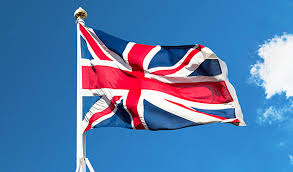
Older teenagers in the UK will face an overnight social media curfew, the government has announced – though they will be able to opt out of it by changing their account settings.
It would mean apps such as Instagram, TikTok and YouTube being set to be unavailable by default to 16 and 17-year-olds between midnight and 06:00.
The government also wants “addictive” features such as auto-play and infinite scroll to be set to be disabled, saying – combined with the curfew – the measures will improve teenagers’ focus, sleep quality and family life.
However, campaigners such as Ellen Roome, who believes her 14-year-old son Jools Sweeney died in an online challenge gone wrong in 2022, does not think the plan goes far enough as teenagers can switch the setting off.
The new plans follow the announcement in June that under-16s in the UK would be banned entirely from a range of platforms.
It adds to a complex – and potentially confusing – mix of policies and measures from the government and tech firms intended to keep young people safe online.
They include optional parental controls over children’s devices and child-only versions of popular sites such as YouTube.
Lorna Woods, professor of internet law at Essex University, said she felt the measure was designed to target apprehensions from parents and child safety groups.
“There have been concerns about the way services keep children and young people engaged on their phones for long periods, and that this can impact their sleep, amongst other effects,” she said.
Meta, which owns Facebook, Instagram and WhatsApp, has previously said it wants age verification to be handled by manufacturers of devices themselves, rather than the onus being entirely on platforms.
Apple recently introduced such “device level” age checks, meaning anyone using iPhone and iPads with the latest version of their operating software will be asked to verify their ages.
Baroness Kidron, who has strongly campaigned for safety and age assurance measures to be at a device rather than app level, was critical of the government’s approach.
She said it should not be about “banning children from tech” but “banning tech from putting toxic products in the hands of children”.
Online safety minister Kanishka Narayan defended the action the government had taken, said the combination of the curfew and limiting auto-play features meant that “Britain is already going to be the most robust place in the world when it comes to regulating” tech companies.
In an earlier statement, Technology Secretary Liz Kendall said the measures would be “crucial in helping young people get the sleep they need, focus on school and college, and spend more quality time with family and friends, all of which are fundamental to building a happy, healthy and fulfilling adult life”.
Laura Trott, the Conservative shadow education secretary, described the plans as a “dog’s dinner”.
The government said further measures would be aimed at helping children use AI chatbots safely including by making providers introduce regular breaks for under-18s.
It said it will aim to lay its new proposed measures in front of Parliament by the end of 2026, with the aim that they take effect alongside its social media ban for under-16s next spring.
But some child safety charities and experts have cast doubt on the effectiveness or promise of a midnight curfew for older UK teens.
He added that Prime Minister Sir Keir Starmer “leaves office having announced a social media ban without a plan” with his likely successor Andy Burnham to “inherit a series of missed opportunities”.
Prof Sonia Livingstone, an expert in children’s digital rights at the London School of Economics, said a curfew could harm vulnerable children by limiting their access to social media when they might need it most.
Dame Rachel de Souza, children’s commissioner for England, said: “We have to listen to young people. They don’t want a ban, but they do want to be protected from addictive, infinite scrolling.”
Meanwhile, social media analyst Matt Navarra said the measure was “not a curfew” but a “mildly annoying settings prompt with a government press release attached”.
Previous attempts to restrict what young people can see online – for example Australia’s social media ban – have been hampered by VPNs, which can hide the true location of an internet user.
But the government said it would not be taking any action to restrict them in the UK for now, saying they were useful for whistle-blowers, minority groups and family privacy.
It cued findings from research it commissioned which indicated there was little to show VPNs were being used by many children to get around age checks.
In a report published on Tuesday, the government said it had trialled a selection of different options with 300 teens, and found an overnight curfew showed sleep benefits.
But Pete Etchells, professor of science communication at Bath Spa University, cautioned against the results – saying it was merely “one part of the puzzle” in restricting tech use.




Lekki LCDA Brokers Peace Over Onise Of Ise Succession, Urges Stakeholders To Respect Court Process
ShareBy David Torough, Abuja The Lekki Local Council Development Area (LCDA) has intervened in the lingering dispute over the vacant...

FG, Access Bank Push AI to Grow MSMEs
ShareThe Federal Government and Access Bank Plc have emphasised the strategic role of Artificial Intelligence and digital financial infrastructure in...
We often forget: PWDs also Have Birthdays Reflection on Disability, Dignity, and Nigeria
ShareBy Ebuka Ukoh This piece highlights the systemic barriers – physical, attitudinal, and institutional – that prevent persons with disabilities...
Ghost Agencies, Short Memories, and Ancestral Shame
ShareBy Prince Charles Dickson, PhD Our ancestors did not endure wars, disease, displacement and impossible journeys merely to produce citizens...

Defence Ministry Partners NIMC to Enhance Data Integrity, National Security
ShareBy Tony Obiechina, Abuja The Ministry of Defence has affirmed its commitment to partner with the National Identity Management Commission...


CVR in Ondo Satisfactory – Says INEC
ShareThe Independent National Electoral Commission ( INEC) in Ondo State says the conduct of residents during the Continuous Voter Registration...


NEC Applauds Alia on Economic Transformation
ShareFrom Attah Ede, Makurdi The National Economic Council (NEC) Monitoring and Implementation Committee has commended Benue State Governor, Rev. Fr.Hyacinth...

OPay Unveils Top 48 Teams in National Innovation Challenge
ShareOPay, a leading fintech company in Nigeria, has announced the selection of the top 48teams for the next stage of...


Macrostrat Urges Fiscal Reforms as CBN Holds Rates Steady After 306th MPC Meeting
ShareBy David Torough, Abuja Macrostrat Nigeria Limited has called for stronger fiscal reforms and closer coordination between monetary and fiscal...


Resign Now, Nigeria Needs Fresh Leadership, Peter Obi Tells Tinubu
ShareBy Tambaya Julius, Abuja The presidential candidate of the Nigeria Democratic Congress (NDC), Peter Obi, has called on President Bola...