
Foreign News
Uganda’s Leading Media Outlets Shut down by Army Chief

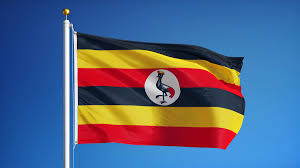
Uganda’s leading independent media group says it is under “military siege” after the army chief – who is the son of President Yoweri Museveni – ordered the closure of TV stations, newspapers and radio outlets.
The Daily Monitor newspaper said that armed soldiers were stationed outside its headquarters in the capital Kampala and both NTV and Spark TV had been taken off air.
The outlets are part of the Nation Media Group, one of the most influential media companies in East Africa.
It is unclear what exactly led to the crackdown, but in posts on X, Gen Muhoozi Kainerugaba said: “I DO NOT believe in a free press! The press should be guided by cadres of the revolution.”
Opposition and human rights groups accuse Gen Kainerugaba of being a central figure in a highly repressive regime led by his father.
Supporters of the president and his family say they have guaranteed stability in Uganda, and the economy has improved under their rule.
President Museveni, 81, is a former rebel leader who took power about 40 years ago.
He won a record seventh term in disputed elections in January, with widespread speculation that he is grooming his son to succeed him one day.
Gen Kainerugaba said on X that his “great father” had given him the “power to shut down any media house I want to”.
He said that both NTV and Daily Monitor would “not re-open without my permission”.
“From now on ALL media in Uganda will follow the rules!” the general added.
The Daily Monitor said on X that the newspaper and its fellow outlets were ordered to close “in a crackdown during the wee hours of Sunday”.
It did not give reasons for the crackdown, but covered the story on its website.
It said staff had reported that “no-one was allowed to enter or leave the compound”, while NTV Uganda and Spark TV viewers “were met with blank screens displaying the message ‘video unavailable’.”
The article pointed out that the Daily Monitor had also been raided by police in 2013 over the publication of a letter allegedly linking senior government officials to a succession plan dubbed the ‘Muhoozi Project’, while NTV had been forced off air in 2007 following accusations by the government that its news coverage was negative.
“Over the years, Museveni has also repeatedly criticised the Daily Monitor, at one point referring to it as an ‘enemy and evil newspaper’ over its critical journalism,” the article said.
During January’s fiercely contested election, Gen Kainerugaba caused outrage when in posts which were subsequently deleted, he threatened to have the testicles of defeated opposition candidate Bobi Wine removed.
Before the polls, opposition rallies were disrupted, with security forces at times opening fire.
The United Nations said the election was held in an “environment marked by widespread repression and intimidation against the political opposition”.
Election officials said the poll was free and fair.
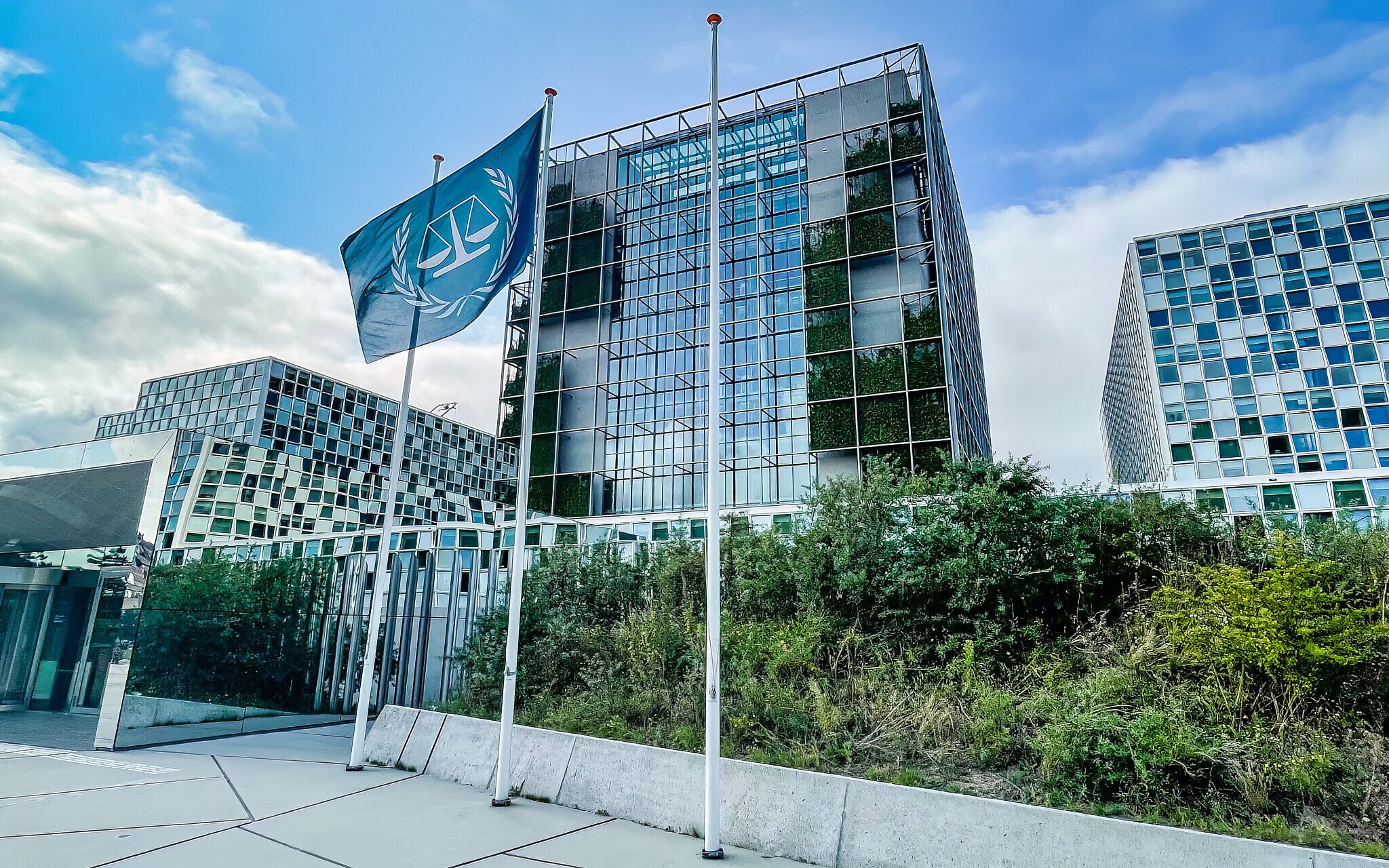
Niger has officially submitted its request to withdraw from the International Criminal Court (ICC), nine months after announcing its intent to leave.
In September 2025, Niger, along with allies Mali and Burkina Faso – which are all under military rule – issued a joint statement saying they would not recognise the ICC’s authority, calling it an “instrument of neo-colonialist repression”.
The court said it had received an “instrument of withdrawal” on 18 June, according to a statement seen by the AFP news agency. Withdrawal takes effect one year after notification.
The ICC added that Niger must honour its obligations to the court until that date.
The ICC – based in The Hague in the Netherlands – was set up in 2002 to pursue cases of genocide, crimes against humanity, war crimes and aggression.
The court’s statement on Tuesday did not make any mention of Mali or Burkina Faso.
When announcing their withdrawal, the three Sahel states said they wanted to set up “indigenous mechanisms for the consolidation of peace and justice”.
Last year, Niger, Mali and Burkina Faso also simultaneously withdrew from the Economic Community of West African States (Ecowas), the regional bloc, and created the Confederation of Sahel States for the three nations.
Juntas have been in control of the countries following coups in the early part of this decade.
Their armies have faced accusations of crimes against civilians, as violence has escalated in the region against jihadist groups linked to al-Qaeda and the Islamic State.
In recent years, the three countries, which are former French colonies, have increasingly become isolated from the West and strengthened their ties to Russia.
There is an outstanding ICC-issued arrest warrant for Russian President Vladimir Putin over alleged war crimes in Ukraine.
Russia, as well as countries such as the US, Israel and China, are not part of the court’s 125 member states. Niger will be the third country to leave the ICC after the Philippines and Burundi.
There have been a number of false dawns when it comes to elections in South Sudan, but the authorities have said the long-delayed first-ever vote will take place in December.
The leaders of the world’s youngest country have not been tested at the ballot box since independence in 2011 and President Salva Kiir has been in office for 15 years.
According to the original plan, the general election was supposed to have happened in 2015 but a civil war meant that had to be postponed.
The 2018 peace deal, which created a unity government with Kiir at its helm and rival Riek Machar as his deputy, envisioned an election in 2022 but the vote was never organised amid tension between the country’s leaders.
Continued issues between the two men could yet delay the vote further.
Machar was sacked as vice-president and arrested earlier last year and charged with murder, treason and crimes against humanity, which he denies. He has been under house arrest in the capital, Juba, since March last year as fighting persists in some areas of the country.
There have been warnings, including form the UN that the violence could once again spill over into full-scale civil war.
When announcing the 22 December date for the vote, electoral chief Abednego Akok Kacuol acknowledged that unresolved legal amendments and persistent funding gaps continued to hamper poll preparations.
“The political will is not ours; it lies with the government,” he said.
Asked what would happen if funds were not secured within six months, Kacuol said his commission would continue planning while adjusting toward a “realistic electoral timeline”.
In a statement on Monday, the presidency said Kiir was committed to implementing the 2018 peace agreement and keeping South Sudan on track toward peaceful, democratic elections.
It said preparations for inter-party dialogue on election-related issues were progressing and would provide a platform for building consensus among political stakeholders.
But opposition groups and civil society organisations have raised concerns over security conditions, political freedoms and electoral readiness.
The Sudan People’s Liberation Movement in Opposition (SPLM-IO), the party of Machar, warned about the poll preparations, saying holding elections remained a “dangerous” matter.
“Anyone coming to register voters and campaign in territories controlled by the mighty SPLM-IO, you will be a prisoner of war,” Nathaniel Pierino, acting chairperson of the group, said in a post on Facebook.
“Be reminded, the country is at war,” he added.
Guinea has banned the export of unrefined gold in an effort to promote domestic processing of the precious metal.
The policy – effective immediately – comes after Guinea’s President Mamadi Doumbouya met industrial and artisanal gold producers and buyers, and aims to boost the economy and create more jobs.
“Guinea will now require its gold to be processed within its own borders.
Raw gold will no longer leave Guinea,” he said, adding that other countries have been reaping the economic benefits of processing and trading their raw materials.Guinea is Africa’s sixth largest gold producer, according to the World Gold Council.
Other African nations have taken similar steps to increase domestic processing and value addition in the mining sector in recent years.
In Tanzania and Uganda, the export of unprocessed minerals and metals such as gold and copper is already banned, while Ghana is set to ban raw gold exports by 2030.
Africa’s top lithium producer, Zimbabwe, has banned concentrate exports of the metal used to make batteries from 2027.
Gold is one of Guinea’s main exports, shipping more than 22 tonnes of the metal in the first quarter of this year, according to the authorities.
A new refinery is near completion in the capital, Conakry, where the country’s gold will be sent before processing and export. It has a reported capacity of 250 tonnes a year so should be able to handle the country’s current production.
Foreign companies operating in the country have been warned that they risk losing their licenses and having their mining contracts terminated if they violate the directive.
Guinea is also the world’s largest producer of bauxite, used to make aluminium.



Ododo Hails Ekinri-Ade Community On Self-Help Projects
ShareFrom Joseph Amedu, Lokoja Kogi State Governor, Alhaji Usman Ododo has commended Ekinri-Ade Community in Ijumu Local Government Area for its relentless efforts to continue...

Uganda’s Leading Media Outlets Shut down by Army Chief
ShareUganda’s leading independent media group says it is under “military siege” after the army chief – who is the son of President Yoweri Museveni – ordered...

Taraba Secures $268.63m ECOWAS Investment for Power, Agriculture, Industrial Devt
ShareFrom John Lamma, Jalingo Taraba State has secured a $268.63 million financing agreement with the ECOWAS Bank for Investment and Development (EBID) to implement major...


Road Accident Claims Two, Injures 15 in Enugu
ShareFrom Sylvia Udegbunam, Enugu The Nigerian Army says vehicle conveying candidates of the 91 Regular Recruits Intake (RRI) from Obinze Barracks,...
FCMB Boosts Digital Banking Experience, Unveils New App Features
ShareBy Tony Obiechina, Abuja First City Monument Bank (FCMB) has introduced new features to its mobile banking application as part...
FCCPC Queries High Fuel Prices despite Crude Oil Slump
ShareBy David Torough, Abuja The Federal Competition and Consumer Protection Commission (FCCPC) has questioned the continued high cost of petrol...

Tinubu Applauds Benue Legacy at 50, Pledges Stronger Support
ShareFrom Attah Ede, Makurdi President Bola Tinubu has described Benue State’s contributions to Nigeria as profound and enduring, assuring the...

Customs PR Officers Sweep Top Honours as 50 Graduate from NCCSC Gwagwalada
ShareBy Tambaya Julius, Abuja The Nigeria Customs Service (NCS) has graduated 50 officers from the Nigeria Customs Command and Staff...

Beyond the Headlines: What Nigeria’s $5 Billion FAB Financing Really Means
ShareBy Prof Uche Uwaleke The Federal Government’s recent decision to draw the first tranche of about $1.5 billion from a...

NADCEL 2026: COAS Commends Troops, Renews Commitment to Personnel Welfare
ShareBy David Torough, Abuja The Chief of Army Staff (COAS), Lt.-Gen. Waidi Shaibu, has praised Nigerian Army troops for their...