
BUSINESS
Polaris Bank Reaffirms Commitment to Excellence as Customer Service Week Begins


Polaris Bank has reaffirmed its commitment to delivering exceptional customer experiences as it joins the global celebration of the 2025 Customer Service Week, with the theme: “Mission: Possible”.
The annual global event, which runs from Oct.
6 to Oct. 10 is dedicated to recognising the vital role of customer service professionals and the value they bring to customers and businesses alike.Speaking to customers and staff, in Lagos, the Managing Director/CEO of Polaris Bank, Kayode Lawal, emphasised that excellent service remains central to the bank’s culture and success.
Lawal said that while great customer service sometimes seems challenging, it is always worth the effort.
According to him, Polaris Bank’s approach to service is anchored on consistency, thoughtfulness and excellence, ensuring that customers experience genuine care and responsiveness in every interaction.
Lawal expressed appreciation to customers for their trust and feedback, describing them as the reason Polaris Bank continues to push boundaries and innovate.
He reaffirmed the bank’s commitment to standing by its customers towards delivering the kind of service they truly deserve daily.
Throughout the week, Polaris Bank will host a variety of engaging activities across its branches and digital platforms to appreciate customers and recognise service champions within the bank.
These will include staff recognition events, customer appreciation sessions and internal learning engagements aimed at deepening service excellence.
Customer Service Week is celebrated globally in the first week of October to honour the importance of service excellence and the professionals who make it possible.
By Tony Obiechina, Abuja
The African Tax Administration Forum (ATAF) ATAF-supported audit interventions in member countries generated USD 907.8 million in tax assessments, of which USD 685.8 million was successfully collected.
The revenue gains included $47.
1 million from transfer pricing audits, $3. 57 million from digital services tax and $142.96 million from cross-border Value Added Tax compliance measures.Throughout the year, ATAF provided technical assistance to 35 countries, trained 2,433 tax officials from 43 countries, including Nigeria, and supported legislative and administrative reforms across the continent.
This is contained in the recently released 2025 Annual Report of ATAF, highlighting the organisation’s growing contribution to strengthening tax systems, advancing domestic revenue mobilisation and amplifying Africa’s voice in global tax policy discussions.
The organisation said the additional revenue is helping governments strengthen public finances and improve their capacity to fund infrastructure, healthcare, education and other development priorities without excessive dependence on borrowing.
The report reflects a year of significant progress across ATAF’s strategic priorities, including capacity building, technical assistance, research, digital transformation, international tax cooperation, and institutional strengthening. In 2025 alone.
The report also highlights ATAF’s expanding role in shaping global tax discourse and ensuring African perspectives are reflected in international tax policy processes, including engagements with the United Nations Framework Convention on International Tax Cooperation and broader discussions on illicit financial flows, digital taxation, and tax transparency.
Speaking on the release of the report, ATAF Executive Secretary, Mary Baine, said the report demonstrates the growing urgency and importance of domestic resource mobilisation in Africa’s development agenda.
She added that ATAF stands ready, working with members, partners, and all stakeholders committed to strengthening development financing through DRM, to support reforms that deliver real impact in the lives of Africa’s people.
The African Tax Administration Forum (ATAF) has said its growing technical assistance programmes across the continent are helping African countries strengthen tax administration, improve revenue collection and reduce opportunities for tax avoidance by multinational companies and wealthy individuals.
According to ATAF’s 2025 Annual Report, the organisation has expanded its technical support to member countries through specialised programmes aimed at improving domestic resource mobilisation at a time many African governments are facing rising debt burdens, weak revenue generation and growing development financing needs.
The report explained that ATAF’s interventions have supported the revision of transfer pricing laws in several African countries to ensure multinational corporations pay fair taxes in jurisdictions where economic activities take place.
It stated that the organisation also assisted tax authorities in introducing anti-tax avoidance measures designed to block aggressive tax planning schemes that often deprive governments of badly needed revenue.
ATAF said part of its support included the establishment of dedicated transfer pricing units within tax administrations to improve the monitoring of multinational companies and strengthen the ability of African tax authorities to detect profit shifting and tax base erosion.
The report added that the organisation also helped countries create exchange-of-information units to improve cooperation among tax authorities and support access to cross-border financial information needed to investigate tax evasion and illicit financial flows.
ATAF also said it is strengthening its internal systems to improve governance, financial sustainability and operational efficiency as the organisation expands its activities across the continent.
The report stated that efforts are ongoing to improve internal governance structures, financial management systems and debt management processes in order to ensure transparency, accountability and long-term institutional stability.
It added that ATAF is also reviewing its membership fee systems while deepening partnerships with donor organisations and development partners to secure additional funding for capacity building, research and technical assistance programmes.
The organisation noted that maintaining financial sustainability has become increasingly important as African countries demand more technical support on complex international tax matters and emerging areas of taxation.
ATAF further disclosed that it is increasing attention on emerging policy areas that are expected to shape the future of taxation globally and across Africa.
Among the major policy areas identified in the report are carbon taxation and climate-related tax measures aimed at helping governments respond to environmental challenges while generating additional revenue.
The report explained that the organisation is also studying the implications of Carbon Border Adjustment Mechanisms (CBAM), which are trade-related climate policies being introduced by some advanced economies and which could affect African exports.
ATAF said it is equally focusing on the taxation of the digital economy as more commercial activities move online, making it increasingly difficult for traditional tax systems to capture revenue from cross-border digital transactions.
The organisation added that attention is also being placed on gender-inclusive tax systems to ensure tax policies do not disproportionately affect vulnerable groups and to promote fairness in revenue administration.
According to the report, ATAF is also supporting African countries in developing better frameworks for the taxation of high-net-worth individuals as governments seek to widen the tax base and improve equity in taxation.
The organisation further stated that it is encouraging the use of artificial intelligence-driven compliance systems to improve taxpayer monitoring, risk assessment and revenue collection efficiency.
ATAF said its long-term strategic objectives remain focused on achieving financial sustainability, deepening regional cooperation and building stronger tax institutions across Africa.
The report explained that the organisation intends to continue training future African tax professionals through specialised programmes aimed at improving technical expertise and strengthening local capacity in tax administration.
It added that ATAF is working toward stronger tax administration systems, better African tax data and improved research capabilities to support evidence-based policymaking across member countries.
The organisation also said one of its major priorities is ensuring that Africa has a stronger voice and greater influence in global tax governance discussions, especially on issues affecting developing economies.
According to ATAF, stronger tax systems are critical for reducing Africa’s dependence on foreign borrowing and external financial support.
The report stressed that efficient and transparent tax administration would help governments mobilise domestic revenue needed to fund national development priorities, improve governance and support inclusive economic growth across the continent.
ATAF maintained that improving tax collection efficiency and strengthening fiscal institutions remain essential for building resilient African economies capable of addressing poverty, unemployment, infrastructure deficits and rising social demands.
Immediate past Customs Area Controller, Nigeria Customs Service (NCS), Tin-Can Island Port Command, Assistant Comptroller-General Frank Onyeka, has handed over leadership of the command after recording revenue collection of N1.609 trillion in 2025.
The Public Relations Officer of the command, Oscar Ivara, confirmed this in a statement on Saturday in Lagos, following Onyeka’s elevation to the rank of Assistant Comptroller-General of Customs.
Onyeka said the command exceeded its 2025 revenue target of N1.524 trillion, describing his tenure as one of the most fulfilling periods of his career in the service.
He formally handed over to Comptroller Joe Anani, who previously served as Customs Area Controller at Ports and Terminal Multiservices Ltd.
“This moment is both emotional and historic for me. Serving as the Customs Area Controller of this great command has been one of the greatest honours of my career,” Onyeka said.
He disclosed that under his leadership, the command generated N1.60 trillion in 2025, surpassing its target, and also recorded N401.01 billion in the first quarter of 2026.
Onyeka attributed the performance to discipline, intelligence-driven operations, improved compliance measures, stakeholder engagement, and the deployment of modern trade facilitation tools.
Beyond revenue, he said the command recorded significant anti-smuggling successes, including seizures of illicit drugs and prohibited goods valued at over N35 billion.
“These seizures underscore our collective resolve to protect the nation from criminal networks and safeguard public health and security,” he said.
He also noted strengthened collaboration with port stakeholders, including freight forwarders, terminal operators, shipping companies, importers and exporters, aimed at improving efficiency and compliance.
According to him, staff capacity development was prioritised through training, workshops and professional development programmes to enhance operational effectiveness.
“I believe that the strength of any institution lies in the quality and preparedness of its personnel,” he said.
Onyeka further acknowledged support for the Customs Officers’ Wives Association (COWA), noting their humanitarian contributions to families and surrounding communities.
He commended the Comptroller-General of Customs, Dr. Bashir Adeniyi, for his leadership and support, and thanked the media and stakeholders for their cooperation during his tenure.
He urged continued collaboration with the incoming management, stressing that unity and continuity were key to sustaining the command’s performance.
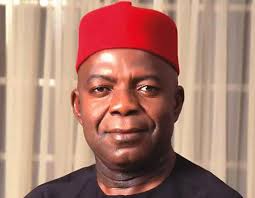
The former Senate President, Adolphus Wabara, has commended Gov. Alex Otti for his transformative agenda, including the ongoing remodeling of the Ariaria International Market, Aba.
In a statement in Umuahia on Saturday, Wabara stated that the market now compared with markets in London and other developed economies
According to the statement, the former senate president made the commendation after a recent visit to the market.
He said the level of transformation at the market “reflected deliberate efforts to revive Aba’s economic glory.
He noted that what he saw went beyond a facelift, describing it as a deliberate economic renaissance, capable of restoring Aba’s pride as the industrial and commercial hub of the South-East
He urged Otti not to relent until the entire remodeling was completed, stressing that no section of the market should be left out.
He added that the comprehensive modernisation of Ariaria should be treated as one of the signature projects of Otti’s administration.
Wabara added that the completion of the market would leave a lasting legacy and further reposition Aba as a leading commercial hub in Africa.
He also applauded Otti’s proposed seaport project at Azumini Blue River in Ukwa.
Wabara, who hails from Ukwa, further said that the seaport would fast-track infrastructure development, improve logistics, create jobs, and strengthen the economy of the South-East.
He urged the governor to remain focused on developmental policies that improve the business environment and uplift the living conditions of the people.




Nasarawa Governor’s Aide Empowers 250 Women in Karu
ShareBy Tambaya Julius, Abuja Two hundred and fifty (250) women from Panda/Kare Electoral Ward in Karu Local Government Area, Nasarawa...


Benue CAN Deputy Chair Makes Case for Less Privileged, Vulnerable in Society
ShareBy Attah Ede, Makurdi The Deputy Chairman Christian Association of Nigeria CAN Benue State Chapter, Rev. Jonathan Terwase Ugbede has...


FG Saves N61.58bn Through Early Fertiliser Procurement, Secures Supply for 2026 Farming Season
ShareBy Raphael Atuu ,Abuja The Federal Government has saved approximately ₦61.58 billion (US$43.99 million) and secured fertiliser supplies for the...


Democracy Day: Renewed Hope Agenda Laying Foundation for Sustainable Growth, Says Nasarawa SSG
ShareFrom Abel Zwanke, Lafia. The Secretary to the Government of Nasarawa State and Renewed Hope Ambassador, Shuaibu Magaji Labaran, has...


One out of every four children in Benue suffering nutritional deficiencies- UNICEF
ShareFrom Attah Ede, Makurdi The United Nations Children’s Fund (UNICEF), has revealed that one out of every four Benue State...
Niger Debunks School Attack Rumours
ShareThe Niger Government has reassured parents, guardians, students, and the general public that schools across the state remain safe and conducive for teaching and learning. This was contained in a statement signed by...


Pope Leo Visits Canary Islands, Highlights Perilous Journeys of Migrants
ShareBakary Jaiju was 19 when he climbed into a wooden boat in the Gambia and set out for Europe. He...


Diri Signs PWDs, BMUTH Bills into Law
ShareFrom Mike Tayese, Yenagoa Bayelsa State Governor, Senator Douye Diri, has signed the Persons with Disabilities (PWDs) and the Bayelsa Medical...


Democracy Day: FG Declares Friday Public Holiday
ShareThe Federal Government has declared Friday, public holiday to commemorate Nigeria’s 27 years of unbroken democratic rule. This was contained in a statement on Thursday in Abuja, by...

NUJ Osun Condemns Arrest of Secretary, Demands Public Apology from Police
ShareFrom Ayinde Akintade, Osogbo The Osun State Council of the Nigeria Union of Journalists (NUJ) has condemned the arrest and detention of its Secretary, Olalekan Akindoju, by...