
Foreign News
Power of Humanity’ can Overcome COVID-19, Climate Challenges – UNGA President

The President of the UN General Assembly, Abdulla Shahid, on Tuesday opened the 2021 annual General Debate as a hybrid in-person and virtual event, reflecting the darkest days of the COVID-19 pandemic.
The Assembly reflected on the darkest days of the pandemic, “when cities were shuttered and vaccines still a dream” and how the world’s peoples “came together as never before”.
Abdulla Shahid of the Maldives said that after a year and a half of suffering “in silence and in anxiety”, it was hope and a sense of shared humanity that enabled this coming together, adding: “Let us give them hope now”.
He recalled that “in record time”, scientists globally collaborated to develop multiple COVID-19 vaccines and “the largest vaccine roll-out in the history of humankind”, calling it a “monumental” undertaking to “be proud” of.
The Assembly President said that over the next 12-months, the world wants solutions to the collective challenges of “fragility, conflict, COVID-19, [and] climate change”.
“These issues…keep our citizens awake at night, they fuel a collective anxiety and a worry that things are progressively getting worse,” he said.
“They are not wrong. We can do more”, Shahid added.
On COVID-19, the UN official outlined that the world has vaccines, know-how and distribution capacity, but “we lack only the political support”.
And despite incredible innovations in renewable energy, adaptive technologies, and transitioning away from fossil fuels, he noted, “political support and the related financing” is in short supply on the changing climate.
While highlighting a near-universal desire for nuclear disarmament and non-proliferation, the Assembly President said, “yet we falter at the finish line, leaving treaties unratified”.
Finally, on the humanitarian front, he pointed out that despite a more-than-sufficient supply of food and water in the world, famine and drought hang in the balance.
“Hundreds of millions will require humanitarian assistance by year’s end,” Shahid warned.
Pointing out that we are living through a “turning point” moment in time, he said: “We can choose a path of isolationism…mutual destruction…slow retreat of the human experiment, or we can forge together a new path, a sustainable and resilient path that changes the future of our planet”.
While describing the COVID-19 pandemic as “a tragedy of the grandest scale”, he also referred to it as a “canary in the coal mine”, warning of the perils that lie ahead if hard, but necessary, choices were not made.
Shahid cited the power of humanity to overcome challenges and was hopeful “that we can bypass protocols and obstacles to transform our societies”.
The UN General Assembly President shared his intention to pursue five “rays of hope” to direct the Assembly’s 76th session, beginning with vaccine equity.
To this end, he will host a high-level meeting focusing on practical obstacles around supply, storage, and distribution. And on longer-term COVID-19 recovery, he vowed to push to build back “better, stronger, greener, and bluer”, the UN correspondent of the News Agency of Nigeria (NAN) quotes him as saying.
“By following the paths laid out by Agenda 2030 [on sustainable development for all] we can pivot away from destructive practices and embrace a better future,” Shahid said.
The Assembly President spelled out the importance of refocusing attention on the climate crisis, “which has taken a backseat to COVID-19”.
Citing the report of the Intergovernmental Panel on Climate Change (IPCC), he said: “We are no longer on the wrong path… we are on the edge of the cliff”.
To address this, Shahid will host a series of climate action events, beginning with helping to bridge gaps to deliver on climate promises – in the lead-up to November’s UN climate conference (COP26), and later, a “super session on the environment” that encompasses the interlocking issues of the ocean, desertification and biodiversity.
The Assembly President also underscored the importance of continued UN reform and revitalisation, saying “this is not about a balance of power, this is about efficiency”.
“We have never been so technologically advanced…so connected…[or] had the wealth, the resources, or the know-how that we have now.
“There is nothing in our path to stop us but ourselves. Let us be the UN that people want us to be,” he said. (NAN)




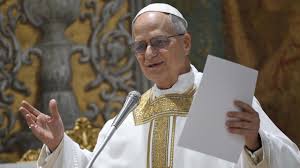
Anglophone separatists in Cameroon have announced a period of “safe travel passage” and halted fighting ahead of Pope Leo XIV’s visit to the conflict‑hit region this week.
Leaders of several armed and secessionist groups said the three‑day measure was in recognition of the “profound spiritual importance” of the papal visit, which starts on Wednesday, and the need to safeguard civilian life.
In a statement from Unity Alliance which brings the groups together – they said they would facilitate the movement of those celebrating the visit. The government is yet to comment.
A near-decade of violence in the English-speaking regions has left at least 6,000 dead and many more forced from their homes.
Pope Leo is currently in Algeria for a second day as part of his 11-day tour of the continent, in which he will also visit Cameroon, Angola and Equatorial Guinea.
Peace is one of the major themes of his visit.
The pontiff arrived in Algeria on Monday, marking the first visit by any pope to the predominantly Sunni Muslim country.
It is also the birthplace of St Augustine, and Leo XIV is the first pontiff from the order to follow his teachings.
He is currently in Annaba where the saint was a bishop – and in the afternoon, is expected to celebrate Mass at the Basilica of Saint Augustine.
The Pope’s second country stop is Cameroon, where he will visit Bamenda, the capital of the country’s North-West region.
The city is regarded as the centre of Cameroon’s conflict between Anglophone separatists and state forces.
A national dialogue organised by the government in 2019 failed to end the violence in the country’s two English‑speaking regions.
Unity Alliance said the decision to pause the fighting “reflects a deliberate commitment to responsibility, restraint, and respect for human dignity, even in the context of ongoing conflict.”
It added that the Pope’s visit should remain “spiritual” and “pastoral” in nature, and warned against any politicisation of the event.
While the Cameroonian, francophone-dominated government has not reacted to the announcement, authorities say appropriate measures had been taken to ensure security in cities scheduled to host the Pope.
Pope Leo’s visit to Bamenda is seen as a symbolic effort by the Catholic Church to promote peace and reconciliation. He is expected to hold a meeting for peace in the city’s Saint-Joseph’s Cathedral.
Officials said all sites to be attended by the Pope will be free of charge for visitors.
Pope Leo’s wide-ranging tour will include stops in 11 cities across the four countries. It is his second major foreign visit since being elected to the papacy last year, and reflects the importance of Catholicism in Africa.
More than a fifth of the world’s Catholics are in Africa, some 288 million people, according to figures from 2024.

President Donald Trump on Sunday ordered a US naval blockade of the Strait of Hormuz in response to Iran’s “unyielding” refusal to give up its nuclear ambitions during peace talks in Islamabad.
While acknowledging that the marathon negotiations in Pakistan had gone “well” and “most points were agreed to,” Trump said Tehran had refused to concede on the issue of its nuclear program.
“Effective immediately, the United States Navy, the Finest in the World, will begin the process of BLOCKADING any and all Ships trying to enter, or leave, the Strait of Hormuz,” Trump said on his Truth Social platform.
“Any Iranian who fires at us, or at peaceful vessels, will be Blown To Hell!”
US Vice President JD Vance left Pakistan without a deal after weekend talks with a team led by Iran’s parliamentary speaker Mohammad Bagher Ghalibaf — the highest-level meeting between the two sides since the 1979 Islamic revolution.
Tehran’s delegation also included Foreign Minister Abbas Araghchi.
“We leave here with a very simple proposal, a method of understanding that is our final and best offer. We’ll see if the Iranians accept it,” Vance told reporters.
In two lengthy posts on Truth Social, Trump slammed Iran for promising to open the Strait of Hormuz, a strategic waterway through which a fifth of the world’s crude oil passes, and “knowingly” failing to deliver.
“They say they put mines in the water, even though all of their Navy, and most of their ‘mine droppers,’ have been completely blown up. They may have done so, but what ship owner would want to take the chance?” Trump said.
Iran had effectively blocked the Strait of Hormuz for weeks, since the United States and Israel launched a bombing campaign against the Islamic republic more than six weeks ago.
On Saturday, the US military announced that two US warships had transited the strait at the start of a mine clearance operation.
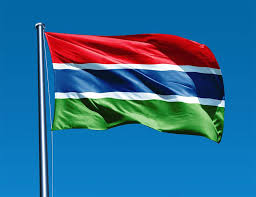
British barrister Martin Hackett has been appointed as The Gambia’s first special prosecutor to try those responsible for human rights abuses carried out during the 22-year rule of ex-President Yahya Jammeh, which ended when he went into exile in 2017.
Hackett will head a newly created office charged with dealing with the cases from a period characterised by widespread repression, enforced disappearances and extrajudicial killings.
The Truth, Reconciliation and Reparations Commission (TRRC) was set up to document the extent of the alleged abuses.
In its final report, handed to current President Adama Barrow in 2021, it identified those most responsible and recommended their prosecution.
The TRRC, which heard harrowing testimony from victims, former security operatives and other witnesses, also called for reparations to be paid to the victims, warning that failure to act risked entrenching impunity.
The TRRC has started phased compensation payments, starting with victims of abuses committed shortly after the 1994 coup when Jammeh first came to power.
But for many survivors, financial compensation is secondary to accountability.
Among the most notorious cases highlighted by the TRRC were the 2004 killing of journalist Deyda Hydara and the murder of more than 50 mainly West African migrants, executed by security forces after being wrongly accused of plotting a coup.
A handful of perpetrators have already been convicted abroad under the principle of universal jurisdiction, including former members of the notorious paramilitary unit and death squad known as “the Junglers” – some of whom have been jailed in Germany and the US.
The appointment of Hackett, who has previously served at the UN-backed Special Tribunal for Lebanon and who investigated war crimes committed by senior military commanders during the Kosovo war, is seen as a decisive step towards domestic accountability.
Attorney General Dawda Jallow was quoted as saying that Hackett had a four-year mandate and was chosen from a wide selection of candidates.
Jammeh, who refused to co-operate with the TRRC, only left power at the insistence of regional leaders.
They sent in troops to The Gambia when he refused to step down after his shock election defeat in December 2016.
Now aged 60, Jammeh has previously denied wrongdoing and is believed to be living in exile in Equatorial Guinea.


Nigeria’s Hidden Killings: One-Man Rule Looms – Adebayo
ShareIn a searing and emotionally charged interview, a presidential aspirant and leader of the Social Democratic Party recounts his harrowing...
Heading Towards Elections with Democracy on Crutches
ShareBy Chidi Amuta Nigerian politicians have once again carried out another successful coup against the people. They have fired up...

2027: Ahmadiyya Leader Sees Hope in Adewole Adebayo if Youths Organise
ShareBy Mike Odiakose, Abuja The Amir and National Head of the Ahmadiyya Muslim Jama’at of Nigeria, Alatoye Abdulazeez, has urged...

OGD 2027 : Why Ogun East Must Produce a Ranking Senator
ShareBy Prince Taiwo Nodiru All over the world, especially in the nations where democracy thrive, the legislative assignments are germane...


Nigeria To Host 5th High Level Ministerial Meeting On AMR
ShareBy Laide Akinboade, Abuja Nigeria said it has concluded arrangement to host the 5th high level ministerial meeting on Antimicrobial...

Sule Inaugurates N2.8bn Loko Township Roads
ShareNasarawa State Governor, Abdullahi Sule has inaugurated a 3.2-kilometre Loko Link and Township Roads project worth N2.8 billion in Nasarawa...


2026 Unity Cup: Don’t Exclude NPFL Players from Eagles, Ekpo Tells Chelle
ShareFormer Nigerian international Friday Ekpo has advised Super Eagles head coach Eric Chelle not to exclude players from the Nigeria...

Cameroon Separatists Pause Fighting Ahead Pope Visit
ShareAnglophone separatists in Cameroon have announced a period of “safe travel passage” and halted fighting ahead of Pope Leo XIV’s visit to the conflict‑hit region this week. Leaders...


Over 2,000 PhD Candidates Jostle for PTDF Overseas Scholarship
ShareThe Petroleum Technology Development Fund (PTDF) has commenced the second phase of interviews for the 2026/2027 PhD award under its...
Akpabio Ties Worsening Insecurity to Gang up Against Tinubu
ShareBy Eze Okechukwu, Abuja The Senate President, Godswill Akpabio has linked the worsening insecurity across the country to a gang up by opposition politicians,...