
Education
Lecturers Using their Blood to Sustain the Remains of Public Varsities

By Oludayo Tade
The country is hard. Nigerians are not smiling. The harsh social-economic realities are hard-hitting. When Mr President announced that subsidy was gone, it actually meant GUNshot for many people who are still nursing the unending wounds from that policy declaration.
As Nigerians battle to survive, the president and his team said they inherited a bad economy from their own government.
That is, All Progressive Congress Muhammadu Buhari handed over a bad economy to another APC leader; the lion of bourdillon, Omo Olodo-Ide and the Commander-in-Chief of the Armed Forces, Bola Ahmed Tinubu.From this proclaimed inherited bad economy, the ruling class have managed to get the best things of this world for themselves. The meaning of awalokan (it is our turn) that the president said while campaigning is now becoming clearer. The people that constitute the ‘awa’ (We) are those from his primary political group who are being blessed with strategic portfolios. It is in this bad economy that they are able to get money to buy jeeps that can protect them from violent attacks and the violent pot-holes. In this same bad economy, the wife of the president gets something even though ‘our mummy’ claimed her family does not need our money to survive.
The other WE (awa) that the president is attending to are those from his political partnership (the G-5 caucus) which made his presidency possible. They are being given portfolios befitting the contributions they made to the actualization of the Olodo-Ide presidency. The third category of the ‘awa’-tokan (we that it is our turn) are those from the political party of Mr President.
They have earned themselves ministerial appointments, board appointments and heads of agencies. The political actors are living large. The masses are told to keep tightening their belts. In all these, how are the university system and the lecturers coping? Mr President, the university system is under attack by the ruling class. Maybe you don’t know or your aides didn’t bring it to your notice.
Lecturers are using their blood to sustain the remains of the public university. To get courses accredited in many departments in Nigeria public universities by the National Universities Commission (NUC), lecturers in those departments contribute money to prepare for the accreditation because most of these universities don’t release money or the school administrations have also become nonchalant like their political class counterparts. It is very bad in some institutions; door label/tags are paid for by staff. I had a colleague who brought his generating set to school to power his class because he wanted the students to get some things.
After being frustrated by the same system, he resigned and moved to a better place where he is better appreciated for his worth. He would only be coordinating people to earn his living. Some years ago, I could print project materials for students with my money, but today, I no longer do that. If I dare to do that, my dependents will suffer the consequences of that action.
The burden of moving to school with the current price regime due to subsidy removal is killing. You are either teaching or attending meetings throughout the week. Salaries remain constant, expenses keep rising. Those you support with money at the end of the month tell you to help them add to what you pay them but you, as the source, nothing has been added to what you are paid since 2009!
Mr President, lecturers have been on the same salary since 2009. Your predecessors signed agreements with the Academic Staff Union of Universities (ASUU) but were not faithful to it. As a responsible Union of intellectuals, the Union calls attention of government to the degeneration of things in the public universities and its implications for national growth and development.
Omo Olodo-Ide, the government of Goodluck Jonathan carried out NEEDS assessment of public varsities in 2012. The findings shocked many. The government found that about #1.13trillion naira would be enough to arrest the infrastructural decay.
Only former President Goodluck Jonathan released N200 billion at once. He pledged to release for the succeeding year in tranches quarterly, the Union went on strike when that didn’t happen. Your immediate predecessor, Muhammadu Buhari, came on board and literally used military approach and was not committed to education.
Mr President, as I write, the Federal Government owes lecturers billions of naira of earned academic allowances for more than six years. If this is not clear to you, it is the money for doing excess teaching and excess supervision. This happened because Federal Government refused to recruit more lecturers and ASUU struck a deal that those doing more than they ought to do should be compensated until government is able to employ more hands.
While you were campaigning to become President Sir, and we were on strike, your Chief of Staff, then speaker of House of Representatives, Femi Gbajabiamila, mid-wifed the suspension of the strike, reaching some informal agreements with ASUU. Now that you are in power, with him closest to you, we learnt you want us to sign ourselves into perpetual slavery that we will not be able to fight for our rights again in the future. I don’t want to believe this Sir. Or is it true that a comrade in government is a lost comrade?
Mr President, the lecturing and supervision affected by the strike have been done and the students have graduated but the workers are yet to be paid. Some of our colleagues died in their offices. Some cannot effectively meet societally imposed obligations.
The commander-in-Chief of the Armed Forces, Sir, it may interest you that many universities brought out advertisement for vacant lecturing positions. A few applied. Among those selected, some didn’t pick up the appointment. Those who picked up the employment in some universities did not stay up to three months before they tendered their resignation. They could not believe what they were paid and the volume of workload allocated to them. Those still on the job are waiting for their planned alternative to click before they abandon their institutions to their fate. What then is the sin that lecturers have committed to warrant such treatments?
Someone asked: is it a crime to choose to lecture in a Nigerian university? Mr President, I will be happy if you can also persuade scholars abroad to come and lecture in Nigeria just as you are doing to attract investors to Nigeria. This will let you know how attractive the salary you pay to Nigerian lecturers is to attract scholars to your universities.
Who will come to a place where there is no light to work? Who wants to receive poverty wage? Who will come to where the intellectual community is derided? Which foreign scholar will come to Nigeria to teach six courses and hundreds of students in a classroom that has no public address system? Mr President, there is growing frustration among lecturers and attitude to work is being negatively affected. There is no motivation, salaries have been ceased and/or delayed with no explanations. There are regrets here and there among those who returned to Nigeria after their scholarship abroad.
Shall we then ask those not catered for by Nigeria to be fervent in teaching and research without adequate funding and motivation? Do you expect poorly paid lecturers to use their salaries to carry out researches for your universities to rank among top universities in the world?
Sadly, to appoint lecturers now, Abuja people dictate who should be employed into our universities. My fear is about the future outcomes of what government is (not)doing. As a Yoruba man, you know that the children we fail to train, will sell the infrastructures that we labour to build. You need to invest in people. Invest in Education because those you call developed countries bear that name because of advances in science and technology as a result of their investment in education. Public University needs urgent attention and rescue. The University system is asking you Sir, Mr President, Nìgbàwo, ló máa tó kàn wá (when will it be our turn)?
Copyright © 2023 | WordPress Theme by MH Themes

Candidates seeking admission into Nigerian tertiary institutions can now upload and verify their O’Level results from the comfort of their homes, following a new initiative by the Joint Admissions and Matriculation Board (JAMB).
Under the new arrangement, candidates will no longer need to visit Computer-Based Test (CBT) centres solely to upload their Senior Secondary School Certificate Examination (SSCE) results, as JAMB will verify the results directly with the examination bodies, beginning with the West African Examinations Council (WAEC).
In a statement on Monday in Abuja, JAMB’s Acting Director, Public Affairs and Protocol, Dr.
Fabian Benjamin, said the Board would continue to deploy technology and collaborate with examination and government agencies to simplify its services and make them more accessible to candidates.According to him, the initiative was part of its renewed commitment to making its services “easier, faster, safer and more convenient” for candidates.
He said the integration of its e-Facility platform with examination bodies would enable candidates’ results to be verified against the records of the issuing bodies before being downloaded into their profiles.
The new system is also expected to address problems associated with manual O’Level result uploads, including misplaced or mixed-up paper results, presentation of fraudulent or unverified certificates and errors in the manual entry of subjects and grades.
The examination body said the initiative would particularly ease pressure on CBT centres during periods of high patronage and help reduce the effect of network challenges and long queues.
The statement reads: “Consequently, candidates can now upload their O’Level results from the comfort of their homes, while the Board undertakes the verification of such results directly with the issuing examination bodies.
“The initiative is part of the Board’s renewed commitment to making services easier, faster, safer and more convenient for candidates. By using technology to reduce unnecessary visits to CBT centres, queues and manual processes, JAMB is putting candidate ease of service delivery at the centre of its operations.
“The new arrangement also addresses challenges associated with manual O’Level result uploads, including misplaced or mixed-up paper results, presentation of unverified or fraudulent results, and errors in the manual entry of subjects and grades. Through the integration of JAMB’s eFacility platform with examination bodies, results can now be verified directly against the examination body’s records before being downloaded into the candidate’s profile.”
To use the new service, candidates are required to visit its website, enter their National Identification Number (NIN) and select the number of examination sittings and relevant examination body or bodies.
After providing their email address and GSM number, candidates are required to pay for the verification using a debit card or bank transfer before entering their examination number, examination series and examination year.
From Joseph Amedu, Lokoja
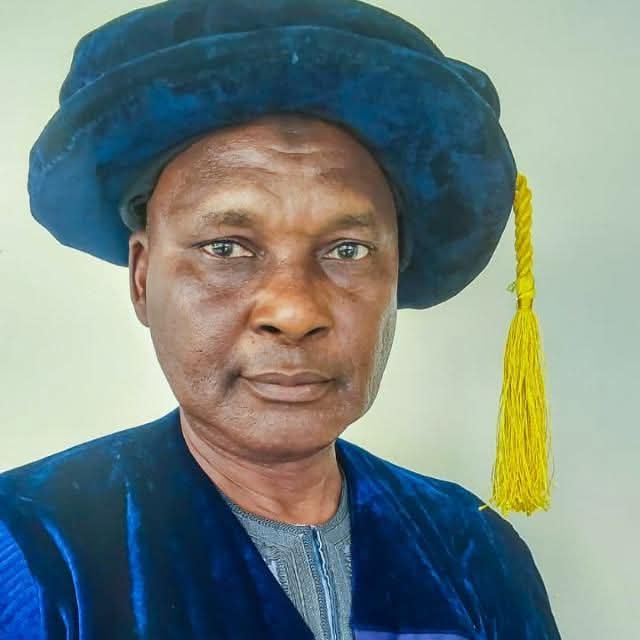
A Professor of History at the Federal University, Lokoja, Suberu Ochi Abdulrahaman, has raised the alarm over the prevailing political illegality bedeviling Nigeria insisting that leaders in the system should endeavor to obey the laws of the land and do the right thing that would move the nation forward.
Professor Abdulrahaman made the observation while delivering the 45th Inaugural Lecture Series of the University at its Felele Campus, in Lokoja, on Wednesday.
Professor Abdulrahaman in his Lecture titled, Persisting Illegalities in Nigeria’s Political Space: Who is to Blame? A Historical Discourse on Power, Institution and Democratic Governance, noted that political illegality which ranges from electoral fraud, arbitrary use of executive power for manipulation and intimidation to sponsorship of thuggery and violence in the system, amongst others, can only be overcome if leaders in governance work in accordance with the nation’s constitution.
According to the Inaugural lecturer “The resistance of political illegalities is neither accidental nor the responsibility of a single institution or generation.
“It is the cumulative product of colonial administrative legacies, prolonged military
authoritarianism, weak institutional development, political opportunism, inadequate civic engagement, and failures of ethical
Leadership.
“History teaches us that no nation develops sustainably when public institutions are weakened by impunity, when constitutional rules are subordinated to personal interests, or when political power is exercised without accountability.
“Equally, history reminds us that societies are capable of renewal when they choose to strengthen institutions rather than personalities, uphold the rule of law rather than arbitrary power, and promote justice above expediency.
“Accordingly, the challenge before Nigeria is not simply to conduct periodic elections or enact additional legislation.
The greater challenge is to cultivate a democratic culture in which constitutionalism becomes habitual, public office is regarded as a sacred trust, institutions command public confidence, and citizens
actively defend democratic values.
“Political leaders must recognise that authority derives its legitimacy not merely from electoral victory but from faithful obedience to the Constitution and unwavering commitment to the public good.
“Institutions must be empowered to function independently, impartially, and professionally.
” Citizens must reject every form of political illegality, whether manifested through vote buying, political
violence, corruption, or indifference to injustice”
The Vice Chancellor of the University, Professor Gbenga Solomon Ibileye in his welcome address, disclosed that his administration will continue to give Inaugural Lecture Series topmost priority as it offers opportunity for where the public is highly equipped with relevant knowledge on contemporary issues affecting the society.
He described Professor Suberu Abdulrahaman as an accomplished historian who has made his mark in his academic field.
Academic Staff Union of Universities (ASUU) has authorised 20 federal and state universities across Nigeria to commence varying degrees of industrial action.
The decision was reached during a critical National Executive Council (NEC) meeting held in Abuja between August 8 and 9, 2026.
ASUU National President, Prof.
Christopher Piwuna, disclosed this at the weekend, expressing the union’s deep frustration over the “haphazard implementation” of the landmark December 2025 FGN-ASUU Agreement.The union warned that a full-scale resurgence of campus unrest is now inevitable.
Regarding the 20 approved universities facing looming strikes, the NEC resolved to grant permission for industrial action once individual institutions successfully satisfy internal union requirements.
The affected institutions include: Adekunle Ajasin University, Akungba (AAUA); Nasarawa State University, Keffi (NSUK); Ibrahim Badamasi Babangida University, Lapai (IBBUL); University of Medical Sciences, Ondo (UNIMEDO); Gombe State University (GSU), Gombe; Plateau State University (PLASU), Bokkos; Emmanuel Alayande University of Education (EAUED), Oyo; Ambrose Alli University, Ekpoma (AAUE); Olusegun Agagu University of Science and Technology (OAUSTECH), Okitipupa; Abia State University (ABSU), Uturu; University of Education and Entrepreneurship (UEE), Akamkpa; Kaduna State University (KASU), Kaduna.
Others are Aliko Dangote University of Science and Technology (ADUSTECH), Wudil; Northwest University, Kano (NWUK); Enugu State University of Science and Technology (ESUT), Enugu; Imo State University (IMSU), Owerri; Niger Delta University (NDU), Wilberforce Island; University of Africa, Toru-Orua (UAT); Bayelsa Medical University (BMU), Yenagoa; and Taraba State University (TSU), Jalingo.
ASUU also disclosed that the implementation status of universities within the Lagos Zone is currently under review, with separate declarations expected in due course.
Speaking on the core grievances driving the crisis, ASUU noted that while Vice-Chancellors at the federal level face severe challenges due to underfunded monthly salary bills, the situation at the state level is considerably worse.
According to the union, only about 10% or fewer of state governors have openly endorsed the new salary package established in December 2025.
The rest were accused of “playing the ostrich” and passing financial burdens onto Governing Councils that lack the funding to back them.
The union also explicitly blamed officials within the Federal Ministry of Finance and the Office of the Accountant-General of the Federation. These bodies are accused of deliberately stalling promotion arrears, dragging their feet on monthly salary releases, and illegally withholding the remittance of academics’ deductions to their respective Pension Fund Administrations (PFAs).
Furthermore, ASUU raised concerns over the unpaid, withheld three-and-a-half months’ salaries dating back to the 2022 nationwide strike. While ASUU initially praised President Bola Tinubu for releasing four months of those salaries, the refusal to remit the balance has left a “strong bitter taste.”
The union also condemned the prolonged delays in paying the 25/35% wage award and outstanding promotion arrears to its members.
Meanwhile, ASUU issued a stern warning regarding the recent harassment of its branch leaders and members by Vice-Chancellors at ESUT, IMSU, and ABSU.
The NEC declared that it will strictly refuse to call off any industrial action in these specific institutions until all forms of victimization stop completely.
Beyond the immediate academic crisis, the NEC reviewed the worsening socio-political and economic landscape of Nigeria.
The union strongly condemned the ongoing atmosphere of pre-election violence, political killings, and economic instability as the country approaches upcoming election cycles, noting that these existential threats directly undermine the living and working conditions of everyday Nigerians and university lecturers alike.
Despite praising the mediation efforts of Senator Lanre Tejuoso, the Chairman of the Implementation Monitoring Committee (IMC), ASUU maintains that it will stop at nothing to enforce the full scope of the agreement.
The union has announced that it will convene an emergency NEC meeting in the next few weeks to appraise the situation. If the government fails to act swiftly to clear outstanding financial entitlements and halt the harassment of lecturers, a wider, coordinated national academic shutdown may follow.



NPERA Deepens Transparency, Accountability in Port Sector
ShareBy David Torough, Abuja The Nigerian Ports Economic Regulatory Agency (NPERA), has reiterated its commitment to transparency, accountability and responsible...


Troops Rescue Wounded Civilians, Recover 117 Cows, Stolen Vehicle in Zamfara
ShareBy David Torough, Abuja Troops of Sector 2, Operation FANSAN YAMMA, have recorded a series of operational successes in Zamfara...

Minister Warns Envoys against Unguarded Comments Ahead 2027 Elections
ShareThe Minister of Foreign Affairs, Ambassador Bianca Odumegwu-Ojukwu, has warned foreign diplomatic missions against making unguarded comments, disparaging remarks or...

Shettima Holds Northern Governors in High Regard, Aide Clarifies
ShareSenior Special Assistant to the President on Media and Communications, Stanley Nkwocha, said Vice President Kashim Shettima holds northern governors...


World Bank Mobilises $112bn Private Capital in FY26
ShareThe World Bank Group said it mobilised a record 112 billion dollars in private capital in fiscal year (FY) 2026,...

Oluremi Welcomes FOPSHAN’s Endorsement of Tinubu for Second Term
ShareThe First Lady, Sen. Oluremi Tinubu on Thursday in Abuja, welcomed the endorsement of the President for a second term...


Why APC Govs Oppose Wike — Tinubu’s Ex-spokesman
ShareA former South-East spokesman to President Bola Tinubu, Denge Onoh, has attributed the growing face-off between the Minister of the...
Nigeria, State Capture and the Implications on 2027 Elections
ShareBy Uche Igwe An interesting trend is going on in Nigeria in the name of democracy. Many observers have noticed...

Wike, His Rainbow Coalition and the Politically Lazy Governors
ShareBy Hajia Hadiza Mohammed Nyesome Wike, the current Minister of the Federal Capital Territory (FCT) will go down in Nigeria...


2027: INEC Appeals for Peaceful Conduct, Promises Neutrality
ShareThe Independent National Electoral Commission (INEC) has appealed to political parties, candidates and voters to ensure peaceful conduct before, during...