
OPINION
Reincarnating Mugabe, the Black Hitler, in Lai Mohammed

By Festus Adedayo
All through history, even with the advent of modernism, despots who hate the power of free speech always have their own version of repressive ancient monarchies’ abenilori. These were the ones entrusted with the task of beheading opponents, literally or metaphorically.
While Robert Gabriel Mugabe of Zimbabwe had his in Minister of Information and Publicity, Jonathan Nathaniel Mlevu Moyo, President Muhammadu Buhari has Lai Mohammed, his Minister of Information and Orientation. History recorded that Mugabe’s Moyo lent himself as a tool in the hands of a man who became one of the most tyrannical Africans to sit in a Government House. In a full coercive capacity, he helped articulate Mugabe’s wave of oppression against Zimbabweans.Five years younger than Mohammed, having been born in 1957, from 2000 to 2005 and 2013 to 2015, Moyo drafted and vociferously defended Mugabe’s tools of repression. These came in the form of Broadcasting Services Act (BSA) (2001), the Zimbabwe Broadcasting Corporation (Commercialization) Act (2003), the Access to Information and Protection of Privacy Act (AIPPA) (2002), the Public Order and Security Act (2002), and the Zimbabwe Broadcasting Corporation (Commercialization) Act (2003). All of these restrictive legislations were targeted at muzzling freedom of speech and attracted widespread criticisms for their violation of Zimbabweans’ rights to free speech. Upon being brought to the Zimbabwean parliament, Chairman of Zimbabwe’s Parliamentary Legal Committee, Dr. Eddison Zvobgo, repelled AIPPA thus: “I can say without equivocation that this Bill, in its original form, was the most calculated and determined assault on our liberties guaranteed by the Constitution, in the 20 years I served as Cabinet minister.”
So when Nigeria’s own Mugabe tool went the Zimbabwean route in a bill recently parceled to the national legislature seeking amendment to the Nigerian Broadcasting Commission (NBC) Act, so as to enable Mugabe – oh, my apologies, Buhari – control online media operations in Nigeria, it was obvious that, as physicists say, like was attracting like. Last week, the minister told the House of Representatives Committee on Information, National Orientation, Ethics and Values that he wanted the committee “to add that internet broadcasting and all online media should be included in the bill.” In the specifics he seeks, Mohammed wants NBC’s powers amended so that it can superintend over the licensing, registration and regulation of the social media. His morbid thirst for the blood of free speech is not done. He also wants the Press Council Act amended, as well as the Advertising Media Practitioners Council of Nigeria (APCON) code, all in the bid to place the media on the laps of government. And Mugabe smiled mischievously in his grave.
As Minister, Moyo turned pugilist against the Zimbabwean press, until he got expelled from the ZANU-PF. Beaming like a voyeur at the government closure of one of the most vociferous newspapers in Zimbabwe, he had remarked, “The Daily News is a victim of the rule of law which it had been preaching since 1999.” He was vilified in Zimbabwe and became as worthless as the country’s dollar, so much that, in 2005, Asher Tarivona Mutsengi, a student leader, journalist and agronomist at the Solusi University, described him thus: “…he will go down in the annals of history as a minister who lacked foresight and for pouring vitriol against his perceived opponents, his shopping spree in South Africa of scarce foodstuffs, causing unemployment to a multitude of journalists and a penchant for uncivilized propaganda.” Mutsengi poured the last vitriol: “…my final analysis is that he is heading for the precipice… He might be a spin-doctor and intelligent as some claim, but I don’t subscribe to that myself.”
The United States was so chagrined by his role in the muzzling of free speech that it banned him from travelling to America. When in January, 1998, Moyo moved to South Africa’s University of Witwatersrand to work on a W.K. Kellog Foundation-sponsored project entitled The Future of the African Elite, the university later alleged that he eloped with a chunk of the research grant totaling 100 million rand. It got so bad that younger brother of President Thabo Mbeki, Moeletsi of Witwatersrand university, led a campaign to have Moyo jailed if he ever stepped his feet on the South African soil.
Scholars have established that there are two models of leadership that exist in Africa. First is one that swivels from benevolence to repression. The second begins as a dictatorship and significantly graduates into heroism. I add a third and the fourth: a leadership that begins as dictatorship and enjoys this sadism’s bumpy ride till its last day in office. The last is one that begins benevolently and never departs from this highway. Two African Heads of State personify the first two models. They are Mugabe and Jerry Rawlings of Ghana respectively. General Sani Abacha represents the third and Nelson Mandela, the fourth.
Mugabe, African nationalist and ideologue, began his leadership journey as a moderate. By the time he left office in 2019, he had become a world renowned dreaded tyrant. Born in February, 1924 to a poor family called Shona in Kutama, then Southern Rhodesia, later known as Zimbabwe, Mugabe was a Marxist-Leninist, revolutionary and politician who became Leader of the Zimbabwean African National Union (ZANU) in 1980 and served, first as Prime Minister and later, President of Zimbabwe for 30 years, 1987 to 2017.
When this revolutionary got into office, he was extremely people-friendly. He expanded Zimbabwe’s healthcare and education phenomenally, tickling the world into a state of exhilaration. He transited from being a major hater of white rule as demonstrated by his guerilla warfare, especially in the Rhodesian Bush War. He fought lan Douglas Smith’s white government to a standstill and reconciled blacks and white. Smith was a Rhodesian fighter pilot, politician, farmer who ruled Rhodesia as Prime Minister from 1964 to 1979 when he handed over to Mugabe. A dotting world waited on Mugabe as a competent and benevolent leader. He lifted the Zimbabwean economy to double-digits, shot school enrolment up from 2 to 70 percent and more than doubled literacy level from 45 to 80 percent. In recognition of all these leadership feats, Mugabe was garlanded with international awards and honors, the most outstanding being the knighthood he received in 1994 from English Queen Elizabeth II and his shortlist for the 1980 Nobel Peace Prize in the 1980s.
By the turn of this century, however, Mugabe had morphed into a recalcitrant monster and grew fiery Dracula fangs. The world in turn robed him with the trophy of one of the most repressive governments in the globe. The Zimbabwean economy nosedived horribly under his grips, so much that a fourth of the population was forced to flee the country to seek refuge elsewhere. More than 90 percent of Zimbabweans were unemployed and healthcare nose-dived to its nadir, shooting HIV-AIDS prevalence figure to a fifth of the population. Mugabe’s government got so repressive that, in a speech he delivered in 2003, thumping his chest like a matador, he boasted against the opposition that he would rule like a “Black Hitler, tenfold.” Under him, the Zimbabwean dollar became one of the most worthless in the world as he printed the currency at will, forcing inflation to jump to 231 million percent in 2008.
Rawlings, a Flight Lieutenant of the Ghana Air Force, on the reverse, hijacked power in Ghana in 1979 as a bloodthirsty despot. He ordered the execution by firing squad of eight military officers – Generals Kotei, Joy Amedume, Roger Felli, and Utuka and three former Ghanaian heads of state – Generals Kutu Acheampong, Fred Akuffo, and Akwasi Afrifa. Hs wave of oppression included torture, killings and arrests of dissenting voices, as well as muzzling of the press. He later resigned from the military, founded a political party named National Democratic Congress (NDC) and became Ghana’s first civilian President. Towards the latter days of his reign, Rawlings amazingly transited into a benevolent democrat and by the 1990s, had become the IMF and World Bank’s poster boy for good governance, tremendously and positively transforming the Ghanaian economy. Thereafter, he got re-elected and at the end of his terms, he supervised the first peaceful transition of power to another civilian government in Ghana.
The comment of Innocent Madawo, a Zimbabwean journalist and Toronto Sun newspaper columnist, about the Zimbabwean Minister of information, is where I begin my comparative analysis of Nigeria’s Mohammed and Moyo. Apparently frustrated by Moyo’s regression into the hall of infamy, Madawo had said of the Zimbabwean Minister of Information: “…a lot are embarrassed that they ever knew him.” Same with Mohammed. His grandson was probably the most embarrassed. In his self confession, the Minister said the lad confronted him with the notorious narrative of “lie” as substitute for his “Lai” first name that is reigning on the streets.
I have bumped into Mohammed about twice, once as Chief of Staff to the Lagos State governor and another time at the Agodi, Ibadan Secretariat sometime in 2011 and I can say that Mohammed cut the visor of a man who could not hurt a fly. Soft spoken but a man you would goof tremendously if you ever set store by his cranial endowment, he looked like your avuncular neighbor next door. To now imagine that such a man could transmute into and carelessly walk into a Moyo hall of infamy, to many who knew him, is one of the mutative wonders of political power.
Caligula, who the unconscionable quote at the beginning of this piece was attributed to, real name Gaius Caesar Augustus Germanicus, the third Roman emperor, was equally inebriated by power. He was so powerful that he planned to leave Rome, the seat of power and permanently live in Alexandria Egypt, where he would be deified and worshipped as a living god. On 24 January 41, he was stabbed 30 times, like his elder brother, Julius Caesar, by assassins within who disdained the idea of Rome losing out as the seat of power.
A lot has been said of Muhammed’s embarrassing assaults on the sanctity of truth and his weaponization of untruth as instrument of the management of governmental information. He has made himself the proverbial man who hangs on his waist a belt made of grains of corns who invariably gets embarrassingly scampered after by a colony of chickens. His penchant for Goebbelsian lies – from Joseph Goebbels, Germany’s Nazi Party chief propagandist and Reich Minister of Propaganda from 1933 to 1945 – which he dresses in the euphemism of propaganda, is notorious. Mohammed’s most recent infamy, which in my own estimation is his chunkiest assault on common sense and reasoning, is his attempt to get the National Assembly legalize his hatred for free speech.
In his years as Minister, Mohammed has negatively defined the boundary of operations of an information minister to include deodorizing the excrement of the man in power. He blatantly dresses government’s failure in garment of honour and turns upon their heads obvious realities in the polity, just to suit the whims of the people-hating, animal-loving government of Buhari. He has effectively used magical realism and voodoo as a tool of communicating government activities. With the UN recent statement that 4.4million Nigerians were starving, I will be shocked if Mohammed hasn’t issued a release to argue that enemies of Nigeria were behind the claim. His notoriety for blatant contradictions became manifest during the EndSARS protests, especially over its casualty figure as he sought to criminalize CNN’s report on Buhari’s decision to borrow a leaf from South Africa’s Soweto massacre.
Mohammed received flaks across board recently when, in a press interview where he attempted to criminalize Twitter’s yanking off of President Muhammadu Buhari’s genocidal quips, he equated Nigerian president’s outlawry with Nnamdi Kanu’s deranged tweets and sought same treatment for both by Twitter. Last week, while speaking on a Radio Nigeria programme, he claimed that Twitter and its founder, Jack Dorsey, were liable for losses that Nigeria suffered during the protests, alleging that Dorsey, through Bitcoins, raised funds in sponsorship of the protests and his Twitter platform fuelled the crisis. At that point, you begin to wonder if indeed Mohammed was ever at the Nigerian Law School. How can Twitter, either vicariously or otherwise, suffer any liability in a Lekki toll gate civil, lawful protest that, all over the world, is held to be a fundamental human right? He has been exhibiting huge appetite to swallow Twitter up and let out its excrement inside a pit latrine.
I do not know if Mohammed realizes that, as the Yoruba say, the yearly masquerade festival, with its feast of plenty and brawns, no matter how long the frills take, always comes to an end. The son of the Chief Masquerade will thus have to resume his patronage of akara – bean cake – seller at the market square. The muscle-flexing and intoxicating wine of power will by then have melted into nothingness.
Today, Mohammed’s predecessors in mis-wielding of raw power – Mugabe, Moyo, Abacha and many more – have become footages in history. At the end of their tour of coercive power usage and stomping on the people’s right to express themselves, Buhari will conveniently mesh into his conservative Hausa–Fulani society which will garland him as a hero; so will Garba Shehu and other hirelings. Where will Mohammed hide his untruthful face in a very critical, very unsparing Yoruba society? What will be said of him when historiographers and historians are compiling 21st century diary of infamy?
Ayinla Omowura calls one of his for a tete-a-tete
Last Tuesday morning, lovers of the music of late ace Yoruba Apala musician, Ayinla Omowura, a.k.a Hadji Costly, Egunmogaji, lost one of the connoisseurs of that traditional music. Waheed Ganiyu was my friend, with whom I shared intellectual conversations on Omowura. He knew Omowura like the back of his hands, though like me, he never met the Abeokuta, capital of Ogun State-born bohemian musician who was killed 41 years ago in a beer parlour tiff. Ask him what vinyl volume a particular track of the musician could be found, he would tell you off hand, with clinical precision. As a testament to his depth, knowledge and how he lent immeasurable hand in the writing of the book, I showered huge encomiums on Waheed in the book.
But for him, I most probably would not have written the biography of Omowura. He rummaged through information and located me sometime in 2015, clutching earlier pieces I had done in newspapers about Hadji Costly. With that characteristic smile of his, he demanded that I wrote a book on the musician. He would inundate me with calls and pleadings, asking that I should wake up from my procrastination. More out of the need to satisfy him, work began on the book in 2018. You could see the fire of enthusiasm on his face as researches turned up tomes of information about Omowura. He was ever ready to accompany me on the several interview trips I embarked on to Abeokuta and Lagos to talk to sources about the musician.
In February this year, Waheed took ill and we all thought he was going to pull through in matter of weeks. Some weeks ago, he called that his health was deteriorating. Ever not ready to burden anyone with his load, he hid details of his existential challenges from his friends. Only for that jarring news of his passage to hit the airwaves last week.
Lovers of Omowura’s music worldwide should not allow Waheed’s only child, Ganiyu Abdulateef Oluwapamilerinayo, a student of Oriwu Junior Model College, Igbogbo, Ikorodu to suffer the absence of his father. Many thanks to Azeez Temitope, a friend of his who offered his shoulders for Waheed to lean on in his last moments. May Allah repose his soul.
Festus Adedayo is an Ibadan-based journalist.


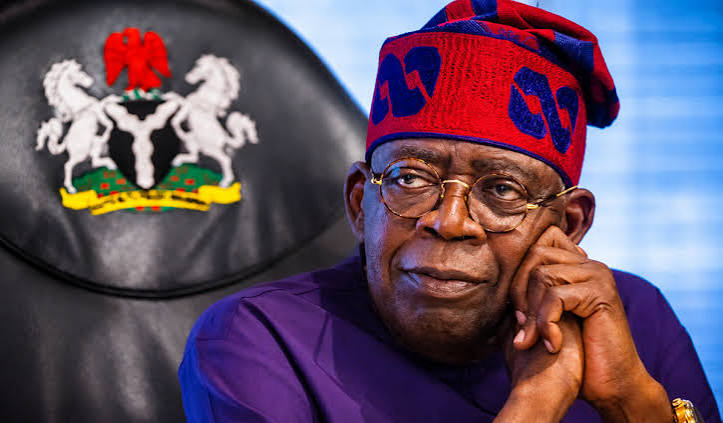
President Bola Tinubu said the World Bank’s October 2026 Nigeria Development Update confirms his administration’s economic reforms are yielding results and strengthening the economy for sustained growth.
This was contained in a statement by the Presidential Spokesperson, Bayo Onanuga, on Sunday in Abuja.
Tinubu welcomed the report, titled ‘Beyond the Federal Purse: How Higher Revenues Reshaped State Priorities’, highlighting improvements in economic growth, revenue generation and fiscal management.
The President noted the World Bank’s finding that Nigeria’s poverty rate had stabilised for the first time since 2019.
He said poverty was expected to decline gradually as economic growth outpaced population growth.
According to the report, the economy grew by 4.2 per cent in the first half of 2026, compared with 3.9 per cent in 2025.
The growth occurred despite the impact of the Middle East conflict, while the World Bank projected average growth of at least 4.4 per cent between 2026 and 2028.
The report showed that inflation declined from 27.6 per cent in January 2025 to 15.2 per cent in December 2025.
However, higher global fuel prices linked to the Middle East conflict slowed the decline, although inflation was projected to ease to about 12 per cent by 2028.
Nigeria’s external position also improved, with its current account surplus reaching 12 billion dollars, representing 7.0 per cent of GDP, in the first half of 2026.
This compared with 8.6 billion dollars recorded in the corresponding period of 2025.
Gross external reserves increased from 45.5 billion dollars at the end of 2025 to 53.8 billion dollars at the end of August 2026.
The report attributed the gains to reforms introduced since 2023, which increased federation revenues by 69 per cent in real terms between 2023 and 2025.
State governments emerged as the largest beneficiaries, with capital expenditure increasing by 151 per cent in real terms over the period.
Much of the additional spending went towards roads, transport, agriculture, energy and housing.
The report noted that 29 of the 33 states shifted spending towards economic infrastructure, while real social spending per capita increased in all but one state.
It also found that internally generated revenue grew in real terms in 31 of 35 states.
Meanwhile, 21 states reduced their debt-to-GDP ratios between 2021 and 2025.
Nigeria’s overall public debt was projected to decline from 40.0 per cent of GDP in 2025 to 38.1 per cent in 2026.
Tinubu said the findings demonstrated the impact of his administration’s decisions to remove the petrol subsidy, unify the foreign exchange market and strengthen fiscal discipline.
“The difficult but necessary decisions to remove the petrol subsidy, unify the foreign exchange market and strengthen fiscal discipline have raised revenues.
“The decisions have also stabilised the economy and created fiscal space for every tier of government to invest in its people. The dividends of reform are becoming visible.
“But more work remains to ensure they fully translate into better living standards for every household, starting with lower food prices and decent jobs for our young people.
“Our administration will stay the course of reform and redouble its focus on inclusive growth under the Renewed Hope Agenda,” he said.
The President said the administration would expand targeted cash transfers, accelerate Compressed Natural Gas (CNG) deployment, raise agricultural productivity and improve access to affordable healthcare and quality education.
“We will continue to expand targeted cash transfers, which have already reached more than 10 million households.
“We will accelerate the deployment of CNG, raise agricultural productivity, and improve access to affordable healthcare and quality education.
“I urge state governments to use their higher revenues more prudently and prioritise projects that improve the living standards of Nigerians, and the health and education of our people,” Tinubu said.
The President commended the Economic Management Team, led by the Minister of Finance and Coordinating Minister of the Economy, state governors and other stakeholders for supporting the reforms.
“I assure Nigerians that the best is yet to come under the Renewed Hope Agenda 2.0, which will accelerate the delivery of shared prosperity for all Nigerians,” he said. (NAN)
Road Crashes: Adamawa to Dualise Girei-Yola Road
The Adamawa Government has set in motion plans to dualise the Girei-Yola road to save lives and properties following increased accidents along the axis.
The Commissioner for Works and Housing, Muhammad Suleiman, who disclosed this in an interview on Sunday in Yola, said the dualisation of the road was among other measures the government planned to curb the frequent crashes on the road.
Suleiman said a committee, comprising the Federal Road Safety Corps (FRSC), Vehicle Inspection Officers (VIOs) and other relevant agencies, was constituted to get to the root of the problem and proffer lasting solutions.
The commissioner said appropriate measures would be implemented following the conclusion of the committee’s report.
According to him, the proposed measures will focus on reducing accidents, while the dualisation of the remaining section of the road will be considered as a long-term solution.
The commissioner said the government had demonstrated commitment to improving road infrastructure and public safety through the construction of major projects in the state capital and local government headquarters
Suleiman said the ministry had also intervened on some federal highways, bridges and other road networks within the state.
On traffic violations around the flyover and the road linking Army Barracks Roads in Yola, the commissioner called for increased public sensitisation to discourage motorists from driving against traffic.
He explained that the road design deliberately reduced the number of U-turns to improve safety, prevent accidents, reduce congestion and ensure the smooth flow of traffic.
He, however, expressed concern that some motorists were abusing the arrangement by driving against traffic instead of using designated U-turns.
“We are starting with sensitisation, and very soon, enforcement will follow. Stringent measures will be taken against traffic violators, particularly those driving against traffic,” he said.
The commissioner further stated that motorists caught driving against traffic could be subjected to psychiatric evaluation to determine their mental fitness to drive.
He said the measure would be introduced after public sensitisation, adding that offenders would also face fines as part of efforts to enforce traffic regulations.
He stressed that the measures were designed to protect road users, reduce accidents and ensure safer movement of vehicles across the state.
Suleiman urged the FRSC and the media to intensify public enlightenment on the dangers and consequences of traffic violations.
The commissioner then appreciated the FRSC for recognising the ministry’s contributions to road safety by presenting an award to him. (NAN)
OPINION
Fuel Price Discount and Monetary Policy Recalibration: Communicating Policy Change Without Undermining Reform Credibility
By Uche Joe Uwaleke
Economic reforms are rarely judged solely by their immediate outcomes. They are also assessed by the consistency of the policies that underpin them, the credibility of the institutions responsible for their implementation and, perhaps most importantly, the signals that governments send to investors, businesses, households and the international community.
In an economy such as Nigeria’s, where years of macroeconomic distortions have necessitated difficult but unavoidable policy adjustments, the language used by policymakers to explain their decisions can be almost as consequential as the decisions themselves. This explains why the Federal Government and the Central Bank of Nigeria must be deliberate in communicating recent policy actions that, although intended to alleviate economic pressures, could otherwise be misconstrued as a retreat from the reform agenda.
The September 2026 meeting of the CBN’s Monetary Policy Committee (MPC), at which the Monetary Policy Rate (MPR) was reduced to 23 percent, provides a compelling illustration of this challenge. The reduction, which represents a significant shift in the monetary policy stance, was accompanied by an explanation that the decision should not be interpreted as monetary policy easing but rather as a recalibration intended to bring the policy rate closer to prevailing market realities.
The distinction is crucial not least because a conventional interpretation of a reduction in the policy rate is that the monetary authorities are easing financial conditions to stimulate borrowing, investment and economic activity. By describing the decision as a recalibration, the CBN sought to communicate that the adjustment should be understood within the broader framework of its continuing commitment to price stability and macroeconomic discipline, rather than as evidence of abandonment of the restrictive monetary stance adopted to combat inflation.
There is, of course, an economic dimension to the decision that cannot be ignored. Nigeria’s elevated interest rates have imposed substantial costs on businesses, constrained private-sector investment and made access to credit particularly difficult for small and medium-sized enterprises. A reduction in the MPR can, over time, contribute to lowering borrowing costs, improving credit conditions and supporting productive economic activity. In that sense, the decision has implications for growth and investment that go beyond a technical adjustment to the monetary policy framework. Yet, given the importance of expectations in monetary policy, the CBN has good reason to avoid allowing a reduction in the benchmark rate to be interpreted as an unconditional declaration of victory over inflation or an invitation to resume the kind of monetary expansion that could undermine the progress already achieved.
The challenge for the CBN is therefore to communicate a delicate balance between maintaining the credibility of its anti-inflationary commitment and acknowledging that monetary policy must respond to changing economic conditions. The language of recalibration helps to convey that balance. It suggests an adjustment within an established policy framework rather than a reversal of direction. This is particularly important because the effectiveness of monetary policy depends not only on the level of interest rates but also on the expectations of investors, consumers and financial institutions regarding the future course of policy. If market participants conclude that the CBN is abandoning its commitment to price stability, the resulting change in expectations could weaken the effectiveness of the policy framework, even before any measurable deterioration in inflation occurs.
A similar consideration underlies the Federal Government’s recent announcement of a temporary fuel price discount for commercial vehicles through the Nigerian National Petroleum Company Limited (NNPCL), in response to the rising cost of petrol and the consequent increases in transport fares. Under the arrangement, NNPCL is expected to sell fuel to eligible commercial vehicle operators at cost price, effectively surrendering its margin on the relevant sales.
The Government has been careful to insist that the initiative should not be interpreted as a return to fuel subsidy, which it abolished in May 2023. The removal of the subsidy represented a major departure from a longstanding system of government intervention that imposed substantial fiscal costs, encouraged market distortions and created opportunities for arbitrage and smuggling.
Reintroducing a general fuel subsidy, even under the pressure of legitimate public demands for relief, could raise difficult questions about the durability of that reform. By presenting the new initiative as a targeted discount rather than a restoration of subsidy, the Government seeks to distinguish temporary, narrowly defined relief from a return to the previous system of broad-based price support. The distinction will, however, be credible only if the design, financing, eligibility criteria and implementation of the arrangement are consistent with the explanation being offered.
It would be unfair to suggest that every adjustment to a reform programme constitutes a retreat from reform. Sound economic management requires governments to respond to changing circumstances, correct unintended consequences and protect vulnerable groups against excessive hardship. Reforms are not ends in themselves; their ultimate purpose is to create a more stable, productive and prosperous economy. A monetary authority that refuses to adjust interest rates when economic conditions warrant it would be no more prudent than a government that insists on allowing every increase in transport costs to fall entirely on households, irrespective of the social consequences. The relevant question is not whether policy adjustments are permissible, but whether they are well designed, economically justified, transparent and consistent with the long-term objectives of reform.
This distinction is particularly vital at a time when Nigeria’s economic policy direction is receiving renewed attention from international financial institutions and credit-rating agencies. The World Bank, the International Monetary Fund and global rating agencies have acknowledged the significance of Nigeria’s macroeconomic reforms, including exchange-rate unification, tighter monetary policy and the removal of the petrol subsidy. Fitch Ratings’ recent favourable assessment of Nigeria has also contributed to the wider discussion about the country’s reform trajectory and improving investor confidence.
Such assessments should not be interpreted as a declaration that Nigeria’s economic challenges have been resolved. Inflationary pressures, the high cost of living, elevated financing costs, exchange-rate vulnerabilities and the constraints facing domestic production remain substantial concerns. Nevertheless, positive assessments matter because they influence how international investors, lenders and development partners evaluate Nigeria’s policy credibility and economic prospects.
For an economy that needs substantial domestic and foreign investment to expand productive capacity, create employment and improve living standards, credibility is an economic asset. Investors are more likely to commit capital when they believe that policy decisions are guided by a coherent framework rather than short-term political expediency. They need reasonable assurance that difficult reforms will not be abandoned and that changes in policy will be supported by clear economic reasoning. The confidence generated by reform is therefore not merely a public-relations achievement; it can affect investment decisions, financing conditions and the economy’s ability to attract the capital needed for sustainable growth.
This is why the manner in which recent policy decisions are communicated matters. The CBN’s description of its interest-rate reduction as a recalibration and the Federal Government’s insistence that the fuel discount does not constitute a return to subsidy can be understood as efforts to preserve continuity in the narrative surrounding Nigeria’s reforms.
The proposed fuel discount deserves particular scrutiny because the coexistence of discounted NNPCL sales and market-determined prices at independent filling stations creates conditions that could undermine the programme if implementation is not carefully managed. Price discrimination, in the economic sense, occurs when different buyers are charged different prices for the same or substantially similar product under specified conditions. Such an arrangement can be justified where the beneficiaries are clearly identifiable, the price differential serves a defined public purpose and the seller can prevent those purchasing at the lower price from reselling the product to those who would otherwise pay the higher market price. Without these conditions, a targeted discount can quickly become an opportunity for arbitrage rather than an effective instrument of social protection.
The central risk is that commercial vehicle operators may have an incentive to purchase discounted petrol at NNPCL stations and divert some or all of it to other vehicle owners at prices above the discounted rate. Where the difference between the NNPCL price and the prevailing market price is substantial, the potential gain from resale could become attractive enough to distort the intended pattern of consumption. The beneficiary may find it more profitable to resell discounted fuel than to use it for the commercial transport service for which the discount was designed.
In such circumstances, the Government would be incurring the economic cost of the foregone NNPCL margin without ensuring that the benefit reaches passengers through lower fares. The programme could then become an indirect transfer to intermediaries and opportunistic traders rather than a meaningful intervention in transport costs.
Preventing this outcome requires the Government to design the programme around the realities of Nigeria’s fuel distribution system and the incentives facing market participants. Eligibility must be established through a reliable, verifiable mechanism that identifies legitimate commercial vehicles and distinguishes them from private vehicles and other ineligible users.
Registration should be linked, as far as practicable, to vehicle identification, number plates and the relevant transport or operating permits. A digital verification system could help NNPCL filling stations confirm eligibility at the point of sale and record the quantity purchased against each registered vehicle. The system should also be designed to prevent the same vehicle from obtaining repeated discounted allocations beyond reasonable limits within a specified period.
The discount should be tied to actual fuel consumption for commercial transport rather than treated as an unrestricted entitlement to purchase cheap petrol. Reasonable quantity limits, calibrated to vehicle type and expected operating requirements, would help reduce the risk of bulk purchases and diversion. The details would need to reflect the practical realities of public transport operations, including the needs of buses, taxis and other qualifying commercial vehicles, without creating an unnecessarily cumbersome process that excludes legitimate beneficiaries.
Equally important is the need for effective monitoring and enforcement. NNPCL must be able to account for the volume of discounted fuel supplied, the identity of the beneficiaries and the extent to which the programme is reaching its intended users. The government should conduct regular audits, investigate unusual purchase patterns and impose proportionate penalties for diversion or fraudulent claims. There must also be a clear channel for the public and transport operators to report abuse.
The Government must also consider the geographical distribution of NNPCL filling stations relative to the locations where commercial vehicles operate. If eligible operators must travel considerable distances to obtain discounted fuel, the additional time, fuel consumption and operating costs could erode the benefit of the discount. It could also create congestion at participating stations and provide opportunities for informal resale.
It goes without saying that a programme that reduces the price of petrol at selected locations but imposes significant additional costs on beneficiaries may achieve far less than its headline price suggests. The availability of discounted fuel must therefore be assessed against the actual transport routes, refuelling patterns and operating requirements of the intended beneficiaries.
Another critical issue is the relationship between the discount and transport fares. A reduction in the input cost of commercial transport does not automatically translate into lower fares for passengers. Operators may face other cost pressures, including vehicle maintenance, spare parts, tyres, insurance and financing costs. They may also be reluctant to reduce fares given that the discount is expected to be temporary.
The Government should therefore establish a clear and credible framework for measuring whether the intervention is producing the intended relief, taking account of the different types of commercial transport and the routes on which they operate. Engagement with transport unions, fleet operators and passenger representatives can help establish reasonable expectations, while monitoring prevailing fares before and during implementation can reveal whether the benefits are being passed through to passengers.
The possibility of supply distortions also deserves attention. If discounted fuel is available only at NNPCL stations while independent marketers continue to sell at market-determined prices, demand may become concentrated at participating stations. Long queues, stockouts and delays could increase the effective cost of obtaining the discounted product. Meanwhile, some customers may be tempted to buy at the discounted price and resell elsewhere, particularly where independent marketers’ prices remain higher. These developments could create shortages at participating stations without reducing the overall cost of transport by a corresponding amount. NNPCL will therefore need adequate supply planning, clear procedures for prioritizing eligible commercial vehicles and safeguards against the diversion of discounted stock.
The Government should also be transparent about the fiscal and commercial implications of the arrangement. Selling at cost price and foregoing a commercial margin may not be identical to a conventional budget-funded subsidy, but the intervention still has an economic cost. The foregone margin represents revenue that NNPCL would otherwise have earned, and the opportunity cost should be acknowledged in assessing the programme. The Federal Government should specify the criteria for reviewing it and the circumstances under which it will be modified. Without such clarity, a measure introduced as temporary relief could become an indefinite commitment, gradually weakening the distinction the Government is seeking to preserve between targeted assistance and the former subsidy regime.
All said, Nigeria’s economic reform agenda must be judged by its capacity to restore stability while creating the conditions for inclusive growth. Monetary discipline, exchange-rate reform and the removal of unsustainable subsidies are not valuable simply because they attract favourable assessments from international institutions or rating agencies. Their real justification lies in the prospect of a more efficient economy, a stronger fiscal position, better investment conditions and more sustainable opportunities for employment and production.
But these reforms cannot be sustained indefinitely without attention to the hardship they impose during the adjustment period. The Government must therefore find ways to cushion the most damaging effects of economic change without undermining the incentives, price signals and fiscal discipline that the reforms are intended to establish.
Undoubtedly, Nigeria has invested considerable economic capital in reversing long-standing policy distortions. Preserving the credibility of that effort requires the government to explain adjustments carefully, implement them consistently and demonstrate that short-term relief is compatible with long-term reform. The real challenge is to ensure that the language of policy is matched by the substance of policy, and that every adjustment strengthens rather than weakens confidence in Nigeria’s economic future.
Prof Uche Uwaleke is the Director of the Nasarawa State University Institute of Capital Market Studies and President of the Capital Market Academics of Nigeria

By Uddin Ifeanyi
I am not an accountant, so my opinion on the NNPCL’s recently released 2025 annual financial report is a qualified one. It matters, therefore, that PwC, the audit and assurance firm which signed off on the report, has no doubt that it represents a true and fair view of the corporation’s performance under the country’s reporting standards.
Far more comforting was my former colleague’s response to the report’s release: “Wonderful! While I was working in the bank, as the Corporate Banking Group’s relationship manager for the NNPC, the ‘most recent’ financials we had was about 15 years old”.
That was some 15 years ago. In terms of accountability and public disclosure, then, Nigeria’s most important corporation over the last 49 years is making steady progress.That said, significant parts of the picture of a profitable company undergirded by improving production, which the report tries so convincingly to take, are out of focus. It is a fair argument that the report’s headline profit growth figure appears to overstate the improvement in the corporation’s underlying trading performance. Why this blur? The NNPC Group’s net profit rose by about 33 per cent to ₦7.2 trillion last year, despite a 23 per cent drop in revenue from ₦45.1 trillion in 2024, to ₦34.5 trillion last year.
Gross profit was down by equivalent percentage points to ₦9.4 trillion in the same period. While two different lines, a ₦5 trillion rise in other income, and a ₦1 trillion fall in general and administrative expenses, explain this seeming contradiction, the resulting problem is not that the increase in the corporation’s profit last year did not come from increased sales or gross profits. It is instead included in the answer to the question, “How repeatable will the ‘other income’ performance be in future accounting periods?”
The corporation’s balance sheet is a smorgasbord of paints off a similarly nuanced canvas. With a current ratio of about 0.85, the NNPCL’s short-term assets (₦28.1 trillion) do not quite make up for its short-term liabilities (₦33.2 trillion). With the right timing, depending on the nature of its account payables, and the makeup of its receivables, the corporation ought to be able to easily meet its obligations. This balance sheet structure has one other purpose: it helps make sense of the corporation’s cash pressure.
The group’s cash balance was down from ₦10.3 trillion in 2024 to ₦6.4 trillion by financial year end 2025. This, despite an increase in cash generated from operations to ₦12.9 trillion in 2025 from ₦11.0 trillion the previous year. Trade and other receivables fell from the ₦31.4 trillion at which it printed in 2024, but even at ₦19.7 trillion, last year, it remained substantial.
On the upside, there is plentiful evidence of a production recovery. Still the chorus of “Hallelujahs” are pressed in on two sides by the narrative section of the report’s claim of average crude and condensate production of 1.77 million barrels per day – a five-year high, and the financial highlights’ listing of 565.8 million barrels of crude oil production. On the face of it, annualised, the latter number translates into about 1.55 million barrels per day of production.
My guess is that these two figures address different scopes — i.e. national production as against the NNPCL’s own or equity production. Any which way, the report could have helped make this reconciliation easier. Equal levels of clarity could have been facilitated by tying natural gas production directly to segment revenue, investment returns, and cash generation.
Overall, the NNPCL report indicates considerable operating progress. Operating cash generation is especially impressive. Nonetheless, the dip in revenue and gross profit, the facts that profit growth is almost entirely the result of large other income performance, and that current liabilities swamp current assets, make the headline profit an incomplete gauge of the organisation’s financial strength.
For more than a decade now, the dominant presence in the room when the NNPC’s accounts are discussed is the extent of outgoings on the subsidy for the pump-gate price of petrol. And this is the main reason I paid this much attention to the corporation’s annual report for last year – to see how far the corporation’s numbers corroborate the federal government’s insistence that it has removed the subsidy completely.
How do the numbers stack up? The corporation’s financial statements continue to use categories such as “energy security” and “under-recovery.” These are not exactly identical terms. Energy security expenses may include more than petrol price support.
Interestingly, the NNPCL’s financial statement for 2024 reports ₦8.67 trillion as an “under-recovery” balance. Other coverage in the 2025 statement describes ₦8.67 trillion as a “federation receivable.” Both labels and reporting periods are not interchangeable, but if either means that the corporation continues to cover a gap between petrol’s supply cost and a managed selling price, and records the amount as recoverable from the federation, the economic burden from the fuel subsidy has not disappeared. It has simply been absorbed by the NNPCL or the federation, rather than fully passed on to consumers.
Uddin Ifeanyi, a journalist manqué and retired civil servant, can be reached @IfeanyiUddin.


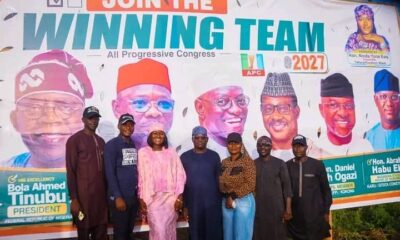

2027: Yona Donates APC Campaign Banner, Seeks Constituents Support
ShareBy Tambaya Julius, Abuja The Councillor representing Tattara/Kondoro Electoral Ward and Chief Whip of the Karu Legislative Council, Hon. Barr....

Pope Leo to Have Surgery after Lump Found on Lung
SharePope Leo XIV has announced he will be operated “in the coming days” after a nodule was found on his...


Motorists Express Worry over Non-access to NNPC Petrol Discount
ShareMany motorists said in spite of the discount in pump price of petrol at the Nigerian National Petroleum Company Ltd...


Tuberculosis: Benue Assembly Passes Law, to Protect Patients from Discrimination
ShareBy Laide Akinboade, Abuja The Benue State House of Assembly has passed into law a landmark legislation aimed at eliminating...

President Tinubu’s 30-Day Fuel “Discount” Cannot Repair the Damage of Subsidy Removal
ShareBy Daniel Nduka Okonkwo The Federal Government has issued a stark warning: restoring petrol subsidies could push the exchange rate...


Troops Neutralize Explosive Devices planted in Zamfara Community
ShareFrom Ifeanyichukwu Nwannah, Gusau The troops of Operation Fansan Yamma (OPFY) have neutralised Explosive Devices Planted along Magami–Hannutara–Dansadau road, Maru,...


Mbah Reaffirms Enugu’s Commitment to Trade, Investment, Industrial Growth
ShareFrom Sylvia Udegbunam, Enugu Enugu State Governor, Dr. Peter Mbah, has reaffirmed his administration’s commitment to creating an enabling environment...


Concerns About the 2027 General Elections
ShareBy Jibrin Ibrahim As the countdown to the 2027 elections reached 100 days this week Tuesday, Joash Amupitan, chairman of...

World Bank Report Confirms Economic Reforms Yielding Results – Tinubu
SharePresident Bola Tinubu said the World Bank’s October 2026 Nigeria Development Update confirms his administration’s economic reforms are yielding results...

Bandits Burn Houses, Business Premises in Niger Border Community
ShareFrom Dan Amasingha, Minna Suspected bandits have attacked Kigbera village in Konkoso Ward, Borgu Local Government Area of Niger State,...