
NEWS
Sani Signs Budget of Sustaining Rural Transformation

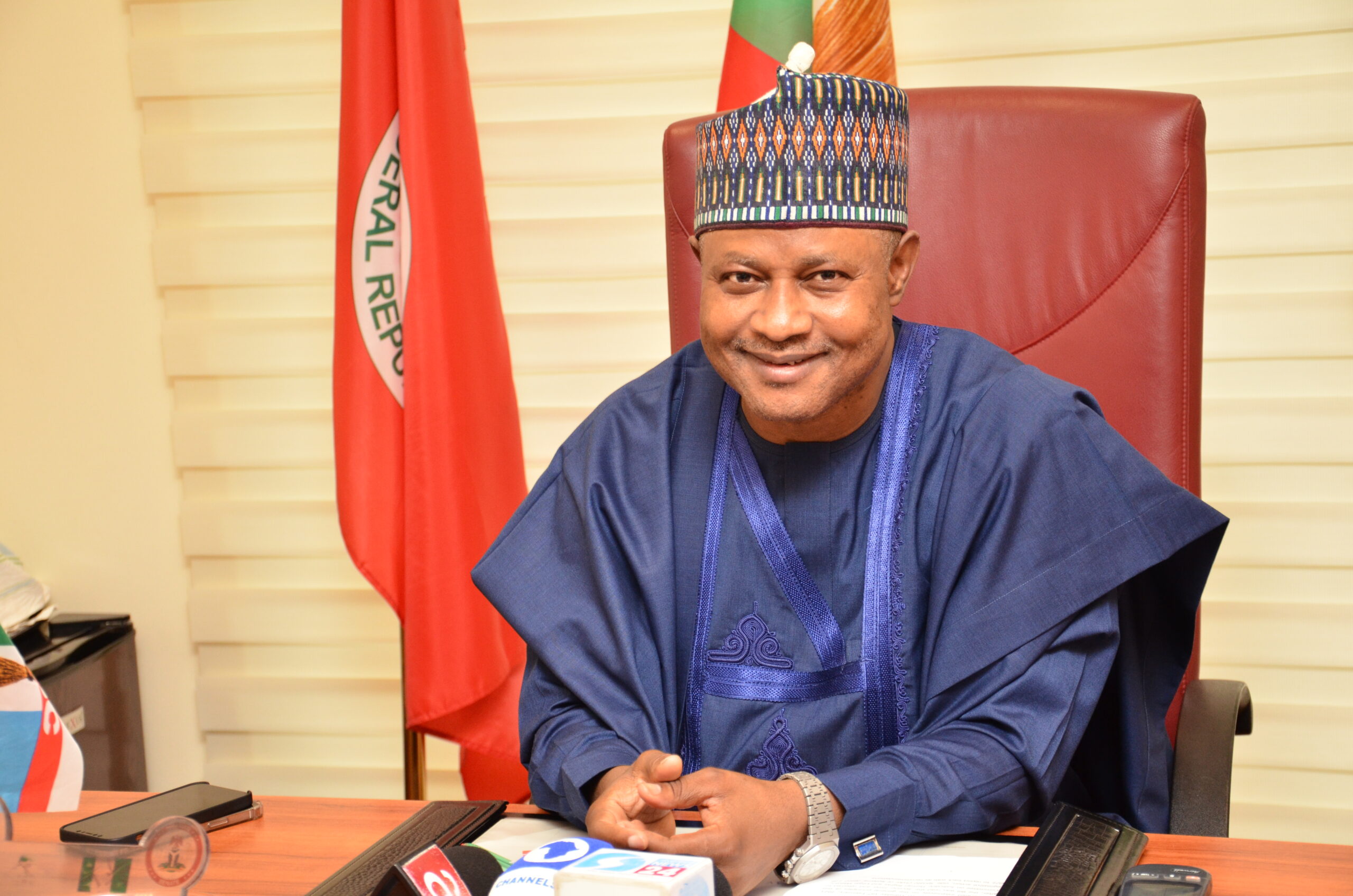
Gov. Uba Sani has signed the 2025 budget of ‘Sustaining Transformation and Inclusive Development’, ten days after he presented the draft proposal to the Kaduna State House of Assembly.
The budget focused on rural development and the total sum is N790, 439, 580, 083 budget.
The sums earmarked for capital expenditure and recurrent expenditure are N551,582,867, 194 and N238,856,712,888.
86. respectively.Speaking after signing the budget on Monday, the Governor commended the assembly for the speedy passage of the budget within 10 days of presenting the proposed appropriation bill.
The governor said that the legislature had invited all the Ministries, Departments and Agencies to defend their budget proposals and the sessions were robust, adding.”but at the end of the day, the 2025 budget was passed.
‘’Here in Kaduna State, I can say without fear of contradiction that we have the best House of Assembly in the country.
”If you look at the members, there are APC and PDP legislators but they have relegated politics and are only focusing on governance. For me, this is highly commendable .
‘’About ten days ago, I was at the House of Assembly chambers where I presented our 2025 budget proposal.
”All the MDAs were invited and they defended their budgets. I was following the debate and I can say it was one of the most thorough budget defence in the history of Kaduna State.”
Sani expressed delight that the legislators passed the appropriation bill within ten days, saying,” this is something that I will continue to be proud of.
”Apart from the budget, the number of motions, and bills they have sponsored, I can say that this is the best state assembly.
‘’As a former Senator who has the highest number of bills during the last senate, I sponsored more that 32 bills, so there is nobody that can give our lawmakers that credit better than me.’’
Speaking earlier, the Speaker of the assembly, Rt. Hon. Yusuf Liman, said that the signing of the 2025 budget by the governor marked an important milestone in the activities of the Assembly.
According to him, the budget proposal underwent thorough scrutiny before it was passed by the legislators.
He thanked Sani for working closely with the assembly to bring the direly needed dividends of democracy to the people of the state.
‘’The determination of the Uba Sani-led administration to create an enabling environment for developmental projects across the state can never be overemphasized,’’ he said.
The speaker said the governor had not only continued with some abandoned projects, ‘’but had also initiated commendable ones. His commitment to rural development is noteworthy.”
Giving a breakdown of the 2025 budget, the Commissioner for Planning and Budget, Alhaji Mukhtar Ahmed, said education got the largest chunk of the budget 26 per cent.
Also, health has 16 per cent while public infrastructure and agriculture have 13 per cent and 9.5 per cent, respectively.
According to him, the sectoral allocations reflected the administration’s emphasis on human capital development and agriculture.
Ahmed said, ’This is the second budget of His Excellency and he has prioritised agriculture.
”While we have 7 per cent in this current year, in 2025 agriculture will have 9. 5 per cent because of the impact agriculture has made.”
He said that 42 per cent of the state’s GDP was from agriculture, adding, ”I’m sure that if we maintain this tempo, it will be higher by next year.’’ (NAN)

By Attah Ede, Makurdi
The Deputy Chairman Christian Association of Nigeria CAN Benue State Chapter, Rev. Jonathan Terwase Ugbede has called on the people of the state to intensify support for the less privilege and the vulnerable in the society.
Speaking at the CAN Secretariat in Makurdi, during the presentation of award on him by Pan African Integrity Initiative Centre Abuja, the Deputy CAN Chairman noted that the vulnerable in the society needs the support and care for them to live more useful lives capable of benefitting other people.
Rev.
Ugbede informed that what he was able to do and the support he has extended to people particularly the vulnerable was as a result of the firm support he was enjoying from the Governor of Benue State, Hyacinth Iormem Alia.The State CAN Deputy Chairman disclosed that the Church in the state has continued to enjoy good working relationship with the state governor, insisting that Governor Alia has never turned down any request by CAN.
Ugbede who called on the Christian community in the state to intensify support particularly in prayers to enable the Governor achieve more for the people, expressed confidence that with relentless prayers Governor Alia would definitely attract more development to Benue State.
He expressed appreciation to the Christian community in the state for standing by him to develop the Church and also appreciated Pan African Integrity Initiative Centre Abuja for finding him worthy of the honour, saying he did not know that people were watching him and that he did not lobby for the honour even as he was not aware of the award.
The National Coordinator of the Center, Chief Amb. Sonny Goli who was represented by Timothy Msugh Atoza while presenting the award, said the Rev. Ugbede has
“consistently supported and facilitated the settlement of expensive hospital bills for men of God and underprivileged citizens, going as far as seeking the direct intervention of the Executive Governor of Benue State whenever necessary.
“You have taken the Gospel beyond church walls by visiting IDP camps, identifying with the displaced, and bringing them hope. Beyond that, you have initiated and driven important projects aimed at the growth and development of the Christian body in this state. In a time when many chase recognition, you have chosen responsibility. When others speak from a distance, you draw near. That, Reverend, is the very essence of missionary integrity.”
In their separate comments the Assistant Secretary of CAN in the state, Apostle General Mike Nkiri, the WOWICAN Chairperson, Lady Cecilia Member Amishiave, Bishop Joseph Atimga Vice Chairman Christian Council of Nigeria, the YOWICAN Chairman Rev. Barr. Bobby Tavershima among others appreciated the centre for the honour as it was well deserved adding that the Deputy Chairman would continue to attract more honours given what he has been doing in the Church
By Raphael Atuu ,Abuja
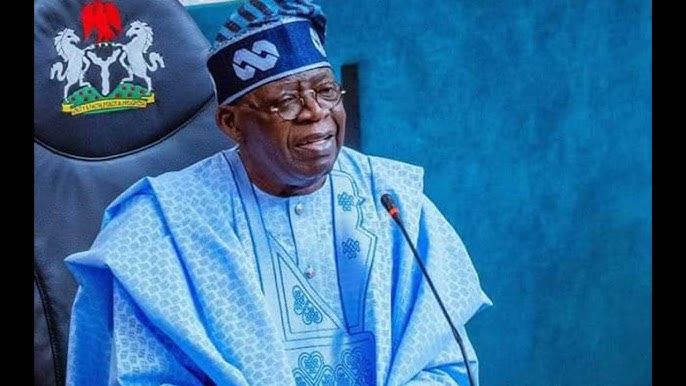
The Federal Government has saved approximately ₦61.58 billion (US$43.99 million) and secured fertiliser supplies for the 2026 wet season through an early procurement strategy that shielded Nigeria from the impact of fresh global disruptions affecting fertiliser markets worldwide.
While several countries across Africa face fertiliser shortages and rising input costs triggered by escalating tensions along key global shipping routes, Nigeria moved ahead of market pressures by locking in supplies and prices months before the current volatility.
The proactive intervention has ensured steady availability of fertiliser raw materials for local production and reduced the risk of price shocks for Nigerian farmers ahead of the planting season.
grapple with fertiliser shortages and rising input costs triggered by fresh global disruptions, Nigeria has secured its fertiliser supply for the 2026 wet season, following early procurement decisions that have also saved the country over $42 million.
The latest disruptions, linked to escalating tensions affecting critical global shipping routes, have pushed up freight costs and driven increases in the prices of key fertiliser inputs, including Granular Ammonium Sulphate (GAS), Diammonium Phosphate (DAP), and Muriate of Potash (MOP). Across multiple markets, supply gaps are emerging, leaving farmers uncertain about availability and pricing ahead of the planting season.
Nigeria, however, has moved ahead of the curve.
PFI NPK Limited, the wholly owned entity of the Ministry of Finance Incorporated (MOFI) and implementation vehicle for the Presidential Fertiliser Initiative, confirmed that it secured its 2026 supply position months before the current market volatility.
According to official Q1, 2026 procurement and shipment records made available to the press, the company locked in nine (9) vessels carrying a combined 407,304.00 metric tonnes, making a total of 534,219 MT of raw materials including the opening balance at the beginning of the 2026 cycle, available for NPK fertiliser production.
All associated Letters of Credit have been fully established or settled, ensuring supply continuity.
The records further show that as of mid-April 2026, over 323,109.24 metric tonnes (approximately 6.5 million 50kg bags) had been released to registered blending plants nationwide, with more than 198,264.41 metric tonnes (approximately 4 million 50kg bags) already offtaken, indicating active distribution across the country ahead of peak planting.
Speaking on the development, the Director of PFI NPK Limited, Dr. Armstrong Ume Takang, said the early procurement strategy was designed to shield Nigeria from external shocks.
“We took a deliberate decision to move early, well ahead of market pressures, by securing supply, locking in pricing, and putting the necessary financial instruments in place.
That foresight is what has ensured that Nigeria is not exposed to the disruptions currently affecting global fertiliser markets,” he said.
Financial data reviewed alongside the procurement records indicate that the early purchasing strategy generated total savings of $43.99 million, equivalent to approximately ₦61.58 billion, when compared with prevailing spot market prices.
A breakdown of the figures shows that GAS was secured at $228 per metric tonne against a current market price of $343, while DAP was locked in at $775 per tonne compared to $950, and MOP at $400 per tonne against $430.
These price differentials reflect the impact of securing supply ahead of global price escalations.
Fertiliser availability and pricing remain central to Nigeria’s agricultural productivity and overall food supply. With global market conditions placing increasing pressure on input costs, ensuring consistent supply and price stability is critical to supporting production outcomes across the agricultural sector.
PFI NPK operates a centralised bulk procurement and distribution model, importing raw materials and supplying them to 94 FEPSAN registered blending plants across Nigeria. The company does not import finished fertiliser, ensuring that all NPK production is carried out domestically, supporting local industry and value addition.
In 2025, the company delivered 648,000 metric tonnes of raw materials. For 2026, operations are being scaled significantly, with a target of 1.52 million metric tonnes.
The supply chain operates under strict governance protocols. Collateral Management Agents provide independent oversight at warehouses, while raw materials remain under PFI NPK control until confirmed sales and repayment are executed.
Standard operating procedures, developed in collaboration with the Fertiliser Producers and Suppliers Association of Nigeria (FEPSAN), guide handling, storage, and distribution, with regulatory compliance ensured through NAFDAC and Standards Organisation of Nigeria (SON) requirements.
Operations are further supported by the Office of the National Security Adviser (ONSA), whose approval remains central to PFI NPK’s ability to operate and scale its distribution across the country.
For farmers preparing for the 2026 wet season, the immediate outcome is supply certainty. Raw materials are either already in-country or in transit, blending plants are receiving inputs, and the risk of sudden price shocks linked to global disruptions has been significantly reduced.
Dr. Takang emphasised that the impact of the intervention ultimately rests at the farm level. “What matters is that the farmer can access fertiliser when needed and at a price that does not undermine production.
By stabilising supply and managing cost exposure at the procurement stage, we are supporting that outcome at scale,” he said.
Looking ahead, the company is strengthening long-term supply security through Government-to-Government partnerships with international suppliers and advancing plans for a digital enterprise system to provide real-time visibility across procurement, inventory, and distribution.
About PFI NPK Limited
PFI NPK Limited is a wholly owned entity of the Ministry of Finance Incorporated (MOFI) and the designated implementation vehicle for Nigeria’s Presidential Fertiliser Initiative.
The company operates a centralised bulk procurement and distribution system for fertiliser raw materials, ensuring domestic blending and nationwide supply stability.
For Media Enquiries,
Contact: Mr Tajudeen Datti Ahmed, – Executive Director, Portfolio,
Email: info@mofi.com.ng
From Abel Zwanke, Lafia.
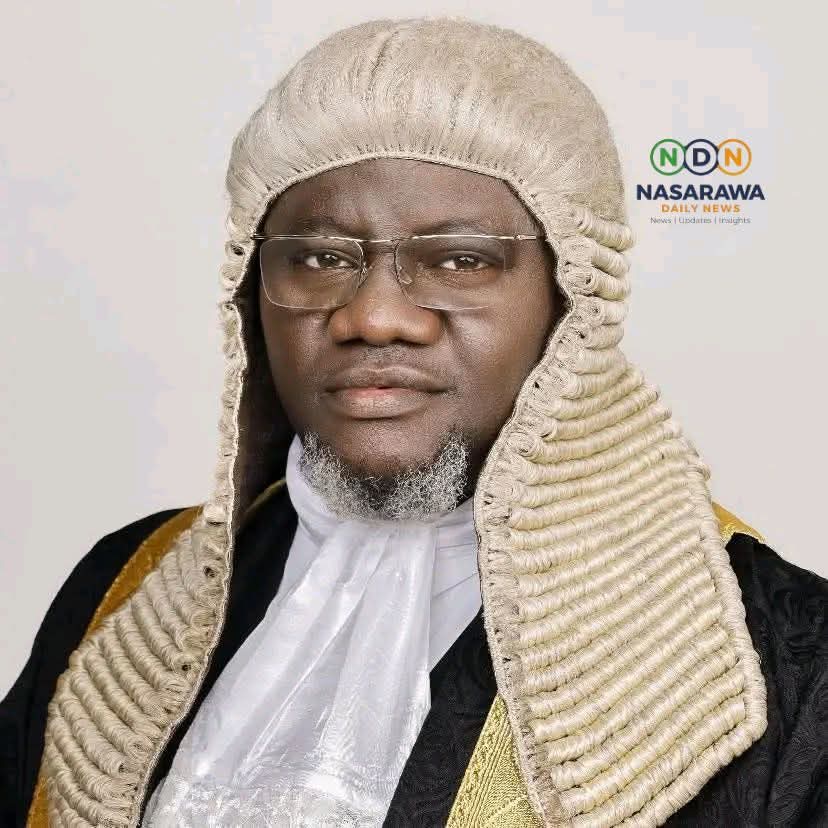
The Secretary to the Government of Nasarawa State and Renewed Hope Ambassador, Shuaibu Magaji Labaran, has said that the Renewed Hope Agenda of President Bola Ahmed Tinubu is laying a solid foundation for long-term economic prosperity, job creation and improved living standards for Nigerians.
Labaran stated this in an interview with journalists on Friday where he assessed the impact of the administration’s policies and reforms on the country and Nasarawa State in particular.
According to him, the agenda is helping to stabilize and reposition Nigeria’s economy and governance structures, with states already benefiting from improved fiscal coordination, infrastructure development and stronger support from the Federal Government.
“As we commemorate Democracy Day, it is important to situate the Renewed Hope Agenda within the broader objective of stabilizing and repositioning Nigeria’s economy and governance structures.”
“In Nasarawa State, we are already seeing gradual but meaningful impacts, particularly in infrastructure development, improved fiscal coordination and strengthened support for subnational governments,” he said.
The SSG acknowledged the economic difficulties currently being experienced by Nigerians but maintained that the reforms introduced by the Tinubu administration were necessary to address longstanding structural challenges.
“It would be unrealistic to deny that Nigerians are facing economic challenges; however, it is equally important to recognize the bold and necessary steps taken by the administration.
“Key achievements include the unification of the foreign exchange market, removal of fuel subsidy which has freed up resources for development, and increased federal allocations to states,” he stated.
Labaran noted that the increased allocations have enabled states such as Nasarawa to invest more in critical sectors including education, healthcare and infrastructure, adding that the reforms are designed to place the country on a sustainable growth path.
On inclusiveness, he said the administration has prioritized youth empowerment through skills acquisition programmes, digital economy initiatives and support for entrepreneurship, while women and rural communities are benefiting from targeted interventions.
“In Nasarawa State, we are aligning closely with these priorities to ensure that no segment of society is left behind,” he said.
Speaking on recent political developments in the state, the Renewed Hope Ambassador described political realignments as a natural feature of democracy, saying they reflect growing confidence in the leadership and direction of the ruling All Progressives Congress.
“These shifts, rather than weakening democracy, are strengthening it by fostering broader consensus and unity around progressive governance. Looking ahead, I am confident that these realignments will enhance democratic consolidation and position the APC strongly for future electoral success,” he added.
Labaran called on Nigerians to play active roles in sustaining democracy through constructive engagement and accountability.
“My message to the good people of Nasarawa State and Nigerians at large is one of shared responsibility. Democracy is not sustained by government alone; it requires active citizen engagement, patience and constructive participation.
Government, on its part, remains committed to transparency, accountability and service delivery,” he said.
He further expressed optimism that by 2027, Nigerians would remember the Tinubu administration for implementing difficult but necessary reforms that strengthened economic resilience, deepened democratic institutions and created opportunities for future generations.
“By 2027, I believe the defining legacy of President Tinubu’s Renewed Hope Agenda will be the courage to implement difficult but necessary reforms that reposition Nigeria for sustainable growth.
“The focus is not just on immediate gains, but on building a stable and prosperous Nigeria that will endure for decades to come,” Labaran said.




Benue CAN Deputy Chair Makes Case for Less Privileged, Vulnerable in Society
ShareBy Attah Ede, Makurdi The Deputy Chairman Christian Association of Nigeria CAN Benue State Chapter, Rev. Jonathan Terwase Ugbede has...


FG Saves N61.58bn Through Early Fertiliser Procurement, Secures Supply for 2026 Farming Season
ShareBy Raphael Atuu ,Abuja The Federal Government has saved approximately ₦61.58 billion (US$43.99 million) and secured fertiliser supplies for the...

Democracy Day: Renewed Hope Agenda Laying Foundation for Sustainable Growth, Says Nasarawa SSG
ShareFrom Abel Zwanke, Lafia. The Secretary to the Government of Nasarawa State and Renewed Hope Ambassador, Shuaibu Magaji Labaran, has...


One out of every four children in Benue suffering nutritional deficiencies- UNICEF
ShareFrom Attah Ede, Makurdi The United Nations Children’s Fund (UNICEF), has revealed that one out of every four Benue State...
Niger Debunks School Attack Rumours
ShareThe Niger Government has reassured parents, guardians, students, and the general public that schools across the state remain safe and conducive for teaching and learning. This was contained in a statement signed by...


Pope Leo Visits Canary Islands, Highlights Perilous Journeys of Migrants
ShareBakary Jaiju was 19 when he climbed into a wooden boat in the Gambia and set out for Europe. He...
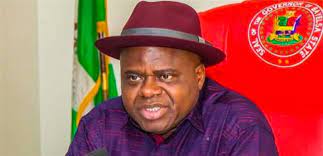

Diri Signs PWDs, BMUTH Bills into Law
ShareFrom Mike Tayese, Yenagoa Bayelsa State Governor, Senator Douye Diri, has signed the Persons with Disabilities (PWDs) and the Bayelsa Medical...


Democracy Day: FG Declares Friday Public Holiday
ShareThe Federal Government has declared Friday, public holiday to commemorate Nigeria’s 27 years of unbroken democratic rule. This was contained in a statement on Thursday in Abuja, by...
NUJ Osun Condemns Arrest of Secretary, Demands Public Apology from Police
ShareFrom Ayinde Akintade, Osogbo The Osun State Council of the Nigeria Union of Journalists (NUJ) has condemned the arrest and detention of its Secretary, Olalekan Akindoju, by...

FCMB names Bismark Rewane Board Chairman
Share First City Monument Bank Limited has appointed Bismarck Rewane as a Non-Executive Director and Chairman of its Board of...