
Oil & Gas
Saudi Arabia Dramatically Changing Oil Exports to China, US

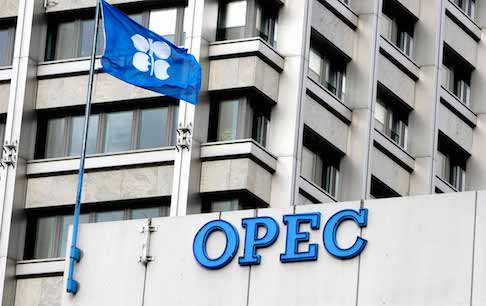
Ganiyu Obaaro, with Agency report
Saudi Arabia has seriously ramped up its oil exports to China in recent months.
The Saudi Kingdom’s crude shipments to China have doubled in the span of a year. During the same period, its oil exports to the U.
S. have dropped by nearly two-thirds.According to TankerTrackers.com, which tracks oil tankers and shipments based on satellite imagery and ships’ automatic identification systems, Saudi Arabia exported a whopping 1,802,788 barrels per day (bpd) to China in July, compared to 921,811 bpd in August of 2018.
By contrast, exports to the U.S. in July were 262,053 bpd, nearly 62 per cent down from 687,946 bpd in August of last year.U.S. sanctions on Iranian oil have helped the shift. Major Asian energy importers like China have been forced to shift business away from the Islamic Republic -OPEC’s third-largest producer -and start buying more Saudi barrels to make up for that shortfall.
The U.S. is now more self-reliant than ever, thanks to its own Shale oil revolution, which helped it become the world’s largest oil producer by the end of last year.
But the numbers also signal a mix of short-term tactics and long-term strategy for the Saudis, industry experts told CNBC.
“Saudi Arabia learned from the last OPEC production cut in 2017 that they got the biggest bang for their buck by cutting flows to the largest, most transparent and most timely market — the U.S.,” said Matt Smith, director of commodity research at commodities analytics firm ClipperData, referring to the coordinated production cut that OPEC and its allies orchestrated to put a floor under falling oil prices.
“Choking back on flows to the U.S. was the best way to draw down inventories and turn around bearish sentiment, and they are employing the same tactic once again.”
ClipperData’s figures, which differ from that of TankerTrackers due to different tracking methods, still show U.S. imports of Saudi crude in July down over 60 per cent from last October.
Meanwhile, Smith said, as Saudi Arabia “slams on the brakes to the most transparent market, it is sending more crude into the most opaque one, China.”
This is where some industry analysts say Riyadh is employing short-term tactics: “impacting what remains the most visible and closely-watched market indicator, U.S. crude stocks,” Antoine Halff, co-founder of energy market analytics firm Kayrros, told CNBC.
The market has largely traded on weekly U.S. numbers, which — up until the growth of satellite imagery to provide greater transparency on global stocks — provided the best available picture of market conditions.
In spite of the greater availability of global market inventory thanks to satellite data, “the goal of impacting the U.S. stock metric seems to remain very real for OPEC in general and the Kingdom in particular,” Halff said. “Rightly or wrongly, this is the benchmark that everybody watches.”
China, oh the other hand, is not as forthcoming as OECD countries about its stocks, and its data isn’t as visible to the market. Halff notes that there is no established benchmark of Chinese stocks as there is for the U.S.
“Producers are far less concerned about building Chinese stocks than they are about building U.S. or OECD stocks in terms of what that may signal to the market,” he said.
TankerTrackers.com co-founder Samir Madani has described China as a sort of “black hole” for the world’s oil exports, having the ability to “easily absorb oil barrels from the market, especially when prices dip.” Looking at this, many analysts see a clear strategy from Beijing.
“The Chinese are very savvy and astute buyers, exporters who supply them have very good reasons to do so,” Halff said. In the current low oil price climate, the world’s largest oil importer is happy to up its Saudi crude purchases as its appetite increases, particularly given its launch of two new refineries which will grow its refining capacity by 800,000 bpd.
Locking in Asian market share is also a key long-term goal for Riyadh, as it is for other regional producers competing to capture downstream capacity across the continent. Saudi Aramco’s plan to acquire a 20 per cent stake in Indian refining and petrochemicals giant Reliance is the most recent example of this.
Conveniently for the Saudis, there’s also no risk of losing the U.S. as a customer, thanks to its giant Aramco-owned Motiva refinery in Texas. Therefore, “Aramco is willing to increase or decrease to the U.S. based on its own needs,” says Ellen Wald, President of Transversal Consulting and author of the book “Saudi, Inc.”







The Nigerian Content Development and Monitoring Board said its Nigerian Oil and Gas Parks Scheme, established to boost local manufacturing through shared infrastructure and embedded power solutions, would be inaugurated in 2026.
Abdulmalik Halilu, spokesman for NCDMB, disclosed this on Monday in Abuja while presenting an overview of the Board’s mandate and achievements at a capacity-building workshop for the media.
NCDMB established the NOGAPS with the primary aim of domiciling and domesticating oil and gas activities in-country by facilitating local manufacturing.
The scheme is a key part of the NCDMB’s 10-year Strategic Roadmap to increase Nigerian content in the industry to 70 per cent by 2027.
Halilu said eight oil and gas industrial parks, covering Bayelsa, Cross River, Akwa Ibom, Imo, Delta, Ondo, Abia, and Edo, were being established.
“NOGAPS in Bayelsa and Cross River states are at 90 per cent completion and due for commissioning in 2026,’’ he said
Mr Halilu said the parks would provide infrastructure and services plots for manufacturing outfits, adding that its local content policy had evolved into a powerful tool for industrialisation, job creation and sustainable economic growth in the sector.
He said local content was designed to stop capital flight and reposition the oil and gas industry as a catalyst for national development.
According to him, exporting oil and gas services outside Nigeria amounted to exporting jobs, capital and industrialisation opportunities, a situation the Federal Government deliberately moved to reverse through local content policies.
He said the success of early local content initiatives led to the enactment of the Nigerian Oil and Gas Industry Content Development Act, which institutionalised the policy and insulated it from political changes.
“The philosophy of local content is simple: what can be competitively produced in Nigeria should be produced in Nigeria, without compromising standards, pricing or project timelines,” Halilu said.
He explained that the NOGICD Act assigns NCDMB two core responsibilities, namely building indigenous capacity and enforcing compliance with the Act, which contains schedules and nearly 300 performance targets.
Highlighting achievements, he cited the Nigeria LNG Train 7 project as a major success story, with over 93 per cent Nigerian workforce participation, engagement of 1,400 vendors, and significant domiciliation of fabrication, engineering and manufacturing activities.
He said capacities developed for oil and gas projects now serve other sectors such as power and construction, reinforcing the sector’s multiplier effect on the economy.
On financing, he said NCDMB had deployed funds from the Nigerian Content Development Fund through intervention programmes, including single-digit interest loans for indigenous companies, asset-acquisition financing, and working capital support introduced during the COVID-19 pandemic.
Halilu also said that NCDMB had fully automated its processes, eliminating physical visits for certifications and approvals, and placing the Board among Nigeria’s top-performing agencies in ease-of-doing-business rankings.

Nigeria is expanding its crude refining footprint in the face of apparent asset acquisition and development by other countries in West Africa.
West Africa is developing into a regional refining and trading hub, backed by state authorities which aims to achieve greater refined product self-sufficiency and export capacity.
The extent of further change in 2026 will be defined by the fortunes of existing and fledgling refining projects, including Nigeria’s 650,000 barrels a at (b/d)Dangote and a clutch of smaller plants.
The Dangote refinery continues to upend regional and global refined product markets, reducing west Africa’s reliance on imports. Since Premium Motor Spirit (PMS) also called petrol production began at the refinery in September 2024, Nigeria the region’s largest petrol importer has seen net petrol imports steadily fall to a historic low of 40,000 b/d in September this year, from 332,000 b/d just a year earlier, Kpler data show.
Meanwhile, Nigeria’s net middle distillate exports hit a record 145,000 b/d in July, up from 82,000 b/d on the year, and the country has broadly been a net exporter of these products since May 2024, according to Argus media.
As a result, Nigeria and West Africa as a whole are pulling on considerably less gasoline and middle distillates such as petrol and jet fuel.
Year-to-date, the region spanning Mauritania to Angola has seen petrol imports drop by a quarter on the year to 337,000 b/d, while jet imports have collapsed to 4,000 b/d, both the lowest since at least 2016 when Kpler records began. West African petrol imports have fallen to a five-year low of 162,000 b/d.
Dangote has inarguably transformed regional oil product market dynamics, having proven robust through multiple bouts of maintenance works, and there is room for it to capture more of the domestic petrol market in the year ahead.
The same cannot be said for Nigerian state-owned NNPC’s refining assets.
The company restarted a 60,000 b/d section of the 210,000 b/d Port Harcourt refinery late in 2024 only to shut it again in May this year, while the 125,000 b/d Warri plant restarted in December 2024 before going offline the following month.
This underscores the challenges of modernizing or rehabilitating long-mothballed facilities along the West African coast.
Refiners in other West African countries are expanding their offerings to regional consumers, further eroding market share previously claimed by European traders.
Angola’s 30,000 b/d Cabinda refinery is up and running producing mainly petrol and jet fuel for the domestic market from its first phase.
This is likely to curb Angolan middle distillate import demand, with the refinery a 90:10 joint venture between UK-based Gemcorp and state-owned Sonangol — meeting 10 per cent of domestic demand.
Cabinda’s second phase will add gasoline production, but not until around 2028.
Angola imported 20,000 b/d of petrol in January-August, according to Kpler, around 40,000 b/d of diesel and gasoil, and negligible amounts of jet fuel.
In Ghana, the 45,000 b/d Tema Oil Refinery (TOR) continues works to restore nameplate capacity.
The privately-owned 120,000 b/d Sentuo Oil Refinery and the country’s smaller Platon and Akwaaba modular refineries operate sporadically. TOR’s return may be a surprise for 2026, with the operator reporting in October that turnaround activities were taking place “aimed at preparing the refinery for a safe and efficient restart”.
The refinery’s prospects look stronger than those of Ghana’s Petroleum Hub Development Corporation (PDHC), which appears to have postponed construction of the first three planned 300,000 b/d refineries since John Mahama returned to power in January for a non-consecutive second term.
The PDHC delays highlight the long lead times typical for large-scale refining projects. Dangote itself took nearly a decade to move from its first loan agreement to eventual start-up.
Other projects announced this year are unlikely to advance in 2026, making operating or near-complete refineries in Nigeria, Angola and Ghana critical for the region’s push towards a bigger role in the downstream market.
he National Bureau of Statistics (NBS) said the average retail price of a litre of petrol witnessed a drop from N1,184.83 in October 2024 to N1,052.31 in October 2025.
The NBS made this known in its Petrol Price Watch for October 2025 released in Abuja yesterday.
It stated that the October 2025 price of N1,052.
31 represented a 11. 18 per cent decrease over the price of N1,184. 83 recorded in October 2024.“Comparing the average price value with the previous month of September, the average retail price increased by 8.42 per cent from N970.59.”
On state profiles analysis, the report said Kogi paid the highest average retail price of N1,110.
00, followed by Sokoto and Borno at N1,105.93 and N1,101.63, respectively.“Conversely, Oyo, Nasarawa and Abia paid the lowest average retail price at N1,001.79, N1,009.38, and N1,012.50, respectively,’’ it stated.
Analysis by zones showed that the North-East recorded the highest average retail price in October 2025 at N1,072.74 while the South-West Zone recorded the lowest price at N1,032.81 per litre.
The NBS also stated in its Diesel Price Watch Report for October 2025 that the average retail price was N1,398.57 per litre.
It said that the October 2025 price of N1,398.57 per litre amounted to a 2.96 per cent decrease on a year-on-year basis over the N1,441.28 per litre paid in October 2024.
“On a month-on-month basis, the price increased by 9.45 per cent from the N1,277.81 per litre recorded in September 2025,’’ it added.
On state profile analysis, the report said the highest average price per litre of diesel in October was recorded in Enugu at N1,468.29, followed by Niger at N1,465.69 and Jigawa at N1,437.40.
On the other hand, the lowest price was recorded in Katsina at N1,301.24 per litre, followed by Edo at N1,307.84 and Kebbi at N1,308.94.In addition, the analysis by zones showed that the South-East Zone had the highest price of N1,415.85 per litre, while the South-South recorded the lowest price at N1,387.18 per litre.(NAN)




The Man Rotimi Makinde: A True Progressive by All Standards
ShareBy Kolapo Ogundare It is impressive to note that many well-meaning Nigerians are now coming out, recounting several good deeds...
FG, NBS Launch Nationwide MICS7 Survey
ShareFrom Francis Sadhere, Delta The Federal Government of Nigeria, through the National Bureau of Statistics (NBS), has officially launched the...


Finding Joy in Old Age: The Renewed Hope Intervention
ShareBy Bridget Tikyaa Getting to the life journey of a senior citizen should ordinarily be a source of pride, a...


CBN Revokes Licenses of Aso Savings, Union Homes Savings, Loans
ShareBy Tony Obiechina, Abuja The Central Bank of Nigeria (CBN) has revoked the operational licences of Aso Savings and Loans...

Dangote Petitions ICPC, Accuses NMDPRA Boss of Corruption, Abuses
ShareBy David Torough, Abuja President of the Dangote Group, Alhaji Aliko Dangote, has petitioned the Independent Corrupt Practices and Other Related Offences Commission...

NDIC Liquidates Aso Savings, Union Homes, Pays N2m Deposits
ShareBy Tony Obiechina, Abuja The Nigerian Deposit Insurance Corporation (NDIC) exercised its appointment as the liquidator of Aso Savings and...


Reps Launch Nationwide Probe into Drug Abuse, Trafficking Crisis
ShareBy Ubong Ukpong, Abuja The House of Representatives has commenced a nationwide investigation into Nigeria’s worsening drug abuse and trafficking...


Clement Koko Assumes Office as CIPPON President
ShareBy David Torough, Abuja Clement Koko has been inaugurated as the President and Chairman-in-Council of the Chartered Institute of Professional...

Thousands of Drivers Wrongly Fined for Speeding Since 2021
ShareThousands of drivers could have speeding fines cancelled after a fault saw some cameras falsely triggered on English A roads...


UK Unemployment Rate Rises to 5.1 Per cent
ShareThe UK unemployment rate in the three months to October has increased to 5.1%, according to official figures. That marked...