
POLITICS
SDP a Party of Ideas – Adebayo

By Mike Odiakose, Abuja
Leader of the Social Democratic Party (SDP) and its presidential candidate in the 2023 general elections, Prince Adewole Adebayo has described the SDP as a party of ideas and discipline that can only accommodate those who believe in its ideas.
He advised those who don’t agree with the party’s ideas not to bother joining the party because it would be counterproductive since party members have a set of ideas that they believe in.
So, this discipline is what has kept our party, so we enjoin anybody coming to join us to be law abiding and to do things according to good conscience and the rule of law.
“In our party, we use democratic methods, so we do not use any desperate methods. We don’t give bribes to delegates. We don’t falsify delegates’ lists. We don’t do fractional primaries and all of that, so we agree on the ideology,” he said.
He equally said his party has been playing the politics of development and measurement, such that it has been proffering solutions to the numerous problems confronting the country, hoping that whenever President Bola Tinubu and his team decides to have a second thought, they would look at the solutions his party is proposing and start to adopt them.
He noted that just as President Tinubu stole his campaign slogan in 2023, he would be happy if he could again steal his ideas now and use them to better the lives of Nigerians.
“I hope that President Tinubu will steal some of my ideas just the way they stole my slogan during their campaign, and use them to better the lives of the people.
“I want President Tinubu’s government to succeed. I don’t want their government to be a colossal failure in order to be able to defeat them in the next election, because if you are waiting for them to fail even more spectacularly than they are failing now, the people are going to suffer irreparably,” he said.
He stressed that the policies that the president and his team are now implementing, that people are crying blue murder, are the things he and his team predicted when they were campaigning as they pointed out the implications then.
He lamented that it has now dawned on President Tinubu that he is in serious trouble because he is approaching half time and none of his policies has worked.
“And he is running out of propaganda to use to explain it because a hungry man has no doubt that he is hungry. So, there is no amount of ‘food is coming’ that you can use to deceive a baby. It is only when the food comes that the baby knows it has come.
“So this is the situation. They are not improving in any index, they are not generating any employment, they are not bringing inflation down, they are not bringing prices of goods and services down, they are not doing better with getting people jobs, they are not doing better with security, they are not doing better in any area that is of importance to the people.
“So, whether it is food, clothing or shelter, education or health care; things that are measurable, they are nowhere and those are the things that we are discussing. All other sentimental issues, we have left for those who are very good at the politics of emotion.
“But, we are for politics of development and measurement, and things that even when we say them; even if you are Tinubu’s best friend or a member of his political party, you know that these things we are saying are quite true.
“Those are the things that we are talking about now and the manner in which we talk about them is such that we proffer solutions, so that should they have a second thought, they will look at the solution we are proposing and they will start to adopt our solutions,” he said.
He also told Nigerians that their current suffering was not by accident as he raised the alarm about what would befall them if they did not vote for the SDP, but lamented that Nigerians ignored his advice.
He, however, called on Nigerians to listen this time around as the country prepares for another election in 2027 so that they could get out of the current quagmire by rejecting Tinubu and his party, the All Progressives Congress (APC).
“Now you listen because you have an opportunity to get out of this quagmire by ensuring that in the next election, you just get rid of the APC and let President Tinubu go and enjoy his old age, and then we can sit down and put a proper government in place and then solve these problems that we shouldn’t be having.
“There are problems that we will be having whether we are developed or not but there are some problems we shouldn’t be having in this 2025 like food shortages, insecurity, lack of access to basic education, lack of access to healthcare and all of that. Those are not problems we should be having now; we should be having bigger problems,” he said.
From Abel Zwanke, Lafia
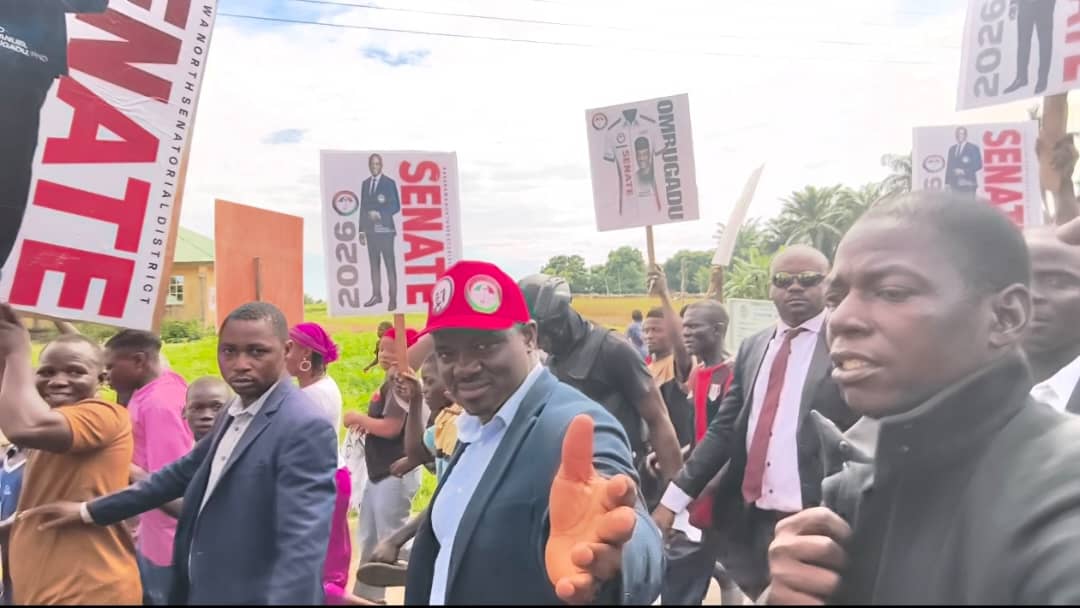
The Peoples Democratic Party (PDP) candidate for the Nasarawa North Senatorial bye-election, David Emmanuel Ombugadu on Wednesday intensified his grassroots engagements across Nasarawa Eggon Local Government Area, receiving widespread support from residents, traditional leaders, women, youths, elders, and religious leaders ahead of the poll.
Earlier in his consultations across the constituency, Ombugadu visited Igga-BrumBrum, Ikka-Wangibi, Mada Station, Lambaga/Arikpa, and Kagbu wards, where he was warmly received by enthusiastic supporters.
The visits formed part of his ongoing efforts to mobilise support and engage directly with the electorate ahead of the forthcoming election.The PDP candidate also paid a visit to the hometown of the late Senator Godiya Akwashiki, where he met with members of the family. During the visit, the father of the late senator described Ombugadu as his son and symbolically adopted him as “Ombugadu Akwashiki.” He prayed for the success of the PDP candidate and urged him to remain committed to the ideals of service, unity, and development championed by the late senator.
In his latest round of engagements, Ombugadu visited Ezen/Lizzi, Agunji/Ogbagi, and Alogani/Gale communities, where large crowds turned out to welcome him. Women groups, youths, elders, and pastors offered prayers for the PDP candidate and publicly endorsed his senatorial ambition, expressing confidence in his ability to provide quality representation at the National Assembly.
Speaking during the meetings, several community leaders recalled projects executed by Ombugadu during his tenure in the House of Representatives, noting that the impact of those interventions remains visible years after he left office.
According to them, many communities continue to benefit from the developmental projects he attracted, a record they said has strengthened public confidence in his leadership.
“The projects Ombugadu brought to our communities are still fresh in our minds. We have not forgotten what he did for our people, and that is why we are supporting him for the Senate,” a community representative said during one of the engagements.
Addressing supporters, Ombugadu expressed gratitude for the overwhelming reception and assurances of support from the various communities. He pledged to provide effective representation and attract more development projects to Nasarawa North if elected.
“I am humbled by the love, prayers, and confidence the people continue to show me. This support is a call to greater service, and I assure our people that I will continue to work for the progress and development of every community in Nasarawa North,” he said.
The former Lawmaker reiterated his commitment to promoting infrastructure development, education, youth empowerment, agriculture, and improved social services, stressing that his campaign remains focused on issues that directly affect the lives and wellbeing of the people.
Political observers say the growing turnout at Ombugadu’s campaign engagements across Nasarawa Eggon reflects increasing grassroots momentum as candidates intensify consultations and voter outreach ahead of the highly anticipated senatorial bye-election.
By Ubong Ukpong, Abuja
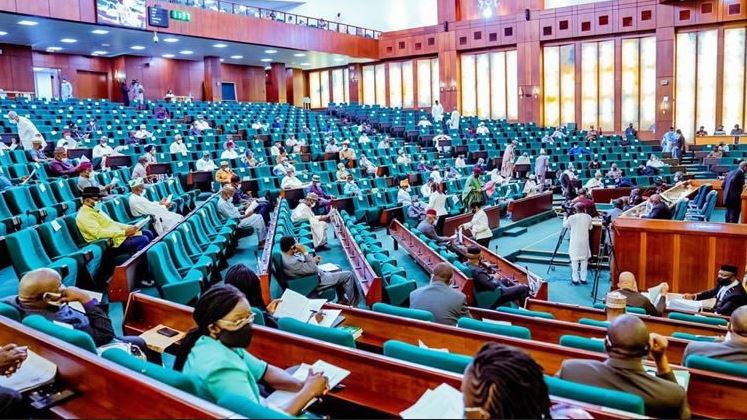
The House of Representatives yesterday raised fresh concerns over Nigeria’s worsening security situation, warning that the nation’s service chiefs should consider honourably resigning if they fail to restore public confidence and reverse the tide of insecurity within a reasonable period.
The lawmakers also called on President Bola Tinubu to immediately deploy a comprehensive and aggressive security strategy aimed at dismantling bandit, terrorist and kidnapping networks operating across the country.
The resolution followed the adoption of a motion of urgent public importance moved by Rep.
Ibe Osonwa during plenary. The motion highlighted the rising cases of banditry, mass abductions, attacks on schools and places of worship, and the growing sense of insecurity among Nigerians.Leading the debate, Osonwa lamented the continued targeting of vulnerable communities, educational institutions and worship centres by criminal groups, warning that the situation was disrupting education, deepening poverty and threatening constitutional rights.
The House reminded the Federal Government of its constitutional obligation to protect lives and property, stressing that the security and welfare of citizens remain the primary responsibility of government.
Lawmakers condemned the persistent wave of kidnappings and attacks across the country and resolved to formally appeal to President Tinubu, in his capacity as Commander-in-Chief, to intensify efforts to secure schools, communities and religious centres while ensuring the rescue of citizens held captive by criminal elements.
The House further directed its Committees on Defence, National Security and Intelligence, and the Army to strengthen oversight of security operations and report back within two weeks.
Meanwhile, prominent Islamic cleric, Sheikh Ahmad Gumi, has defended his visit to Ibadan, Oyo State, dismissing allegations that he was promoting the Islamisation of the South-West or advancing northern religious interests in the region.
Responding to criticisms in a social media post, Gumi said his attendance at an Islamic gathering in Ibadan was in his capacity as a representative of the Coalition of Northern Muslim Ulama and not at the invitation of any South-West Muslim group.
The cleric maintained that no individual or organisation could prevent him from travelling to any part of Nigeria, insisting that his constitutional rights entitled him to move freely across the country.
Gumi also linked the controversy surrounding his visit to what he described as growing Islamophobia in parts of the South-West, arguing that his participation in the event had been unnecessarily politicised.
His comments came amid renewed public debate over security and religious issues following reports surrounding the abduction of residents in Oyo State, although one of the victims recently dismissed claims that the kidnappers demanded the introduction of Sharia law as a condition for their release.
The developments underscore growing national concerns over security, social cohesion and the need for stronger government action to address the challenges confronting the country.
By Mike Odiakose, Abuja
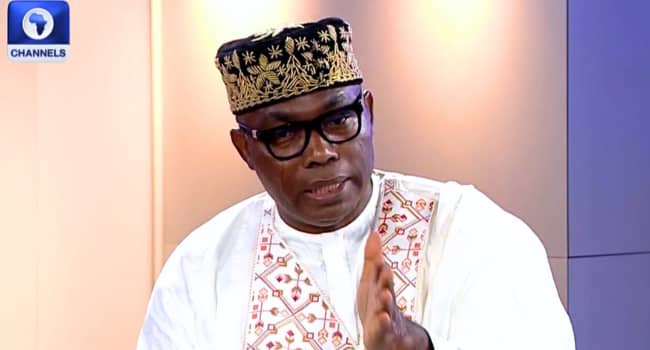
As Nigeria moves closer to renewed constitutional conversations around the creation of state police, comments made about four years ago by former Social Democratic Party (SDP) presidential candidate, Prince Adewole Adebayo, are drawing fresh relevance.
In an interview conducted during the build-up to the 2023 presidential election, Adebayo strongly defended the creation of state and local government policing, arguing that Nigeria’s highly centralised security structure had become ineffective and disconnected from local realities.
According to him, any level of government empowered to make laws should also possess the authority to enforce them.
He argued that it was contradictory for states to legislate on issues including criminal offences, sanitation, public order and local administration while depending almost entirely on a centrally controlled police system headquartered in Abuja.
Adebayo maintained that most offences affecting everyday life — including murder, theft, arson and other serious crimes — are prosecuted under state laws, raising questions about why states have little operational control over policing.
Using Lagos as an example, he questioned situations where incidents occurring entirely within a state still require intervention and decisions from federal authorities.
He said such arrangements weaken accountability and delay justice.
The former presidential candidate also called for wider police reforms beyond decentralisation, arguing that policing in Nigeria should move away from what he described as a culture of force toward one rooted in public service and community trust.
According to him, police should belong to the people rather than function as an extension of government power.
He further proposed stronger institutional links between policing and the justice system, including reforms that would reinforce the role of legal institutions in ensuring accountability.
Beyond security, Adebayo linked Nigeria’s security challenges to broader failures in economic governance.
He rejected arguments that Nigeria’s fiscal problems stem primarily from insufficient taxation, insisting instead that the country loses substantial revenue through leakages, resource theft and weak administration.
He argued that government should prioritise recovering legally due revenues rather than imposing additional tax burdens on citizens and businesses.
Adebayo pointed to crude oil theft and illegal extraction of solid minerals as examples of areas where stronger governance could significantly improve national income.
He also criticised arbitrary tax practices, warning that unrealistic assessments discourage productivity and encourage corruption.
According to him, economic recovery requires efficient revenue collection, transparent administration and stronger protection of public resources.
While the interview was held years ago, many of the issues raised — particularly around decentralised policing, insecurity and economic management — remain central to Nigeria’s ongoing governance debate.
With discussions on state police once again gaining policy attention, Adebayo’s earlier arguments are returning to public conversation as part of wider calls for security and structural reforms.




Benue CAN Deputy Chair Makes Case for Less Privileged, Vulnerable in Society
ShareBy Attah Ede, Makurdi The Deputy Chairman Christian Association of Nigeria CAN Benue State Chapter, Rev. Jonathan Terwase Ugbede has...

FG Saves N61.58bn Through Early Fertiliser Procurement, Secures Supply for 2026 Farming Season
ShareBy Raphael Atuu ,Abuja The Federal Government has saved approximately ₦61.58 billion (US$43.99 million) and secured fertiliser supplies for the...

Democracy Day: Renewed Hope Agenda Laying Foundation for Sustainable Growth, Says Nasarawa SSG
ShareFrom Abel Zwanke, Lafia. The Secretary to the Government of Nasarawa State and Renewed Hope Ambassador, Shuaibu Magaji Labaran, has...


One out of every four children in Benue suffering nutritional deficiencies- UNICEF
ShareFrom Attah Ede, Makurdi The United Nations Children’s Fund (UNICEF), has revealed that one out of every four Benue State...
Niger Debunks School Attack Rumours
ShareThe Niger Government has reassured parents, guardians, students, and the general public that schools across the state remain safe and conducive for teaching and learning. This was contained in a statement signed by...


Pope Leo Visits Canary Islands, Highlights Perilous Journeys of Migrants
ShareBakary Jaiju was 19 when he climbed into a wooden boat in the Gambia and set out for Europe. He...

Diri Signs PWDs, BMUTH Bills into Law
ShareFrom Mike Tayese, Yenagoa Bayelsa State Governor, Senator Douye Diri, has signed the Persons with Disabilities (PWDs) and the Bayelsa Medical...

Democracy Day: FG Declares Friday Public Holiday
ShareThe Federal Government has declared Friday, public holiday to commemorate Nigeria’s 27 years of unbroken democratic rule. This was contained in a statement on Thursday in Abuja, by...
NUJ Osun Condemns Arrest of Secretary, Demands Public Apology from Police
ShareFrom Ayinde Akintade, Osogbo The Osun State Council of the Nigeria Union of Journalists (NUJ) has condemned the arrest and detention of its Secretary, Olalekan Akindoju, by...

FCMB names Bismark Rewane Board Chairman
Share First City Monument Bank Limited has appointed Bismarck Rewane as a Non-Executive Director and Chairman of its Board of...