
POLITICS
Senate Approves 15% Funding for zonal Development Commissions by Member-States

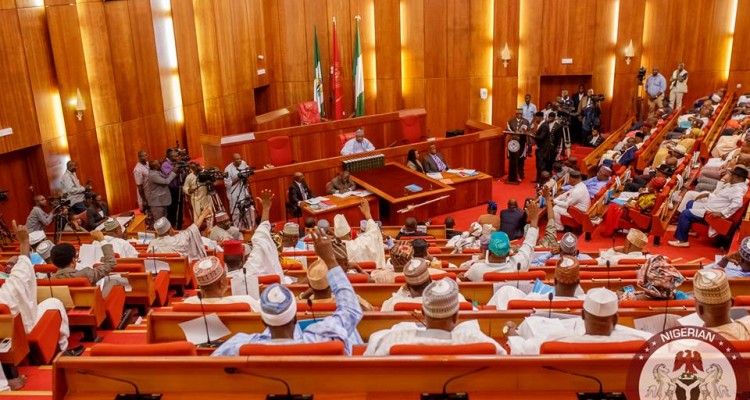
Senate on Thursday approved 15 per cent from the consolidated fund as source of funding for the new created zonal development commissions by member-states.This followed consideration and adoption of the report of Senate Committee on Special Duties on the bills establishing the commissions.
The zonal development commission bills earlier passed included: South-South Development Commission Establishment Bill, 2024 and North-West Development Commission Act ( Amendment) Bill, 2024. Others were: South-East Development Commission Act (Amendment) Bill, 2024, South-West Development Commission Establishment Bill, 2024 and North-Central Development Commission Establishment Bill, 2024.Earlier, the lawmakers had, during the clause-by-clause consideration of the report on the bills, engaged in heated debates over source of funding for the various zonal development commissions.Their different positions resulted in striking out of some provisions of Section 23 of the various bills.The section had confered operational immunity on the board and chief executives of the commissions.The Committee on Special Duties had, in its report, recommended that 15 per cent of statutory allocations of member-states of a commission should be used to fund the commission by the Federal Government.Lending support to the recommendation, Sen. Barau Jibrin (APC- Kano) said 15 per cent statutory allocation of member-states for funding of their zonal development commission would not result in any deduction from their statutory allocations.“Mr President, distinguished colleagues, the 15 per cent of statutory allocation of member-states recommended for funding of zonal development commissions by the federal government is not about deductions at all.“What is recommended is contained in the report presented to us by the committee on special duties and being considered by the senate now.“It is that 15 per cent of statutory allocation of member-states in a zonal development commission will be used to fund the commission from the consolidated revenue fund.“Each state has monthly statutory allocation; 15 per cent as contained in this report being considered, will be calculated by the federal government and removed from the consolidated revenue fund for funding of their development commission,” Jibrin said.However, Senators Yahaya Abdullahi (PDP-Kebbi), Wasiu Eshinlokun (APC- Lagos) and Seriake Dickson ( PDP-Bayelsa), among others, raised concerns over the recommendation.Yahaya specifically said the provision would lead to litigation against the federal government by the state governments, saying that no state would like its statutory allocation to be tampered with in the process of funding a zonal development commission.“Mr President, distinguished colleagues, the 15 per cent of statutory allocations of member-states , recommended for funding of their zonal development commissions will be contested by some state governments”, he said .President of the Senate, Godswill Akpabio, in his remarks, said the provision was in order, as constitutionally supported.“We don’t need to be debating on whether 15 per cent statutory allocation of member-states of a commission will be deducted or not, in view of provisions of Section 162(4) of the 1999 Constitution which empowers the National Assembly to appropriate from either the Consolidated Revenue Fund or Federation Account.“15 per cent of statutory allocation of member-states has been recommended by the senate and, by extension, the National Assembly, for funding of their zonal development commissions by the federal government; anybody who wants to go court over that may do so,” he said.Akpabio consequently put the question on adoption of the provision for voice votes to Senators and ruled that the ‘ayes’ have it.He, thereafter, thanked the lawmakers for spending time to consider the bills on the zonal development commissions which, he said, would serve as a pillar for the newly-created Ministry of Regional Development. (NAN)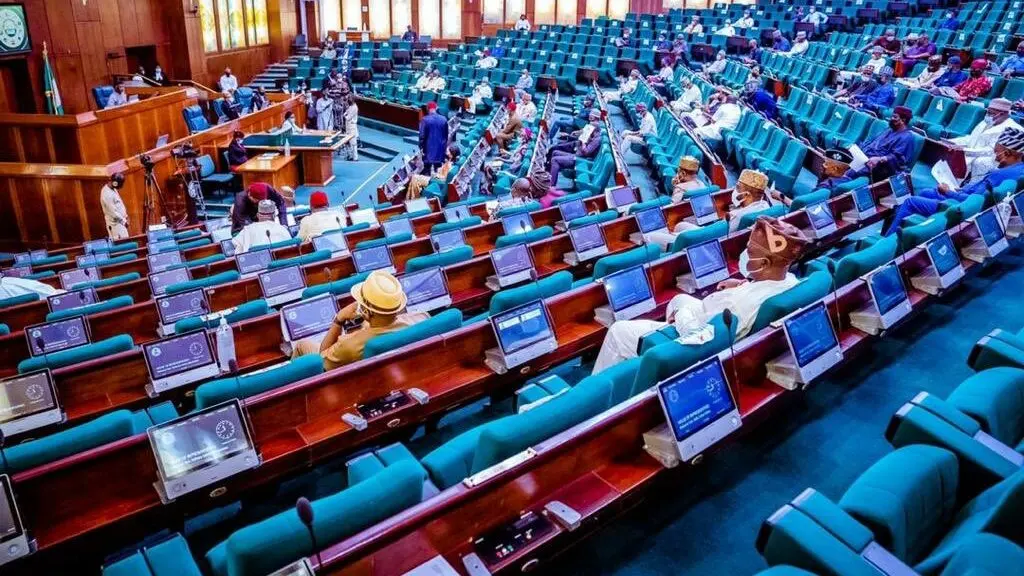
From Rabiu Sanusi, Kano
The House of Representatives has backed plans to increase Nigeria’s strategic petroleum reserve from 20 days to 90 days by 2027 in a move aimed at strengthening the country’s fuel security and ensuring a more reliable supply of petroleum products.
Chairman of the House Committee on Petroleum Resources (Downstream), Ugochinyere Ikeagwuonu, disclosed this in Abuja during a technical briefing, where the committee also passed a vote of confidence in the administration of President Bola Tinubu over its efforts to secure the nation’s petroleum pipelines.
Ikeagwuonu said the proposed expansion of the strategic reserve would be supported by sustained domestic petroleum supply, reducing the country’s vulnerability to supply disruptions.
The committee further reported that contributions from local refineries to Nigeria’s national petrol supply had increased by more than 75 per cent, with the country recording over 25 days of supply sufficiency and no reported shortfalls so far.
The development, according to the committee’s briefing, highlights the growing role of domestic refining in supporting the nation’s energy security.
In a related development, the committee established two subcommittees to investigate separate petitions concerning gas distribution licences issued by the Nigerian Midstream and Downstream Petroleum Regulatory Authority (NMDPRA) and allegations of abuse of office against Mumuni Dagazau, Executive Vice President, Downstream of the Nigerian National Petroleum Company Limited (NNPC Limited).
The proposed 90-day reserve target represents a significant policy ambition for Nigeria petroleum sector as the country seeks to strengthen supply resilience, improve energy security and reduce exposure to disruptions in fuel distribution.
The outcome of the planned investigations and progress towards the 2027 reserve target will remain important issues for the downstream petroleum industry.

From Francis Sadhere, Delta
Former Governor of Delta State, Dr. Emmanuel Eweta Uduaghan, has died. He was 71.
Uduaghan, who governed the state from 2007 to 2015, reportedly passed away on the morning of Monday, October 19, 2026.
His death was announced in a statement signed by Toju Anire Uduaghan on behalf of the family, which described his passing as a devastating loss to the family, Delta State and Nigeria.
The family said the former governor was a beloved father, brother, uncle and patriarch, whose life and service touched many people across the state and the country.
“His passing has left us devastated. Words can hardly express the depth of our sorrow at the loss of a man who meant so much to our family and whose life and service touched countless others across Delta State and Nigeria,” the statement said.
Uduaghan held several key positions in the Delta State Government before becoming governor. He served as Commissioner for Health from 1999 to 2003 and Secretary to the State Government from 2003 to 2007.
He subsequently emerged as governor in 2007 and remained in office until 2015, during which the family said he demonstrated commitment to the human and infrastructural development of the state.
The family described his death as a profound loss, noting that he was a source of strength, a father figure and a respected elder whose memories and legacy would remain cherished.
“We are grateful to Almighty God for his life, his service, and the legacy he leaves behind,” the statement added.
The family prayed for the repose of his soul and divine comfort for relatives, friends, associates, former colleagues and others mourning his death.
“Your memory will forever remain in our hearts, and your legacy will endure in the lives of those you touched,” the family said in its farewell message.
Uduaghan’s death marks the loss of a former leader who occupied prominent positions in Delta State’s political and administrative history.
The family concluded its announcement with a prayer for his peaceful repose, saying, “May your gentle soul rest in perfect peace. Amen.”
By Tambaya Julius, Abuja
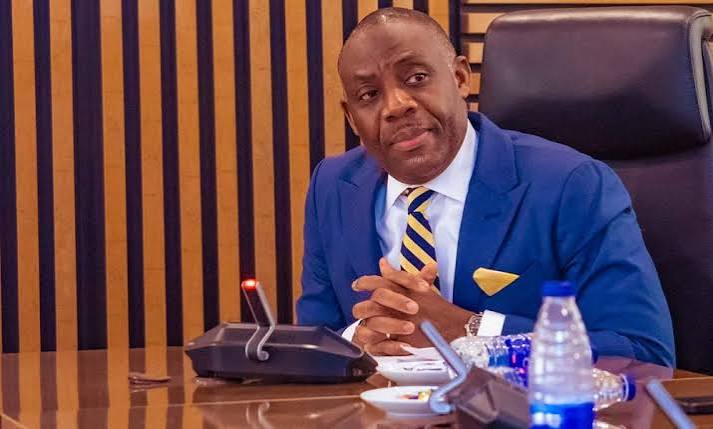
The Federal Government has urged vice-chancellors of Nigerian universities to introduce degree programmes that address critical manpower shortages and meet the growing demand for specialised healthcare and social services.
The proposed programmes include Audiology, Occupational Therapy, Speech and Language Therapy, Clinical Psychology and Medical Social Work.
The government said expanding training in these fields would help bridge gaps in specialist care and create more employment opportunities for Nigerian graduates.The Minister of Education, Dr.
Tunji Alausa, also reaffirmed the Federal Government’s commitment to establishing autism centres across the six geopolitical zones to improve access to specialised care and support for persons on the autism spectrum and their families.Alausa said universities must align their academic programmes with national workforce needs and emerging societal challenges, stressing the importance of equipping graduates with practical skills for professional practice and employment.
He explained that developing the proposed programmes would strengthen Nigeria’s capacity to provide essential services locally, reduce dependence on limited specialist services and produce professionals capable of meeting the needs of the population.
The planned autism centres are expected to provide access to diagnosis, therapeutic services and research, while serving as regional support hubs for families, healthcare professionals and educational institutions.
The minister said the initiatives reflect the Federal Government’s commitment to strengthening local capacity and improving support for persons with autism and other developmental conditions.
He assured stakeholders that the government would continue to pursue reforms aimed at expanding access to relevant education, strengthening institutional capacity and promoting skills development.
Alausa also commended the Chairman of the Federal Government Committee for the Advancement of Audiology, Occupational Therapy and Speech and Language Therapy, Dr. Victoria Amu, for her dedication and commitment to advancing the specialised fields.
He urged vice-chancellors and other university administrators to work closely with Amu, relevant regulatory agencies and professional bodies to facilitate the introduction of the proposed programmes.
According to him, such collaboration would help ensure that the programmes meet the required academic and professional standards.
The minister reiterated the government’s commitment to building a responsive and inclusive higher education system that equips Nigerians with relevant skills, addresses critical manpower gaps and expands access to essential specialised services.
He added that the initiatives form part of broader efforts to develop human capital, improve service delivery and ensure that Nigeria’s education system responds effectively to national priorities and the needs of its citizens.



NDLEA Nabs 85-year-old Woman, Seizes 407kg Cannabis
ShareThe National Drug Law Enforcement Agency (NDLEA) has arrested an 85-year-old grandmother and five other suspected drug traffickers during coordinated...
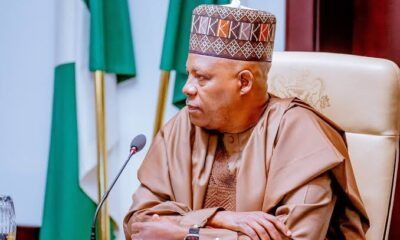

Economy would’ve Collapsed without Tinubu’s Reforms, Says Shettima
ShareVice President Kashim Shettima has said Nigeria’s economy would have collapsed had President Bola Tinubu not taken what he called...


House of Reps Seeks 90-Day Fuel Reserve for Nigeria by 2027
ShareFrom Rabiu Sanusi, Kano The House of Representatives has backed plans to increase Nigeria’s strategic petroleum reserve from 20 days...

56,000 Candidates Register for 2026 Private WASSCE
ShareThe West African Examinations Council (WAEC) said no fewer than 56,000 candidates registered for the 2026 West African Senior School...


JAMB Warns Varsities Against Issuing Admission Letters
ShareThe Joint Admissions and Matriculation Board (JAMB) has warned universities against issuing admission letters to candidates, insisting that only admissions...
Beyond Survival: Building A Healthier Nigeria For A Longer Life
ShareBy Yussuf Mubaraq Damilare What does it mean to live a long life if access to basic medical care remains...


Jigawa to Increase Corps Members Allowance – Namadi
ShareThe Jigawa government has announced plans to increase monthly allowance for the National Youth Service Scheme (NYSC) members posted to...

NCDMB, Dangote Push for Sustainable Nigerian Content
ShareFrom Mike Tayese, Yenagoa The Nigerian Content Development and Monitoring Board (NCDMB) and the Dangote Group have urged a decisive...
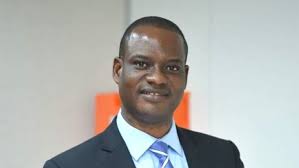

Oyedele Unveils Capital Market Master Plan, Targets $1trn Market by 2036
ShareBy Tony Obiechina, Abuja The Minister of Finance and Coordinating Minister of the Economy, Prof. Taiwo Oyedele, has unveiled the...
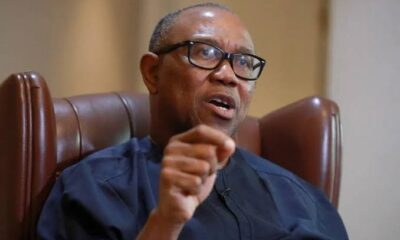

OBI In London, URGES DIASPORA TO Stop FUNDING RELATIVES
ShareBy Elijah Oguche, Abuja The presidential candidate of the Nigeria Democratic Congress (NDC), Peter Obi, has urged Nigerians living in...