
POLITICS
Senate Approves FG’s 2022-2024 External Borrowing Plan

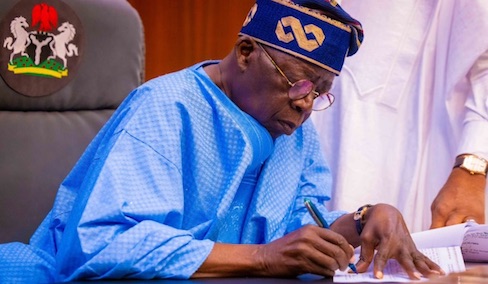
The Senate has approved President Bola Tinubu’s request on the 2022-2024 external borrowing rolling plan of 7.4 billion dollars and 100 million euros.
This followed the adoption of report of the Senate Committee on Local and Foreign Debt at plenary.
Presenting the report, Sen. Haruna Manu, the Vice Chairman of the Committee, said the committee noted with utmost importance, the genuine and very serious concerns of Nigerians about the level and sustainability, serviceability of the nation’s borrowing activities in the last decade.
He said the debt service figures constitute a huge drain on the nation’s revenue to the extent that it accounts for over 30 per cent of its expenditure in the annual budget.
Manu said due to the shortfall on the nation’s annual revenue in relation to its need for rapid infrastructural and human capital development, the National Assembly have had to pass deficit budget every year.
This, he said required borrowing to finance the deficit in the budget.
Manu said the borrowing request seeking approval of National Assembly was proposed to be borrowed from various financial institutions.
According to him, the proposed projects in the Ministries’ of Education, Agriculture and Women Affairs were mostly ongoing projects and programmes in respect of which external borrowed funds have been spent in the past, including loans.
He said the projects have a great multiplier effect on stimulating economic growth through infrastructure development, job creation and poverty alleviation, stimulation of commercial and engineering activities.
The Taraba senator said the projects also have consequent tax revenues payable to government as a result of the productive activities.
He said the committees found that the World Bank has expressed its willingness to provide funds to improve the reliability of electricity supply, achieve financial and fiscal sustainability, and enhance accountability and to also ensure that all existing grid-connected capacity is utilised to deliver more power.
According to him , the projects are also intended to improve states’ land administration, business-enabling environment and public Private partnership.
Similarly, Senate also gave expeditious approval for securitisation of the balance of N7.3trillion
ways and Means revenue in the Consolidated Revenue Fund (CRF) of Nigeria.
The approval followed the consideration of President Bola Tinubu request in a letter addressed to President of Senate, Godswill Akpabio and read at plenary.
Senate also confirmed the appointment of Executive Commissioners for the Nigerian Upstream Petroleum Regulatory Commission (NUPRC).
This followed the adoption of the report of Senate Joint Committee on Petroleum Upstream on screening of the nominees.
Those confirmed were Bashir Indabawa North-West , Executive commissioner, exploration and acreage management
Kelechi Ofoegbu , South-East, Executive Commissioner, Corporate Services and Administration.
Enorense Amadasu South-South , Executive Commissioner, Development and Production.
Babajide Fasina South-West,Executive Commissioner, Economic Regulation and Strategic Planning.
Senate thereafter,adjourned plenary until Jan 23. (NAN)

Lagos State Governor, Babajide Sanwo-Olu has urged the media to uphold professionalism, verify information and combat misinformation ahead of the 2027 general elections.
Sanwo-Olu gave the charge on Thursday in Lagos, while speaking as the Special Guest Speaker at the seventh annual lecture organised by Freedom Online, with the theme, “2027 Elections, Economy, Security and Nigeria’s Future.
”He said the media had a critical role to play in strengthening Nigeria’s democracy by providing citizens with credible information and holding political actors accountable.
The governor urged journalists and media organisations to go beyond reporting political activities and scrutinise information circulating on social media, particularly with the increasing use of artificial intelligence.
“The most dangerous information will not come from newspapers. It will come from anonymous accounts and doctored videos.
“You are the institution best placed to review, analyse, criticise and verify this information,” Sanwo-Olu said.
The governor urged the media to report the challenges confronting the country while also highlighting policies and initiatives capable of driving development.
“I am asking you to tell the whole story. I am not asking you to hide the problems; I am asking you to give the same energy to the things that work,” he said.
Sanwo-Olu also identified insecurity and economic development as closely connected issues, stressing that sustainable economic growth could not be achieved in an environment where citizens and businesses were unsafe.
“We speak of the economy and insecurity as though they were two subjects. They are one,” he said.
The governor said governments at all levels must continue to create an environment that would attract investment, support businesses and provide opportunities for young Nigerians.
According to him, job creation remains one of the most effective ways of empowering citizens and reducing social vulnerabilities.
“The most effective value is a job,” Sanwo-Olu said, stressing the need for policies that would expand economic opportunities and improve the standard of living of Nigerians.
On the removal of the fuel subsidy, the governor said the decision was driven by the need to address an unsustainable burden on the nation’s finances.
“The subsidy was not removed because anybody enjoyed removing it. The subsidy was removed because it had become an unsustainable national burden,” he said.
Sanwo-Olu urged Nigerians to continue to engage constructively in the democratic process, adding that the 2027 elections should further consolidate the country’s democratic experience.
“Whatever the outcome, I expect Nigeria to add one more milestone to its democratic record,” he said.
Earlier, the Special Guest of Honour, Sen. Gbenga Daniel, said Nigeria’s political and economic challenges required collective efforts and constructive engagement among stakeholders.
Daniel, a former governor of Ogun, said the country’s future depended largely on the ability of political leaders, professionals, the media and citizens to contribute positively to national development.
Also speaking, the Convener of the lecture and Publisher of Freedom Online, Gabriel Akinadewo, said the annual event was designed to provide a platform for stakeholders to examine critical national issues and proffer solutions.
Akinadewo said the choice of the theme reflected the importance of examining the intersection between elections, the economy, security and the future of Nigeria ahead of the 2027 elections.
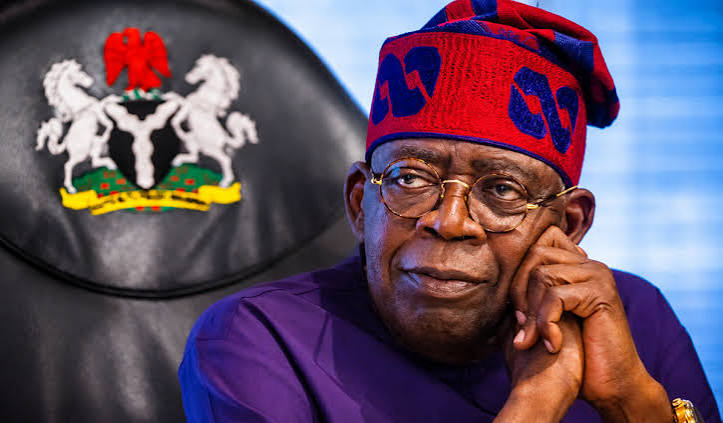
By David Torough, Abuja
The Presidency has dismissed reports suggesting that President Bola Tinubu is facing a criminal case in the United States, clarifying that the ongoing litigation before a Washington, D.C.
, federal court is a civil dispute over access to government records under the U. S. Freedom of Information Act (FOIA).Presidential Spokesperson and Special Adviser on Information and Strategy, Bayo Onanuga, made the clarification in a statement issued Thursday in Abuja, urging the Nigerian media and public to distinguish between verified court proceedings and what he described as partisan speculation.
“For clarity, the matter is a civil records-disclosure dispute under the United States Freedom of Information Act. It is not a criminal case against President Bola Ahmed Tinubu, nor has the court found him guilty of any criminal wrongdoing,” Onanuga said.
The dispute originated from FOIA requests filed by American transparency activist Aaron Greenspan in 2022 and 2023, seeking records from U.S. government agencies relating to a Chicago heroin-trafficking investigation dating to the early 1990s in which Tinubu was named alongside Lee Andrew Edwards, Mueez Abegboyega Akande and Abiodun Agbele.
After some U.S. agencies declined to confirm or deny the existence of the requested records, Greenspan instituted Civil Action No. 23-1816 before the U.S. District Court for the District of Columbia in 2023.
Tinubu was subsequently permitted to intervene in the proceedings to protect his privacy interests.
The Presidency said several agencies initially relied on the “Glomar” defence, a legal mechanism under which an agency may neither confirm nor deny the existence of certain investigative records where disclosure could harm protected interests.
However, the court later ordered further processing of the records. According to the Presidency, the CIA, Executive Office for United States Attorneys, Department of State, Department of the Treasury and Internal Revenue Service were subsequently removed from the proceedings after obtaining summary judgment.
The remaining dispute centres on records held by the Federal Bureau of Investigation (FBI) and the Drug Enforcement Administration (DEA).
The Presidency said the two agencies have, in compliance with court orders, produced 399 pages of records, although portions were redacted pursuant to exemptions contained in U.S. law.
Greenspan is challenging the withholding of the unredacted portions, while the FBI and DEA, through the U.S. Department of Justice, are defending the redactions.
The exemptions cited by the agencies cover grand jury proceedings and certain pen-register and trap-and-trace information; attorney-client and attorney-work-product privileges; law-enforcement materials; personal privacy; confidential sources; and investigative techniques.
The Presidency said Tinubu, acting on the advice of his lawyers, had also invoked FOIA Exemption 7(C), which provides protection against certain unwarranted invasions of personal privacy in law-enforcement records.
It stressed that the President’s opposition to disclosure should not be interpreted as an admission of criminal wrongdoing.
“The release or withholding of records under FOIA does not, by itself, establish criminal liability,” the statement said, adding that the issue before the court is whether the agencies’ redactions are lawful under U.S. law.
The Presidency also recalled a February 4, 2003 letter from the American Consulate in Lagos to then Inspector-General of Police Tafa Balogun, stating that an FBI records check had found no criminal arrest records, wants or warrants for Tinubu, who was then governor of Lagos State.
The current litigation remains before Judge Beryl A. Howell of the U.S. District Court for the District of Columbia.
Greenspan has until September 11, 2026, to file his opposition and reply to processes filed by the defendants and Tinubu, while the FBI, DEA and the President have until September 18 to respond.
The Presidency also took aim at recent commentary by Washington-based lobbyist Karl Von Batten, saying neither Von Batten nor his client, former Vice-President Atiku Abubakar, is a party to the litigation.
Onanuga urged the Nigerian media to focus on the evidence and court filings rather than political interpretations, stressing that the outcome would be determined by the court under applicable U.S. law.
“The litigation is a civil records-disclosure dispute under FOIA. It does not constitute a criminal charge, trial, or judicial finding against President Tinubu,” the Presidency said.
Meanwhile,the International Criminal Court (ICC) has dismissed an anonymous case against Nigeria over alleged crimes against humanity, says Attorney-General, Lateef Fagbemi (SAN).
Fagbemi, in a statement by his Special Adviser on Communication and Publicity, Kamarudeen Ogundele, disclosed this on Thursday in Abuja.
He said the filing, titled ‘Formal Communication Requesting Investigation into Systemic Kidnappings in Nigeria as Crimes Against Humanity’, breached established ICC procedures.
The document, numbered ICC-RoC46(3)-01/26, was submitted anonymously and sought an investigation into alleged systemic kidnappings in Nigeria.
Fagbemi said the ICC’s Pre-Trial Chamber II dismissed the request at the threshold because it was improperly before the Court.
He said the Chamber also found that the communication lacked any legal basis for consideration under the Court’s governing framework.
According to him, the dismissal followed an earlier procedural step which he described as improper.
He said the President of the Pre-Trial Division had assigned the unverified communication to Pre-Trial Chamber II under Regulation 46(3).
“The Federal Government notes with serious concern that on August 26, the President of the Pre-Trial Division improperly initiated a procedural process,” Fagbemi said.
He said the assignment occurred without a prior, reasoned determination on the Chamber’s competence or whether the communication was manifestly frivolous.
Fagbemi said the development breached “foundational procedural safeguards” established under the Court’s regulations.
He identified the judges on Pre-Trial Chamber II as Rosario Salvatore Aitala, Sergio Gerardo Ugalde Godínez and Haykel Ben Mahfoudh.
The minister said Nigeria welcomed the Chamber’s swift dismissal but remained concerned about the initial handling of the anonymous communication.
He said the filing unusually bypassed established legal channels and could cast an unnecessary shadow over the Court’s judicial processes.
“The activation of internal registry mechanisms based on an unverified filing represents an unusual and troubling departure from the governing statutory framework,” he said.
Fagbemi said internal administrative guidelines could not be used to circumvent procedures established under the Rome Statute.
“The authority to evaluate information or request an investigation rests solely with the Prosecutor of the ICC,” he said.
He added that formal referrals could also originate from a State Party or the UN Security Council.
According to him, neither the President of the Pre-Trial Division nor any Pre-Trial Chamber has authority to receive anonymous petitions.
He said such bodies also lacked powers to interfere in the internal security matters of a sovereign nation.
Fagbemi warned that unchecked administrative handling of anonymous requests could undermine Nigeria’s relationship and cooperation with the ICC.
He stressed that Nigeria remained committed to the Rome Statute, international accountability and the rule of law.
“However, the primary constitutional responsibility for investigating and prosecuting domestic criminal activities, including kidnapping and banditry, resides firmly with Nigeria’s national judicial and law enforcement institutions,” he said.
The minister said this position was consistent with the fundamental principle of complementarity under international criminal justice.
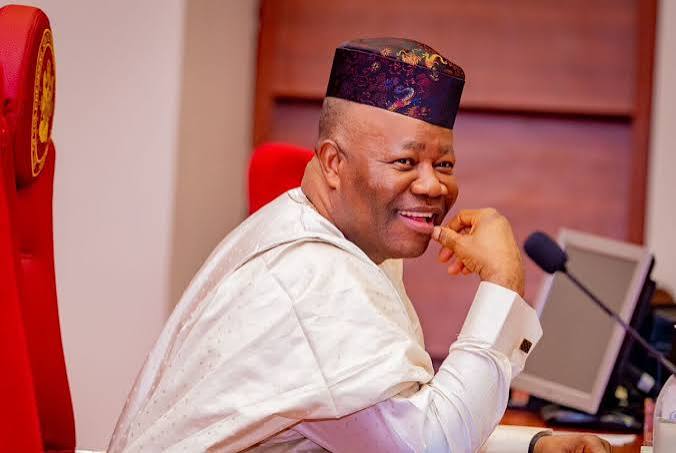
President of the Senate, Godswill Akpabio has felicitated Vice President Kashim Shettima on the occasion of his 60th birthday.
Akpabio conveyed his felicitation in a congratulatory message issued by his Special Assistant on Media, Mr Jackson Udom in Abuja on Wednesday.
Akpabio in the message said:”Birthdays are milestones in the journey of life but for those entrusted with the service of a nation, they are also moments to celebrate the footprints they have left along the way.
“Today, I celebrate one such journey,that of an accomplished public servant, steadfast patriot and Vice President of the Federal Republic of Nigeria, His Excellency, Sen Kashim Shettima.
“Your Excellency, your journey through public service from Commissioner to Governor, Senator and now Vice President has been distinguished by courage in adversity, intellectual depth, loyalty to country and an abiding conviction in the promise of Nigeria.”
“You governed Borno State at one of the most difficult periods in its history, when terror tested the resilience of its people and challenged the authority of the Nigerian state.
“Yet you remained at your duty post, providing leadership in the face of danger and demonstrating that adversity must never be permitted to extinguish hope.”
He said the vice President brings the same resilience, experience and patriotic commitment to the service of the nation.
Akpabio said his partnership with President Bola Tinubu in advancing the “Renewed Hope Agenda” demonstrates the importance of unity of purpose at the highest levels of government in confronting challenges of the present and laying the foundations for a more prosperous future.
“On this special day, I celebrate not merely the addition of another year to your life but the years you have invested in the service of our fatherland.
“On behalf of my family, my constituents and the Senate of the Federal Republic of Nigeria, I wish you many more years of good health, wisdom, strength and fulfilment.”
“May Almighty God continue to guide you, strengthen you and grant you the grace to serve our nation with distinction.
“Happy Birthday, Mr. Vice President.
May God bless you, and may God bless the Federal Republic of Nigeria.”Akpabio said.


Nigeria Pledges Stronger Ties with Sao Tome on Maritime Security
ShareBy Tony Obiechina, Abuja The Federal Government has reaffirmed Nigeria’s commitment to strengthening bilateral relations with São Tomé and Príncipe,...
NAICOM Launches Programme to Strengthen Insurance Sector
ShareBy Tony Obiechina, Abuja The National Insurance Commission (NAICOM) has officially launched the Insurance Sector Strengthening Programme (ISSP), a new...
NESG Convenes Pre-Summit Dialogue on Bridging the Gap from Learning to Earning
ShareBy Tony Obiechina, Abuja The Nigerian Economic Summit Group (NESG), in collaboration with the Federal Ministry of Budget and Economic...

Enugu Govt Names Henry Okeke to Polytechnic Iwollo Governing Council
ShareBy Raphael Atuu, Abuja The Enugu State Government has approved the immediate appointment of Barr. Henry Okeke as a member...
NCS, Niger Customs Team Up to Revive Kamba Border Economy
ShareBy Tambaya Julius, Abuja The Nigeria Customs Service (NCS), Kebbi Area Command, has commenced fresh efforts to revive legitimate cross-border...
Equipping Educators for Excellence: Preparing for a New Academic Session
ShareBy Tolulope Sobiye Ogunbowale A new academic session is knocking at the door. But before the first lesson is taught,...
NFF: Why Nigeria Must Follow the Rules, not Sentiments
ShareBy Ken Ekwueme On Tuesday, September 1, 2026, the world football governing body FIFA formally accepted the resignation of Nigeria...


NOA Initiates Five-month Voter Education Exercise in Bauchi
ShareThe National Orientation Agency (NOA) in Bauchi State, says it will conduct a five-month voter education exercise to mobilise participation...


Sanwo-Olu Urges Media to Combat Misinformation Ahead 2027 Elections
ShareLagos State Governor, Babajide Sanwo-Olu has urged the media to uphold professionalism, verify information and combat misinformation ahead of the...


I Think I’d Have Won BBNaija Season 11 – Neche Speaks on Exit
ShareFormer Big Brother Naija housemate Neche said she believes she could have won the show if she had stayed, citing...