
Oil & Gas
Shell MD Lauds Growth of Local Content in Oil and Gas Industry

The Managing Director, Shell Petroleum Development Company (SPDC), Mr Osagie Okunbor, on Tuesday said that local content in the Nigerian oil and gas sector has grown tremendously in the past decade.
The News Agency of Nigeria (NAN) reports that Okunbor made the assessment while giving an oil and gas industry message at the ongoing 10th Practical Nigerian Content Conference and exhibition in Yenagoa.
In the overview, Okunbor recalled that in 2020, the oil and gas industry celebrated with the Nigerian Content Development Monitoring Board (NCDMB), the 10th anniversary of its establishment and the enactment of the NOGICD Act.
He observed that the successes of the Act in just 11 years was exceptionally commendable.
According to him, many strides have been made in developing domestic capacity in the country and there are so many success stories to that effect.
He listed the leaps recorded to include the Egina Project executed by Total Energies, which was attested to by the NCDMB to have realised over per cent in Nigerian content.
He noted that the project set new industry benchmarks for a project of its size and magnitude.
“Egina enabled the domiciliation of new capacities and facilities in-country one of which is the FPSO integration facility located at the LADOL Free Zone.
“This feat by Total Energies added to the pool of jobs in-country and enabled capital retention.
“Also SPDC Limited in 2016 spent more than N2 billion in the construction, upgrade and provision of equipment for the Nigerian Institute of Welding in a bid to enhance welding technology in-country.
“With this investment, the institute is now able to perform destructive and non-destructive testing of materials.
“Another laudable project was the establishment of three world-class pipe-mills in-country for the manufacturing of Helical Submerged Arc Welded line pipes. This was a first in Nigeria.
“ExxonMobil Upstream and its affiliates have, since 2006, supported the training of unemployed Nigerian engineers, through its engineering capability development programme.
“This programme has enabled the acquisition of project-based engineering skills, allowing young graduates to acquire relevant training suitable for gainful employment,” he said.
Okunbor further noted that Agip Joint Venture is working with the NCDMB to provide a 15 megawatts power station for electricity to the Nigerian Oil and Gas Park Scheme in Ogbia Local Government Area in Bayelsa
Okunbor listed Chevron’s human capacity development programme which is focused on dynamic, positioning training, is another commendable effort in building domestic capacity.
According to Okunbor, with the five-year scholarships it provides for this training, Chevron has successfully trained more than 172 Nigerian seamen.
The SPDC MD also listed the launch of a 200 million dollars Nigerian Content Intervention Fund managed for the NCDMB by the Bank of Industry as another commendable initiative.
He said the fund was set up to boost the financial capacity of indigenous companies with loans at very attractive interest rates, which by extension reduces overall project costs.
“It is important to also recognise the successes from indigenous service companies. For example, Dorman Long Nigeria, fabricated the first pressure vessel in-country for the Gbaran Ubie Project.
“Kay-Global, another indigenous service company, is manufacturing fire retardant coveralls in Delta and Rivers States.
“High quality, locally manufactured low and high voltage cables which are now made by Coleman Cables, MicCom Nigeria and KableMetal are also worthy of mention,” Okunbor said.
He called on the entire industry to focus on existing challenges that hamper the effective delivery of Nigerian content aspirations.
Okunbor expressed optimism that with collaborative effort the oil and gas industry could deliver an in-country value addition model, that is worthy of replication globally.
“The theme of this year’s event: “Driving Nigerian Content in the New Dawn of the Petroleum Industry Act” is truly apt and well timed, given the overarching impact of the Act on the industry and the entire energy value chain in Nigeria.
“I am, therefore, looking forward to the in-depth and detailed conversations and discussions that will take place here, over the course of these next few days.
“I implore us all to fully engage, striving for honest conversations and strategic thinking as we discuss pertinent Nigerian content dilemmas and challenges.
“I have no doubts that the outcomes from this forum will provide useful insights for emerging policies and industry guidelines,” Okunbor said. (NAN)




By David Torough, Abuja
The Nigerian National Petroleum Company Limited (NNPC) said it saved $3.4bn through contract restructuring and optimisation over the past year, while increasing its contribution to government revenue to N19.
5tn and boosting crude oil and gas production.Group Chief Executive Officer, Bayo Ojulari, disclosed the figures on Tuesday while presenting the company’s one-year performance scorecard at the opening of the 25th NOG Energy Week in Abuja.
According to Ojulari, the contract optimisation programme reduced operating costs by $3.
4bn without disrupting operations, strengthening commercial efficiency and improving the competitiveness of Nigeria’s oil and gas industry.The scorecard showed that crude oil production rose by six per cent year-on-year to 569.7 million barrels, while gas production increased by 8.1 per cent to 2,576 billion standard cubic feet. NNPC’s contribution to government revenue also climbed by 21.8 per cent to N19.5tn.
Ojulari said Nigeria’s crude oil production has reached about 1.71 million barrels per day, the highest level in five years, while NNPC Exploration and Production Limited achieved a record output of 365,000 barrels per day.
He said the company aims to increase crude oil production to two million barrels per day by 2027 and three million barrels per day by 2030. Gas production is projected to rise from 7.62 billion cubic feet per day this year to 10 billion cubic feet per day in 2027 and 12 billion cubic feet per day by 2030.
The NNPC boss also reported significant improvements in export infrastructure, noting that crude export terminals recorded an average 98 per cent recovery factor between April 2025 and May 2026. He added that major evacuation pipelines, including the Trans Niger, Trans Escravos, Trans Ramos, Trans Forcados and Oando-Brass lines, are operating at 100 per cent availability.
Ojulari further disclosed that NNPC maintained 100 per cent compliance with its Joint Venture cash-call obligations throughout 2025 and into June 2026, although some partners remained in default, increasing the company’s funding responsibilities.
On the commercial front, he said NNPC signed gas sale and purchase agreements covering 1.29 billion standard cubic feet per day for long-term LNG feed gas and 750 million standard cubic feet per day for domestic industrial gas supply to DFL FZE and Dangote Refinery. The agreements are expected to attract more than $20bn in investments, with seven additional transactions under negotiation.
He also highlighted governance reforms, including the resumption of monthly remittances to the Federation Account in July 2025, the restoration of monthly business performance reporting and the company’s first earnings call in November 2025.
Ojulari urged governments, investors, regulators and operators across Africa to strengthen collaboration, arguing that strategic partnerships would be critical to unlocking the continent’s energy potential and attracting greater investment.
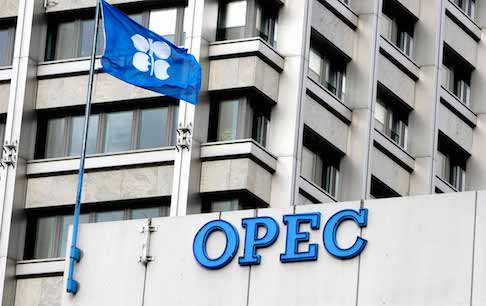
The Organization of the Petroleum Exporting Countries (OPEC), has revised downward its 2026 global oil demand growth estimates, citing expected slower consumption growth in advanced economies, where collective demand will rise by only 100,000 barrels per day.
The cartel said it now expects global oil demand growth to reach 1.
2 million barrels per day in 2026, down from its previous forecast of 1. 4 million barrels per day, explaining that the revision would bring total global oil consumption to 106.3 million barrels per day.In Europe, oil demand will decline by 30,000 barrels per day as weaker economic activity weighs on consumption, OPEC, said in its monthly oil market report.
The OPEC also expects some Asian economies, particularly Japan, to record slower demand growth. The organization forecast Japanese oil consumption to fall by 80,000 barrels per day.
However, strong demand from major emerging economies partly offset these weaker signals.
The OPEC said China would add 250,000 barrels per day to global demand, supported by its petrochemical industry. The organization also forecast India to increase demand by 200,000 barrels per day, driven by infrastructure spending and growth in vehicle ownership. Overall, OPEC expects emerging economies and developing countries to contribute an additional 1.1 million barrels per day to global oil consumption in 2026.
The OPEC’s revision aligns with a broader reassessment of global oil demand expectations.
In its May 2026 report, the International Energy Agency projected a much sharper downturn. The agency forecast a contraction of 420,000 barrels per day in global oil demand for the full year rather than a slowdown in growth.
The gap between the two institutions now exceeds 1 million barrels per day, highlighting the uncertainty surrounding the market outlook.
Both reports identified the near-closure of the Strait of Hormuz as a major factor behind market instability. According to the U.S. Energy Information Administration, six Gulf countries collectively reduced production by 10.5 million barrels per day in April, marking what the agency described as an unprecedented contraction outside pandemic periods.
As supply shortages intensified, oil producers outside the Middle East moved to increase production to offset part of the missing volumes. Several African producers, including Nigeria, Libya and Angola, benefited from rising demand for Atlantic Basin crude among Asian and European buyers that lost access to Gulf oil supplies, according to the IEA.
However, not all African producers can fully capitalize on the opportunity. Nigeria, Africa’s largest oil producer and an OPEC member, nonetheless showed encouraging momentum. According to provisional data published on May 15 by the Nigerian Upstream Petroleum Regulatory Commission, the country increased oil production from 1.546 million barrels per day in March to 1.663 million barrels per day in April 2026.
The Nigerian Content Development and Monitoring Board (NCDMB) has reaffirmed that compliance with Nigerian Content regulations in the oil and gas industry remains non-negotiable.
The Executive Secretary of NCDMB, Felix Ogbe, stated this on Tuesday at the 2026 Nigerian Oil and Gas Midstream and Downstream Stakeholders Summit in Lagos.
Ogbe was represented by Austin Uzoka, Head of the Directorate of Planning, Research and Statistics.
He said the midstream and downstream sectors remained vital to Nigeria’s economic expansion, industrialisation and job creation efforts.
The summit focused on the theme, ‘Unlocking, Growing and Sustaining Nigerian Content Development in Nigeria’s Oil and Gas Midstream and Downstream Sectors.’
Ogbe described the gathering as a strategic platform for shaping the future direction of Nigeria’s energy industry and strengthening indigenous participation.
According to him, reforms, improved regulatory clarity and growing investor confidence are repositioning Nigeria as a leading oil and gas investment destination in Africa.
He noted that the Board, established under the Nigerian Oil and Gas Industry Content Development Act 2010, continued promoting local capacity development and technology transfer.
Ogbe added that the Board had also advanced employment opportunities for Nigerians across several segments of the oil and gas industry.
He said Nigerian companies had recorded significant achievements in upstream operations, particularly in exploration, drilling, engineering, fabrication and project management activities.
According to him, the next growth phase lies within the midstream and downstream sectors of the nation’s petroleum industry.
He identified gas processing, transportation infrastructure, storage facilities, LPG and CNG distribution, refining and petrochemical development as major investment opportunities.
Ogbe said Nigeria was gradually reducing dependence on imported refined petroleum products through increased local refining and processing capacity.
He described the Dangote Refinery as a strong symbol of Nigeria’s industrial ambition, energy independence and economic self-sufficiency.
Ogbe stated that modular refineries were equally opening fresh opportunities for indigenous participation, local investment and improved national energy security.
He also highlighted ongoing gas commercialisation projects as important drivers of industrialisation and value addition within the domestic economy.
The NCDMB boss specifically referenced the Nigeria LNG Train 7 project and the Federal Government’s Presidential Initiative on Compressed Natural Gas.
According to him, both initiatives would strengthen domestic gas utilisation and support broader industrial growth across the country.
While emphasising the Board’s regulatory responsibilities, Ogbe insisted that compliance with Nigerian Content requirements remained central to industry operations.
“Compliance remains non-negotiable, but it must also be practical, implementable and supportive of investment and business growth,” he said.
He urged policymakers, investors, operators and service providers to deepen collaboration in order to maximise opportunities within the sector.
Ogbe said stronger partnerships would help drive sustainable economic growth, industrial capacity and long-term competitiveness in Nigeria’s energy industry.
The two-day summit attracted major stakeholders from the oil and gas industry to discuss strategies for expanding local content development.
Participants also examined ways to strengthen industrial capacity and improve Nigeria’s competitiveness within the global energy market.


FG begins 2026 National Laureate Programme
ShareThe Tertiary Institutions National Laureate Committee has announced the commencement of the 2026 National Laureate Programme. The National Laureate Programme...
Still On Abubakar Malami, His Battles and Landmark Achievements
ShareBy Hajia Hadiza Mohammed As I stated in my previous article, some of my colleagues have queried my interest in...


Why Nigeria’s Births should not Worry Elon Musk
ShareBy Chinedu Moghalu Elon Musk has a gift for reducing significant anxiety to a sentence. “Nigeria alone had 4 million...
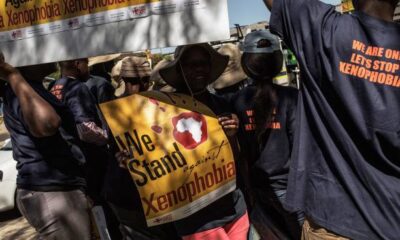

Neutralizing South Africa’s Xenophobic Excesses
ShareBy Chidi Amuta Nelson Mandela must be churning in his resting place. An exemplary life lived and a myth created...
Enugu Joint Security Operatives Rescue Abduction Victim
ShareFrom Sylvia Udegbunam, Enugu A joint security team comprising Police operatives, Forest Guards, and members of the Neighbourhood Watch Group...


Police Uncovers Two Illegal Arms Factories in Benue
ShareFrom Attah Ede, Makurdi Police in Benue State uncovered and destroyed two illegal firearm manufacturing factories, recovered three AK-47 rifles...


Troops Foil Bandits’ Attack, Rescue Nine Kidnap Victims in Zamfara
ShareFrom Ifeanyichukwu Nwannah, Gusau Troops of Sector 2, Operation FANSAN YAMMA, deployed at the Forward Operating Base (FOB) in Kasuwan...
The Fake DG Saga Holds a Mirror to All of Us
ShareBy Akin Fadeyi A man got tired of his wife’s alleged belligerent behaviour. She was never “available” and whenever she...


OPay is Okay: Trust Is Not Claimed – It Is Earned
ShareFor tens of millions of people across Nigeria, digital finance has changed everyday life. Paying bills, sending money, saving, and...


Wike Directs Immediate Demolition of Suspected Criminal Hideout in Abuja
ShareBy Laide Akinboade Abuja Minister of the Federal Capital Territory (FCT), Nyesom Wike has directed the immediate demolition of an...