
NEWS
Shettima Urges Africa to Leverage Islamic Finance for Inclusive, Sustainable Devt

By Tony Obiechina, Abuja
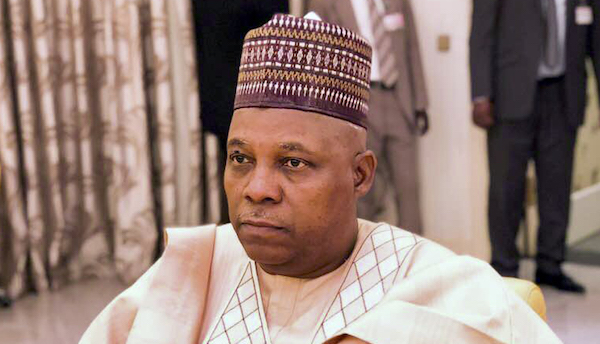
Vice President, Kashim Shettima and other economic Stakeholders have called on African nations to deepen the adoption of Islamic finance as a tool for inclusive and sustainable economic transformation across the continent
Represented by Dr.
Tope Fasua, Special Adviser to the President on Economic Matters, Shettima made the call while addressing delegates at the 7th African International Conference on Islamic Finance (AICIF) held in Lagos on Tuesday.The Conference was organised by the Metropolitan Law and Metropolitan Skills Ltd in collaboration with the Securities and Exchange Commission of Nigeria (SEC).
Speaking on the theme “Africa Emerging: A Prosperous and Inclusive Outlook,” the Vice President said Africa’s demographic advantage must translate into equitable prosperity, stressing that the continent’s progress will be measured not only by growth but by inclusion. He highlighted Nigeria’s recent economic reforms under President Bola Tinubu’s Renewed Hope Agenda as key drivers of stability and investor confidence.
According to Shettima, Nigeria has unified its exchange rate, rationalised subsidies, modernised tax and customs systems, and opened new gateways for trade and investment reforms, which have lifted reserves above $40 billion and earned favourable ratings from Fitch and Moody’s.
“These outcomes reaffirm Nigeria’s position as an anchor of the AfCFTA’s $3.4 3.4trn market and a driver of Africa’s growth,” he said.
The Vice President emphasised that Islamic finance provides a credible framework for promoting shared prosperity, rooted in ethics, fairness, and social responsibility.
He said Nigeria’s experience demonstrates the transformative potential of Islamic finance instruments such as sukuk, takaful, murabaha, and waqf, which have financed critical infrastructure and expanded access to inclusive financial services.
“Our sukuk issuances, now in their seventh cycle, have funded more than 120 major road projects covering nearly 6,000 kilometres,”
Shettima noted. “Each bond represents a covenant between government and citizens, proof that finance can build rather than burden.”
The VP added that takaful insurance is extending protection to millions of previously excluded households, while waqf endowments are being explored to support schools, hospitals, and small businesses.
“Islamic finance aligns with our conviction that enterprise must serve humanity and wealth must circulate to uplift communities,” he said.
Across Africa, Shettima observed, countries like Egypt, Senegal, Kenya, and South Africa are developing regulatory frameworks for Islamic banking, green sukuk, and socially responsible investments.
By 2030, the share of Islamic finance in Africa’s capital markets is projected to expand significantly, he said, urging policymakers to sustain reforms that strengthen transparency, governance, and investor protection.
He also underscored the need to mobilise Africa’s vast domestic capital, including pension funds, sovereign wealth funds, and insurance pools, through innovative instruments such as green sukuk and diaspora bonds.
“Africa’s future must be financed from within, guided by principles of justice, inclusion, and sustainability,” Shettima asserted.
Shettima concluded by urging participants to “build an Africa where enterprise and empathy coexist, where finance is not a privilege for the few but a promise to the many, and where every child, from Lagos to Lusaka, finds a stake in the continent’s future.”
Conference Chairperson Ummahani Ahmad Amin said that AICIF was conceived as a platform for collaboration and knowledge sharing to advance Islamic finance as a viable alternative source of funding for Africa’s socio-economic needs.
She noted that while Islamic finance assets globally reached $3.88 trillion in 2024, Africa still lags behind in harnessing its full potential to close the continent’s annual infrastructure financing gap of up to $170 billion.
She emphasised that challenges such as limited liquidity, weak market infrastructure, and inadequate investor education must be addressed for Islamic finance to reach its potential.
“Artificial intelligence is also reshaping finance across the continent, from automating compliance to personalising ethical investment, and we must ensure ethical guardrails guide its use,” she said.
The conference, co-hosted by the Securities and Exchange Commission (SEC), brought together regulators, scholars, development partners, and investors from across the African continent.
In his opening remarks, SEC Chairman Mairiga Katuka said Nigeria’s non-interest capital market had grown rapidly under the Capital Market Masterplan (2015–2025), with sovereign sukuk raising over N 1.4 trillion and funding 124 critical road projects nationwide.
Katuka noted that Nigeria now has 19 registered halal mutual funds managing over N112 bn in assets, up from one fund in 2008, and pledged the SEC’s commitment to evolving regulatory frameworks for innovations such as innovative sukuk, tokenisation, and blockchain-enabled transparency.
The two-day conference also featured a startup pitch competition supporting innovations in technology and social impact, as well as an awards ceremony honouring individuals and institutions contributing to the growth of Islamic finance across Africa.
In his remarks, Emir of Kano, former Governor of the Central Bank of Nigeria (CBN), Alhaji Sanusi Lamido Sanusi urged Islamic finance institutions across Africa to focus more on supporting small and medium enterprises (SMEs) in underserved communities as a pathway to achieving shared prosperity and sustainable development.
Sanusi emphasized that Islamic finance can only make a meaningful impact when it directly addresses the financial exclusion faced by small businesses and vulnerable groups.
“I would be happier to see Islamic banks that are big, but more importantly, ambitious enough to grow a market that delivers real value to people and helps reduce poverty,” Sanusi stated.
“We need to begin now to see how we can use finance to create opportunities for the small people.”
The Emir underscored the need for Islamic financial institutions to go beyond conventional models by extending services to the grassroots, where the majority of Africa’s unbanked population resides. He called for bold strategies that bridge cultural and social barriers that have historically hindered access to finance, particularly for women.
“Go to the grassroots, have the courage to build and connect with the cultural conceptions and attitudes that have denied women. The empowerment of women is what will contribute to prosperity in Africa,” he added.
Sanusi reiterated that inclusive finance remains central to Africa’s economic transformation, urging Islamic finance stakeholders to leverage their principles of equity, risk-sharing, and social responsibility to foster a more just and prosperous continent.
By Tony Obiechina, Abuja
The Federal Government has reaffirmed Nigeria’s commitment to strengthening bilateral relations with São Tomé and Príncipe, with focus on maritime security, the Nigeria-São Tomé and Príncipe Joint Development Zone (JDZ), trade and investment.
The Minister of State for Defence, Dr.
Bello Muhammad Matawalle, disclosed this while representing President Bola Ahmed Tinubu at the Presidential Inauguration of President Carlos Manuel Vila Nova for a second five-year term.Speaking on behalf of Mr.President, Matawalle commended the people of São Tomé and Príncipe for conducting a peaceful, credible and transparent election.
“Your victory reflects the confidence of the people in your leadership. Nigeria commends the Government, the National Electoral Commission, Political Parties, and the people of São Tomé and Príncipe for strengthening democratic institutions in your country,” he said.
President Tinubu added: “Nigeria values the longstanding friendship between our two countries. I therefore look forward to deepening cooperation in maritime security, the Nigeria-São Tomé and Príncipe JDZ, trade and investment, and other areas of mutual interest.”
The event, which was held at the country’s Parliament Building, was attended by several African and European leaders and other dignitaries. In addition to Minister Bello Matawalle, who represented President Bola Ahmed Tinubu, other leaders who graced the swearing-in ceremony included the President of the Republic of Congo, President Denis Sassou Nguesso, the President of the Gabonese Republic, Brice Oligui Nguema, the Prime Minister of Mozambique, Mrs. Maria Benvinda Levy, the representative of the Angolan Head of State and Angola’s Foreign Minister, Téte António, and the Prime Minister of Morocco, Aziz Akhannouch, among other dignitaries.
Dr. Matawalle said Nigeria remains committed to peace, security and development in the Gulf of Guinea region. He expressed Nigeria’s readiness to re-establish and strengthen closer ties with São Tomé and Príncipe for mutual benefit.
“His Excellency President Tinubu’s participation through representation reflects the historic ties of friendship, fraternity, solidarity and cooperation that continue to define relations between Nigeria and São Tomé and Príncipe,” the Minister said
By Tony Obiechina, Abuja
The National Insurance Commission (NAICOM) has officially launched the Insurance Sector Strengthening Programme (ISSP), a new national initiative aimed at transforming Nigeria’s insurance industry into a more inclusive, innovative, and trusted driver of economic growth.
Declaring the programme open in Abuja, the Commissioner for Insurance, Mr.
Ayo Omosehin, described the launch as a defining moment when reform must move “from intention to action.”Omosehin said the ISSP was designed in response to the sector’s persistent challenges, including low insurance penetration, limited public understanding of insurance products, and gaps in trust, capacity, and distribution.
“Despite Nigeria’s large and growing economy, insurance penetration remains significantly below its potential. Many citizens remain uninsured or underinsured,” he stated.
He added that opportunities among women, youth, and small businesses were “not yet fully harnessed,” noting that these gaps should be seen as a call for “innovative solutions, stronger industry coordination, and deeper stakeholder engagement.”
The Commissioner explained that the ISSP was built around six critical pillars: Advocacy and Policy, Awareness and Education, Capacity Building, Gender Inclusion, Youth Engagement, and MSME and Value Chain Development.
He said awareness and education would be central, because “insurance uptake is directly linked to public understanding and trust.”
Through targeted campaigns, the programme seeks to strengthen insurance culture and improve financial literacy nationwide.
On capacity, Omosehin stressed that the industry’s competitiveness depends on human capital, and that training initiatives under ISSP will strengthen technical expertise across the value chain.
He also highlighted the focus on gender and youth, noting that “women are a significant economic force, while young people represent the future of our nation and our industry.”
The programme also targets Micro, Small and Medium Enterprises, which he said drive employment but often operate without adequate risk protection.
Omosehin said the ISSP aligns with the Nigeria Insurance Industry Reform Agenda (NIIRA 2025) and key priorities such as deepening penetration, enhancing professionalism, and strengthening consumer protection.
While NAICOM will create an enabling environment for innovation, he warned that this would not come “at the expense of consumer protection, solvency, transparency, or public trust.”
“The next phase of insurance growth in Nigeria must be anchored on responsible underwriting, adequate capitalization, robust governance, transparent operations, prompt claims settlement, and measurable value to policyholders,” he said.
The Commissioner further noted that digital transformation and insurtech solutions would be integrated into the ISSP to make insurance products more convenient and personalized for Nigerians.
He called the future of insurance a “shared responsibility,” urging regulators, operators, professional bodies, development partners, educational institutions, and the media to play their roles.
“Through sustained commitment and strategic partnerships, we can transform insurance from an underutilized financial service into a powerful instrument for economic resilience, social protection, and national development,” Omosehin said.
He commended the promoters and partners of ISSP and assured stakeholders of NAICOM’s continued support in protecting policyholders and ensuring market stability.
The launch, he said, “marks the beginning of a new chapter for insurance in Nigeria, one defined by innovation, inclusion, collaboration, professionalism, trust, and regulatory discipline.”
The event drew industry operators, intermediaries, technology providers, and development partners
By Tony Obiechina, Abuja
The Nigerian Economic Summit Group (NESG), in collaboration with the Federal Ministry of Budget and Economic Planning has convened a pre-summit dialogue ahead of the 32nd Nigerian Economic Summit (NES#32), focusing on one of the critical challenges facing Nigeria’s young population: translating education and skills acquisition into meaningful economic opportunities.
The virtual dialogue, themed “The Missing Link: From Learning to Earning,” brought together stakeholders from the education, technology, philanthropy, entrepreneurship and youth development sectors to examine the gaps between learning, skills development and access to productive employment, while exploring practical pathways for connecting human capital development to economic opportunities.
In her remarks, Olapeju Ibekwe, Chief Executive Officer, Sterling One Foundation, noted that the engagement was designed to lay the groundwork for a focused and implementable agenda that moves Nigeria from diagnosis to delivery. She appreciated the panelists, discussants and participants for their contributions and encouraged stakeholders to register for NES#32 and join the broader conversation on building an economy that delivers jobs, productivity and shared prosperity.
In her special remarks, Mrs Obianuju Anigbogu, Director, Education Planning, Research and Development, Federal Ministry of Education, underscored the importance of strengthening education planning, research and development as foundations for building a productive and future-ready workforce. She stressed the need for stronger collaboration among government, the private sector and other stakeholders to ensure that education policies and interventions translate into meaningful outcomes for learners and the wider economy.
Delivering the keynote remarks, Mr Abubakar Sulaiman, Managing Director and Chief Executive Officer of Sterling Bank, emphasised that the capabilities required to drive productivity and economic growth must begin to be developed from the school system. He called for a shift from a pipeline focused primarily on certificates to an ecosystem that builds capability, productivity and opportunity, with transferable skills that enable graduates to contribute effectively across industries regardless of their fields of study.
Mr Sulaiman noted that a graduate of History, English or Physics, for instance, should leave the education system with a meaningful component of the skills required to function effectively in the workplace. He emphasised that building an adaptable workforce capable of responding to changing industry demands would be critical to strengthening the connection between education, employment and economic productivity.
During the panel discussion, Lawal Mohammed Faruk, Director, Research, Innovation and Information Technology, National Universities Commission (NUC), represented by Dr Ezinne Orisakwe, Assistant Director, Research, Planning and Administration, NUC, highlighted the need for effective systems to track graduates and out-of-school young people. She noted that reliable data on the transition from education to employment would help government and other stakeholders better understand the challenges facing young people and design more responsive interventions.
Dr Orisakwe also called for stronger policy coordination and urgent capital investment to address the growing pool of graduates and skilled manpower seeking employment. She stressed that closer alignment among government agencies and coordination units would help create the synergy required to translate skills and qualifications into productive economic opportunities.
Also contributing to the discussion, Oyindamola Egbeyemi, Director, Programmes and Coordination, Lagos State Employment Trust Fund (LSETF), emphasised the importance of ensuring that skills development programmes respond directly to labour-market demand. She noted that programme design and implementation should be guided by clear economic outcomes, with interventions going beyond training and certification to create measurable pathways to employment, enterprise development, productivity and improved livelihoods.
Other panellists, including Femi Taiwo, Managing Partner, FATE Africa, and Olapeju Ibekwe, CEO, Sterling One Foundation, shared perspectives on the structural and practical barriers preventing many young Nigerians from converting education and acquired skills into sustainable livelihoods. The discussion highlighted the need for stronger collaboration between educational institutions and industry, alongside greater opportunities for entrepreneurship, innovation and workforce development.
The dialogue underscored that bridging the gap from learning to earning requires more than expanding access to education. It requires an education and skills ecosystem that equips young Nigerians with relevant, adaptable and marketable capabilities, while creating clear pathways into employment, entrepreneurship and productive economic participation.
The pre-summit engagement forms part of the broader consultations leading to NES#32 and contributes to the Summit’s focus on building an economy that creates opportunities, improves productivity and delivers shared prosperity. It also reinforces the need to place young Nigerians and the development of human capital at the centre of conversations on Nigeria’s future of work and economic growth.
The 32nd Nigerian Economic Summit (NES#32) will be held under the theme “Growth that Works: Delivering Jobs, Productivity and Shared Prosperity” on 26–27 October 2026 at the Transcorp Hilton, Abuja. The Summit will bring together policymakers, private-sector leaders, development partners and other stakeholders to advance practical actions towards an economy that creates jobs, raises productivity and delivers shared prosperity.


Nigeria Pledges Stronger Ties with Sao Tome on Maritime Security
ShareBy Tony Obiechina, Abuja The Federal Government has reaffirmed Nigeria’s commitment to strengthening bilateral relations with São Tomé and Príncipe,...
NAICOM Launches Programme to Strengthen Insurance Sector
ShareBy Tony Obiechina, Abuja The National Insurance Commission (NAICOM) has officially launched the Insurance Sector Strengthening Programme (ISSP), a new...
NESG Convenes Pre-Summit Dialogue on Bridging the Gap from Learning to Earning
ShareBy Tony Obiechina, Abuja The Nigerian Economic Summit Group (NESG), in collaboration with the Federal Ministry of Budget and Economic...


Enugu Govt Names Henry Okeke to Polytechnic Iwollo Governing Council
ShareBy Raphael Atuu, Abuja The Enugu State Government has approved the immediate appointment of Barr. Henry Okeke as a member...
NCS, Niger Customs Team Up to Revive Kamba Border Economy
ShareBy Tambaya Julius, Abuja The Nigeria Customs Service (NCS), Kebbi Area Command, has commenced fresh efforts to revive legitimate cross-border...
Equipping Educators for Excellence: Preparing for a New Academic Session
ShareBy Tolulope Sobiye Ogunbowale A new academic session is knocking at the door. But before the first lesson is taught,...
NFF: Why Nigeria Must Follow the Rules, not Sentiments
ShareBy Ken Ekwueme On Tuesday, September 1, 2026, the world football governing body FIFA formally accepted the resignation of Nigeria...


NOA Initiates Five-month Voter Education Exercise in Bauchi
ShareThe National Orientation Agency (NOA) in Bauchi State, says it will conduct a five-month voter education exercise to mobilise participation...


Sanwo-Olu Urges Media to Combat Misinformation Ahead 2027 Elections
ShareLagos State Governor, Babajide Sanwo-Olu has urged the media to uphold professionalism, verify information and combat misinformation ahead of the...


I Think I’d Have Won BBNaija Season 11 – Neche Speaks on Exit
ShareFormer Big Brother Naija housemate Neche said she believes she could have won the show if she had stayed, citing...