
Education
Stakeholders Blame Exams Body, Parents over Mass Failure


Stakeholders in the education sector said, the mass failure in the 2025 West Africa Senior Secondary Certificate Examinations (WASSCE) stem from systemic issues attributed to the examination body, parents and the students
The stakeholders spoke in separate interviews in Abuja on Thursday.
Founder, Exam Ethics Marshall International (EEMI), Ike Onyekere faulted the systemic malpractice and deep-rooted corruption within Nigeria’s examination ecosystem.
The West Africa Examination Council (WAEC) had revealed a sharp decline in performance in the 2025 SSE results compared to the previous year.
Out of a total of 1,969,313 candidates who sat for the examination across 23,554 schools, only 754,545 candidates, representing 38.32 per cent obtained a minimum of five credits, including English Language and Mathematics.
Onyechere decried the 38.32 per cent credit pass rate recorded in this year’s examinations as a “very poor result,”
He, however, noted that the decline was not unexpected due to challenges encountered during the exams.
According to him, there were serious logistical issues during the exams such as power outages, poor supervision, and lack of proper oversight which contributed to students’ poor showing.
“I am not surprised because these logistical issues, as critical as they were, they were ignored during and after the exams.
“No person talked about how those kinds of issues should be addressed in terms of how they affected the performance of those students.
“No person talked about what happened after their papers were collected from them, when they did finish their allotted time and when there was no light.
“So these are some of the questions we need to address,” he said.
Onyechere further criticised students’ growing reliance on “magic centres” and malpractice rings, arguing that many students no longer prepare sincerely for their examinations.
He said most of the students have their mind fixed on magic centres, and other forms of malpractices unfettered and with no consequences.
He accused WAEC and its sister examination body of enabling malpractice by repeatedly failing to name and shame individuals and institutions complicit in exam fraud.
“Every year, WAEC releases statements saying schools were involved in malpractices but where are the names? Who are these schools? Who are the supervisors?
“They recycle these supervisors and protect them,” he said
Citing his experience in the Federal Ministry of Education, he alleged that past attempts to publish and blacklist indicted schools and individuals were stifled.
He praised the Joint Admissions and Matriculation Board (JAMB) for its comparative transparency, saying, “at least, JAMB names CBT centres and schools caught in malpractice and takes them to court.
Onyechere admonished WAEC to take cue from JAMB, in addressing the menace of malpractices.
For meaningful change, he called on WAEC to publish names, sanction schools, blacklist corrupt officials, and take concrete action, not just about release of statements.
He also advised students to reject malpractice, rather, discover and develop their true talents.
Also, Dr Jekayinfa Olatunji, a Fellow with the National Mathematical Centre (NMC), called for a national education emergency roundtable, reforms in exam preparation strategies, and closer monitoring of learning standards at all levels.
Olatunji said until tangible solutions are implemented, the futures of millions of Nigerian students would hang in the balance.
“In 2024, no fewer than 1,805,216 students sat for waec exams out of which 1,332,089 students passed at least 5 subjects including English Language and Mathematics at credit level and above, representing 72.12 per cent pass.
“Ordinarily, the results may seem good, but, what about the remaining 27.88 per cent who didn’t get five credits with English Language and Mathematics?
“The students might not have progressed in their education that year.
“Now, the worst has happened in 2025. Out of 1,969,313 students who sat for WASSCE exams, only 38.32 per cent passed five subjects including English Language and Mathematics.
“The remaining 68.68 per cent didn’t pass five subjects including English Language and Mathematics.
“What this means is that only 754,641 students out of 1,969,313 succeeded in having scores that could earn them tertiary institution admissions,” he said
He advised the education stakeholders to take proactive steps to forestall a repeat of the woeful performance in 2026.
Similarly, a civil servant and a parent, Ijeoma Osita, attributed the poor performance in the examination to both students’ attitudes and the role of parents in fostering academic irresponsibility.
Osita decried increasing culture of academic laziness among students and misplaced priorities by parents.
She further lamented that the quality of learning was fast diminishing due to an over-dependence on technology without critical thinking and originality.
According to her, many students no longer commit themselves to studying or building academic discipline, choosing instead to rely heavily on shortcuts such as Artificial Intelligence (AI), examination malpractice, and plagiarism.
“From what I have observed, many students are not ready to go the extra mile to study, build their capacity and equip themselves academically.
“They rely so much on AI and ‘expo’. Unfortunately parents endorse the negative trend, in having their children pass exams.
“They fail to harness the potential in their children by encouraging them to study harder, or even employ extra hands to coach them in the areas of weakness.
“The parents prefer to hire “machinery,” sometimes to write exams for their children.
“Some will even encourage and finance their children to leave the school, where they have attended for years, to register them in ‘miracle centres’,” she said.
She urged parents to take more responsibility in guiding their children, stressing the importance of discipline, hard work and quality education over superficial success.
 | ReplyForwardAdd reaction |

Candidates seeking admission into Nigerian tertiary institutions can now upload and verify their O’Level results from the comfort of their homes, following a new initiative by the Joint Admissions and Matriculation Board (JAMB).
Under the new arrangement, candidates will no longer need to visit Computer-Based Test (CBT) centres solely to upload their Senior Secondary School Certificate Examination (SSCE) results, as JAMB will verify the results directly with the examination bodies, beginning with the West African Examinations Council (WAEC).
In a statement on Monday in Abuja, JAMB’s Acting Director, Public Affairs and Protocol, Dr.
Fabian Benjamin, said the Board would continue to deploy technology and collaborate with examination and government agencies to simplify its services and make them more accessible to candidates.According to him, the initiative was part of its renewed commitment to making its services “easier, faster, safer and more convenient” for candidates.
He said the integration of its e-Facility platform with examination bodies would enable candidates’ results to be verified against the records of the issuing bodies before being downloaded into their profiles.
The new system is also expected to address problems associated with manual O’Level result uploads, including misplaced or mixed-up paper results, presentation of fraudulent or unverified certificates and errors in the manual entry of subjects and grades.
The examination body said the initiative would particularly ease pressure on CBT centres during periods of high patronage and help reduce the effect of network challenges and long queues.
The statement reads: “Consequently, candidates can now upload their O’Level results from the comfort of their homes, while the Board undertakes the verification of such results directly with the issuing examination bodies.
“The initiative is part of the Board’s renewed commitment to making services easier, faster, safer and more convenient for candidates. By using technology to reduce unnecessary visits to CBT centres, queues and manual processes, JAMB is putting candidate ease of service delivery at the centre of its operations.
“The new arrangement also addresses challenges associated with manual O’Level result uploads, including misplaced or mixed-up paper results, presentation of unverified or fraudulent results, and errors in the manual entry of subjects and grades. Through the integration of JAMB’s eFacility platform with examination bodies, results can now be verified directly against the examination body’s records before being downloaded into the candidate’s profile.”
To use the new service, candidates are required to visit its website, enter their National Identification Number (NIN) and select the number of examination sittings and relevant examination body or bodies.
After providing their email address and GSM number, candidates are required to pay for the verification using a debit card or bank transfer before entering their examination number, examination series and examination year.
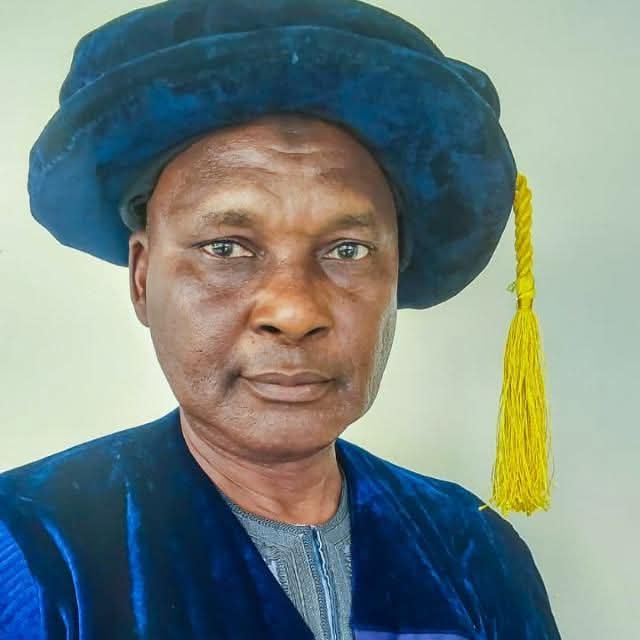
From Joseph Amedu, Lokoja
A Professor of History at the Federal University, Lokoja, Suberu Ochi Abdulrahaman, has raised the alarm over the prevailing political illegality bedeviling Nigeria insisting that leaders in the system should endeavor to obey the laws of the land and do the right thing that would move the nation forward.
Professor Abdulrahaman made the observation while delivering the 45th Inaugural Lecture Series of the University at its Felele Campus, in Lokoja, on Wednesday.
Professor Abdulrahaman in his Lecture titled, Persisting Illegalities in Nigeria’s Political Space: Who is to Blame? A Historical Discourse on Power, Institution and Democratic Governance, noted that political illegality which ranges from electoral fraud, arbitrary use of executive power for manipulation and intimidation to sponsorship of thuggery and violence in the system, amongst others, can only be overcome if leaders in governance work in accordance with the nation’s constitution.
According to the Inaugural lecturer “The resistance of political illegalities is neither accidental nor the responsibility of a single institution or generation.
“It is the cumulative product of colonial administrative legacies, prolonged military
authoritarianism, weak institutional development, political opportunism, inadequate civic engagement, and failures of ethical
Leadership.
“History teaches us that no nation develops sustainably when public institutions are weakened by impunity, when constitutional rules are subordinated to personal interests, or when political power is exercised without accountability.
“Equally, history reminds us that societies are capable of renewal when they choose to strengthen institutions rather than personalities, uphold the rule of law rather than arbitrary power, and promote justice above expediency.
“Accordingly, the challenge before Nigeria is not simply to conduct periodic elections or enact additional legislation.
The greater challenge is to cultivate a democratic culture in which constitutionalism becomes habitual, public office is regarded as a sacred trust, institutions command public confidence, and citizens
actively defend democratic values.
“Political leaders must recognise that authority derives its legitimacy not merely from electoral victory but from faithful obedience to the Constitution and unwavering commitment to the public good.
“Institutions must be empowered to function independently, impartially, and professionally.
” Citizens must reject every form of political illegality, whether manifested through vote buying, political
violence, corruption, or indifference to injustice”
The Vice Chancellor of the University, Professor Gbenga Solomon Ibileye in his welcome address, disclosed that his administration will continue to give Inaugural Lecture Series topmost priority as it offers opportunity for where the public is highly equipped with relevant knowledge on contemporary issues affecting the society.
He described Professor Suberu Abdulrahaman as an accomplished historian who has made his mark in his academic field.
Academic Staff Union of Universities (ASUU) has authorised 20 federal and state universities across Nigeria to commence varying degrees of industrial action.
The decision was reached during a critical National Executive Council (NEC) meeting held in Abuja between August 8 and 9, 2026.
ASUU National President, Prof.
Christopher Piwuna, disclosed this at the weekend, expressing the union’s deep frustration over the “haphazard implementation” of the landmark December 2025 FGN-ASUU Agreement.The union warned that a full-scale resurgence of campus unrest is now inevitable.
Regarding the 20 approved universities facing looming strikes, the NEC resolved to grant permission for industrial action once individual institutions successfully satisfy internal union requirements.
The affected institutions include: Adekunle Ajasin University, Akungba (AAUA); Nasarawa State University, Keffi (NSUK); Ibrahim Badamasi Babangida University, Lapai (IBBUL); University of Medical Sciences, Ondo (UNIMEDO); Gombe State University (GSU), Gombe; Plateau State University (PLASU), Bokkos; Emmanuel Alayande University of Education (EAUED), Oyo; Ambrose Alli University, Ekpoma (AAUE); Olusegun Agagu University of Science and Technology (OAUSTECH), Okitipupa; Abia State University (ABSU), Uturu; University of Education and Entrepreneurship (UEE), Akamkpa; Kaduna State University (KASU), Kaduna.
Others are Aliko Dangote University of Science and Technology (ADUSTECH), Wudil; Northwest University, Kano (NWUK); Enugu State University of Science and Technology (ESUT), Enugu; Imo State University (IMSU), Owerri; Niger Delta University (NDU), Wilberforce Island; University of Africa, Toru-Orua (UAT); Bayelsa Medical University (BMU), Yenagoa; and Taraba State University (TSU), Jalingo.
ASUU also disclosed that the implementation status of universities within the Lagos Zone is currently under review, with separate declarations expected in due course.
Speaking on the core grievances driving the crisis, ASUU noted that while Vice-Chancellors at the federal level face severe challenges due to underfunded monthly salary bills, the situation at the state level is considerably worse.
According to the union, only about 10% or fewer of state governors have openly endorsed the new salary package established in December 2025.
The rest were accused of “playing the ostrich” and passing financial burdens onto Governing Councils that lack the funding to back them.
The union also explicitly blamed officials within the Federal Ministry of Finance and the Office of the Accountant-General of the Federation. These bodies are accused of deliberately stalling promotion arrears, dragging their feet on monthly salary releases, and illegally withholding the remittance of academics’ deductions to their respective Pension Fund Administrations (PFAs).
Furthermore, ASUU raised concerns over the unpaid, withheld three-and-a-half months’ salaries dating back to the 2022 nationwide strike. While ASUU initially praised President Bola Tinubu for releasing four months of those salaries, the refusal to remit the balance has left a “strong bitter taste.”
The union also condemned the prolonged delays in paying the 25/35% wage award and outstanding promotion arrears to its members.
Meanwhile, ASUU issued a stern warning regarding the recent harassment of its branch leaders and members by Vice-Chancellors at ESUT, IMSU, and ABSU.
The NEC declared that it will strictly refuse to call off any industrial action in these specific institutions until all forms of victimization stop completely.
Beyond the immediate academic crisis, the NEC reviewed the worsening socio-political and economic landscape of Nigeria.
The union strongly condemned the ongoing atmosphere of pre-election violence, political killings, and economic instability as the country approaches upcoming election cycles, noting that these existential threats directly undermine the living and working conditions of everyday Nigerians and university lecturers alike.
Despite praising the mediation efforts of Senator Lanre Tejuoso, the Chairman of the Implementation Monitoring Committee (IMC), ASUU maintains that it will stop at nothing to enforce the full scope of the agreement.
The union has announced that it will convene an emergency NEC meeting in the next few weeks to appraise the situation. If the government fails to act swiftly to clear outstanding financial entitlements and halt the harassment of lecturers, a wider, coordinated national academic shutdown may follow.



Troops Rescue 54 Kidnap Victims, Neutralises 22 Terrorists in One Week – DHQ
ShareBy David Torough, Abuja The Armed Forces of Nigeria rescued at least 54 kidnapped victims and neutralised 22 terrorists during...

Tinubu Orders Forensic Audit of IPPIS, Federal Agencies Over Ghost Workers, Payroll Fraud
ShareBy David Torough, Abuja President Bola Tinubu has approved a comprehensive forensic audit of the Federal Government’s personnel, payroll and...
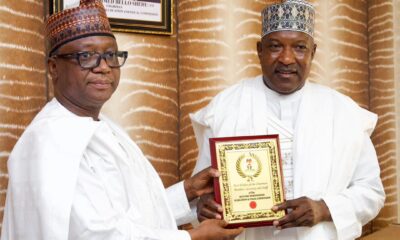

RMAFC, NEITI Collaborate to Boost Transparency in Revenue Generation
ShareBy Tony Obiechina, Abuja The Chairman of the Revenue Mobilisation, Allocation and Fiscal Commission (RMAFC), Dr. Mohammed Bello Shehu has...

Nigeria’s Capital Market Upgraded to Global Frontier Status after Classification
ShareBy Tony Obiechina, Abuja Nigeria’s capital market has been upgraded from “Unclassified” to “Frontier Market” status by global index provider,...
Electricity Distributors’ Association Decries Outstanding Debts by MDAs
ShareThe Association of Nigerian Electricity Distributors (ANED) has raised concerns over outstanding electricity debts owed by government Ministries, Departments and...

Afreximbank Records 30 Per Cent Rise Net Income for First Half 2026
ShareThe African Export-Import Bank (Afreximbank) and its subsidiaries (the Group) recorded a 30 per cent increase in net income to...


CBN Sells N700bn Treasury Bills in Second August Auction
ShareBy Tony Obiechina, Abuja The Central Bank of Nigeria (CBN), on behalf of the Debt Management Office (DMO), has offered...


Niger FRSC Records 234 Crashes, 110 Deaths in Seven Months
ShareFrom Dan Amasingha, Minna Ten people have been killed and several others injured in a fatal road crash involving a...
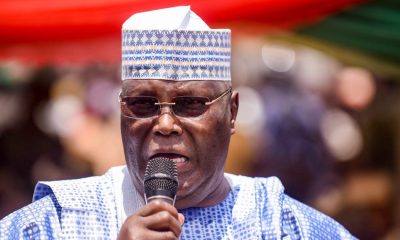

Fuel Subsidy War Deepens as Presidency, Atiku Clash Again over Policy
ShareBy David Torough, Abuja The political battle over Nigeria’s petrol subsidy regime has intensified, with the Presidency and former Vice-President...
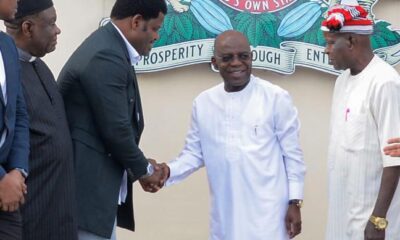

The Man Behind ‘The Ultimate Commander’: A Birthday Tribute to Ambassador Osita Offor
ShareBy David Torough, Abuja Ambassador Osita Offor, popularly known as “The Ultimate Commander,” is being celebrated today for his vision,...